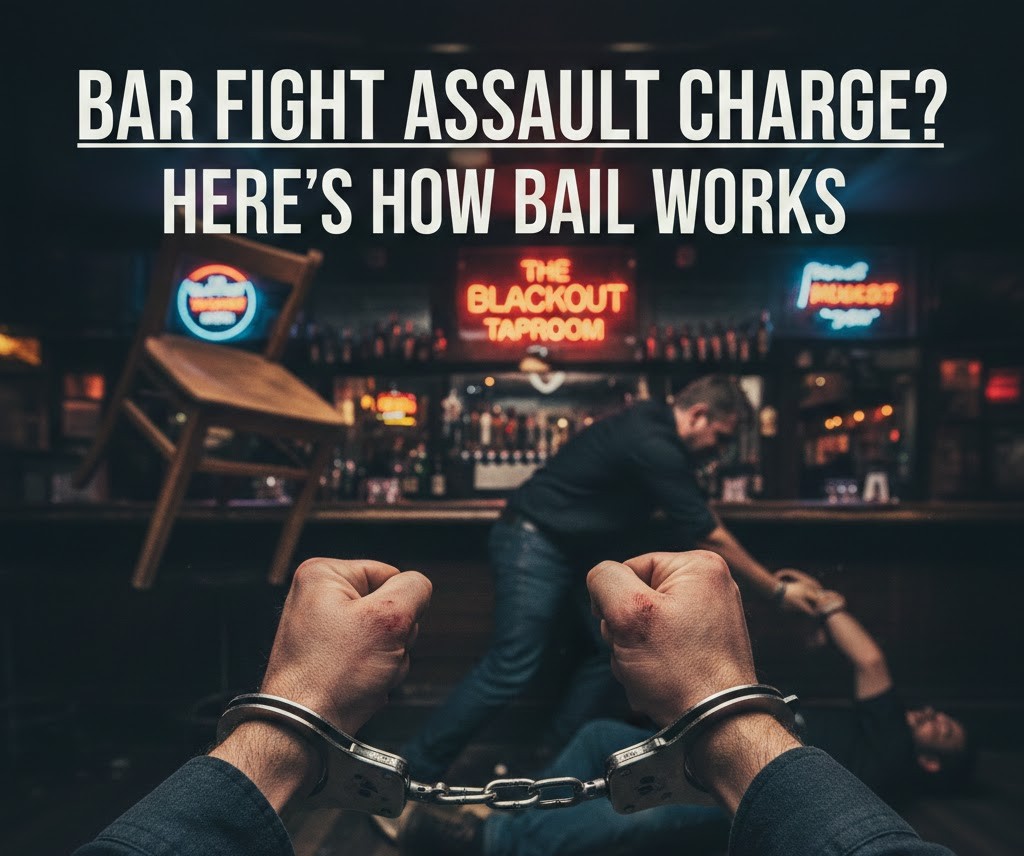
Getting arrested after a night out can be a disorienting and terrifying experience. If you or a loved one is facing an assault charge from a bar fight, the first priority is usually getting out of jail.
Understanding the bail process is the first step toward building a legal defense. This guide breaks down how bail works for assault charges, what factors judges consider, and how you can regain your freedom quickly.
1. What Happens Immediately After the Arrest?
After an altercation at a bar, the police will likely take you to a local station for booking. This involves recording your personal information, taking fingerprints, and photographing you (the “mugshot”).
Depending on the severity of the fight, you may be charged with:
Simple Assault: Usually a misdemeanor involving minor injuries or threats.
Aggravated Assault: A felony involving “serious bodily injury” or the use of a deadly weapon (like a bottle or chair).
Once booked, you will remain in custody until a bail hearing or until you post a pre-set amount according to a “bail schedule.”
n a bar fight scenario, the judge doesn’t just pick a number out of thin air. They evaluate several key factors during the bail hearing:
Severity of the Injuries: If the other party required hospitalization, bail will be significantly higher.
Criminal History: Is this a first offense, or is there a pattern of violent behavior?
Flight Risk: Do you have strong ties to the community (job, family, home), or are you likely to flee?
Public Safety: Does the judge believe you pose a continuing threat to the victim or the community?
3. Types of Bail Release
There are several ways to secure a release from jail while awaiting your court date:
| Type of Bail | How It Works |
| Own Recognizance (OR) | The judge releases you based on a promise to return. No money is required. This is common for first-time, minor offenses. |
| Cash Bail | You pay the full amount of the bail to the court. This money is returned (minus small fees) after the case concludes, provided you attend all hearings. |
| Surety Bond (Bail Bond) | You pay a bail bondsman a non-refundable fee (usually 10%). The bondsman then guarantees the full amount to the court. |
| Property Bond | The court places a lien on a piece of property (like a house) to secure your release. |
4. Common Bail Conditions for Assault Cases
Getting out of jail often comes with “strings attached.” If you violate these conditions, your bail can be revoked, and you’ll be sent back to jail. Common conditions include:
No-Contact Orders: You are strictly prohibited from contacting the victim or returning to the bar where the fight occurred.
Travel Restrictions: You may be required to stay within the county or state.
Alcohol Abstinence: Since the fight happened at a bar, the judge may order you to avoid alcohol and stay out of establishments that serve it.
Check-ins: Regular meetings with a pretrial services officer.
Bail is only the beginning. An assault conviction can lead to heavy fines, probation, or prison time. A skilled criminal defense attorney can:
Argue for Lower Bail: At your first appearance, an attorney can highlight your community ties to reduce the cost.
Gather Evidence: They can secure bar surveillance footage and witness statements before they disappear.
Build a Defense: Whether it was self-defense or a case of mutual combat, a lawyer ensures your side of the story is heard.
How much is bail for a bar fight assault charge?
Bail amounts vary wildly depending on the jurisdiction and the severity of the charges. For a misdemeanor simple assault, bail may range from $500 to $5,000. However, if the charge is upgraded to felony aggravated assault due to serious injuries or the use of a weapon, bail can be set anywhere from $10,000 to $50,000 or more.
Can I get bail reduced for an assault charge?
Yes. Your attorney can request a bail reduction hearing. The court may lower the amount if you can prove you have strong community ties, a steady job, no prior violent record, and that the fight was an isolated incident.
What happens if I can’t afford bail?
If the cash bail is too high, most people use a bail bondsman. You typically pay a non-refundable premium (usually 10% of the total bail). The bondsman then posts a “surety bond” for the rest. If you cannot afford the 10% fee, your lawyer may argue for Release on Own Recognizance (OR).
Will I go to jail for a first-time bar fight?
While jail time is possible, first-time offenders are often eligible for diversion programs, probation, or fines, especially if the injuries were minor. However, violating your bail conditions (like contacting the other party) is the fastest way to ensure you stay behind bars until your trial.
Can I claim self-defense to get out of bail?
Self-defense is a legal defense used during your trial or in negotiations with the prosecutor; it usually does not waive the requirement for bail. However, if your attorney can show the judge preliminary evidence that you were not the aggressor, it may lead to a significantly lower bail amount.
What is a “No-Contact Order” in an assault case?
In almost every bar fight case, the judge will issue a Protective Order or No-Contact Order. This means you cannot call, text, email, or approach the victim or the witnesses. If you run into them at the same bar later, you are legally required to leave immediately or risk being sent back to jail without bail.
Don’t let a mistake ruin your family’s traditions. We are the most trusted bail bond agency in [Ventura], known for our fast, discrete, and professional service.
Call us today at [805-910-9842] for a free consultation. We’re open 24/7, including Christmas and New Year’s.
Frequently Asked Questions: Co-Signing Bail Bonds
Q: What is the risk of co-signing a bail bond? A: The primary risk is financial. If the defendant fails to appear in court and cannot be located, the co-signer is responsible for paying the full face value of the bail to the court. Additionally, the co-signer is responsible for the non-refundable bail premium and any recovery costs incurred if the defendant skips bail.
Q: Can a co-signer get their money back? A: The 10% premium paid to a bail agent is a non-refundable fee for the service of posting the bond. However, if you provided any cash or property as collateral, that will be returned to you once the defendant’s case is fully resolved and the bond is exonerated by the court.
Q: Does co-signing a bail bond affect your credit score? A: Simply signing a bail bond does not typically show up on your credit report or affect your score. However, if you fail to pay the agreed-upon premium or if the bond goes into forfeiture and the debt is sent to a collection agency, your credit score will be negatively impacted.
Q: Can I withdraw as a co-signer after the bond is posted? A: Yes. If you have reason to believe the defendant will not go to court or is engaging in illegal activity, you can request that the bail bonds company “surrender” the bond. This will return the defendant to custody and release you from future liability, though you may still be responsible for fees incurred up to that point.
Q: How long is a co-signer responsible for a defendant? A: A co-signer’s responsibility lasts for the duration of the legal case. Once the judge “exonerates” the bond (usually at sentencing or when charges are dropped), the financial obligation to the court ends.