Protesting is a cornerstone of American democracy, protected by the First Amendment. In California, thousands of residents take to the streets every year to advocate for social and political change. However, while the right to assembly is protected, it is not absolute. Legal boundaries exist, and arrests are a common reality of large-scale demonstrations.
If you or a loved one has been detained, understanding California protest laws and the bail bond process is essential for a fast release.
The U.S. Constitution protects your right to peacefully assemble and speak freely. In the Golden State, these protections generally apply to “public forums,” including:
Public sidewalks and parks
Streets (though these often require local permits)
Government buildings and plazas
When Does a Protest Become “Unlawful”?
Under California Penal Code 407, an assembly can be declared unlawful if people assemble to do an illegal act or conduct themselves in a violent, boisterous, or tumultuous manner. Law enforcement can issue a dispersal order, and failure to leave can result in immediate arrest—even if you are being peaceful.
Common Criminal Charges at California Protests
Most protest-related arrests are classified as misdemeanors, but they still appear on criminal records and carry potential jail time. Common charges include:
| Charge | California Penal Code | Description |
| Unlawful Assembly | PC 407 & 408 | Participating in a meeting declared illegal by police. |
| Failure to Disperse | PC 409 | Remaining at the scene after a lawful order to leave. |
| Resisting Arrest | PC 148 | Willfully resisting, delaying, or obstructing an officer. |
| Trespassing | PC 602 | Entering private property without permission. |
| Disturbing the Peace | PC 415 | Fighting in public, loud noise, or using offensive words. |
If you are arrested during a demonstration in cities like Los Angeles, San Francisco, or Sacramento, the process typically follows these steps:
Search and Seizure: Officers will search you for weapons or evidence.
Transport: You will be taken to a local precinct or county jail.
Booking: This involves fingerprinting, “mugshots,” and a background check.
Charges Filed: The District Attorney’s office decides which charges to pursue.
Bail Setting: You are either released on your own recognizance (OR) or assigned a bail amount based on the County Bail Schedule.
How Bail Works for Protest Arrests in California
Bail is a financial guarantee paid to the court to ensure the defendant returns for their hearing. Because California jails can become overcrowded after mass arrests, posting bail is often the fastest way to get home.
Why You Should Post Bail Immediately
Staying in jail while awaiting a court date can be devastating. Posting bail allows you to:
Protect your employment by returning to work.
Consult with a defense attorney in private.
Avoid the pressure of accepting a “bad” plea deal just to get out of custody.
Using a California Bail Bond Agency
Most people cannot afford the full bail amount upfront. A licensed bail bondsman typically charges a 10% premium (the legal standard in CA) to post the full bond for you. This service is available 24/7, which is vital during weekend protests or late-night arrests.
What to Do if a Loved One Is Arrested
If you are searching for someone detained at a protest, follow these steps:
Locate the Inmate: Use the county’s online “Inmate Locator” tool.
Gather Info: You will need their full legal name and date of birth.
Contact a Bondsman: Do not discuss the details of the protest over jail phones, as all calls are recorded and can be used as evidence.
Secure Release: A bail agent can often expedite the process during “mass booking” events.
Quick Comparison Table
| Feature | Arrest Warrant | Bench Warrant | Ramey Warrant |
| Issued By | Judge (via DA) | Judge (from the bench) | Judge (directly via Police) |
| Reason | Formal criminal charges | Failure to appear/comply | Probable cause (pre-charge) |
| Urgency | Standard | Variable | High (often after hours) |
| Bail Possible? | Yes | Yes | Yes |
What Should You Do If You Have a Warrant?
If you suspect there is a warrant out for your name, do not wait for the police to come to you. A “walk-through” or voluntary surrender is often the best way to handle the situation. This allows you to arrange your bail before you go into custody, significantly shortening the time you spend behind bars.
Why Choose Bada Bing Bail Bonds?
We are available 24/7 to help you navigate the system. Whether it’s a failure to appear or a complex Ramey warrant, we provide:
Fast, Discreet Service: We get you out so you can get back to your life.
Flexible Payment Plans: We work with your budget.
Expert Advice: We know the local court systems inside and out.
Don’t let a warrant hang over your head. Call Bada Bing Bail Bonds today at [Your Phone Number] for a free warrant check and immediate assistance.
Protect Your Freedom and Your Future
An arrest is not a conviction. Whether you were exercising your First Amendment rights or were simply in the wrong place at the wrong time, you have the right to a legal defense and a fair bail hearing.
Are you looking for immediate help after a protest arrest? [Contact our experienced California Bail Team today] for a free consultation and 24/7 assistance.
Frequently Asked Questions: Co-Signing Bail Bonds
Q: What is the risk of co-signing a bail bond? A: The primary risk is financial. If the defendant fails to appear in court and cannot be located, the co-signer is responsible for paying the full face value of the bail to the court. Additionally, the co-signer is responsible for the non-refundable bail premium and any recovery costs incurred if the defendant skips bail.
Q: Can a co-signer get their money back? A: The 10% premium paid to a bail agent is a non-refundable fee for the service of posting the bond. However, if you provided any cash or property as collateral, that will be returned to you once the defendant’s case is fully resolved and the bond is exonerated by the court.
Q: Does co-signing a bail bond affect your credit score? A: Simply signing a bail bond does not typically show up on your credit report or affect your score. However, if you fail to pay the agreed-upon premium or if the bond goes into forfeiture and the debt is sent to a collection agency, your credit score will be negatively impacted.
Q: Can I withdraw as a co-signer after the bond is posted? A: Yes. If you have reason to believe the defendant will not go to court or is engaging in illegal activity, you can request that the bail bonds company “surrender” the bond. This will return the defendant to custody and release you from future liability, though you may still be responsible for fees incurred up to that point.
Q: How long is a co-signer responsible for a defendant? A: A co-signer’s responsibility lasts for the duration of the legal case. Once the judge “exonerates” the bond (usually at sentencing or when charges are dropped), the financial obligation to the court ends.
Don’t let a mistake ruin your family’s traditions. We are the most trusted bail bond agency in [Ventura], known for our fast, discrete, and professional service.
Call us today at [805-910-9842] for a free consultation. We’re open 24/7, including Christmas and New Year’s.
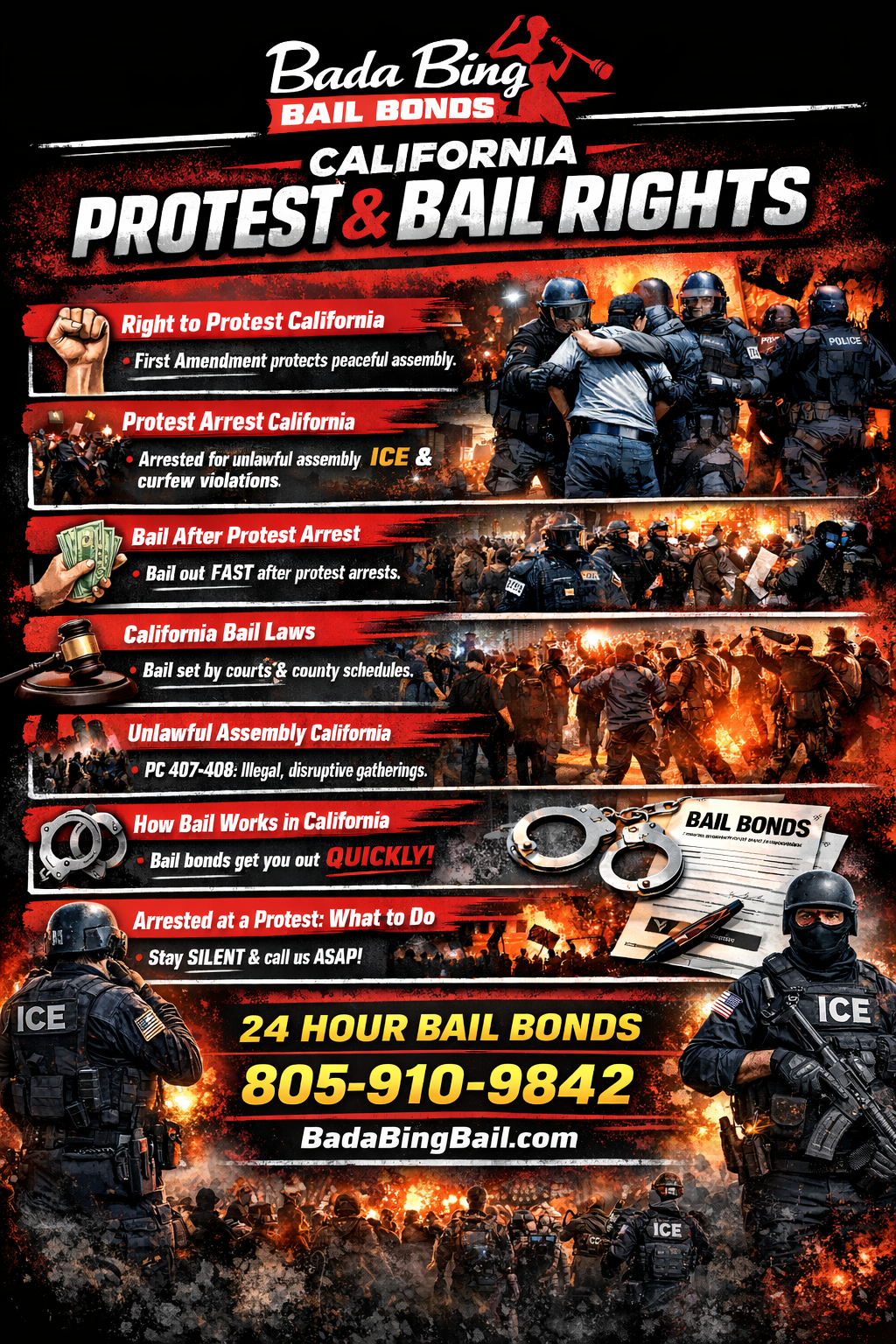
California Protest & Bail Rights Overview
| Topic | What It Means in California | Why It Matters |
|---|---|---|
| Right to Protest California | Protected under the First Amendment and California law, allowing peaceful assembly and expression in public spaces. | Protects free speech, but rights are not unlimited and must follow lawful orders. |
| Protest Arrest California | Police may arrest protesters for unlawful assembly, blocking traffic, trespassing, or failure to disperse. | Even peaceful protesters can be arrested if laws or orders are violated. |
| Bail After Protest Arrest | Most protest-related arrests qualify for bail and same-day release once bail is posted. | Bail prevents unnecessary jail time while your case is pending. |
| California Bail Laws | Bail is set using county bail schedules or by a judge based on charge severity and risk factors. | Understanding bail laws helps secure faster release from custody. |
| Unlawful Assembly California | Defined under Penal Code 407–409 when a gathering becomes disruptive or violent. | One of the most common charges during protest arrests. |
| How Bail Works in California | Bail is a financial guarantee to appear in court; a bail bond allows release without paying full bail. | Bail bonds make release affordable and fast for most families. |
| Arrested at a Protest: What to Do | Remain silent, ask for a lawyer, comply physically, and contact a bail bond agency immediately. | Protects your legal rights and speeds up release. |
| California Bail Bond Rights | You have the right to contact a licensed bail agent and post bail unless legally denied. | Ensures access to freedom while awaiting court proceedings. |