The call usually comes when the house is quiet and your guard is down. A brother, spouse, son, or friend says they’ve been arrested. The line is bad, they’re talking fast, and you’re trying to catch three things at once: where they are, what happened, and how to get them out.
At that hour, someone facing this situation isn’t asking for a lecture on criminal procedure. They want a straight answer to one question: how do bail bonds work in California, and how fast can someone get released? That’s the right question. Bail is about money, but in real life it’s also about timing, jail workflow, and making clean decisions under pressure.
If you’re still trying to confirm where your loved one was booked, start with this guide on how to find an arrested loved one in Camarillo. Once you know the facility and the booking name, the next steps get a lot clearer.
Table of Contents
- That First Call from Jail
- Understanding How Bail Is Set in California
- The 10 Percent Solution and The Bondsman’s Role
- Covering the Cost Co-Signers Collateral and Payment Plans
- From Bond Posted to Jail Release The Real Timeline
- After Release Responsibilities Until the Case Ends
- What to Do Right Now Your First Call for Help
That First Call from Jail
The first call is messy. Your loved one may not know the exact charge yet. They may not know the bail amount. Sometimes they only know the city where the arrest happened and the name of the jail, and sometimes they don’t even know that much because they were moved after booking started.
That confusion is normal. Booking takes time, and until the jail enters the person into its system, you may hear answers that sound incomplete or contradictory. Families often think something is wrong because nobody can give them a clean release time in the first few minutes. Usually, it just means the process is still moving through the jail’s intake line.
Practical rule: Get the full legal name, date of birth if you have it, and the city of arrest before you do anything else.
When people ask how do bail bonds work in California, they’re usually asking three smaller questions underneath it:
- Where are they now. You need the correct facility before anybody can act.
- Is bail already set. Some cases move fast through a standard schedule. Others wait for court action.
- Who can sign. The jail won’t solve the money side for you. A family member or friend usually has to step in.
Stress makes people rush into bad assumptions. They hear “bail” and think they must produce the full amount immediately. In many cases, that isn’t how the release happens at all. The practical move is to verify custody, confirm bail, and decide the cheapest realistic path that also gets the person out quickly.
Understanding How Bail Is Set in California
Bail is a financial guarantee to the court. It’s there to support one basic promise: the defendant returns for required court appearances. It isn’t the same thing as guilt, and it isn’t a fine.
What bail actually does
In California, the bail bond business has been regulated by the Department of Insurance since the Bail Bond Regulatory Act of 1937, and the Department describes a bail bond as a surety bond from a licensed company that guarantees an arrestee’s court appearance. The consumer cost is typically 10% of the total bail, so a $50,000 bail generally requires a $5,000 premium paid to the bondsman, plus any actual, necessary, and reasonable expenses tied to the transaction, according to the California Department of Insurance bail bond guidance.
That amount can be set in more than one way. Sometimes a jail uses a county bail schedule for a common charge. Other times a judge sets or adjusts it in court. For a family standing in a parking lot at night, the key point is simple: once bail is known, you choose how to satisfy it.
The common options are:
- Cash bail. Someone pays the full bail amount directly.
- Property-based security. Real estate may be used in some situations, but it’s slower and more document-heavy.
- A bail bond. A licensed bail agent posts the full bond after the premium and agreement are handled.
Bail is the court’s requirement. A bail bond is the tool families use when paying the full amount doesn’t make sense.
Cash bail vs bail bond at a glance
| Feature | Paying Full Cash Bail | Using a Bail Bond |
|---|---|---|
| Upfront payment | Full bail amount | Typical premium of 10% of bail |
| Who posts with the court | The person paying cash | A licensed bail bond company |
| Refundable at case end | Cash bail may be returned depending on case compliance and court handling | The premium is not refunded |
| Main benefit | No bail company involved | Lower upfront out-of-pocket cost |
| Main drawback | Large amount of money tied up | You pay a service fee to transfer the risk |
Cash can work when the bail is manageable and tying up that money won’t hurt the family. A bond usually makes more sense when the bail is high enough that paying it in full would empty savings, disrupt rent, or force a rushed loan.
The 10 Percent Solution and The Bondsman’s Role
Most families don’t need a theory lesson. They need to know what the bail agent does after the phone call.
What you pay and what the agent does
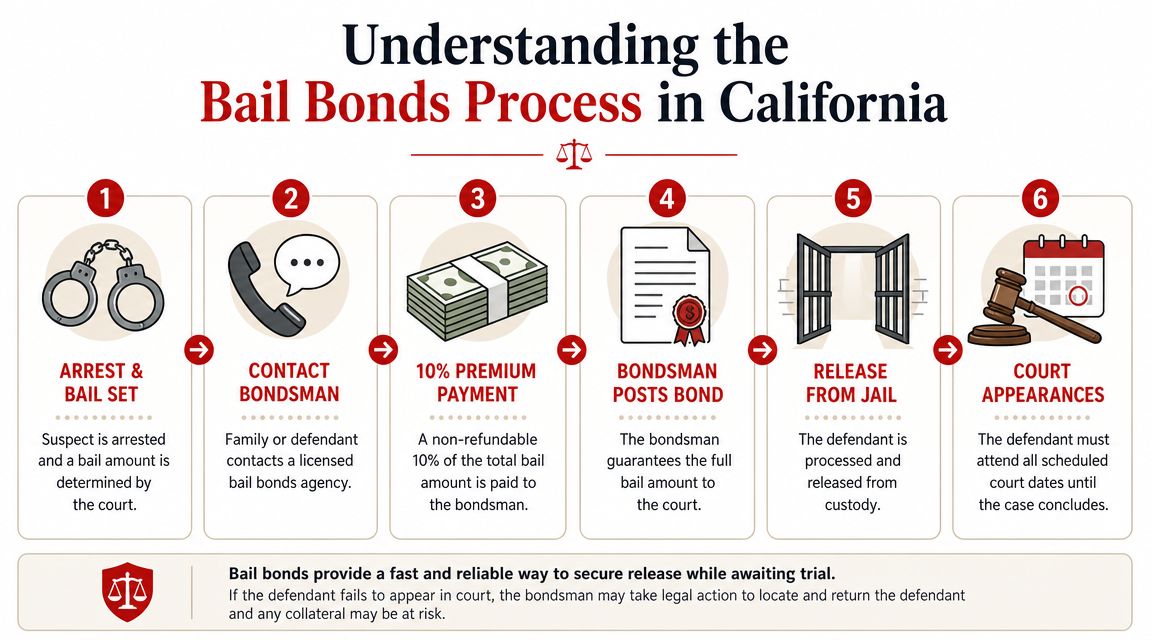
Under California practice, a bail bond is a surety arrangement where the defendant or co-signer pays a nonrefundable premium of up to 10% to a bail agent, and the agent posts the full bond. If the defendant appears in all proceedings, the bond is exonerated, but the premium stays with the agent as compensation for taking on that risk, as explained in this California bail posting overview.
That means the 10% isn’t a down payment on bail. It’s the fee for the service.
A licensed bondsman handles the part most families can’t do themselves:
- Verify the booking and bail
- Prepare the bond agreement
- Review who is signing and what backing is needed
- Post the bond with the jail or court
- Trigger the release process
- Track the case until the bond is exonerated
If you want a quick breakdown of what people look for in an agency, this page on the benefits of hiring a trustworthy bail company like Bada Bing Bail Bonds covers the service side of that decision.
A lot of this can be handled remotely now. That matters at 3 AM. If the paperwork can be signed digitally and the agent already knows the facility’s routine, the file moves sooner and the release line starts sooner.
Here’s a visual walkthrough of the process families usually want to see before they sign anything.
How the process usually moves
The clean version looks like this:
- Arrest and booking. The jail has to intake the person first.
- Bail is confirmed. No guessing. You need the actual amount.
- A co-signer speaks with the agent. The agent checks identity, details, and risk.
- The premium is arranged. That may be paid in full or structured through available terms.
- The bond is posted. This is the moment the release process can begin.
- The defendant gets released once the facility completes its side. That final part belongs to the jail, not the bondsman.
What works is speed and clean information. Full name, correct jail, exact booking details, reachable co-signer, and signed documents. What doesn’t work is waiting for morning because everyone hopes the jail will “just let them out,” or calling multiple people while nobody has the booking name right.
Covering the Cost Co-Signers Collateral and Payment Plans
Cost is where most families freeze. Not because they don’t want to help, but because they’re trying to help without wrecking their own finances.
What a co-signer is really agreeing to
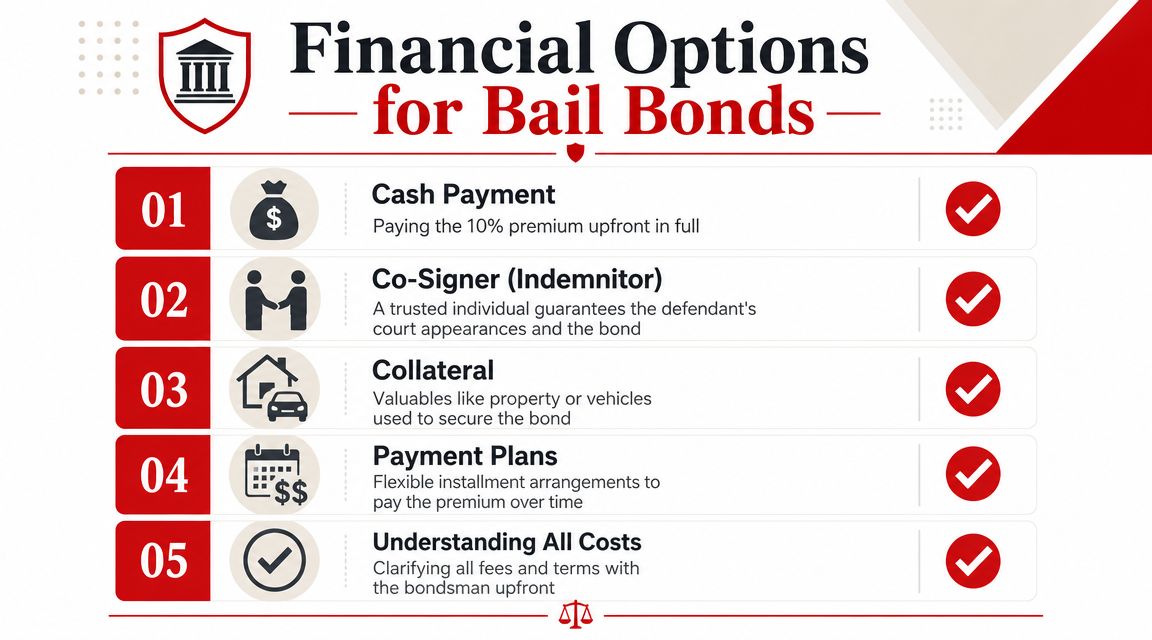
A co-signer, sometimes called an indemnitor, is the person who signs the contract and takes responsibility for the bond obligations. That doesn’t make the co-signer responsible for the criminal charge itself. It does make that person responsible if the defendant disappears, misses court, or breaks the bond terms in a way that creates a loss.
That’s why the right co-signer matters. The strongest co-signer is usually the person who has influence over the defendant and can keep them on track for court.
A smart co-signer asks direct questions:
- What is the exact premium
- Is the premium refundable
- Is collateral required
- What happens if a court date is missed
- How are payment terms documented
California guidance from legal and industry sources reinforces that the 10% premium is nonrefundable, even if the case is dismissed or the defendant is found not guilty. Those sources also note that if the defendant fails to appear, the bondsman may seek recovery from the defendant and any co-signers. For larger bonds, collateral is common, and one California law firm notes that property bonds may require equity equal to roughly 150% of the bail amount in many counties, as discussed in this California bail cost and collateral explanation.
If you’re co-signing, don’t focus only on getting someone out tonight. Focus on whether they’ll make every court date after tonight.
For families trying to spread out the cost, some agencies offer installment arrangements. If that’s the issue in front of you, this page on Ventura County bail bond payment plans shows the kind of option people often ask about.
When collateral enters the picture
Collateral is about risk. The larger the bond, or the shakier the file, the more likely an agency is to require backup beyond the premium.
Collateral can involve things like property equity or other assets. It isn’t punishment. It’s security in case the defendant vanishes and the bond becomes a real loss.
What works for families is being honest up front. If the defendant has prior missed appearances, unstable contact information, or weak local ties, hiding that won’t help. It usually slows approval and creates more friction later. The fastest path is a clean file, a solid co-signer, and realistic expectations about what the agency will need to secure the bond.
From Bond Posted to Jail Release The Real Timeline
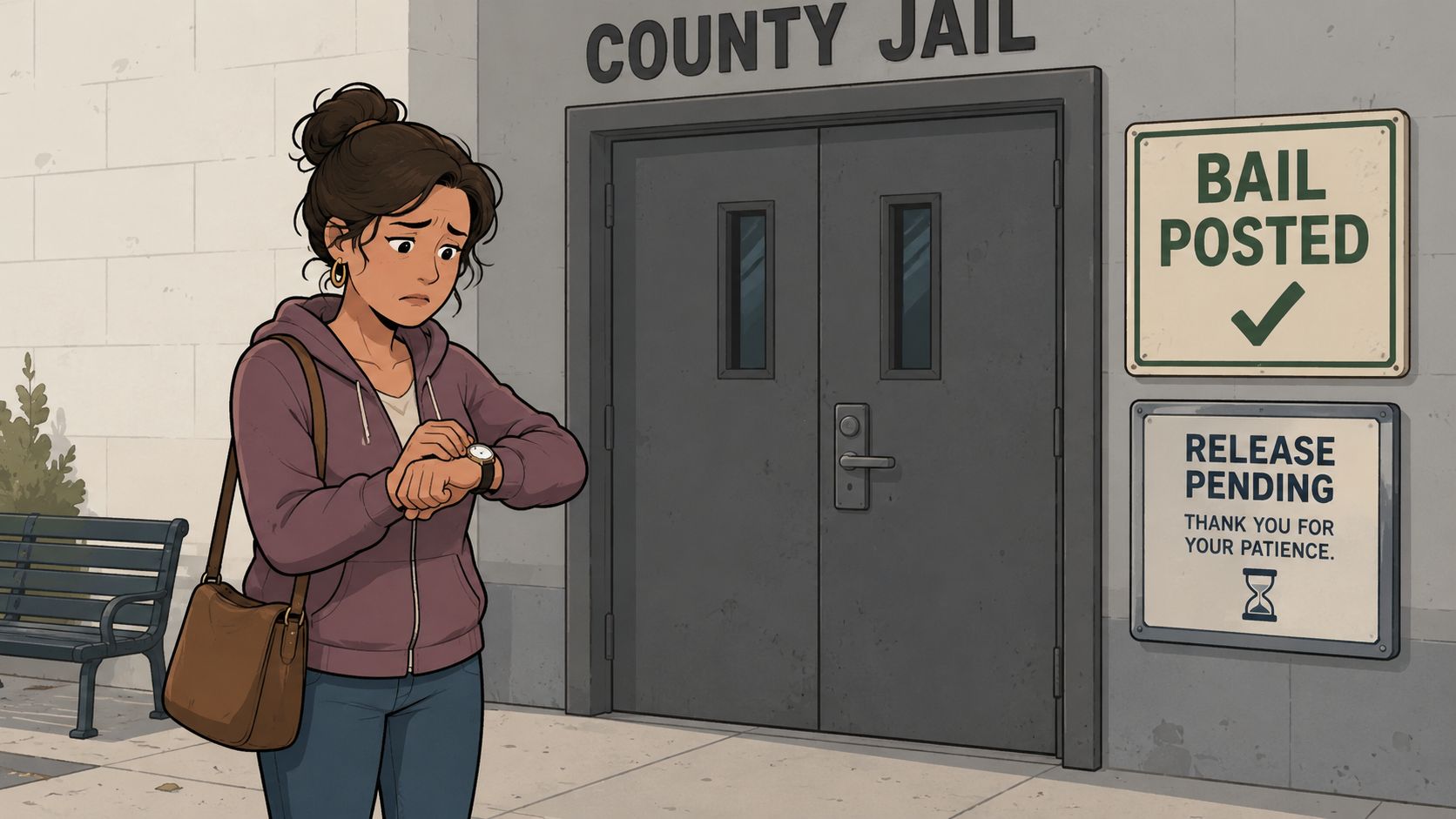
This is the part most websites skate past. Families hear “bond posted” and think release means immediate pickup. It doesn’t.
Why release isn’t instant
A California law firm notes that release can take from 30 minutes to about 4 hours after a bond is secured, while also noting that real facility delays like booking backlogs and staff shift changes can stretch that longer, especially in larger county jails, according to this practical California bail timeline overview.
That range is useful, but families should treat it as a starting point, not a promise. Once the bond is posted, the jail still has work to do. Staff has to process the release, clear internal checks, and move the person through the release queue. That queue may be short in one facility and jammed in another.
In practice, county size matters. A smaller local jail can move faster than a large county facility with a constant intake line and a heavier overnight workload. That’s why release in places like Ventura or Santa Barbara can feel very different from release in a busier Los Angeles County setting.
What helps and what slows things down
What helps:
- Accurate booking details. Wrong spelling or wrong facility wastes time immediately.
- Fast paperwork completion. Delays often start on the family side, not the jail side.
- An agent who knows the local facility. Local process knowledge matters because each jail has its own rhythm.
- Quick response after arrest. The sooner the bond process starts, the sooner the release line can start.
What slows things down:
- Booking backlog
- Shift changes
- Weekend or overnight processing
- Large county jail release queues
- Confusion about holds or case status
If the arrest happened in Ventura County and you’re trying to understand local timing, this page on getting released faster from jail in Oxnard gets into the local release angle.
A good bondsman can move the file fast. The jail still controls the gate.
That’s the trade-off families need to understand. You can control the phone call, the documents, the payment, and the bond posting. You cannot control how fast a crowded facility processes releases once your person gets into that line.
After Release Responsibilities Until the Case Ends
Getting out is the urgent part. Staying out is the important part.
What the defendant has to do
Once released, the defendant has one job above all others. Show up to every court date. If there are conditions from the court or the bond agreement, those also need to be followed closely.
That usually means:
- Keep track of all dates. Don’t rely on memory.
- Stay reachable. If the phone is off and nobody can find the defendant, problems start fast.
- Tell the agent about changes. New address, new number, travel issue, medical issue. Speak up early.
- Do not treat release like the case is over. The case is just moving outside the jail now.
Some agencies provide reminders and check-ins. That isn’t busywork. It helps prevent the single mistake that causes the biggest damage, which is a missed court appearance.
How the bond ends well or badly
The good ending is exoneration. That means the defendant made the required appearances and the court releases the bond obligation at the end of the case. If collateral was posted, it can then be returned once the bond is fully cleared.
The bad ending is forfeiture. That happens if the defendant misses court and the bond is put at risk. At that point, the co-signer’s exposure becomes very real. The problem is no longer theoretical. It becomes a money problem for everyone who signed.
The bond works only if the defendant treats every court date like it’s non-negotiable.
Families sometimes focus so hard on release night that they don’t talk through the next months. They should. Before the defendant walks out, everyone needs the same understanding about transportation, reminders, contact information, and who is responsible for keeping the court schedule straight.
What to Do Right Now Your First Call for Help
If you need to move tonight, keep it simple. Have the defendant’s full name ready, the city of arrest, and any booking details you have. If you don’t know the exact jail, say that immediately so the search starts with the right information.
Then ask the questions that matter:
- Has bail been set
- What is the exact premium
- Who needs to sign
- Is collateral likely
- What’s the realistic release window for this facility
A local, active agency is beneficial because the primary issue usually isn’t the definition of bail. It’s whether someone can verify the booking, prepare the paperwork quickly, and deal with the facility that holds your loved one. If you’re ready to move, you can start the application and get the intake details in one place.
Bada Bing Bail Bonds is one option in Southern California for families who need a licensed agent to verify custody, explain the premium, discuss payment plans or co-signer requirements, and coordinate with jails in Ventura, Santa Barbara, Los Angeles, and nearby counties.
If you need clear answers right now, call Bada Bing Bail Bonds. A licensed agent can verify where your loved one is being held, explain the bail amount in plain English, and help you start the release process without guesswork.