It’s late. Your phone rings. Someone you care about says they’ve been arrested in Ventura County, or maybe Oxnard, Camarillo, Thousand Oaks, Port Hueneme, Santa Paula, Moorpark, Fillmore, Ojai, or Santa Barbara. You’re half awake, your heart is pounding, and you need answers fast.
Start with this. Don’t panic, don’t guess, and don’t hand over money to the first person who answers the phone without understanding the process. Ventura Bail Bonds FAQ: Common Questions Answered is really about one thing. What you need to do right now to get a person released and avoid making the situation worse.
Table of Contents
- Your First Call After an Arrest
- How the Bail Process Works in Ventura County
- Understanding Bail Costs and Payment Plans
- How Long Does It Take to Get Someone Out of Jail
- Bail for Specific Charges Warrants and Probation
- Your Responsibilities After Posting Bail
- Why Choose Bada Bing for Ventura County Bail Bonds
Your First Call After an Arrest
The first call matters because the first hour usually decides whether this becomes a controlled process or a mess. Families often call in a panic and start with the wrong question. They ask, “How much is it?” before they even confirm where the person is, whether booking is complete, or whether bail is available yet.
Get the basics in order first. You need the person’s full legal name, date of birth if you have it, where they were arrested, and what agency picked them up. If the arrest happened in Oxnard, ask whether they’re still at the local department or already being moved. If you need help understanding that handoff, read this guide on bailing someone out in Oxnard before jail transfer.
What to ask right away
Use this short checklist and keep it simple:
- Confirm location: Find out where the person is being held right now.
- Ask about booking status: If booking isn’t finished, release can’t happen yet.
- Find out the charge type: Some charges move cleanly through the system. Others create delays.
- Check for holds or warrants: A hold can stop release even when family is ready to pay.
- Keep your phone close: Missed calls slow everything down.
Practical rule: Don’t argue facts of the case over the phone with jail staff or a bail agent. Focus on release first.
What not to do
Don’t start calling ten different people and repeating different details. That creates confusion. Don’t promise the arrested person you can have them out immediately either. Fast bail bonds Ventura service means the process starts immediately. It doesn’t mean the jail skips booking, classification, or release steps.
Stay calm, take notes, and move in order. That’s how families get through this.
How the Bail Process Works in Ventura County
Ventura County has a real system behind it. This isn’t random. The county’s bail process is centered at the Pre-Trial Detention Facility, 800 South Victoria Avenue, Ventura, and the sheriff states that bail can be posted there by cash, cashier’s check, bail bond, or credit/debit card. The sheriff also notes that the facility maintains a list of 76 bail bond providers, which tells you the local process is organized and established, not improvised in the middle of the night. You can review that directly on the Ventura County Sheriff posting bail page.
A visual helps if your head is spinning. This is the basic flow.
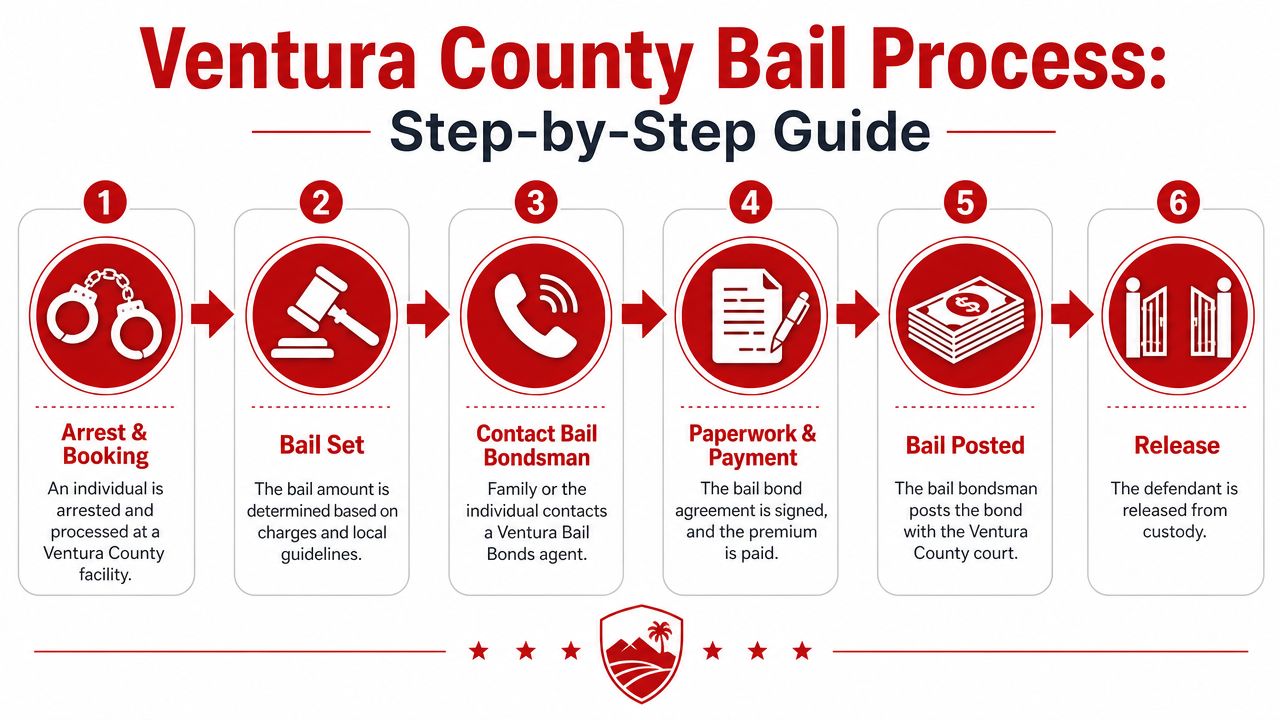
The six steps that actually happen
-
Arrest and booking
Law enforcement takes the person into custody and begins processing. Personal information is recorded, property is logged, and the jail decides where the person will be housed. -
Bail is set
Bail may come from the schedule tied to the charge, or the case may need a court appearance before release terms are final. Until that amount or status is clear, nobody can meaningfully quote the next step. -
A family member or friend arranges release
Often, Ventura County bail bonds become an important option. Instead of posting the full bail amount directly with the jail, a bail bond can be used if the case qualifies. -
Paperwork gets signed
The indemnitor, usually the co-signer, signs the bond agreement and takes on responsibilities tied to the defendant’s appearance in court.
After that, the bond gets posted, the jail processes the release, and then everyone waits on the jail’s internal timeline.
Where a bondsman fits in
A bondsman doesn’t decide the bail amount and doesn’t control the jail’s release desk. What a bondsman does is verify the booking, explain what release path is available, complete the bond paperwork, and post the bond once the case is ready.
If you want a local walk-through of bail bonds Ventura procedure from start to finish, this page on how bail works in Ventura County is worth reading.
Later in the process, this video can help you picture what families are dealing with when they’re trying to move things along.
The smart move is to treat release like a sequence. Confirm custody, confirm bail status, sign correctly, post correctly, then wait for the jail to do its part.
Understanding Bail Costs and Payment Plans
This is the part families care about most, and for good reason. They want to know what they have to come up with tonight.
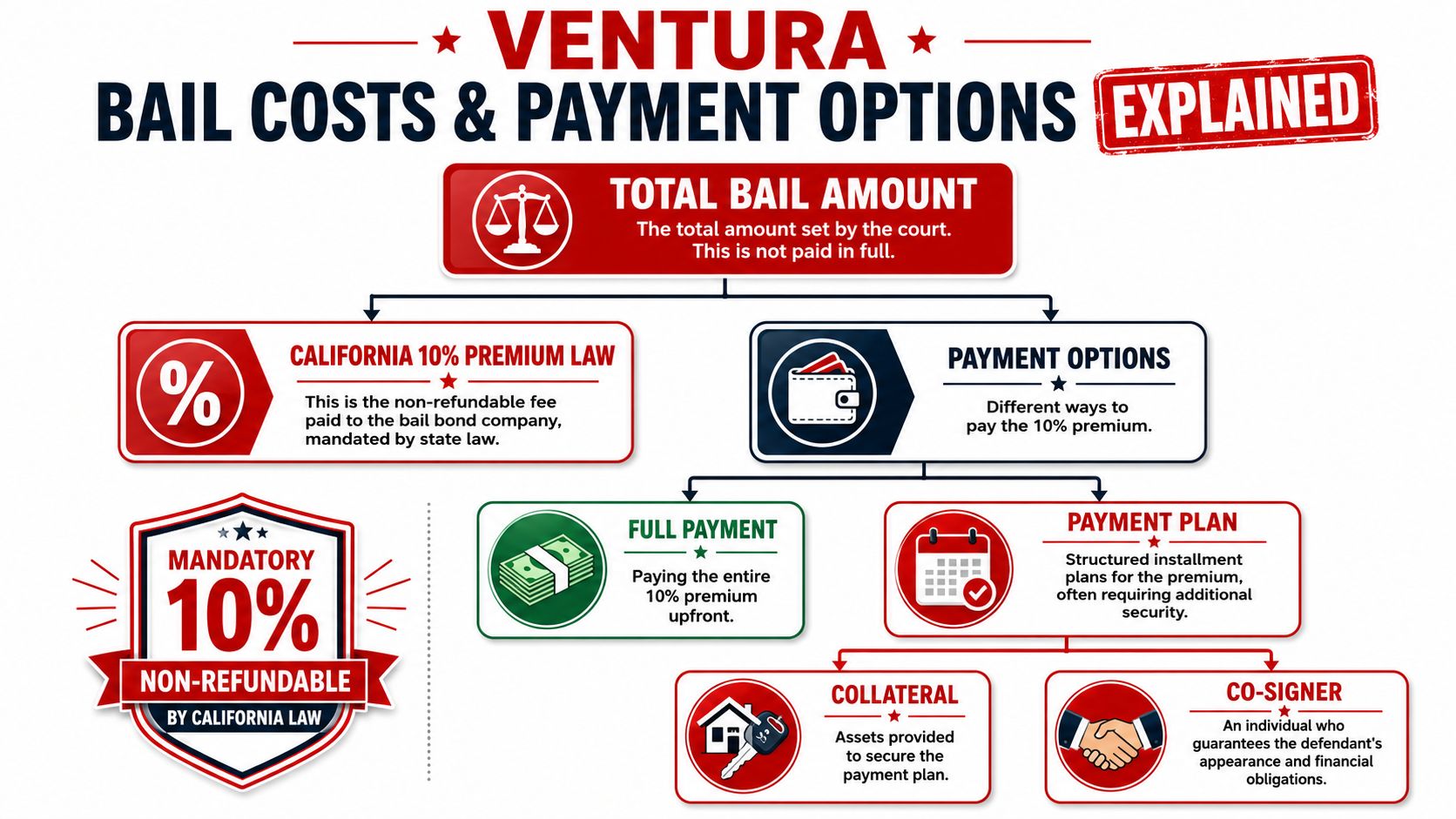
In California, a bail bond is a surety bond, and the standard premium is 10% of the total bail amount. For example, if bail is $10,000, the typical premium paid to the bail agent is $1,000, not the full bail amount. The California Department of Insurance also states that this premium is nonrefundable even if charges are dropped, and that only actual, necessary, and reasonable transaction expenses can be added because the rate is filed and regulated. You can review those rules on the California Department of Insurance bail bond consumer page.
What families usually misunderstand
The premium is not a deposit you get back. It’s the fee for the bond service. That point needs to be clear before you sign anything.
The next issue is affordability. A lot of families can’t comfortably produce even the premium in one shot, especially at night, on a weekend, or after rent has already cleared. That’s why payment plans, co-signers, and collateral matter so much in real Ventura County Jail bail bonds cases.
The three practical ways families close the gap
| Option | What it means | When it usually matters |
|---|---|---|
| Pay in full | The premium is handled upfront | Cleaner, faster paperwork when funds are available |
| Use a payment plan | The premium is paid over time under agreed terms | Common when family has income but limited immediate cash |
| Add security | A co-signer or collateral supports the bond | More likely when risk is higher or the balance is larger |
How co-signers are evaluated
A co-signer is not just a name on paper. The co-signer is the person taking responsibility for making sure the defendant appears in court and follows the bond agreement. Good co-signers usually have stable contact information, steady ties to the community, and the willingness to stay involved after release.
If you’re considering structured payments, this page on bail bond payment options is a practical starting point.
When collateral comes up
Collateral usually enters the conversation when the bond is larger, the payment plan carries more risk, or the facts of the case make the bond less secure. That can include property interests, vehicle titles, or other assets depending on the file and the underwriting decision.
Important distinction: Premium and collateral are not the same thing. The premium is the service fee. Collateral is security tied to the bond risk.
One more thing families often don’t hear clearly. Not every bond gets the same underwriting response. Two people can have similar bail amounts but very different release paperwork because risk isn’t only about the number. It also depends on history, ties to the area, prior failures to appear, and whether the case suggests future court compliance.
For readers comparing bail bonds Oxnard, Ventura, or Camarillo options, the useful question isn’t “Who answers fastest?” It’s “Who explains the payment structure clearly, without hiding the obligations?”
How Long Does It Take to Get Someone Out of Jail
People often get frustrated. They hear “fast bail bonds Ventura” and assume the person will walk out immediately. That’s not how it works.
A fast bail process means the work starts right away. It does not mean the jail stops what it’s doing and moves one file to the front. The biggest delays usually happen after the bond is posted, not before. Booking must be complete. Internal jail checks must clear. Staff has to process the release.
What actually slows release
Some delays are routine. Shift changes, busy intake periods, and crowded release queues all affect timing. If the arrest happened late at night, during a weekend, or during a surge in bookings, the wait can feel longer because jail staff are handling multiple priorities at once.
Specific charges can also complicate the timeline. A DUI may involve issues that have to be cleared before release. A domestic violence arrest may trigger added review or release conditions. A probation issue can stop the process until the hold is sorted out.
What you can control
You can’t control the jail’s internal pace, but you can control the paperwork side. That means:
- Give accurate information: Wrong names and wrong dates of birth waste time.
- Answer calls immediately: If an agent or office needs one missing signature or document, delays stack up fast.
- Don’t disappear after signing: The jail may still be processing while the bond file needs follow-up.
- Prepare for pickup: Once release happens, someone needs to be reachable.
If you want a local explanation focused on timing, read how long release from Ventura County Jail can take.
Most people blame the bond when the real delay is still inside the jail.
That’s why local experience matters. Someone familiar with Ventura, Oxnard, and Camarillo court patterns usually knows where delays tend to happen and how to keep the paperwork from becoming one more problem.
Bail for Specific Charges Warrants and Probation
Not every arrest leads to the same release path. Some cases are straightforward. Others need extra review before anyone can say whether the person can walk out tonight.
The mistake families make is assuming every case works like a simple scheduled bail matter. It doesn’t. Charges, warrants, and probation status can all change the release picture.
DUI and domestic violence cases
A DUI arrest may look simple at first, but there can be timing issues tied to the booking process and jail clearance. Families hear “it’s just a DUI” and think that means immediate release. Sometimes it does. Sometimes it doesn’t.
Domestic violence cases often make people nervous because emotions are high and communication between the parties may become part of the problem. If the court or jail imposes conditions, those conditions matter. Ignoring them after release is how a manageable case turns into a worse one.
Warrants and no bond issues
If there’s an outstanding warrant, the warrant has to be understood before anyone promises a release plan. Some warrants are bail-based. Others aren’t. Some require the person to be seen by the court first.
If you’re dealing with that situation, read what a no bond warrant means. It helps families understand why the answer isn’t always “pay and go.”
Probation violations and co-signer caution
Probation matters because the court may treat the arrest as more than just the new allegation. A probation issue can trigger a hold, a hearing requirement, or tighter release terms. That changes the bond conversation immediately.
For co-signers, sound judgment is essential. If the defendant has a record of missing court, ignoring conditions, or disappearing when pressure hits, don’t sign out of guilt. Sign only if you’re ready to stay involved, keep in contact, and take the responsibility seriously.
If the case includes a warrant or probation problem, ask one question first. “Is this person actually bondable right now?”
That question saves time, money, and false hope.
Your Responsibilities After Posting Bail
Getting someone out is only the first half of the job. After release, the defendant and the co-signer both have responsibilities, and those responsibilities are not optional.
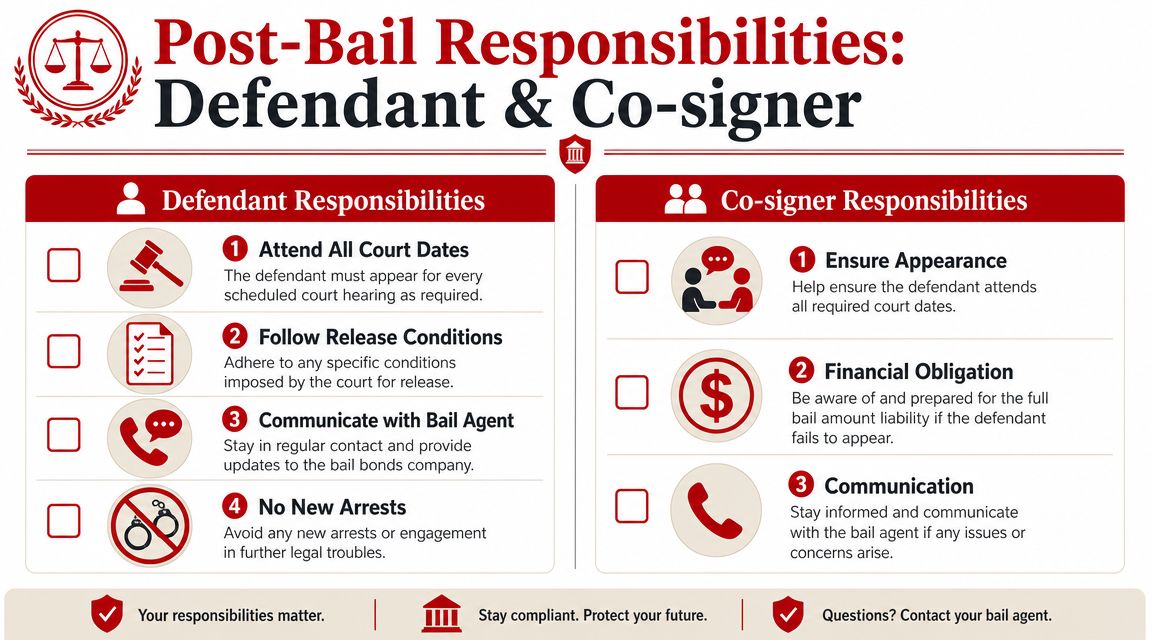
If the defendant misses court, picks up a new arrest, or vanishes, the legal and financial consequences fall fast. Families usually focus so hard on getting out of jail that they forget the bond remains active until the case is resolved and the bond is exonerated.
What the defendant has to do
The defendant’s role is simple to say and easy to mess up:
- Appear in court: Every hearing matters, even the short ones.
- Follow release conditions: If the court sets rules, follow them exactly.
- Stay reachable: Missed calls create unnecessary risk.
- Avoid new trouble: New arrests can wreck the existing bond arrangement.
What the co-signer is agreeing to
The co-signer is not doing a favor in the abstract. The co-signer is making a real commitment.
That means staying in contact with the defendant, paying attention to court dates, and speaking up early if something starts going wrong. If the defendant is slipping, hiding, using again, or talking about not going to court, silence is the worst move.
Privacy and working with the lawyer
Families often worry that calling a bail agent somehow replaces the need for a defense lawyer. It doesn’t. These are different roles. The bail side handles release. The defense lawyer handles the criminal case.
A good bail process also respects privacy. Sensitive family details, employment issues, and case facts should be handled carefully and only as needed for the bond file. One practical option families use in Ventura County is Bada Bing Bail Bonds, which handles release coordination, payment plans, co-signer arrangements, and follow-up communication tied to compliance.
Bottom line: The easiest bond to manage is the one where the defendant treats every court date like it’s mandatory, because it is.
Why Choose Bada Bing for Ventura County Bail Bonds
When a family calls about Ventura County bail bonds, they usually need three things. A straight answer, a real release path, and someone who won’t waste time. That’s what matters in Ventura, Oxnard, Camarillo, Port Hueneme, Thousand Oaks, Santa Paula, Moorpark, Fillmore, Ojai, and nearby Santa Barbara cases.
You don’t need jargon at two in the morning. You need someone who can verify the booking, tell you whether the person is bondable, explain the paperwork in plain English, and keep you updated while the jail works through release. If you’re looking for local service details, start with the Ventura bail bonds page.
For most families, the right choice comes down to a few basics:
- Clear pricing: You should understand the premium, the payment plan if there is one, and any security requirement before you sign.
- Local familiarity: Ventura County Jail bail bonds move more smoothly when the agent knows the local process.
- Responsiveness: Nights, weekends, and holidays are when people need help most.
- Calm communication: Panic spreads fast. Clear updates matter.
This process is manageable when you handle it in the right order. Confirm where the person is. Confirm whether bail is available. Get the paperwork done correctly. Stay reachable. Then make sure the defendant treats release like a responsibility, not a reset button.
If you need help right now, contact Bada Bing Bail Bonds and be ready with the arrested person’s full name, where they were taken, and any booking details you have. A clear call gets results faster than a panicked one.