The call usually comes late. Someone says they’ve been arrested in Ventura, Oxnard, Camarillo, or Thousand Oaks. You’re half awake, trying to catch the name of the jail, the charge, and whether they can get out tonight.
At that point, nobody cares about textbook definitions. You want to know how does bail bond work, what it costs, what you need to sign, and how fast your person can get out. That’s the key question families ask when they start searching for bail bonds Thousand Oaks, bail bonds near me Ventura, or 24 hour bail bonds Ventura County.
This process feels personal because it is. But it’s also common. The commercial bail industry wrote an estimated $15 billion in bail bonds in 2019, with about 15,000 bail bond agents helping release more than 2 million people each year in the U.S., according to the Center for American Progress fact sheet on commercial bail. So if you’re dealing with this right now, you’re not the only family trying to sort it out in the middle of the night.
Table of Contents
- An Arrest in Ventura County What Happens Now
- Bail vs Bail Bonds What Is the Difference
- The Bail Bond Process Step-by-Step in Ventura
- Understanding the Costs The 10 Percent Rule in California
- Your Responsibilities After Release From Custody
- Ventura County Bail Bond FAQs
- How long does release take in Ventura County
- Can someone in Oxnard or Thousand Oaks still use a Ventura-area bondsman
- Do I always need a bail bond to get someone out
- What information should I have ready before calling
- What counts as collateral
- Can I arrange a bond if someone has a warrant
- Where can I find more Ventura County-specific answers
An Arrest in Ventura County What Happens Now
A Ventura County arrest usually starts with confusion. A person may be taken to a city jail for booking first, or they may end up at the main county facility depending on the agency and the charge. Families in Ventura, Oxnard, Port Hueneme, Santa Paula, Moorpark, Fillmore, Ojai, Thousand Oaks, and nearby Santa Barbara often get only bits of information at the beginning.
The first thing to understand is simple. Release usually does not happen the minute you make a call. There’s booking, jail processing, charge entry, bail review, paperwork, and release procedures. If you need a practical breakdown of the wait, this guide on how long Ventura County jail release can take is worth reading while you’re gathering information.
What you should do first
Start with the basics. If you have them, write these down before you call anyone:
- Full legal name of the person in custody
- Date of birth if you know it
- Where they were arrested such as Ventura, Oxnard, or Thousand Oaks
- Possible charge if they told you
- Booking number if the jail or arrested person gave it to you
If you don’t have all of that, don’t freeze. A local agent handling Ventura County bail bonds can often help narrow things down with the information you do have.
Practical rule: The faster you get the correct jail location and booking details, the faster the bond process moves.
What doesn’t help
Families lose time doing three things over and over. They call too many different jails without writing anything down, they assume release is instant once money changes hands, or they wait for morning because they think nothing can happen overnight. That’s why people look for 24 hour bail bonds Ventura County in the first place. Arrests don’t run on office hours.
If the person may qualify for release without using a bond at all, that matters too. In some cases, a judge may allow other forms of release, and in Arkansas guidance that reflects a broader practical point, legal guidance notes people may seek a bail reduction hearing or own recognizance release instead of paying a bondsman, as explained in this overview of release options and bail reduction. The local lesson is that the smartest question isn’t always “how do I buy a bond.” Sometimes it’s “do we need one at all?”
Bail vs Bail Bonds What Is the Difference
Understanding the difference between bail and a bail bond matters when a family is trying to get someone out of custody tonight in Ventura County.
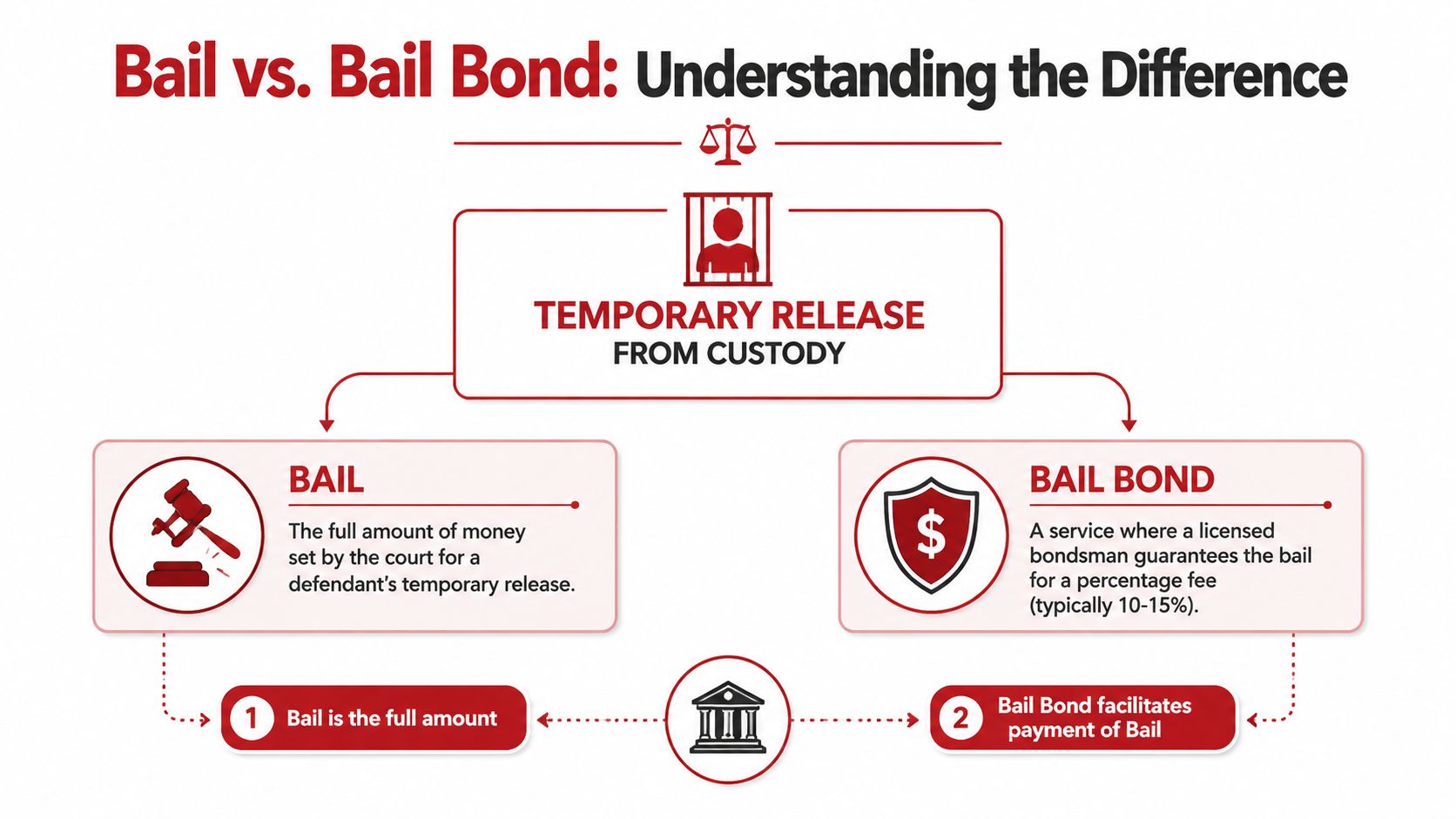
Bail is the amount the court requires for release. A bail bond is what you use when paying that full amount to the court is not realistic.
The plain-English version
With cash bail, the family pays the full bail amount directly to the court. With a bail bond, a licensed bail agent posts the bond so the person can be released without the family bringing the entire amount in cash.
In practice, that difference is what matters at 2 AM. A family in Oxnard or Ventura usually is not comparing legal definitions. They are trying to answer one hard question fast. Do we have to come up with the full bail amount tonight, or is there another way to get them out?
A bail bond is a surety contract. The bondsman guarantees the full bail amount to the court. The defendant or indemnitor pays a nonrefundable premium and, in some cases, signs over collateral depending on the risk, the charge, and the size of the bail. If the person shows up to court as required, the bond is exonerated. The premium is still the cost of the service.
Quick comparison
| Option | Who gets paid | What you pay upfront | What happens if the defendant appears |
|---|---|---|---|
| Cash bail | The court | The full bail amount | The case moves forward under the court’s rules |
| Bail bond | The bail bond company | The premium and possibly collateral | The bond is exonerated, but the premium is still kept |
This is why families needing bail bonds in Oxnard or Thousand Oaks are focused on a practical solution, not legal theory.
One more point families in Ventura County often miss. Paying cash bail ties up a large amount of money while the case is pending. Using a bond costs less upfront, but that premium is not returned. The right choice depends on how much cash is available, how quickly release needs to happen, and whether the family is comfortable taking on co-signer responsibility.
For a more detailed breakdown of the difference between cash bail and bond, this local guide explains how the choice usually plays out. If you want a Ventura-specific service overview, this page on Ventura bail bonds services covers the local side.
The Bail Bond Process Step-by-Step in Ventura
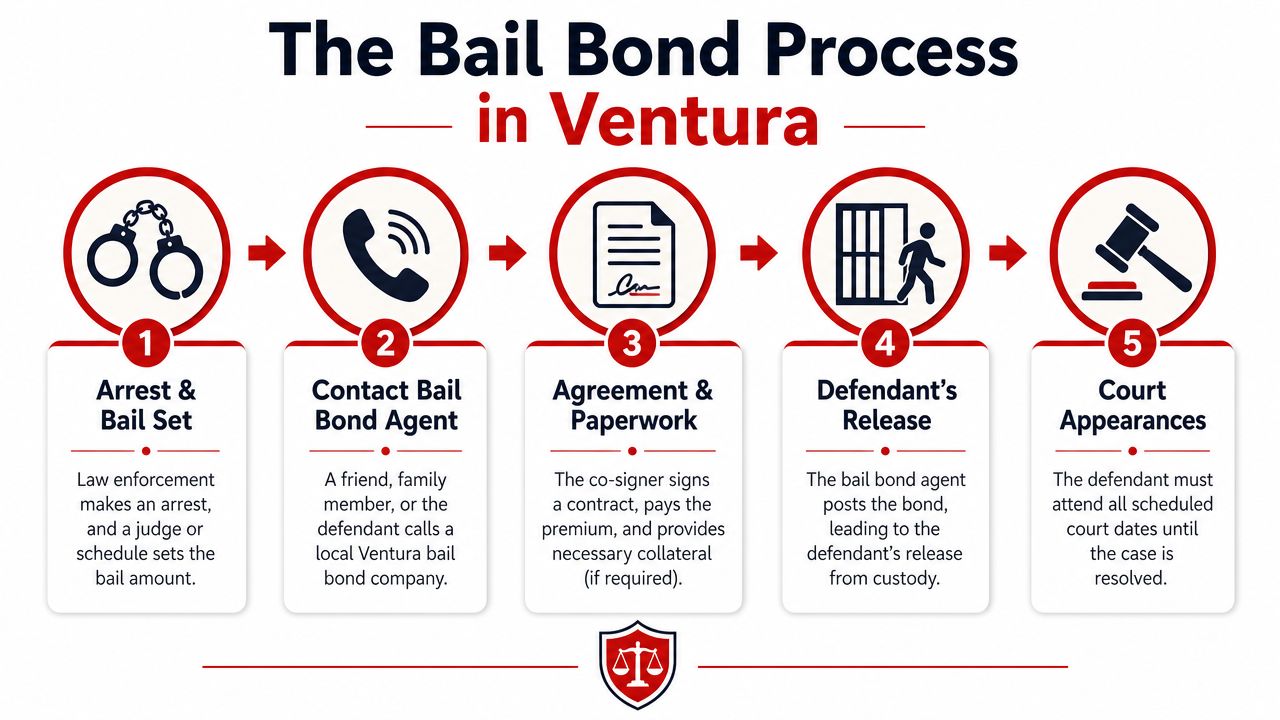
It usually starts the same way. The phone rings late, nobody has clear information, and the family wants one answer: how do we get them out tonight?
The first job is confirming where the person is booked and whether bail has been set. In Ventura County, time gets wasted when families have the wrong spelling, a nickname instead of the legal name, or the wrong city listed for the arrest. Ventura, Oxnard, Thousand Oaks, Camarillo, and Port Hueneme cases can all follow slightly different booking paths before the person is ready for release.
What you need before you call
Have the basics ready. Even partial information helps, but accurate information helps more.
A solid first call should cover:
-
Who is in custody
Full legal name is best. Date of birth helps. Booking number helps even more. -
Where the arrest happened
The arrest location often points to the right agency and booking process. -
What charge may be involved
Even rough information can help determine whether bail is already scheduled or whether a court appearance may come first. -
Who will sign for the bond
The co-signer, also called the indemnitor, is the person taking financial responsibility for the bond. -
How you plan to handle payment
If you need time payments or another arrangement, ask early about bail bond payment options in Ventura County so there is no delay once the bond is approved.
Here’s a short walkthrough of the general process in video form:
What happens after the paperwork is signed
Once the bond company confirms the booking and bail amount, the case moves into paperwork, identification, signatures, and payment. If collateral is required, that gets documented at the same time. Then the bond is posted with the jail.
Posting the bond does not mean immediate release.
The jail still has to run its own release process. Staff may need to clear holds, finish internal checks, complete release paperwork, and move the person through the custody line. In Ventura County, that delay is normal. A bond can be posted quickly, but the release still depends on how fast the jail processes that file.
Fast bond posting and fast release are not the same thing.
Where delays usually happen in Ventura County
This is the part families do not see from the outside. The delay is often not the bond itself. It is the jail process behind it.
Common slowdowns include incomplete booking, a transfer between facilities, a probation or immigration hold, missing co-signer documents, or simple shift-change timing at the jail. That is why local experience matters in places like Ventura, Oxnard, Camarillo, and Thousand Oaks. An agent who works these facilities regularly usually knows what to check first and what questions to ask before the family loses another hour.
A few practical steps make the process cleaner:
- Answer your phone. If one signature, ID, or document is missing, the file can stall.
- Use the exact legal name used at booking. Shortcuts create mistakes.
- Ask where release will happen. Families often wait at the wrong location.
- Be realistic about timing. Night bookings, transfers, and jail workload all affect release.
One local option families use is Bada Bing Bail Bonds, which handles booking verification, paperwork, and bond posting for Ventura-area cases. That is the kind of local, practical help families should look for from any licensed agency that regularly works Ventura County custody and release procedures.
Understanding the Costs The 10 Percent Rule in California
This is the part families worry about most, and for good reason. Nobody likes making financial decisions under stress.
In the U.S., a surety bail bond is typically sold for a 10% fee of the total bail amount. That premium is generally nonrefundable, and the bail bond company promises the court it will cover the full bail amount if the defendant fails to appear, according to the Bureau of Justice Statistics overview of bail and surety bonds.
What the premium means
That 10% premium is the fee for the bond service. It is not a down payment on money you get back later from the bondsman if the defendant goes to court.
Families often get tripped up here. They hear “bail” and assume every dollar involved works like refundable court money. A surety bond doesn’t work that way. The company takes on the risk of guaranteeing the full amount to the court. The premium is what pays for that risk.
You may also hear about two other terms:
- Co-signer means the person financially backing the bond agreement.
- Collateral means property or another asset used to secure the bond if the risk is larger or the circumstances require it.
If the bond is high or the case has added risk, the company may ask for collateral in addition to the premium. That doesn’t happen in every case, but families should be ready for the possibility.
Cost examples at the standard premium
Here’s a simple table using the standard premium model.
| Total Bail Amount Set by Court | Your Bail Bond Premium (10%) |
|---|---|
| $5,000 | $500 |
| $10,000 | $1,000 |
| $20,000 | $2,000 |
| $50,000 | $5,000 |
That table is just math based on the standard premium. It doesn’t cover collateral, payment arrangements, or case-specific underwriting decisions.
Ask two direct questions before you sign: what am I paying today, and what am I still responsible for if the defendant misses court?
For families trying to manage the upfront cost, payment arrangements may be available depending on the bond and the co-signer’s situation. If that’s the issue, review the available bail bond payment options before assuming you have only one way to handle the premium.
Your Responsibilities After Release From Custody
Release is not the finish line. In Ventura County, families get a lot of relief when the jail door opens, then run into the next problem a day later when nobody is sure about the first court date, the paperwork, or who the bond company needs to hear from.
The bond stays in place until the case is finished or the court releases the obligation. Until then, the defendant and the co-signer both have duties, and missed details can turn into a warrant or a money problem fast.
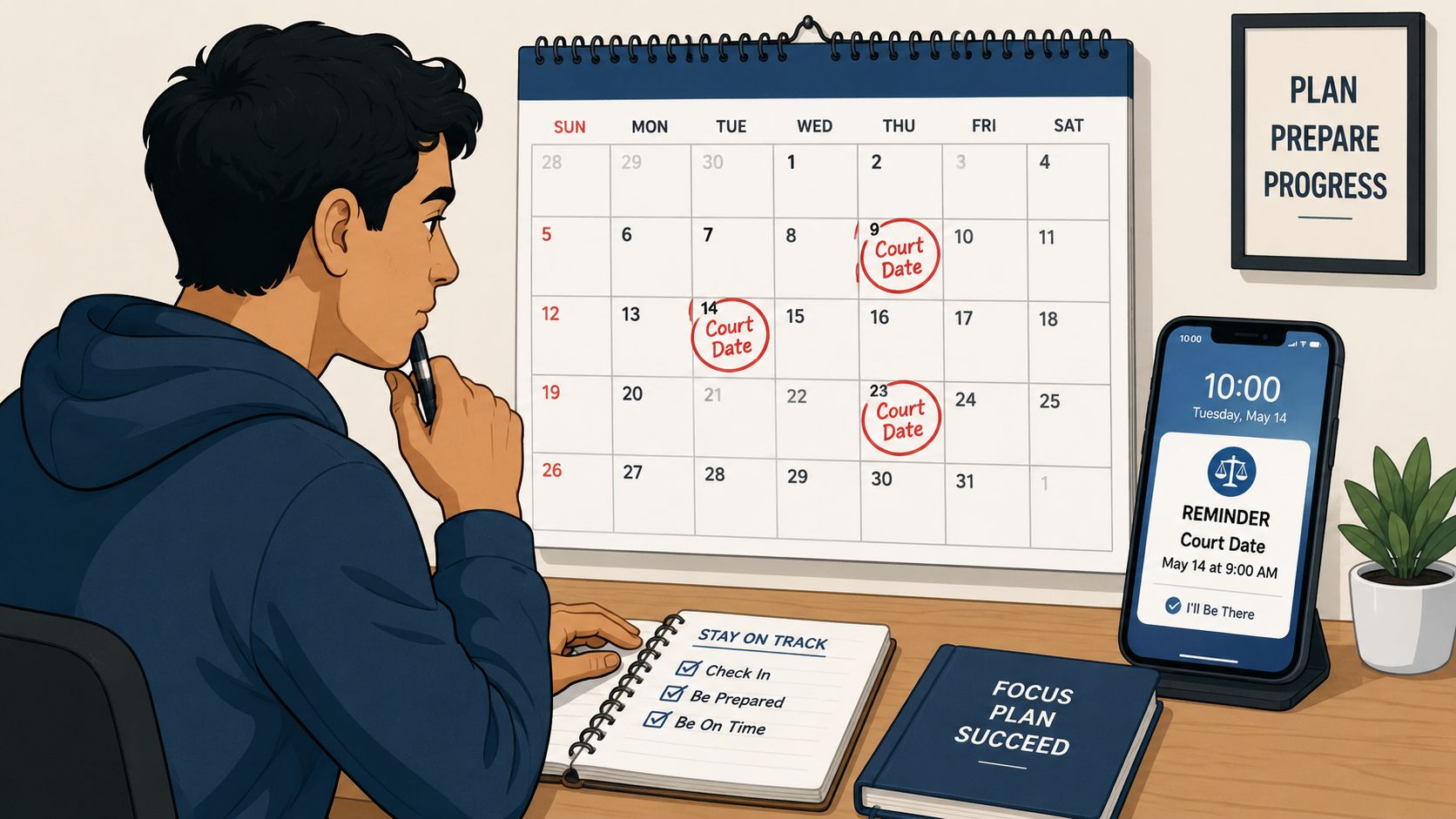
What the defendant has to do
The job after release is simple to say and serious in practice. Show up to every court date, follow every release condition, and stay reachable.
In Ventura, Oxnard, and nearby courts, people get into trouble when they rely on memory, lose paperwork, or assume a date will get pushed without notice. Do not guess. Write down every appearance, keep the court paperwork in one place, and set phone reminders the same day you get out.
If the defendant appears as required, the bond stays in good standing while the case moves through court. If the defendant misses court, the court can forfeit the bond, issue a warrant, and put pressure on everyone who signed the agreement.
That is where families get hit twice. The defendant now has a court problem, and the co-signer may have financial exposure under the bond contract.
What the co-signer is agreeing to
A co-signer is backing more than a release. A co-signer is taking responsibility for helping that person stay compliant until the bond is exonerated.
That usually means the co-signer needs to:
- Track every court date and confirm the defendant has the same information
- Answer calls or messages from the bond office if a court date changes or a problem comes up
- Keep tabs on the defendant’s location and contact information
- Protect any collateral listed in the agreement and understand when it could be at risk
If you are stepping into that role, read this plain-English guide on how co-signing a bail bond works before you sign.
One practical point matters here. If the defendant changes phones, moves, or starts avoiding calls, the co-signer should deal with that early, not after a missed hearing. Waiting usually makes the outcome worse.
When the case ends and the bond is exonerated, documented collateral should be returned under the agreement. The premium does not come back. That was the fee paid for the bond service, not a deposit held by the court.
Ventura County Bail Bond FAQs
How long does release take in Ventura County
There’s no honest one-size-fits-all answer. Release timing depends on booking status, the facility, staffing, holds, and how backed up the jail is. Main county facilities and city facilities don’t always move at the same pace.
Can someone in Oxnard or Thousand Oaks still use a Ventura-area bondsman
Yes, if the bondsman serves that jail and county. Families searching for bail bonds Oxnard or bail bonds Thousand Oaks are often dealing with the same county-wide system, even if the arrest started with a local police department.
Do I always need a bail bond to get someone out
No. In some cases, the person may qualify for another form of release, or a lawyer may seek a bail reduction or release on recognizance. Whether that applies depends on the case and the court.
What information should I have ready before calling
Keep this checklist next to you:
- Defendant’s legal name
- Date of birth if known
- Jail or arresting agency
- Booking number if available
- Charge if known
- Your own ID and contact information
- A plan for who will co-sign
What counts as collateral
It depends on the bond and the agency’s underwriting. Property, vehicles, or other assets may be considered in some cases. Not every bond requires collateral.
Can I arrange a bond if someone has a warrant
Sometimes that requires extra planning. A warrant case can involve surrender timing, court handling, and whether bail is already set. Don’t assume it works like a standard post-arrest jail release.
Where can I find more Ventura County-specific answers
Use a local question-and-answer resource that focuses on county practice, not generic national content. This Ventura County bail FAQ page is a good place to start if you need answers tied to local jails and courts.
If you need help right now, Bada Bing Bail Bonds handles Ventura County arrests around the clock, explains the bond process in plain English, and helps families move from the first phone call to release without guessing through the paperwork.