If you’re reading this after a late-night arrest, your head is probably spinning. You want one answer first. Where are they, and how fast can they get out of the Santa Barbara County Jail?
Take a breath. Most families lose time by guessing, calling the wrong place, or assuming bail is the only thing holding release up. It often isn’t. In Santa Barbara County, delays can start with booking, classification, medical screening, detox concerns, mental health review, and simple jail processing. If you understand that early, you make better decisions and stop getting blindsided.
This is the straight version. No fluff. No legal lecture. Just what to do next, what can slow release, and how to stay useful instead of panicked.
Table of Contents
- That First Call from Jail What Happens Now
- Santa Barbara County Jail Locations and Inmate Search
- The Booking Process What to Expect After Arrest
- Understanding Bail Schedules and Your Release Options
- How to Visit Mail Money and Communicate
- Securing Release with 24 Hour Bail Bonds
- After the Release Pickup and Next Steps
That First Call from Jail What Happens Now
The call usually sounds the same. They’re scared, talking fast, and not making much sense. Maybe they say they were arrested in Santa Barbara, Goleta, Isla Vista, Santa Maria, or Carpinteria. Maybe they swear they’ll be out in an hour. Don’t count on that.
Your job in the first few minutes is simple. Get their full legal name, date of birth if you can, the arresting agency if they know it, and any clue about the charge. Then stop arguing facts over the phone. Arguing doesn’t help. Getting verified information does.

What to do in the first hour
Start with this order:
- Confirm where they are using an actual custody search, not social media or a cousin’s guess. If you need help with that step, use this guide on how to find someone arrested.
- Wait for booking to catch up if they were just arrested. A person can be in custody before the online system reflects it.
- Ask about medical issues immediately if they use medication, were intoxicated, have withdrawal risk, or have a mental health diagnosis.
- Get ready for paperwork, because the fastest release cases still require clean information and a reachable co-signer.
Practical rule: The first bad mistake families make is assuming silence means nothing is happening. Inside the jail, a lot may be happening before bail is even the main issue.
What matters most right now
You do not need to solve the criminal case tonight. You need to solve the custody problem first.
That means finding the correct facility, confirming whether booking is complete, learning whether bail is already set, and understanding whether medical or classification issues are slowing things down. Once you know those four things, the chaos drops fast.
Santa Barbara County Jail Locations and Inmate Search
Santa Barbara County doesn’t run just one custody site. The Sheriff’s Office provides public custody-search access for both the Santa Barbara Main Jail and the Santa Maria North Branch Jail, and it also maintains a countywide data dashboard with jail population, bookings, releases, jail days, crime categories, and other operating indicators through the Santa Barbara County Sheriff’s Office dashboard and custody tools.
That matters because families waste time when they assume every arrest goes to one building. It doesn’t. If you’re trying to arrange release, confirm the right facility first.
The two main custody locations
Here is the quick-reference version.
| Facility | Address | Primary Phone |
|---|---|---|
| Santa Barbara Main Jail | Santa Barbara County Jail, Santa Barbara, California | Contact the Santa Barbara County Sheriff’s Office |
| Santa Maria North Branch Jail | Santa Maria North Branch Jail, Santa Maria, California | Contact the Santa Barbara County Sheriff’s Office |
I’m keeping the phone guidance plain for a reason. Jail contact details can change, routed lines can differ by department, and families often get transferred around anyway. The Sheriff’s custody-search system is usually the cleanest starting point because it confirms whether the person is booked and which facility is holding them.
If you’re trying to understand the basic search process under pressure, this related guide on finding an arrested loved one lays it out in a simple way.
How to search without wasting time
Use the online custody search and stay consistent with the name. If the person has a hyphenated last name, a common nickname, or multiple surnames, try variations carefully. Booking systems aren’t forgiving.
Look for these things when a result appears:
- Facility location so you know whether you’re dealing with Santa Barbara or Santa Maria.
- Custody status so you know whether booking is active, complete, or still updating.
- Charge information when available, which helps you understand whether release may be quick or more complicated.
- Housing information if listed, because that can affect communication and visit planning later.
Don’t assume “not found” means “not arrested.” It can simply mean the arrest was recent, the booking record hasn’t posted yet, or the name was entered differently.
What the county setup tells you
The county’s custody system also tells you something bigger. Santa Barbara County is managing more than one jail facility and tracking operations in a structured way. That means you should treat every case as a process problem, not just a payment problem.
Find the person first. Confirm the facility second. Ask about booking status third. Families who do it in that order usually move faster.
The Booking Process What to Expect After Arrest
It’s 2 AM, you finally confirm your loved one is in custody, and now everyone in the family is asking the same question. “How long until they’re out?” The honest answer is this: release timing in Santa Barbara County depends on what happens during booking, and some of the biggest delays have nothing to do with paying bail.
A snapshot from 2025 cited in local reporting on the county jail population review showed a large share of the jail population was unsentenced, with many people staying in custody far longer than families expect after arrest. That matters because booking is not a quick front-desk process. Staff still have to clear the person for housing, check medical and mental health issues, and decide whether they can safely move through the system.
What actually happens during booking
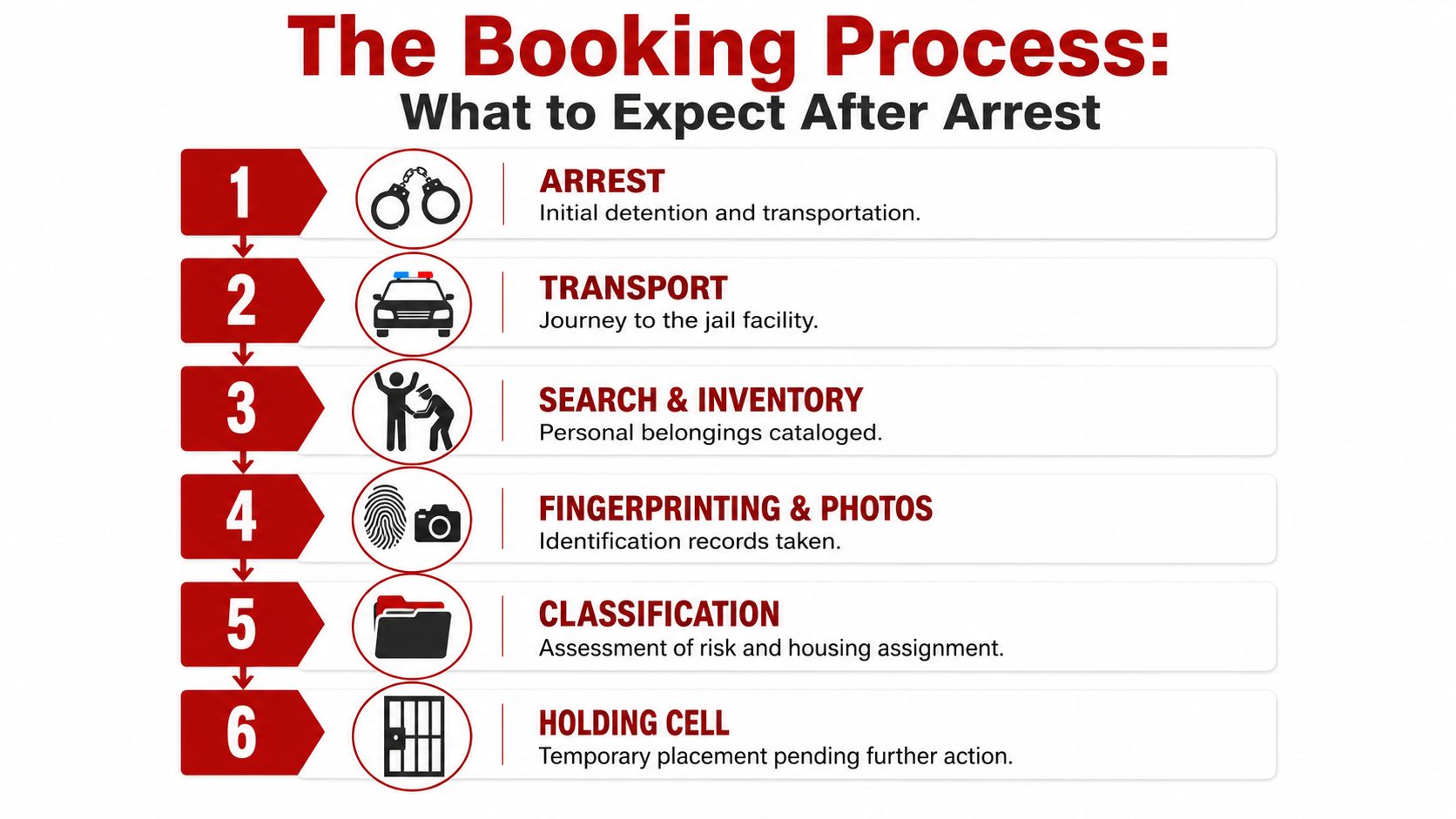
Here’s the booking flow families should expect:
- Search and property intake. Deputies inventory personal belongings and store them.
- Identification processing. Photos, fingerprints, and personal information are entered into the system.
- Classification review. Staff decide housing level, safety concerns, and separation issues.
- Initial holding. The person may sit in a holding cell while other steps are still pending.
- Medical screening. Nurses or medical staff check for injury, withdrawal risk, prescriptions, intoxication, and urgent health needs.
- Mental health screening. If the person appears unstable, suicidal, severely anxious, psychotic, or unable to answer basic questions, that can slow release even if bail is available.
This is the part families miss. A person can be “booked” for one purpose and still not be cleared for release.
If your loved one uses methadone, Suboxone, seizure medication, insulin, psychiatric medication, or has been drinking heavily for days, say that clearly when you call the jail or speak with staff. Do not downplay it because you want them out faster. Bad medical information causes bigger delays and bigger problems.
The delays families do not see coming
The slowdowns usually happen in three places.
First, medical clearance. If staff believe the person is in withdrawal, injured, intoxicated, or medically unstable, treatment comes before release processing.
Second, mental health review. A person who is confused, suicidal, manic, or not responding normally may be held longer for evaluation and safer housing.
Third, facility procedures. Housing decisions, shift changes, paperwork volume, and transportation inside the custody system can all add hours. In some cases, that turns into most of a day.
That is why “we already posted bail” does not always mean “they’re walking out now.” Bail solves the financial side. It does not erase medical screening, classification, or jail release procedures. If you want a clearer sense of what the amount itself means, read this guide on how bail schedules work in California cases.
What you should do right away
Focus on useful information, not repeated phone calls.
- Confirm the full legal name and date of birth used at booking.
- Ask whether booking is complete or still in process.
- Report urgent medical or mental health facts clearly and briefly.
- Find out whether the person is awaiting classification or medical clearance.
- Keep one family contact in charge so staff and a bail agent are not getting five conflicting calls.
A short explainer can help you visualize the process before you start making calls:
If the person has serious withdrawal risk, mental health instability, or active medical needs, work with the screening process instead of fighting it. Give accurate medication information, stay calm, and get clear answers about whether the delay is medical, classification-related, or administrative.
Understanding Bail Schedules and Your Release Options
Once booking is far enough along, the next question is bail. At this point, families either make a clean decision or create a money problem on top of a custody problem.
In California, there are usually three release paths people talk about. Cash bail, a bail bond, or release on own recognizance. Not every person qualifies for every option, and not every case moves on the same timeline.
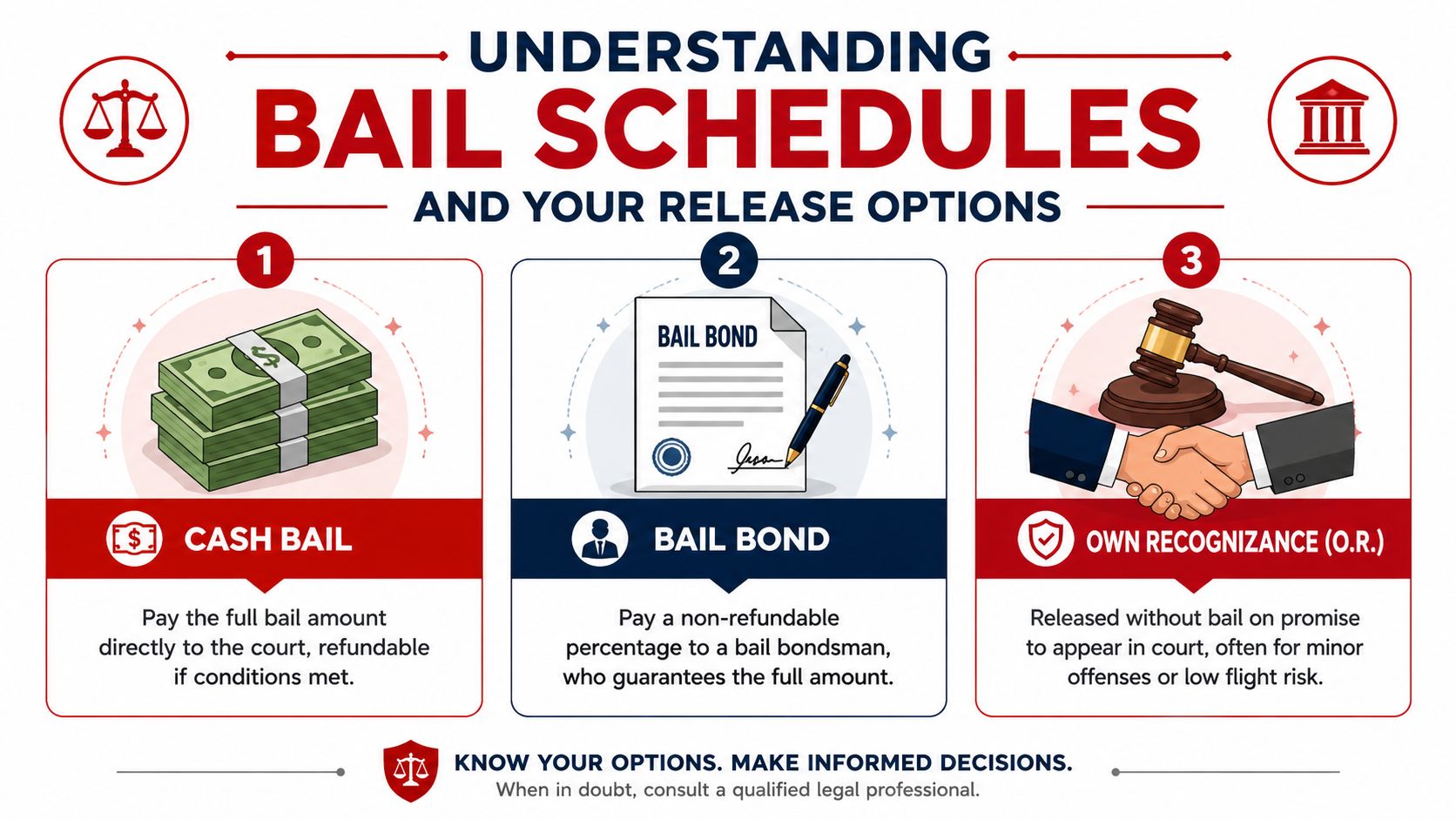
Cash bail versus a bail bond
Here’s the blunt comparison families need.
| Option | How it works | What to think about |
|---|---|---|
| Cash bail | You pay the full bail amount directly to the court | Ties up a lot of money at once |
| Bail bond | You pay a premium to a licensed bail agent who posts the bond | Useful when full cash isn’t realistic |
| Own recognizance | The court releases the person on a promise to appear | Usually depends on charge, record, and court decision |
For bail bonds in California, the premium is 10% of the total bail by law, based on the publisher information provided for this article. That premium is non-refundable. Families need to understand that before signing anything.
Cash bail is different. You may get the posted amount back at the end of the case if the person follows all court requirements and subject to court handling and any applicable deductions. The upside is potential return of funds. The downside is obvious. Few individuals have that kind of cash sitting around at 2 a.m.
What I recommend in the real world
If posting full bail would drain rent money, require selling something, or force you into desperate borrowing, stop. That’s not a smart rescue plan.
A bail bond is often the practical option because it gets movement started without freezing the family’s finances. If you need a plain-English breakdown first, this guide on how bail schedules work is worth reading before you sign.
Reality check: Cheap-sounding promises usually hide confusion, delay, or bad paperwork. Ask exactly what the premium is, who must sign, and what conditions apply.
When bail isn’t the only gate
Even after bail is set, release can still hinge on jail processing, internal clearance, or issues already discussed in booking. Don’t promise the family a pickup time until custody staff move the person toward release.
That’s the part people hate hearing. It’s also the part that keeps you from melting down in the parking lot.
How to Visit Mail Money and Communicate
Sometimes release doesn’t happen as fast as everyone hoped. When that happens, your job shifts from panic to support.
Communication rules at the Santa Barbara County Jail can change by housing unit, classification status, and facility procedure. That’s why I tell families to verify the current rule with the jail before they drive, mail anything, or load money onto the wrong system. Guessing creates delays.
Visiting without getting turned away
Before you visit, confirm all of this:
- Approval status: Ask whether the inmate must list you first or whether advance approval is required.
- Schedule rules: Check the facility’s current visitation schedule and whether visits are in person, remote, or limited by housing status.
- Identification: Bring valid photo ID and don’t assume a digital copy on your phone will work.
- Dress and conduct: Keep it simple and conservative. If staff think clothing or behavior violates policy, they can deny the visit.
Mail and money basics
Mail sounds easy until it isn’t. Use the inmate’s legal name and booking information exactly as the jail requires. Don’t send extras, decorations, stickers, or anything that gives mail staff a reason to reject it.
Money works the same way. Use the approved jail method for deposits, and verify the facility before you send funds. A person in custody may need money for commissary or communication, but the right account setup matters.
The family member who follows instructions exactly is the one who gets through faster. Jail systems reward accuracy, not creativity.
What calls usually mean
A short call doesn’t always mean something is wrong. It may just mean time limits, housing restrictions, or incomplete processing. If your loved one sounds confused, tired, sick, or agitated, don’t turn that into a family argument. Write down what they said, especially anything about medication, detox, injury, or fear for their safety, and pass that information to the right people calmly.
Securing Release with 24 Hour Bail Bonds
It is 2 a.m., your phone rings, and the first thing you hear is, “Can you get me out tonight?” Start with this. Do not send money to anyone until custody, bail status, and the exact jail location are confirmed. In Santa Barbara County, release delays often come from issues families do not see at first, including medical screening, mental health review, housing decisions, and internal jail clearance after the bond is posted.
24 hour bail bonds matter because the right agent does more than quote a price. The agent should confirm that bail is available, check for any hold that can slow or stop release, identify who needs to sign, and tell you what kind of timeline is realistic. That matters here because a person can be bondable on paper and still sit longer than the family expects if the jail is dealing with detox concerns, medication questions, mental health observation, or a facility transfer.
What a bail agent should do for you
A useful agent should handle the job in plain English and stay with it until the person is released. Expect these four things:
- Verify custody and current bail status
- Explain the charge and release process clearly
- Complete the paperwork without errors
- Track the release and answer when delays happen
Ask one direct question early: “Is there anything besides the bond that could keep them in custody tonight?” If the answer is vague, keep looking. Families lose hours when they confuse “bond posted” with “release in progress.”
If the arrest was for DUI, use a resource that addresses that type of case, like bail bonds DUI. If the arrest involves a family dispute or sensitive allegation, review guidance for bail bonds domestic violence. Different charges can bring different court conditions, staffing steps, and timing problems.
Local knowledge saves time
Santa Barbara County cases are not always as simple as one arrest, one jail, one quick release. A person may be arrested in one area, booked through another facility, or delayed by classification decisions that the family never hears about on the first call. Local experience helps because the process is rarely just “pay and pick up.”
If your family is sorting out where to start, these pages on bail bonds Santa Barbara County and bail bonds carpenteria can help narrow the next step. Bada Bing Bail Bonds is one available option. Based on the publisher information for this article, the agency handles booking verification, paperwork coordination, payment plans, co-signer questions, and release tracking across Southern California.
What to ask before signing
Keep the call short and specific. Ask:
- What is the premium?
- Who must sign the bond?
- Is collateral required?
- Are there medical, mental health, or housing issues that could delay release?
- Who updates me if the jail clears the bond but does not release them right away?
If you need to act now, start with a 24 hour bail bonds service near you and get the current status before you move money. That one step prevents a lot of expensive mistakes.
After the Release Pickup and Next Steps
When release is approved, don’t assume the person walks out immediately. The jail still has to finish internal release procedures, return property, and clear the person for discharge. That can happen at odd hours, and it can still take time after bond posting or court authorization.
Keep your phone on. Stay reachable. If the jail or your bail agent calls and you miss it, you can turn a nearly finished release into another long wait.
Pickup without chaos
When it’s time to pick them up, keep it simple:
- Bring identification: Have valid photo ID and keep your phone charged.
- Confirm the facility: Make sure you’re driving to the right jail, not the wrong end of the county.
- Bring essentials only: Leave unnecessary bags and drama at home.
- Expect exhaustion: People coming out of custody may be tired, embarrassed, angry, sick, or quiet.
The ride home is not the time to interrogate them. Get food, water, medication questions sorted out, and let them breathe.
What matters after they get out
Release is not the finish line. It’s the handoff.
The person must appear in court, follow all release conditions, and stay in contact with anyone who posted bond on their behalf. Missing court can wreck the case and create a fresh custody problem. If your family is still confused about the money side, read this explanation of whether you get bail money back in California so nobody is arguing about refunds based on bad assumptions.
Also, start organizing paperwork immediately. Save charge information, court dates, bond documents, medication details, and the name of any lawyer or public defender involved. Families who keep one clean folder make better decisions than families trying to reconstruct everything from text messages.
If you need fast, calm guidance after an arrest, Bada Bing Bail Bonds can help you verify custody, understand the next step, and move the release process forward without adding confusion.