
The call usually comes late. Someone was stopped in Oxnard, Ventura, Camarillo, or Port Hueneme. A family member is crying, trying to repeat a booking number, and asking the only question that matters right now. How do we get them out?
That's where pretrial release comes in. In plain English, it means getting someone out of custody while the case is still pending. They have not been convicted. They're waiting for court, and the system is deciding whether they can stay out, under what rules, and whether money has to be posted.
If you're dealing with Ventura County bail bonds for the first time, the process can feel cold and confusing. It doesn't have to stay that way. What matters tonight is understanding the release options, what Ventura County Jail bail bonds do, what the costs look like under California bail laws, and what happens between the first phone call and the moment of pickup.
Table of Contents
- An Arrest Just Happened What Is Pretrial Release
- Four Types of Pretrial Release Explained
- How Judges Decide on Bail and Release Conditions
- The Pretrial Release Timeline in Ventura County
- California Bail Laws and Ventura County Costs
- How Bail Bonds Ventura Agencies Secure Release
- Your Next Steps to Secure Pretrial Release
An Arrest Just Happened What Is Pretrial Release
A lot of families first ask, “What is pretrial release?” when they're half awake, scared, and trying to answer a jail call without missing details. The legal definition matters, but the practical meaning matters more. It's the set of ways the court allows your loved one to come home before trial instead of staying in custody.

In real life, pretrial release is the answer to the crisis question. Not “What happens months from now?” but “Can they get out tonight, tomorrow, or after court?” If the arrest happened in Ventura, Oxnard, Thousand Oaks, Santa Paula, Moorpark, Fillmore, Ojai, or nearby Santa Barbara, that answer usually depends on the charge, the booking process, the bail schedule, and whether the court allows release without full cash bail.
You are not looking at some rare situation. In locally run jails across the United States, two-thirds (2/3) of the more than 740,000 incarcerated individuals are unconvicted, which means the majority of people in those jails have not been convicted and are there because pretrial release has not yet happened or could not be secured, according to Vera's pretrial detention analysis.
What that means for your family tonight
If this is your first arrest in the family, the system may seem like it's built to keep you guessing. Booking, bail amounts, release conditions, court dates, and jail rules all hit at once. Families often lose time because they don't know whether they should wait for own recognizance release, prepare for bond, or start gathering information for a co-signer.
Practical rule: Pretrial release is not one single thing. It can mean release on a promise, release with supervision, or release through bail.
That's why a clear first step matters. If you need the bigger picture of what happens right after an arrest, this guide on post-arrest procedures and bail explained helps put the first few hours in order.
The plain-English definition
Here's the direct version. Pretrial release means a defendant is allowed to stay out of custody while the criminal case moves through court. Sometimes that release costs nothing up front. Sometimes it comes with strict conditions. Sometimes it requires a secured bond.
What families need most is not legal theory. They need to know what kind of release is possible, what it costs, and what happens next at the jail.
Four Types of Pretrial Release Explained
Courts use a few different paths to release someone before trial. Think of them as different ways of making a promise to the court. The bigger the court's concern about missed appearances or new trouble, the tighter that promise usually becomes.
Four ways the court can say yes
The first path is release on own recognizance, often called ROR. The court releases the person based on a promise to return to court and follow any rules. No full cash payment is required up front. This is usually the cleanest outcome for a family because it avoids the immediate financial pressure of bail.
The second path is an unsecured bond. The person is released without paying the full amount at the start, but they may owe money later if they violate the terms or fail to appear. Families sometimes confuse this with a surety bond. It isn't the same thing. An unsecured bond is still the court extending trust first.
The third path is supervised release. The person gets out, but not without strings attached. Those conditions can include reporting requirements, curfews, or monitoring. The point is not just release. It's release under active oversight.
The fourth path is a secured or surety bond. This is the type of bond often associated with discussions of bail bonds Ventura or bail bonds Oxnard. A financial guarantee has to be posted so the person can be released.
If you want a closer look at when someone may qualify for release without posting bail, this page on California own recognizance release is worth reading.
Comparing the real trade-offs
Here's the side-by-side version families usually need.
| Release Type | Upfront Cost | Key Requirement | Best For |
|---|---|---|---|
| Release on Own Recognizance | Usually none | Promise to appear and follow court rules | People the court views as reliable and low risk |
| Unsecured Bond | Usually none at release | Financial liability only if terms are broken | Cases where the court wants leverage without immediate payment |
| Supervised Release | Varies by condition | Ongoing compliance with court-ordered restrictions | Cases where the court wants oversight instead of straight release |
| Secured or Surety Bond | Requires bond arrangement | Financial guarantee to secure release | Cases where the court sets bail and release depends on posting it |
Comparing pretrial release options
Some options save money but depend on the court trusting the defendant. Others get someone out faster once terms are arranged, but they bring financial cost and responsibility.
A few practical points matter here:
- ROR is the least disruptive: If the court grants recognizance release, the family doesn't need to raise bail money immediately.
- Supervision isn't freedom without limits: A person can be out of jail and still have daily rules that affect work, travel, or home life.
- Surety bonds solve a cash problem: Families who can't post full bail in cash often use this route to secure release.
- The cheapest option isn't always available: The judge, charge, history, and local process all shape what the court will allow.
Getting out is only half the job. Staying compliant is what keeps a release from turning into a new problem.
For fast bail bonds Ventura cases, families usually focus on the secured bond route because that's the path that can move when bail has already been set and jail release depends on posting it.
How Judges Decide on Bail and Release Conditions
Most release decisions come down to two practical questions. Will this person come back to court, and can they be released without creating too much risk while the case is pending?
The two questions behind almost every release decision
Courts don't just pull a number out of the air. Judges look at the alleged offense, past record, prior missed court appearances, community ties, and whether the person was already on probation or dealing with another pending matter. Family support can matter. Stable housing can matter. Employment can matter. But none of it works like a magic sentence you say in court.
Pretrial release decision-making is increasingly shaped by tools that try to measure Failure to Appear (FTA) risk and the risk of pretrial misconduct, rather than relying only on fixed bail schedules, according to the National Center for State Courts discussion of pretrial risk assessment.
That doesn't mean judges stop using judgment. It means the court is trying to answer the same old questions with more structure. Some people are released with minimal conditions. Others get curfews, monitoring, no-contact terms, or secured bail.
What families can do that actually helps
Families often want to “say something to the judge.” Sometimes that instinct helps. Sometimes it creates confusion. What helps most is organized, accurate information.
Bring together what the defense lawyer or bonds agent may need:
- Basic identifiers: Full legal name, date of birth, and booking information.
- Local ties: Home address, family support, and work information if available.
- Medical or practical concerns: Needed medication, childcare responsibilities, or job issues that make prolonged detention harder.
- Court compliance history: If the person has been reliable in court before, that matters more than emotional pleading.
Courts respond better to facts than panic. Clean information beats a long explanation every time.
When bail feels too high for the charge or the family's circumstances, the next legal tool may be a hearing to ask the court for less restrictive financial terms. This guide on how to Argue for reduced bail effectively explains that process.
The Pretrial Release Timeline in Ventura County
The timeline starts the second the arrest happens, but families usually feel it once booking begins. If you're dealing with Ventura County Jail bail bonds, the hardest part is often not the paperwork. It's the waiting without knowing which stage the jail is in.
What happens first at the jail
Ventura County's primary detention facility is the Ventura Pre-Trial Detention Facility, also called the Ventura County Main Jail, at 800 S Victoria Avenue in Ventura, and it holds both male and female inmates, according to this Ventura jail location overview.
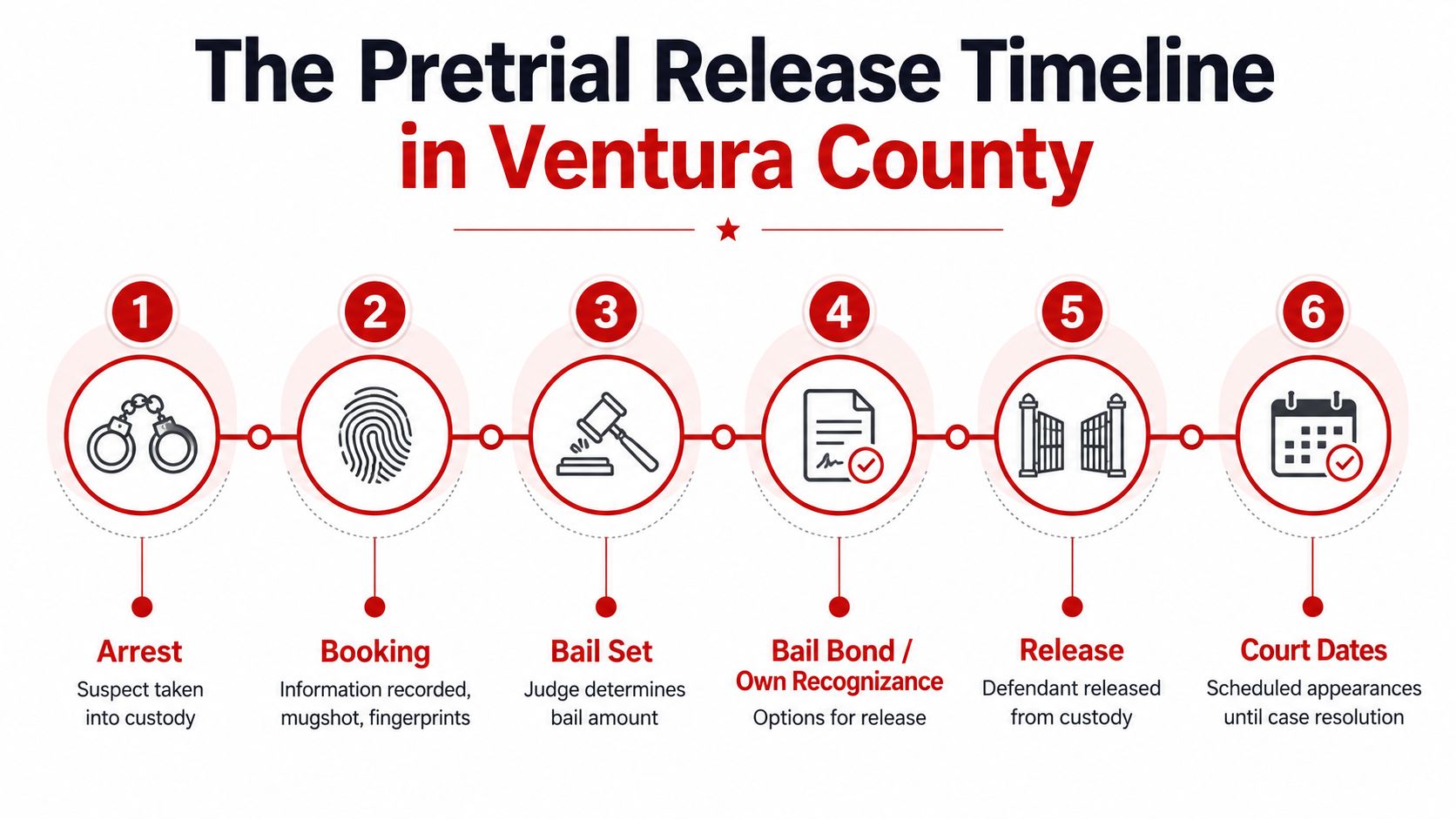
The first stage is booking. Jail staff record the arrest, confirm identity, take fingerprints, process property, and enter the person into the custody system. Families often expect release work to begin immediately. Usually, it doesn't. Nothing meaningful can move until booking is far enough along for the jail to process the case correctly.
That's why calls for 24-hour bail bonds Ventura services often sound urgent from the first minute. The family is ready. The jail is still processing.
When release actually starts moving
Once booking is in place, one of two things usually happens. Either the case falls under a bail schedule amount, or the person has to wait for court review. If there is a posted amount available, bond work can begin once the necessary details are confirmed. If court review is required, everyone waits longer.
The release path usually looks like this:
- Arrest and transport: The person is taken from the scene to the jail.
- Booking and intake: Personal data, fingerprints, and custody records are completed.
- Bail review: The jail applies the schedule or the court sets conditions.
- Release arrangement: Cash bail, recognizance release, or bond paperwork is prepared.
- Jail release processing: The jail clears the person for discharge.
- Pickup and next instructions: The family gets them home and starts preparing for court.
A lot of frustration happens at the last stage. Families think posting bond means immediate release. It doesn't. The bond can be accepted, and the jail can still need time to finish internal release steps.
The bond solves the legal barrier to release. The jail still controls the physical release process.
If you need local expectations for movement after bond is posted, this Ventura County jail release guide helps families understand what usually happens next in Ventura, Oxnard, Camarillo, and nearby areas.
California Bail Laws and Ventura County Costs
Money is where panic spikes. Families hear a bail amount and assume they have to come up with the entire total in cash that same night. Sometimes that's possible. Often it isn't.
What the numbers mean in real life
In Ventura County, the local schedule gives families a starting point. The Ventura Superior Court 2024 bail schedule sets standard bail at $10,000 for felonies and $2,500 for other misdemeanors, with additional enhancements for offenses committed while on probation, according to the Ventura Superior Court 2024 bail schedule.
That means a family calling about a standard felony case in Ventura, Oxnard, Moorpark, or Thousand Oaks may hear a scheduled bail amount of $10,000. A standard misdemeanor may start at $2,500. If the alleged offense happened while the person was on probation, the amount can increase under the schedule.
Here's the practical takeaway. Bail is not the same as the fee paid to a bond agency. The bail amount is the court's financial requirement. The bond premium is the service charge for the bond.
What families often misunderstand about the 10 percent
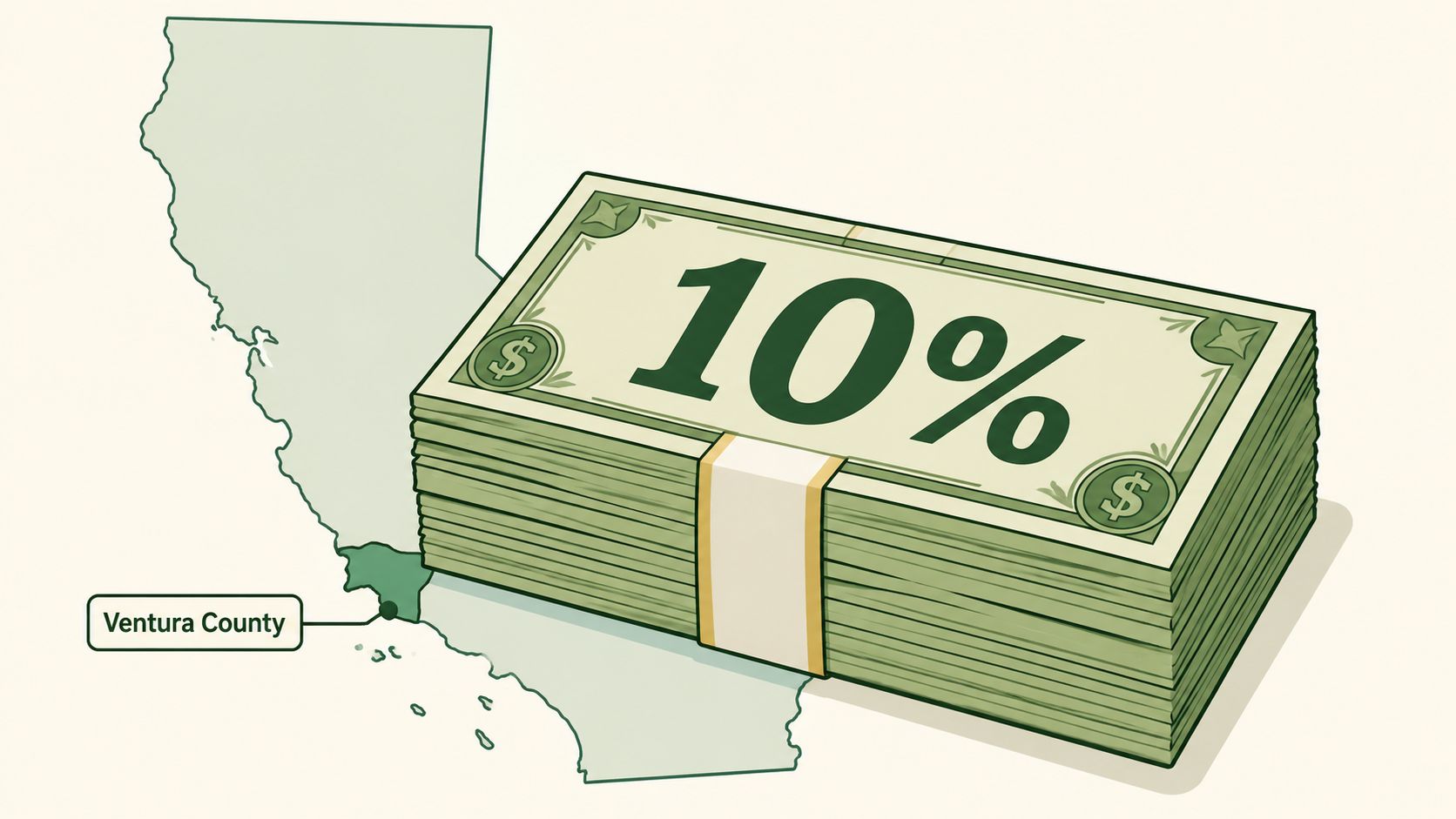
In California, the bail bond premium is state-regulated at 10% of the total bail amount, and this fee is nonrefundable even if charges are dropped or the case is dismissed, according to this explanation of California's 10 percent bail bond premium.
So if bail is $10,000, the premium is $1,000. If bail is $2,500, the premium is $250. Families often assume that money comes back at the end the way cash bail might. It doesn't. The premium is the cost of the bond service.
That's one of the most important financial distinctions in California bail laws. A surety bond can make release possible when full cash bail is out of reach, but the fee paid for that bond is not a deposit.
A few cost questions come up over and over:
- Is the 10 percent negotiable by law? The state-regulated premium is set at 10 percent.
- Do dropped charges erase the fee? No. The premium remains nonrefundable.
- Can probation status affect the amount set? Yes, the Ventura schedule includes enhancements for certain probation-related situations.
- Should families wait and hope for lower bail? Sometimes a bail hearing changes things, but waiting can also mean more time in custody.
For fast bail bonds Ventura calls, the right move depends on whether immediate release is possible through the schedule or whether the defense plans to push for lower bail in court.
How Bail Bonds Ventura Agencies Secure Release
When a family cannot or doesn't want to post full cash bail, a bail bond agency steps in to secure the bond and move the release process forward. That's why people searching for bail bonds Ventura, Ventura County bail bonds, or bail bonds Oxnard are usually not looking for legal theory. They need someone to translate custody details into action.
What the agent actually does
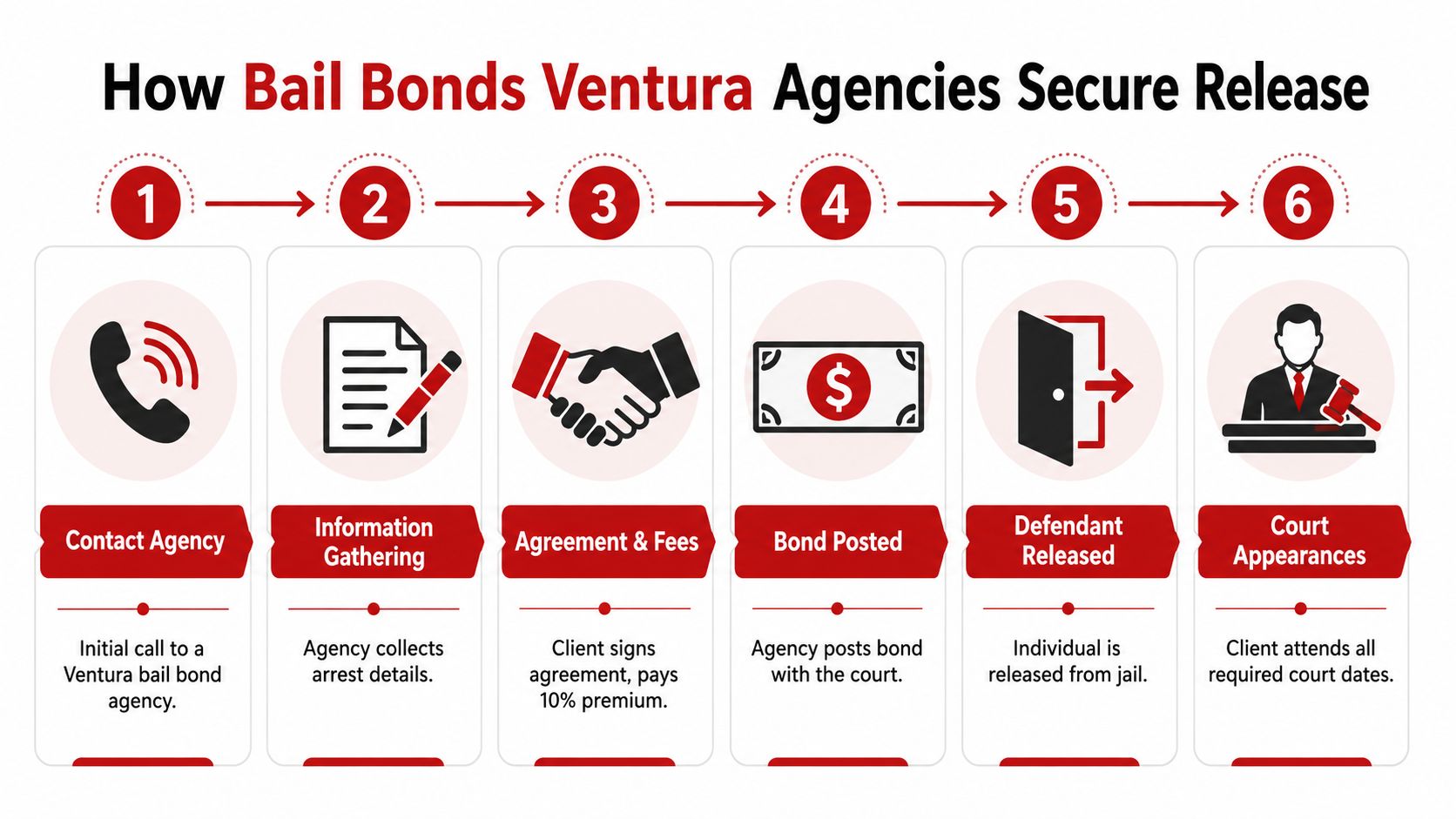
An agent's job starts with verification. The agency confirms where the person is booked, what the charge is, whether bail has been set, and what documents are needed from the family or co-signer. Then the agency prepares the bond paperwork, collects the premium, and posts the bond through the proper channel.
In California, the bail bond premium is 10% of the total bail amount and is nonrefundable even if charges are dropped or dismissed, as noted earlier in this article. That legal structure shapes how every surety bond works.
The actual workflow usually looks like this:
- Contact and verification: The agency confirms booking details and the bail amount.
- Co-signer review: The family member signing takes responsibility for helping ensure court appearance.
- Paperwork and payment: Agreements are signed and the premium is collected.
- Bond posting: The agency submits the bond so the jail can process release.
- Release tracking: Someone follows the jail's acceptance and release status until pickup is possible.
One local option families use is Bada Bing Bail Bonds, which handles 24 hr bail bonds in Ventura County and tracks the release process after bond posting.
What helps and what slows things down
The biggest thing that speeds up release is clean information. Wrong spelling, missing booking details, confusion about the jail location, and unsigned co-signer forms all slow the process. Families often think the delay is at the agency when the actual holdup is incomplete intake or jail processing.
What tends to help most:
- Have the full name ready: Include correct spelling and date of birth if possible.
- Confirm the jail: Ventura County cases often route through the Ventura Pre-Trial Detention Facility, but always verify.
- Keep one decision-maker on the call: Too many people relaying details causes mistakes.
- Ask about conditions, not just price: Release conditions matter after they walk out.
Fast bail bonds Ventura service isn't only about posting money quickly. It's about preventing avoidable mistakes that cost hours.
Families in Ventura, Oxnard, Camarillo, Port Hueneme, Thousand Oaks, Santa Paula, Moorpark, Fillmore, Ojai, and Santa Barbara usually need both speed and clarity. The paperwork part matters. The after-release instructions matter just as much.
Your Next Steps to Secure Pretrial Release
If you're in the middle of this tonight, focus on the next useful move, not every possible future problem. Find out where your loved one is being held, whether booking is complete, whether bail has been set, and whether the court may allow some other form of release.
Keep the process simple:
- Get the booking details right: Name, jail, and charge information come first.
- Ask what release path is available: ROR, supervised release, cash bail, or surety bond.
- Understand the cost before you agree: In California, the bond premium is a fee, not a refundable deposit.
- Prepare for life after pickup: Court dates and release conditions matter immediately.
If the arrest happened in Ventura, Oxnard, Camarillo, Port Hueneme, Thousand Oaks, Santa Paula, Moorpark, Fillmore, Ojai, or Santa Barbara, the fastest path is usually a direct conversation with someone who can verify the custody details and tell you whether release can move now or has to wait for court.
You don't need to know every legal term tonight. You need a clear answer about what it takes to get your person home and what they must do once they're out.
If you need immediate help with Ventura County bail bonds, Bada Bing Bail Bonds is available around the clock to verify booking details, explain the release options in plain English, and help families in Ventura, Oxnard, Camarillo, Port Hueneme, Thousand Oaks, Santa Paula, Moorpark, Fillmore, Ojai, Santa Barbara, and surrounding Southern California areas take the next step.