The phone rings from a jail line, and everything feels too fast. Your loved one is talking in short bursts, maybe from Ventura, Oxnard, or Santa Barbara, and all you want is a straight answer, will they come home today? The first word that usually matters is arraignment, because that hearing is where the court starts turning an arrest into an actual case, and where release, detention, or a bail decision often begins to take shape.
If you’re scrambling for a plan right now, the important thing is to stay focused on the next move, not the whole case. A local bondsman can help you understand the booking status, the court date, and whether the question is release on recognizance, bail, or custody. For families who need 24 hour bail bonds Ventura County, the fastest path usually starts with plain facts, not courtroom jargon.
Table of Contents
- The First Call and the First Court Date
- The Core Purpose of an Arraignment Hearing
- A Step by Step Walkthrough of the Hearing
- Your Rights and How to Prepare
- Possible Outcomes The Critical Decision on Bail
- After the Arraignment What Comes Next
- Ventura and Santa Barbara Arraignment FAQs
The First Call and the First Court Date
The first call from jail usually comes with very little context. A spouse or parent hears that there is a court date, maybe an arraignment, and the whole family is left trying to figure out one question first, is the person staying in custody or getting out?
The arraignment is where that starts to get answered. It is the first formal court appearance after an arrest, and in federal practice it usually happens the same day or the next day after the arrest and charging process. In plain English, it is the point where the court stops treating the situation like a booking event and starts treating it like an active criminal case.
Practical rule: once arraignment is set, speed matters. The court can decide detention, release, or bail, and those decisions affect whether your family spends the day waiting or starts planning for pickup.
For families looking for bail bonds Ventura or bail bonds Oxnard, that first court date is often the moment everything becomes urgent. A fast response can be the difference between someone sitting in the jail system and a release window opening up. If you need to move quickly, you start with the booking details, the charge, and the court handling the case, which is why many people go straight to 24 hour bail bonds Ventura County.
The key point is simple. Arraignment is not the end of the case, but it is often the first real decision point for the family.
The Core Purpose of an Arraignment Hearing
An arraignment does three jobs at once, and that is why families feel the pressure so fast. The court tells the defendant what the charges are, records an initial plea, and makes sure the person has counsel, so they are not standing there alone without legal help. In many courts, the judge can also decide whether the person stays in custody or is released pending trial during that same hearing.
Charges, plea, and counsel
First, the charges are read or formally stated. That sounds basic, but it matters because the court is putting the accusation into the official record, not just repeating what showed up in a booking sheet.
Second, the defendant enters a plea, which is usually not guilty at this stage in many jurisdictions. That does not mean the person is lying or choosing a fight for the long haul, it means the case stays open while the defense figures out the facts and the law.
Third, the court makes sure counsel is addressed. If the defendant has a lawyer, that lawyer can speak for them. If not, the court deals with representation so the case can move forward properly.
An arraignment is a combined charging-and-case-management hearing, not a trial.
That is the part families often miss. The hearing starts the court process, it does not decide guilt. The practical question for loved ones is whether the judge will allow release or keep the person in custody, and that is why your pretrial release options matter right away.
For people dealing with Ventura County bail bonds, the takeaway is straightforward. The arraignment shows what the case is, who is handling it, and whether the person is going home soon or staying put.
A Step by Step Walkthrough of the Hearing
The courtroom usually feels more formal than it looks on TV. A judge sits on the bench, the prosecutor handles the state’s side, and a defense attorney speaks for the defendant. If the person does not have counsel yet, the court addresses that before the hearing goes much farther.
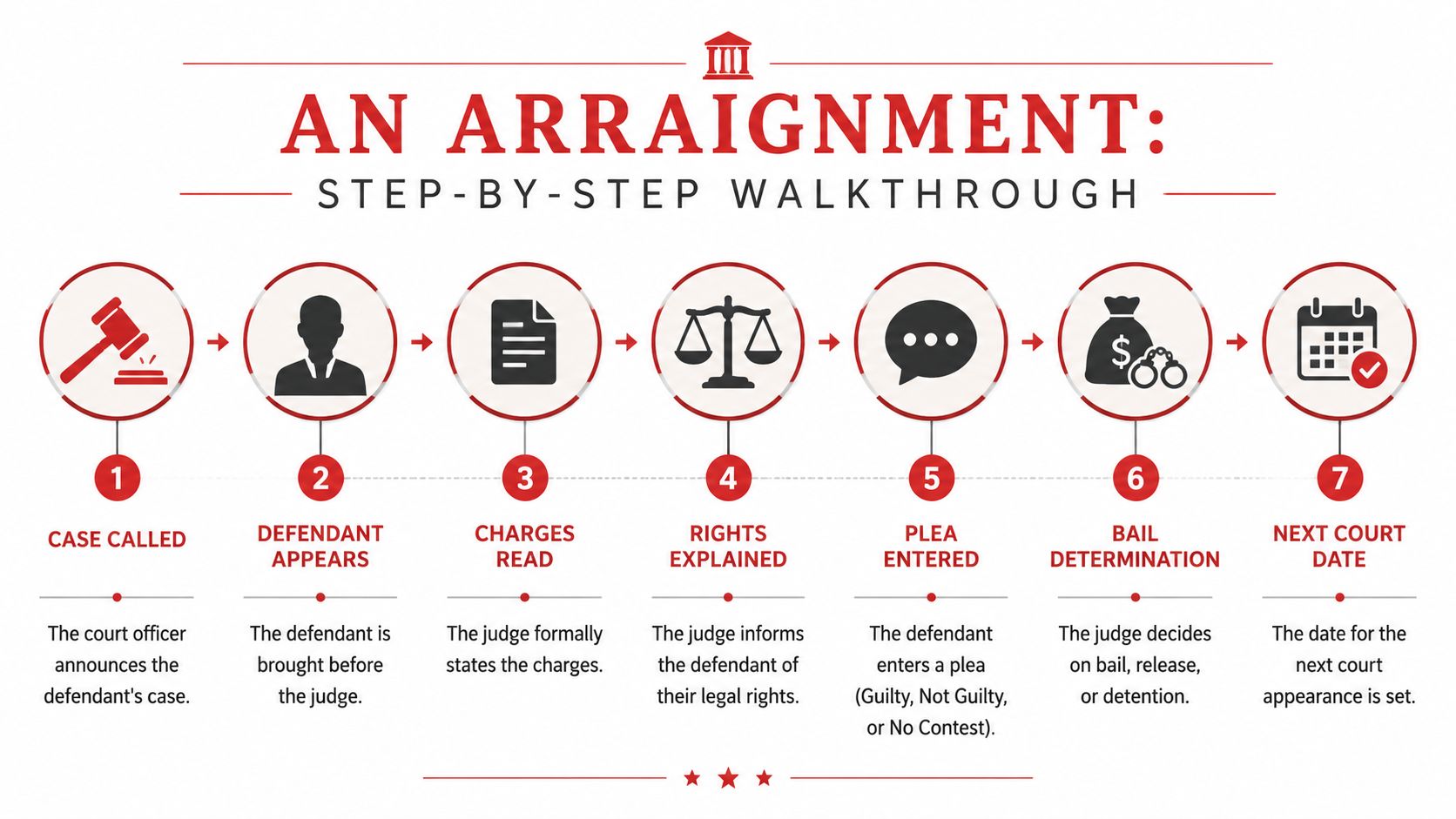
The sequence is usually steady. The court calls the case, the defendant appears, the charges are read, and the judge makes sure the defendant understands what is being said. Then comes the plea, followed by the release decision and the next court date.
What each person does
The judge controls the hearing and decides what happens next. The prosecutor explains the case posture and any concerns about release. The defense attorney protects the defendant’s rights, asks questions, and can raise issues tied to bail, release, or later dates.
In a busy local court, the hearing may move quickly. That is normal. Courts often handle many arraignments in one session, so people should expect the matter to be brief, but still important.
A defense lawyer may speak before the defendant does, especially when the goal is to protect the record and avoid unnecessary statements. That is one reason families should not treat arraignment like a place to “clear things up” casually. It is a formal hearing, and words can matter.
Here is the simple sequence to follow:
- Case called: The clerk or court officer announces the matter.
- Defendant brought forward: The person appears before the judge.
- Charges stated: The court places the accusations on the record.
- Rights addressed: The judge makes sure the defendant understands the process.
- Plea entered: The defendant responds.
- Release decision made: Bail, release, or custody is addressed.
- Next date set: The court schedules the follow-up appearance.
That is why bail bond information for Ventura families matters as soon as arraignment starts to look real. If bail is part of the hearing, the people waiting outside need a working plan, not guesswork.
Your Rights and How to Prepare
A lot of panic at arraignment comes from not knowing what to say, what to bring, or what the judge expects. The basics are narrower than people think. The defendant has the right to counsel, and they have the right not to talk themselves into trouble by volunteering extra details before they understand the case.
What to do before you walk in
Dress neatly and keep it simple. Courts do notice whether someone looks respectful, and that doesn’t mean a suit, it means clean clothes, no loud graphics, and no behavior that turns the hearing into a sideshow. Address the judge respectfully, answer only what’s asked, and don’t interrupt.
Bring identification and any paperwork a lawyer or family member has been told to gather. Leave behind anything the jail or courthouse would reasonably treat as a problem, especially items that could create a scene or distract from the hearing. If a person is already in custody, the bigger priority is getting accurate booking and court information rather than overpacking for court.
Courtroom rule: if you don’t know whether to speak, wait for counsel. Silence is usually safer than explaining the case badly.
Families often ask what matters most in the first hearing. The answer is not a dramatic speech. It’s discipline. A calm defendant, a prepared family, and a lawyer or bondsman who already knows the basic facts can make the process cleaner.
If you’re checking whether there are pending issues that could complicate release, a comprehensive guide to Ventura warrants can help you avoid a nasty surprise. That kind of check is practical, not dramatic, and it’s often worth doing before the courtroom door opens.
For fast bail bonds Ventura cases, prep is about reducing friction. The fewer unknowns there are, the faster the family can respond if the judge sets bail or release conditions.
Possible Outcomes The Critical Decision on Bail
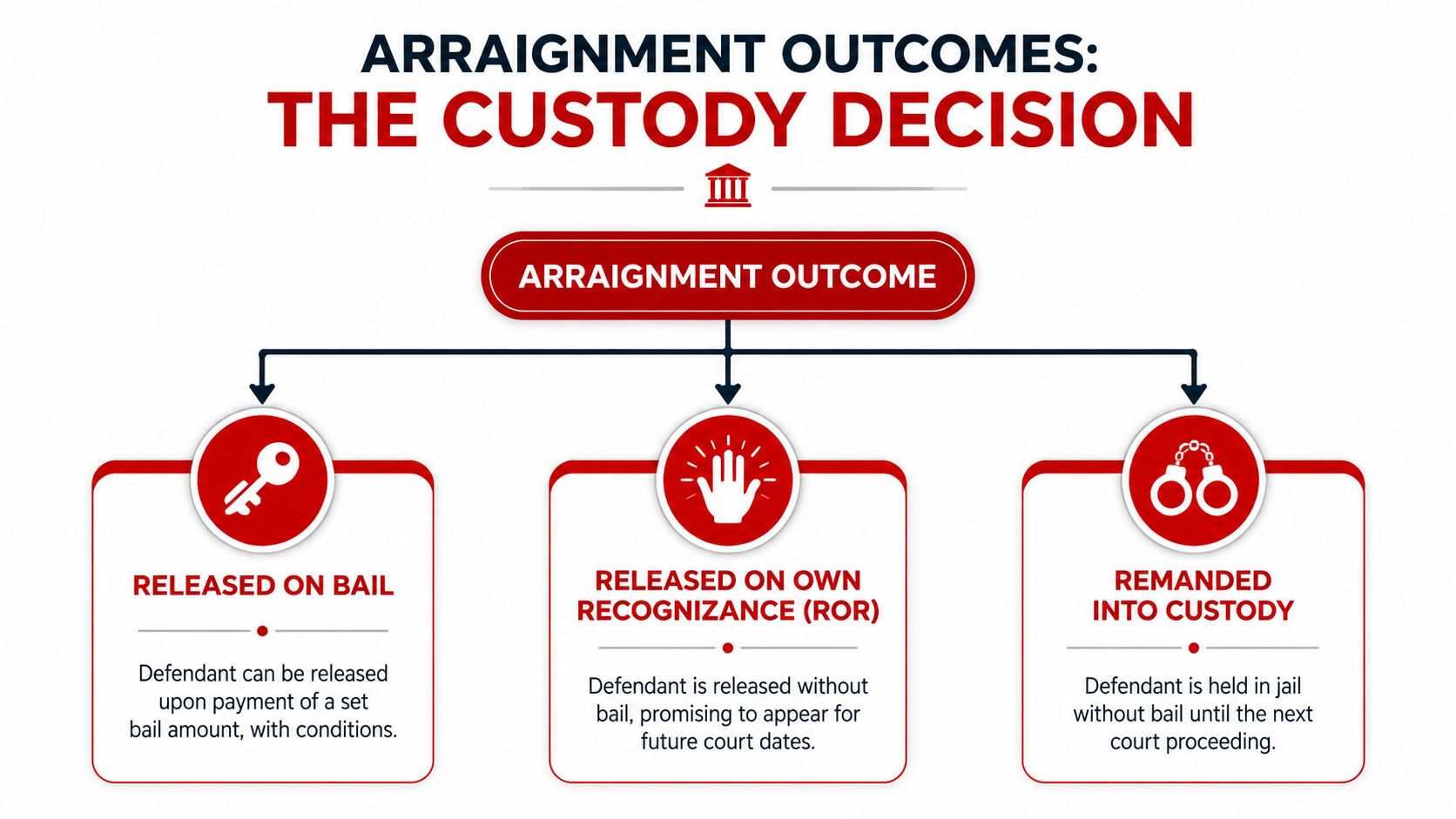
This is the question every family is really asking. Will they go home today? The answer depends on which of three paths the court chooses, and those choices can happen right there at arraignment.
The first path is release on own recognizance, often called O.R. The person is released without paying bail, but they’re expected to return for court. The second path is bail, where the court sets a financial condition for release. The third path is remand, which means the person stays in custody without bail for now.
How bail decisions work in Ventura County
In Ventura County, the countywide bail schedule adopted under Penal Code §1269b includes presumptive amounts for certain arrests. The schedule listed for Ventura County shows $2,500 for an unlisted 17(b) misdemeanor, $10,000 for an unlisted felony, and $20,000 for an assault with a deadly weapon charge Ventura County bail schedule. Those are examples from the schedule, not a promise of what every case will receive.
That’s where a bail bond comes in. In Ventura County, the standard premium is generally 10% of the total bail amount, so a $20,000 bail typically requires about $2,000 to post a bond, and that premium is generally non-refundable for the service of securing release Ventura County bail bonds premium. For a family that doesn’t have the full bail amount in cash, that can be the difference between waiting in the parking lot and getting home the same day.
The sheriff says bail can be posted at the Pre-Trial Detention Facility, 800 South Victoria Avenue, Ventura, and acceptable methods include cash, cashier’s check payable to the Ventura County Superior Court, a bail bond, or credit/debit card through GovPayNet Ventura County Sheriff bail posting. For many families, a bond is the most practical route because it lets a licensed agent work the release paperwork immediately.
If the judge sets bail, the question becomes speed, not theory. Release often turns on how fast the paperwork and posting get handled.
A local 24-hour bail bonds Ventura agent can post the bond as soon as the jail accepts the documents. That matters most when the person is already in custody and every hour feels longer than it should. A service such as Bada Bing’s Ventura County bail support can help families sort out the release path, the bond paperwork, and the jail process when they need a clear next move.
The bottom line is this. Bail is not punishment by itself. It is the court’s release mechanism, and for families in Ventura County Jail bail bonds situations, it is often the practical bridge between detention and home.
Arraignments in Orange County and LA County
The core arraignment process — charges read, plea entered, release decision made — works the same way statewide. But the local specifics differ once you leave Ventura and Santa Barbara County.
Orange County In-custody arraignments for Orange County’s central criminal docket are handled at the Central Justice Center, 700 Civic Center Drive West, Santa Ana. If bail is set rather than OR release, it follows the Orange County bail schedule, and release is processed through one of the county’s jail facilities, including the OC Central Men’s/Women’s Jail, Theo Lacy Facility, or James A. Musick Facility.
Los Angeles County LA County works differently before arraignment even happens. Since October 2023, LA Superior Court has operated under Pre-Arraignment Release Protocols (PARP) — the “zero-bail” system — which releases most non-violent, non-serious arrestees before arraignment with a written court date instead of a dollar bail amount. Domestic violence charges and nearly all serious or violent felonies are excluded from PARP and remain on the traditional bail schedule. See our full breakdown of OR release and PARP in Orange and LA County for the details that actually matter once your case reaches arraignment there.
After the Arraignment What Comes Next
Once the hearing ends, the case doesn’t stop moving. If the person is released, they need to follow every condition the court set and show up for the next date. If they’re in custody, the next step is usually waiting for the next court proceeding while the defense continues working the file.
Families tend to think the hard part is over once the judge leaves the bench. It isn’t. A release decision only works if the defendant and the people around them stay organized, keep track of dates, and avoid new problems that can pull the case in the wrong direction.
A bail agent can help after posting too. That usually means reminders, status updates, and practical guidance so the family doesn’t lose track of the next hearing. In real life, that follow-through matters because missed court dates create bigger headaches than the original arrest.
If the person is still inside, patience becomes part of the strategy. The goal shifts from “get out today” to “be ready for the next hearing and keep the process clean.” Either way, the arraignment has already done what it was designed to do, it put the case on rails.