When someone gets a late-night call from the jail in Oxnard, the whole family feels the clock start moving faster. One person is trying to calm down the house, another is looking for the booking number, and somebody else is searching for Ventura County bail bonds while trying not to miss a single detail. That’s usually the moment when the difference between bond types jail starts to matter, because the wrong choice can mean extra collateral, a larger cash demand, or a delay that keeps a loved one inside longer than necessary.
For families in Ventura, Oxnard, Camarillo, Port Hueneme, Thousand Oaks, Santa Paula, Moorpark, Fillmore, Ojai, and Santa Barbara, the question isn’t just “what does bail cost?” It’s who has to post the money, what the court will accept, and how quickly release can occur. If you need immediate help, start with 24 hr bail bonds, then work through the bond type, the release process, and the out-of-pocket risk before you commit.
Table of Contents
- Introduction to bond types jail in Ventura County
- Understanding bond types jail
- How booking and release works in Ventura County
- Comparing bond types jail trade-offs
- Cost and payment options in California
- When to call a bail agent
- Conclusion and next steps
- FAQs about bond types jail
Introduction to bond types jail in Ventura County
A family usually doesn’t get a clean, convenient moment to learn bail language. It happens after an arrest, after the phone call, after everyone’s already tired and worried, and after the first round of guesses about whether the judge set cash bail, a surety bond, or something else entirely. In that situation, speed matters, but clarity matters just as much.
Ventura County families often need release options that fit the actual facts of the case, not just a generic fee quote. A surety bond is the commercial bond type many people hear about first. The bail bond company guarantees the full bail amount and charges a fee, while collateral can still be part of the deal. That setup is different from a cash bond, a deposit bond, a property bond, or personal recognizance, and each one shifts the financial risk to a different person.
Practical rule: The first question is never just “How much is bail?” It’s “Who is the court asking to put up the money, and what happens if the case takes a bad turn?”
That is why local families looking at bail bonds Ventura and Ventura County Jail bail bonds need more than a short definition. They need a workable decision path that turns jail terms into real-world choices. If you’re dealing with a release issue right now, the faster route is to identify the bond label, confirm the booking details, and decide whether a commercial bond, cash posting, or a release on promise to appear is even available. If the next call needs to happen right away, a 24 hr bail bonds contact can help sort out what the jail is requiring before families commit money or collateral.
Understanding bond types jail
A family hears “bond” and usually wants one simple answer. The court does not work that way. Different bond types shift the cost, the paperwork, and the risk to different people, so the label on the jail sheet matters as much as the dollar amount. Federal court materials separate personal recognizance, unsecured, secured, and surety bonds, while county jail guidance also uses terms like cash and property bonds. The practical question is who has to post money, who signs, and what the court will accept before release can happen.
The main bond types families run into
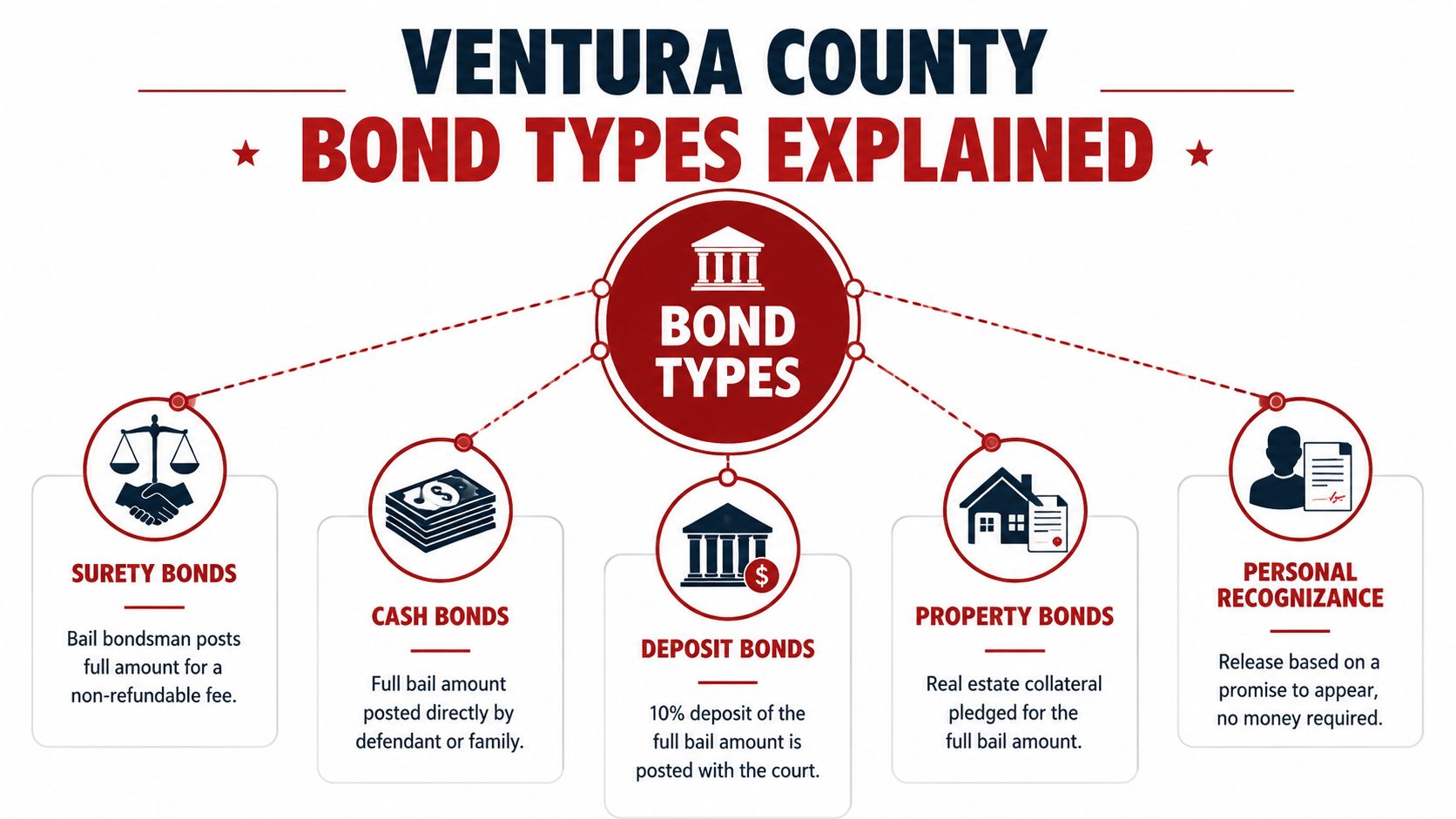
Surety bonds are the commercial option commonly referred to when people say “bail bonds.” The bail bond company signs for the full amount, the family usually pays a premium, and collateral may still be part of the arrangement. That premium is only one part of the total cost, because a co-signer can still be on the hook for paperwork, conditions, and any property pledged to secure the bond.
Cash bonds are straightforward in one sense. The full bail amount is posted directly, and the court holds it under its rules until the case is resolved. A deposit bond works differently, because it usually requires only part of the full amount to be posted with the court. For families with limited savings, that can make release possible without covering the entire bail figure up front.
Property bonds use real estate or other property as security, but they are not an easy substitute for cash. Colorado judicial guidance says the unencumbered equity must equal 1.5 times the bond amount, so a $20,000 bond requires at least $30,000 in unencumbered home equity (Colorado Judicial Branch). That cushion protects the court, but it also excludes families with low equity or mortgages that already tie up the property.
If the bond is tied to property, the question is not just “Do we own a house?” It is “How much equity is actually available, and will the court accept it?”
What personal recognizance really means
Personal recognizance, often shortened to PR, can allow release without paying money upfront. Courts use it when they believe the person has a low flight risk and enough community ties to make a promise to return credible. Judges often add conditions like check-ins or reporting requirements, so PR is not a free pass. It is a lower-cash release with obligations attached.
For families searching for understanding cash bail, the practical move is to separate the label from the money source. Ask which bond type the jail or court is allowing, who must sign, and whether release depends on cash, a premium, collateral, or a signed promise to appear.
How booking and release works in Ventura County
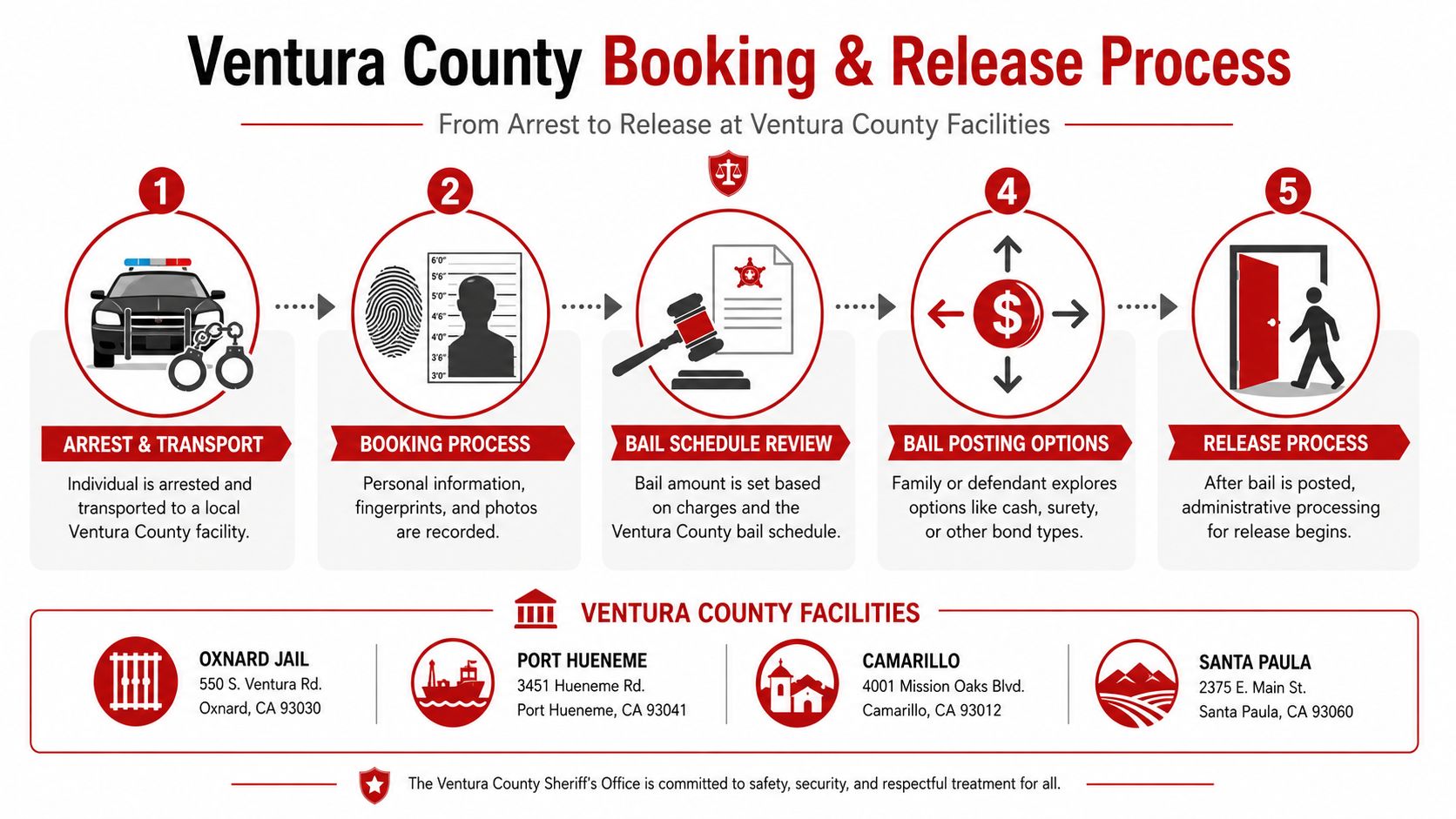
The booking process starts before anyone talks about paying anything. A person is arrested, transported to a local facility, and entered into the system through booking, which usually includes identification, fingerprinting, and photos. After that, the bail amount or release condition becomes the primary concern, because that’s what tells the family whether they need a surety bond, a deposit, or a different release path.
What happens first at the facility
At Ventura County facilities, families often hear about release only after the jail has processed the case and the booking details are available. That can happen after a citation, after arraignment, or after the charge information is entered into the jail’s workflow. Once that information exists, a bondsman can help match the bond type to the actual jail requirement, then coordinate paperwork with the facility.
The release window is rarely just “pay and walk out.” Administrative processing comes next, and that can be slower when the arrest happens at night, on a weekend, or during a holiday shift. That’s one reason 24-hour bail bonds Ventura service matters, because the family may need someone available to verify the jail, the charge, and the exact posting method before the next shift changes.
The release path families should track
For a family trying to help someone out of Ventura County Jail bail bonds, the key is to keep the process organized:
- Confirm the booking details: The exact facility matters, whether it’s Oxnard, Port Hueneme, Camarillo, Santa Paula, or another local site.
- Identify the bond type: Cash, surety, deposit, property, or PR changes who pays and what documents are needed.
- Gather the paperwork: Booking number, arresting agency, and charge information usually speed up the call.
- Plan for processing time: Even after posting, release still moves through jail administration.
If you’re looking for information on Ventura County bail, start with the booking record, then verify what the jail will accept before anybody rushes to pay the wrong way.
Comparing bond types jail trade-offs
A Ventura County family often faces the same choice under pressure. The defendant is in custody, the phone is ringing, and someone has to decide who will post the money, what papers will be needed, and what can go wrong if the court date is missed. The right bond type is the one that fits the family’s cash position, access to collateral, and comfort with risk.
A side-by-side view helps more than a glossary because the trade-offs are practical, not theoretical.
| Bond Type | Who Posts | Upfront Cost | Collateral |
|---|---|---|---|
| Surety Bond | Bail bond company guarantees the full amount | Usually a nonrefundable premium of about 10% of bail | Often required |
| Cash Bond | Defendant or family posts it directly | Full bail amount | Usually no separate collateral, because cash itself secures the release |
| Deposit Bond | Defendant or family posts the court’s required deposit | About 10% of the full bail in many settings | Usually not collateral in the property sense |
| Property Bond | Property owner posts real estate or other property | No cash premium in the same sense, but paperwork is substantial | Real estate or other pledged property |
| Personal Recognizance | Defendant signs a promise to appear | No money upfront | No cash collateral, but court conditions can still apply |
A surety bond works well when a family cannot tie up the full bail amount in cash. The trade-off is straightforward, the premium is generally nonrefundable even if the case ends favorably, because the service being bought is the guarantee itself. A cash bond can be easier to track on paper, but it requires the full amount up front, and that is often hard for families to absorb during an arrest.
Property bonds can look attractive until the title work starts. The court wants a reliable asset, and the family has to show ownership and equity clearly. PR is the lightest on money, but it depends on the court’s risk assessment, so not every defendant qualifies.
Useful shortcut: If the family has time but no liquid cash, ask about property or PR. If the family has limited cash and needs speed, surety is usually the route people investigate first.
Families also need to ask who is really carrying the cost. A parent, spouse, or sibling may be the one putting up money, signing paperwork, or pledging property, and that decision can affect the household long after release. Clear answers on collateral, co-signer duty, and payment timing matter more than the headline bond type.
That is why payment plans for Southern California bail come up early in real cases. The family is not choosing in a vacuum, it is choosing under pressure, and the right option depends on whether the jail will accept a low-cash release, whether collateral is available, and whether someone can cover the amount without putting the whole household at risk.
Cost and payment options in California
California’s surety structure is the number most families ask about first, because it’s the easiest number to compare. In California, a felony defendant who can’t afford full cash bail can seek release through a 10% bail bond premium paid to a licensed surety agent, because the agent guarantees the full amount to the court while charging a nonrefundable fee (Investopedia). That’s the headline number, but the family still needs to ask what else is included and what might still be required.
What families should ask before they sign
- Premium terms: Is the rate tied to the full bond amount, and is it nonrefundable?
- Collateral needs: Will the agent ask for property, a vehicle, or another asset?
- Co-signer responsibility: If someone signs with the defendant, what happens if a court date is missed?
- Payment timing: Can the family split the premium, or does the agency expect payment upfront?
- Release coordination: Does the bond posting include help with the jail paperwork and status updates?
The local value of a transparent agent is that the family can hear the full number before they commit. Payment plans for Southern California bail matter most when the family can’t cover everything in one shot, and that’s where a clear co-signer arrangement can make the difference between posting now and waiting.
In Ventura County, that matters because the same family might be comparing cash posting against a surety bond while also dealing with the court’s timing. A cash bond may avoid a premium, but it locks up more money. A surety bond reduces the upfront burden, but the family pays for the service and may still need collateral depending on the case.
When to call a bail agent
If the jail hasn’t given clear release information, it’s time to call. If the amount looks high, the charge involves DUI, domestic violence, or a warrant hold, or the family can’t tell whether the jail wants cash or a bond, waiting usually makes the situation more stressful, not less. In those moments, a local agent who knows the county process can verify the booking details and move the paperwork faster.
Have this ready before you call: the defendant’s full name, booking number if you have it, arresting agency, charge information, and any jail or court notice you received. For a fast response, you can also review how California bail bonds work and then decide whether a surety bond, cash posting, or a different release route makes the most sense. I’ve found that families save the most time when they stop guessing about the bond label and start giving the agent exact booking facts.
Conclusion and next steps
The cleanest way to handle bond types jail is to make the decision in the right order. First, identify whether the court or jail is allowing surety, cash, deposit, property, or PR. Next, compare the upfront money, the collateral ask, and the risk if the defendant misses court. Then gather the booking documents so the posting process doesn’t stall.
Local knowledge matters because Ventura County, Oxnard, Camarillo, Port Hueneme, Santa Paula, Moorpark, Fillmore, Ojai, and Santa Barbara don’t all move at the same pace. A local Ventura County bail bonds agent who understands the jail workflow can help families avoid dead ends and focus on release instead of jargon. If you want a plain answer and immediate support, contact Bada Bing Bail Bonds for transparent pricing and help with the next step.
FAQs about bond types jail
What happens if the defendant misses court?
The risk depends on the bond type. With a surety bond, the bond company can face the financial loss, and with property bonds, the pledged property is exposed. With cash posting, the court controls the money, and with PR, the court can issue consequences for the violation.
Can collateral be reclaimed before the case is over?
Usually not automatically. Collateral stays tied to the bond until the court and the bond terms say it can be released, so families should ask that question before they sign anything.
Do fees differ for misdemeanors versus felonies?
The legal charge affects the bail amount and the posting burden, but the bond type still controls who posts and how the money moves. A higher bail number can make a surety bond look attractive even when the premium stays tied to the total.
How long does it take after payment?
That depends on the jail, the booking stage, and whether the paperwork is complete. Payment alone doesn’t end the process, because administrative release still has to clear.
If you’re dealing with an arrest right now, gather the booking details, check the bond type, and call Bada Bing Bail Bonds as soon as you can so a local agent can start the release paperwork and explain your options in plain English.