Bail exonerated means the court has ended the bail obligation because the case is resolved, but that doesn’t automatically mean every dollar spent comes back. If cash bail was posted directly with the court, the deposit is generally returned when bail is exonerated, but if a bail bond company was used, the premium is still owed because that fee is paid for the service, not held as court bail.
If you’re staring at a docket late at night in Ventura County and wondering whether “exonerated” is good news, it usually is. It means the case has reached a point where the court no longer needs the bail in place, and that’s a big step, but the money side depends on how the bail was posted and whether any collateral was part of the agreement.
Table of Contents
- Seeing Bail Exonerated on the Docket
- What Bail Exonerated Means in California
- Exoneration Versus Release and Bond Termination
- How Exoneration Affects Your Money and Collateral
- Common Scenarios Where Bail Gets Exonerated
- Next Steps After Your Bail Bond Is Exonerated
- Frequently Asked Questions About Bail Exoneration
Seeing Bail Exonerated on the Docket
A Ventura County family checks the court docket at 2 a.m., hoping for any sign that the case moved forward, and there it is, exonerated. That one word can feel like a relief and a mystery at the same time. The person is still dealing with the case, the family still wants their money straightened out, and nobody wants to guess wrong about what the court did.
In plain English, bail exonerated means the court has ended the bail obligation because the criminal case is resolved. The court is no longer holding that bail in place to secure future court appearances. That matters whether the case ended by dismissal, acquittal, conviction, surrender, incompetency finding, or diversion under the circumstances recognized by California procedure as described in California legal commentary.
That’s the part families often miss. Exoneration is about the bail obligation, not about whether somebody is innocent or guilty. It’s also not the same thing as getting every dollar back automatically.
Practical rule: if you see “exonerated” on the docket, treat it as a sign that the bail chapter is closing, then check the payment method next. That’s where the refund question gets answered.
For folks using Ventura bail bonds families rely on, the practical meaning is simple. The court has released the bail duty, but the financial outcome still turns on whether the case involved cash bail or a bond. If the bail was posted through a bondsman, the bond company’s premium doesn’t disappear just because the court ended the obligation.
If you need a clearer picture of what happened at the start of the case, this guide to what happens at an arraignment helps connect the first hearing to the point where exoneration eventually shows up on the docket. That’s usually the missing link for families who’ve been watching the case move through the system one step at a time.
What Bail Exonerated Means in California
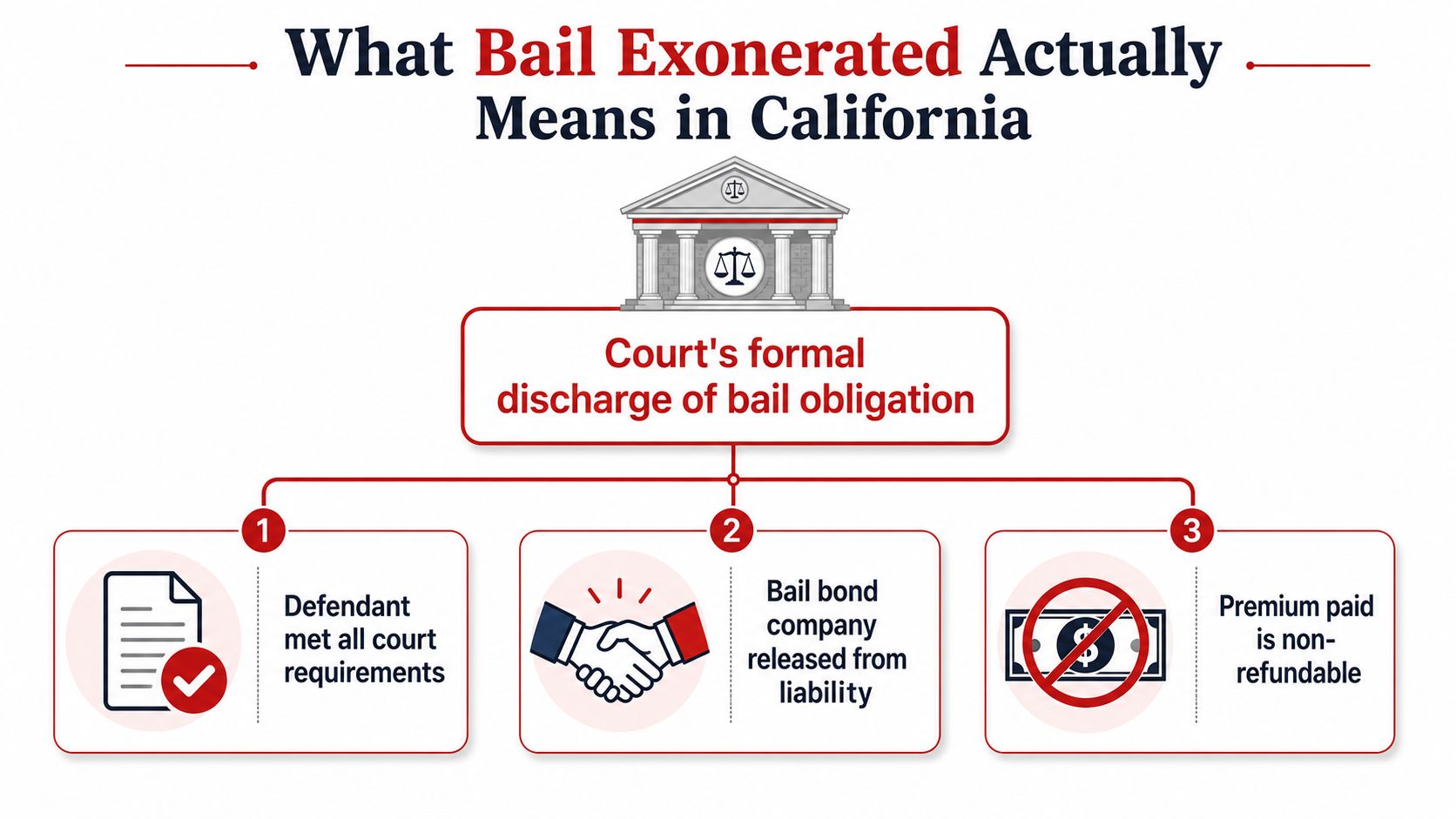
Exoneration is the court’s formal discharge of the bail bond, or the release of the surety from further liability. California legal definitions describe it as the point when the bail obligation ends and no more court appearances are required according to Justia’s bail exoneration definition. That is the cleanest way to understand the term.
Think of bail like a security deposit
A cash bail deposit works much like a security deposit. The court is holding money that is tied to a condition, and once that condition is satisfied and the bail is exonerated, the court generally returns the deposit to the person who posted it.
A bail bond works differently. The bond company posts the bail for the defendant, and the family pays the company’s premium for taking that risk and standing behind the appearance guarantee as explained in California bail practice commentary.
That is where a lot of the money confusion starts for families. The court’s discharge of the bail obligation ends the court’s claim on the bail itself, but it does not erase the separate agreement with the bond company. If a family used a bail bondsman, the premium is typically non-refundable even after exoneration as noted in California Q&A guidance.
Why the case result does not control exoneration by itself
California law ties exoneration to the end of the bail obligation, not to whether the defendant was found innocent or guilty. That is why exoneration can happen even if the case ends in conviction, acquittal, or dismissal. The court is asking a narrower question, whether bail is still needed for future appearances.
The best way to read it is simple. Exoneration tells you the bond’s legal life is over, not how the court felt about the underlying case.
For families dealing with Ventura County bail bonds, that distinction matters because a docket entry can look like final financial relief when it is really only final court relief. If the bond was a surety bond, the company is released from liability, but the premium stays with the company. If the case involved full cash bail, the deposit is generally the part that comes back.
If you are sorting through paperwork and trying to separate who owes what, a clear explanation of surety bond meaning can help make the roles of the court, the defendant, and the bond company easier to separate.
Exoneration Versus Release and Bond Termination
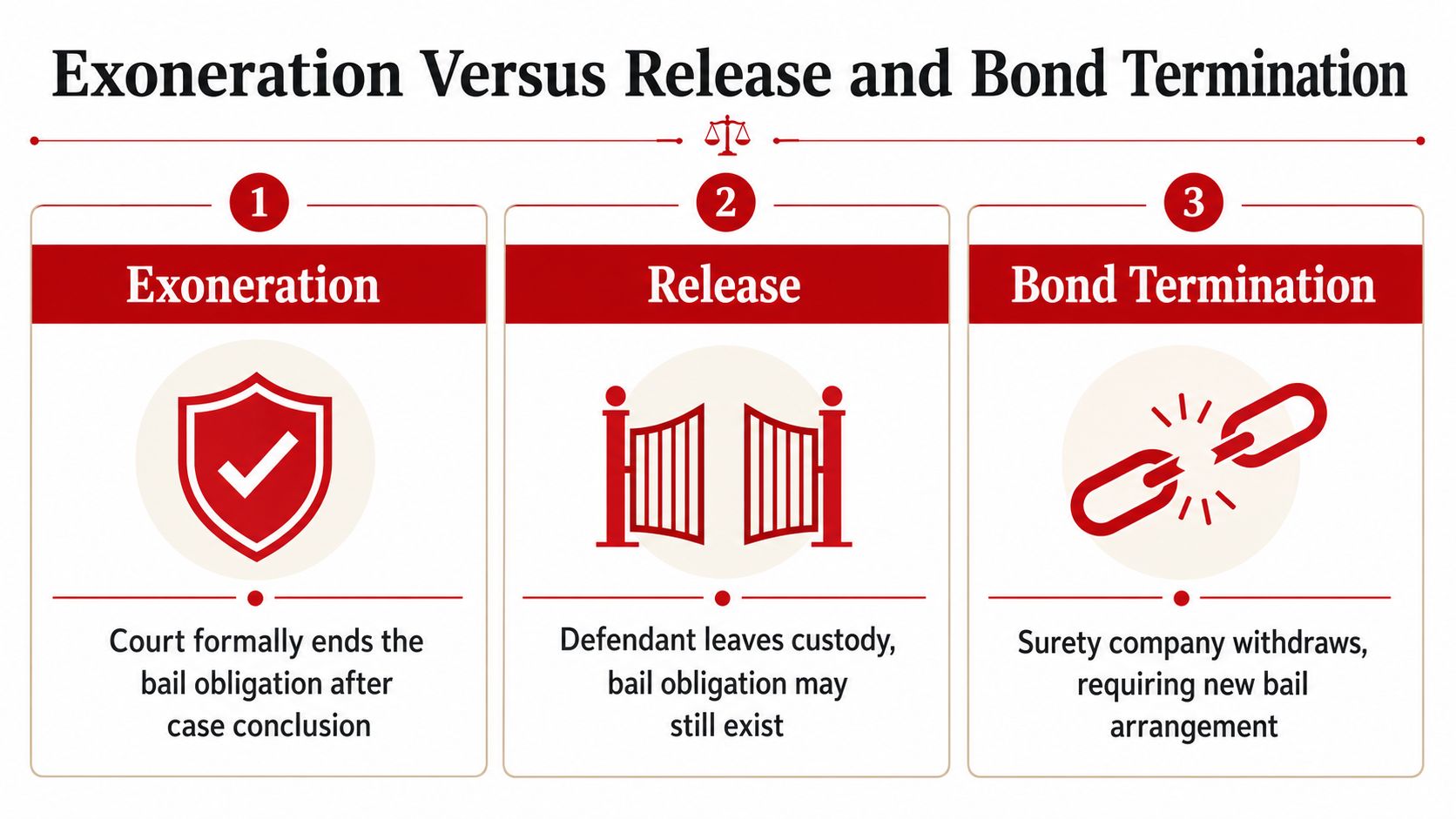
Families often use release, exoneration, and bond termination like they mean the same thing. They don’t. Each one points to a different stage in the process, and if you mix them up, the court paperwork gets confusing fast.
Release means the person leaves custody
Release is the jail or court letting the defendant out of custody. That might happen because bail was posted, the judge ordered release, or the defendant qualified for another form of release. It does not automatically tell you whether the bail obligation is finished. A person can be released and still have an active bond.
Exoneration means the bond is over
Exoneration is the court saying the bail obligation is done. In California, that can happen when the case ends, even if the result is conviction, dismissal, or acquittal as defined in California bail practice. This is why a docket can show a case is still emotionally active for the family, yet the bond itself is already discharged.
Bond termination is a different procedural idea
Bond termination can happen for procedural reasons that don’t feel like final case resolution. A bail arrangement may end because a surety steps out, the defendant is surrendered, or the bond is otherwise altered. That’s not the same thing as the case concluding, and it’s not the same as exoneration. For families reading paperwork tied to Ventura County Jail bail bonds, that difference matters because the word on the form changes the money outcome.
Release gets someone home. Exoneration closes the bail obligation. Those are related, but they are not the same thing.
For a local example of release without the same financial result, this page on own recognizance release in California helps separate a no-money release from a bond-based release. That contrast is often what clears up the confusion for first-time callers.
How Exoneration Affects Your Money and Collateral
This is the part families care about most, and it deserves a straight answer. Cash bail and a bail bond do not behave the same way when exoneration happens. The money that came out of your pocket may be treated very differently depending on which path you used.
A Ventura County family can see the word exonerated on the docket and still have one big question at the kitchen table, what money comes back, and what stays with the bond company. The answer starts with how the bail was posted.
Cash bail usually comes back through the court
If the full bail was deposited directly with the court, the depositor is generally entitled to the return of that deposit when bail is exonerated as described in California legal commentary. The court held that money only while the bail obligation was active. Once exoneration happens, that claim ends, and the deposit is no longer needed for the case.
Bond premiums do not come back
If a bail bond company was used, the premium is usually non-refundable because it is the fee for posting the bond and taking on the risk of the defendant’s appearance per California bail guidance. In plain terms, the premium is paid for the service of getting the person released, not for how the case later resolves.
California bail references often describe the standard premium structure as 10%, which helps families understand why the number they paid at the start is not the same thing as cash held by the court. The bond company earns that fee when it posts the bond. A California Q&A explanation says the same thing, the premium is not refunded even when the bond is exonerated as reflected in Avvo’s explanation.
Collateral follows a separate path
Collateral is different from the premium. If collateral was pledged, its return depends on the bond being exonerated and the collateral release process being completed. That process is not always automatic. Families should expect paperwork, and they should also expect that any unpaid service charges or bond agreement terms may still need to be addressed as discussed in bail FAQ guidance.
A simple way to separate the pieces helps here. The premium is the price of the bond. Collateral is security held against the bond. Cash bail is court-held money that may come back once the obligation ends.
| What Comes Back After Bail Exoneration | How Bail Was Posted | Premium Refunded | Cash Deposit Returned | Collateral Returned |
|---|---|---|---|---|
| Court deposit | Full cash bail with the court | No premium involved | Generally yes | Not usually applicable |
| Surety bond | Bail bond company posted the bond | No | No cash deposit with the court | Usually yes, after release steps are complete |
For families searching Oxnard bail bonds or anywhere in Ventura County bail bonds, this is the money question that matters at 3 a.m. The premium and the collateral are not the same thing. The premium is the bond company’s fee, and the collateral is security that should be handled under the bond agreement once the bond is fully discharged.
If the process feels stalled, ask for the exoneration order first, then ask separately about collateral release. Those are related files, but they don’t always move at the same speed.
For a closer look at the refund side of the process, this guide on how do you get your bail money back is useful for families trying to match the paperwork to the money trail.
Common Scenarios Where Bail Gets Exonerated
In Ventura County, families usually see exonerated on the docket after a case reaches a real stopping point. That can happen in Ventura, Oxnard, Camarillo, Port Hueneme, Thousand Oaks, Santa Paula, Moorpark, Fillmore, Ojai, and Santa Barbara. The case may look different from one family to the next, but the meaning stays the same. The court no longer needs that bail in place.
A case ends because the court no longer needs future appearances
A DUI case may be resolved through dismissal or another final outcome that closes the bail obligation. A domestic violence arrest may end in dismissal if the prosecution does not move forward. A warrant case can be cleared after the defendant appears and the court deals with the underlying matter. In each of those situations, exoneration follows the case result, not the family’s feelings about the outcome.
A simple way to understand it is this. If the case no longer has open court appearances tied to that bond, the bond can come off the books.
Trial outcomes can also lead to exoneration
If a case goes all the way to trial and ends in acquittal, the bail obligation is over because there are no more required court appearances tied to that bond. The same basic rule also helps explain why a bond can end after other final case outcomes, including dismissal or conviction, once the court no longer needs the defendant secured. That is why the docket language matters more than guesses from the family or the defendant.
A local example comes up often with families calling for 24-hour bail bonds Ventura. They want to know whether a resolved case means the money part is finished. The answer can be yes for the court-held cash deposit, but not for the premium paid to a bond company.
The video below helps if you are trying to match a closed case with the paperwork that follows.
Collateral and paperwork keep moving after the result
Even after the docket says exonerated, the family may still have to wait on paperwork, especially if collateral was pledged. A family that posted a car title, cash, or other security should keep every receipt and every bond document together. That makes it easier to confirm what was pledged, what was held, and what should be returned once the bond file is fully closed.
If the case ended because the court entered a failure-to-appear consequence before later resolving the matter, it helps to review how bail forfeiture works so the family can tell the difference between a case that was closed cleanly and one that first went through a problem step.
Next Steps After Your Bail Bond Is Exonerated
The word exonerated is not the finish line for the family’s job. It’s the signal to start checking paperwork carefully so the money and collateral follow the case outcome. That’s especially true if the bond involved a co-signer, property, or a long paper trail.
Start with the court record
Confirm the exoneration directly with the court clerk or the online docket before assuming anything else is complete. If you’re in Ventura County, save a copy of the docket entry or exoneration order for your records. You’ll want that if there’s a delay later.
Then contact the bail bond company
If a bond company was involved, call them and ask what they need to begin releasing collateral. Families often focus on the court order and forget the separate bond file that also has to be closed. That’s where a lot of the waiting happens.
Keep the original paperwork handy
Gather the bond agreement, receipt, any collateral papers, and the case number. If something is missing, the process can slow down while everyone tries to reconstruct the file. That’s avoidable if the family keeps one clean folder from the beginning.
Practical rule: if you can’t find the exoneration order in your records, ask for it again right away. Paperwork gaps are one of the easiest delays to fix.
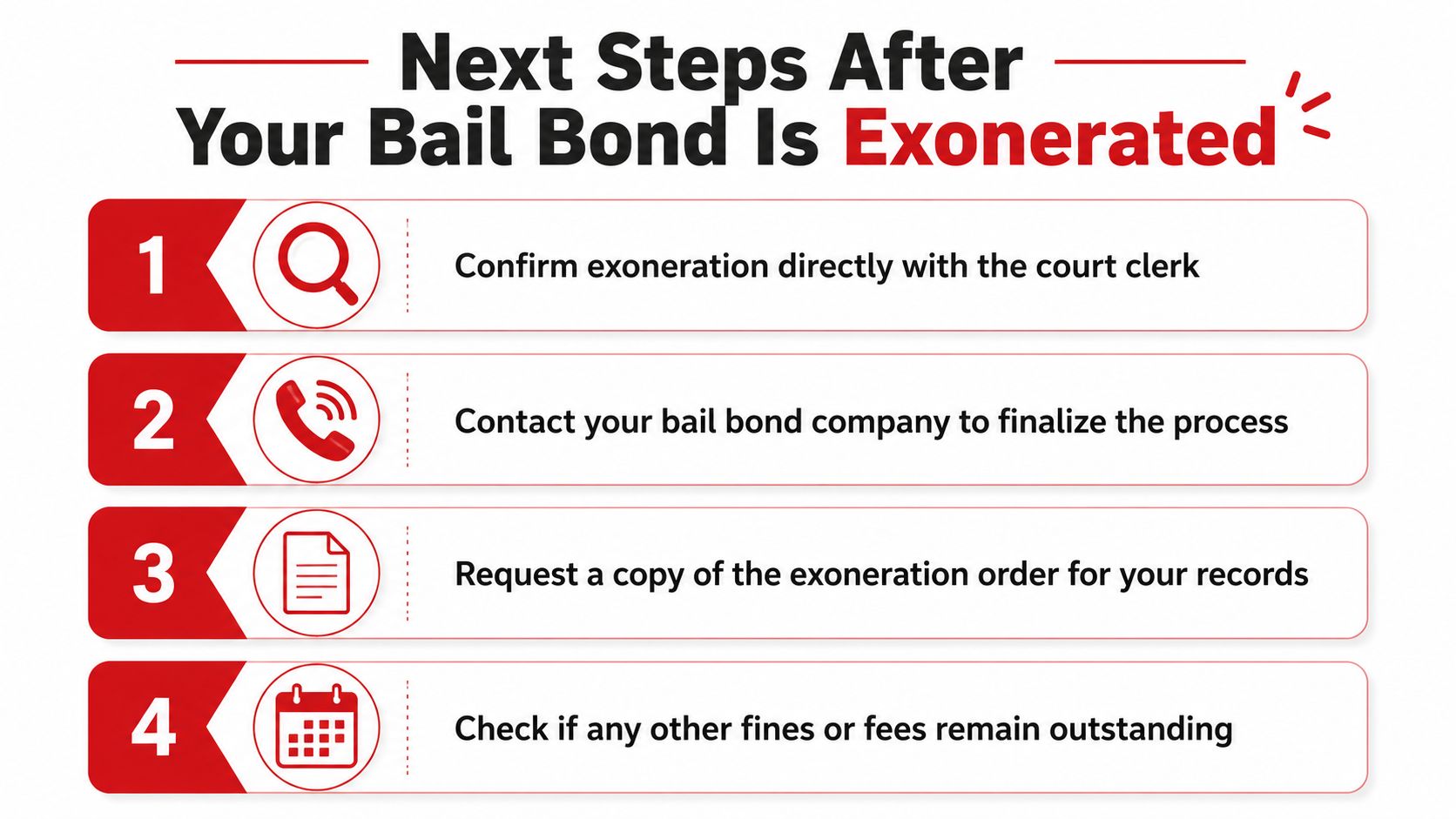
Check for anything else still outstanding
Sometimes the bond is done, but other financial obligations are still open. Fines, fees, or other court-ordered amounts may remain separate from the bail itself. If anything looks off, ask the clerk or the bond company to point to the specific line item.
For families using fast bail bonds Ventura services or looking after a release through Ventura County Jail bail bonds, the smartest move is to stay organized until the collateral is back in hand. If the release process stalls, this guide on getting your bail money back can help you compare the court side and the bond side without guessing.
Frequently Asked Questions About Bail Exoneration
How long does exoneration take to show up in Ventura County?
The court has to enter the exoneration in the record, so there can be a lag between the case ending and the docket reflecting it. Families should check the court record directly and not assume the silence means something went wrong.
Does exoneration mean the case is completely over?
It means the bail obligation is over. That can happen when the case is resolved, but other legal obligations, like fines or sentence terms, can still exist separately.
What if the defendant missed a court date earlier but the case was later resolved?
That history can matter in the case file, but exoneration still turns on whether the bail obligation has ended and the court has entered the discharge. If you’re unsure, ask for the written docket entry.
Can I use the same bondsman again in the future?
Yes, if the relationship worked well and the company is available for the new case. Families often return to the same agent because they already understand the paperwork and the communication style.
What should I watch for if collateral was involved?
Watch for the collateral release steps, not just the word exonerated. The bond can be discharged before the collateral physically comes back, so follow up until you have confirmation that the file is fully closed.
If you’re dealing with a recent exoneration in Ventura County and still trying to sort out what comes back, what doesn’t, and what paperwork you need next, Bada Bing Bail Bonds can help you read the docket, track the bond file, and answer the money questions in plain English. Visit Bada Bing Bail Bonds for direct help from a local team that understands Ventura, Oxnard, Camarillo, and the rest of the county when the clock is moving and the family needs answers fast.