California’s bail schedule is a county-by-county list of presumptive amounts, not one fixed statewide number, and the standard bondsman fee is 10% of the total bail. If the number on the paper says $50,000, the usual bond premium is $5,000, not fifty grand.
You’re probably reading this after a bad call, not because you’re bored. A loved one got booked in Ventura, Oxnard, Camarillo, or somewhere nearby, and now you need a real number, fast, before the night drags on and the jail window closes.
Table of Contents
- The Call That Changes Everything
- What a California Bail Schedule Is
- Why Schedules Vary by County in California
- How to Find the Bail Amount for Your Charge and County
- How Bail Amounts Scale by Charge Severity
- Exceptions That Change the Schedule Amount
- Why Families in Ventura County Call a Bondsman
- Your Next Steps and Who to Call Right Now
The Call That Changes Everything
It’s 2 a.m., and your phone is lighting up from a jail number you don’t recognize. Your brother is in Ventura County Jail, your wife got stopped in Oxnard, or your son’s sitting in booking in Camarillo, and the first thing everyone asks is the same thing, how much is bail?
That’s why people search bail schedule California in a panic. They’re not researching for fun. They need the county number, the release path, and the fastest way to get someone out before a simple booking turns into a long, expensive wait.
What people get wrong in that moment
Most families assume there’s one statewide price for a charge. There isn’t. California’s schedule is local, the jail uses it as a starting point, and the number can change once a judge looks at the case.
Practical rule: at the jail, speed matters more than theory. If you have the charge, the county, and the booking status, you’re already ahead of most callers.
The rest comes down to reading the schedule the right way and not wasting time on the wrong county. Ventura County, Santa Barbara, Oxnard, Port Hueneme, Thousand Oaks, Santa Paula, Moorpark, Fillmore, and Ojai all run through local systems and local timing. That’s where families lose hours.
The clean move is simple. Confirm the county, confirm the charge, check the schedule, then decide whether you’re paying full cash or using a bond. If you want a plain-English explanation of the release process itself, this bail basics guide is a useful place to start.
What a California Bail Schedule Is
A California bail schedule is an operational default, and the jail uses it as the first number, not the final answer. Each county’s superior court judges must adopt and annually revise a uniform bail schedule under Penal Code section 1269b(c), and that schedule sets presumptive bail amounts for offenses in that county. Ventura County follows its own schedule, so the number you hear at booking may not match what another county would use. Source on county schedules
Why presumptive bail is not final bail
The jail relies on the schedule to keep cases moving. A judge can still move away from it after reviewing public safety, the seriousness of the offense, prior record, and flight risk. The schedule sets the starting point, and the court can raise it, lower it, or change the release conditions once the case is reviewed.
That matters at 3 a.m. because families hear one number and assume the case is settled. It isn’t. The schedule tells you what the county expects as the default, while the judge can change it once the case gets reviewed.
Ventura County families need to pay attention to the county that booked the arrest. A Los Angeles number does not control a case booked in Ventura, and a statewide headline does not get anyone out of jail. The booking county sets the path, and that is the only number that matters in the first hours.
The practical way to read it is simple. The schedule is the jail’s pricing map, not the court’s final ruling. If you are trying to estimate what release will cost tonight, start with the county schedule, then wait for the judge’s review. If you want a plain-English explanation of the release process itself, this bail basics guide is a useful place to start.
Why Schedules Vary by County in California
County schedules vary because each county court sets its own presumptive amounts. In California, that means the number attached to a charge can shift depending on where the arrest happened, even before a judge looks at the case. Human Rights Watch report
Ventura County Is Not Los Angeles County
Ventura families need to look at the booking county first. A felony or misdemeanor booked in Ventura County follows Ventura County’s schedule, not the number people saw for a bigger neighboring county. That difference can decide whether a family posts cash, uses a bond, or waits until morning.
The schedule also matters because it shapes the first money question before any conviction talk starts. Human Rights Watch reported that California’s bail practices can push people into jail on the front end, even though many cases never end in a guilty finding. That is why the number at booking carries so much weight when the jail wants an answer fast.
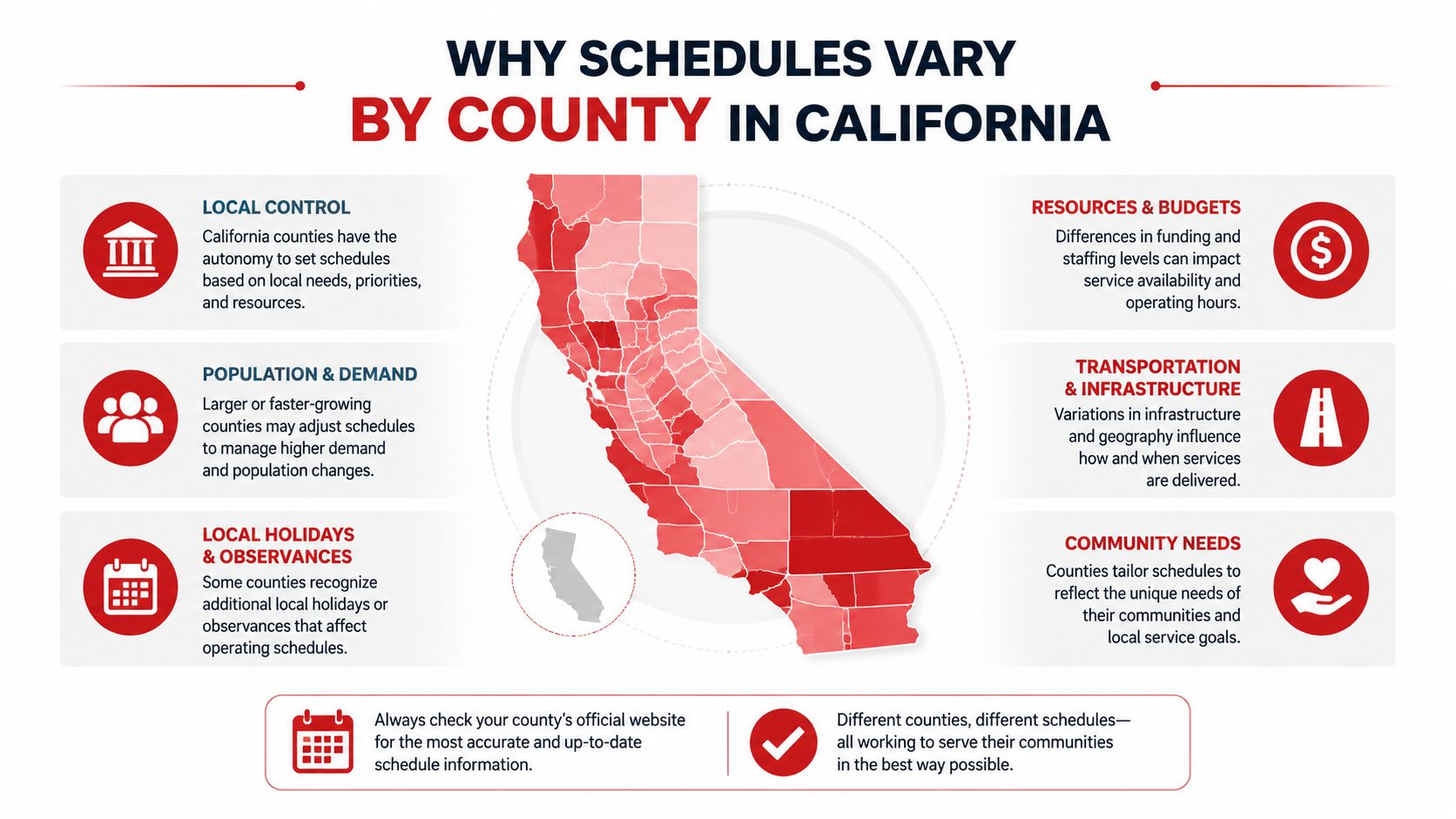
Families compare counties and expect the same charge to carry the same amount. It usually does not. Local courts set their own schedules based on local needs and resources, so a Ventura case can land differently from a case booked somewhere else. If you want another county example, this Alameda County bail schedule page shows the same county-by-county split in a different part of California.
How to Find the Bail Amount for Your Charge and County
Start with the county that booked the arrest. For Ventura County, pull the current criminal bail schedule PDF from the Ventura County Superior Court site, find the offense in the alphabetical list, and confirm whether the charge is listed as a felony or misdemeanor. If the charge is unclear, the booking sheet or jail roster usually settles that quickly.
Four Checks Before You Call a Bondsman
- Check the county first. Ventura County, Santa Barbara County, and the other nearby counties each use their own schedule.
- Match the exact offense. A charge name that looks close enough can still be the wrong line item.
- Confirm felony or misdemeanor. That distinction changes the starting point.
- Verify booking status with the jail. You want to know the person is in custody and whether any holds are attached.
The jail search matters because a booking number without a live custody status doesn’t help you post bail. If there’s a hold, a second case, or another agency involved, the quoted number may not be the whole story. Families often waste time by guessing instead of checking.
The cleanest move is to gather the charge, the county, and the jail status before anyone starts talking money. If you need a straightforward guide to finding a detainee in local custody, this California inmate search resource will point you in the right direction.
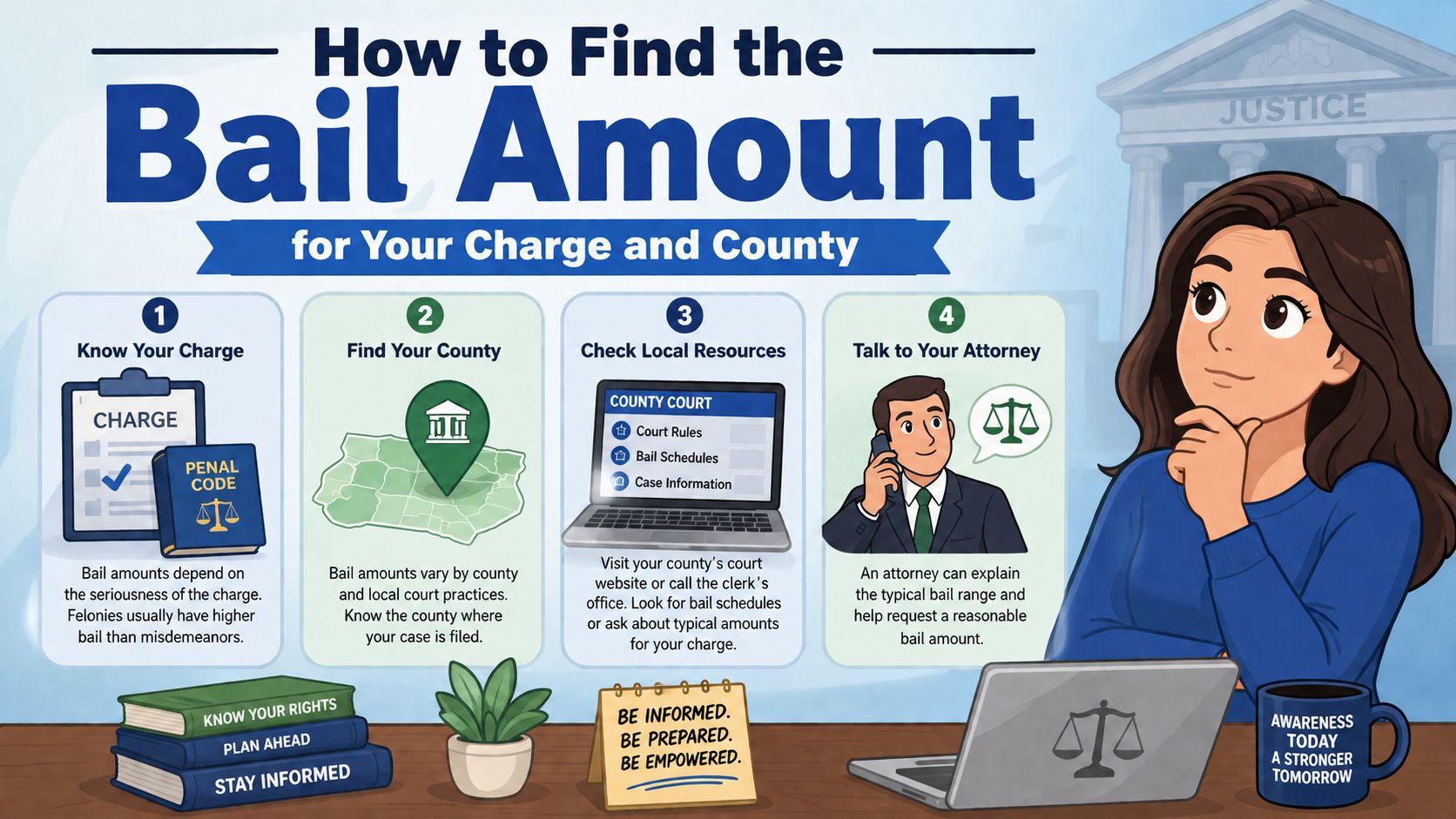
The reason this step matters is simple. The schedule number is only useful if it matches the exact county and the exact charge. Get that wrong, and you’re budgeting off the wrong figure.
How Bail Amounts Scale by Charge Severity
The schedule climbs fast as exposure gets worse. In Los Angeles County, unlisted felonies are set at $20,000 for a maximum term of 3 years, $55,000 for 10 years, $100,000 for 16 years, and $1,000,000 for life sentences. In El Dorado County’s 2025 schedule, any felony offense not otherwise listed still carried a $10,000 presumptive bail. Los Angeles and El Dorado examples
California Bail by Offense Severity and Premium Cost
| Offense Category | Presumptive Bail | Bondsman Premium (10%) |
|---|---|---|
| Unlisted felony, shorter exposure example | $20,000 | $2,000 |
| Unlisted felony, 10-year exposure | $55,000 | $5,500 |
| Unlisted felony, 16-year exposure | $100,000 | $10,000 |
| Unlisted felony, life sentence exposure | $1,000,000 | $100,000 |
That table is the primary budgeting tool. A family doesn’t plan around the headline bail, they plan around the 10% premium if they’re using a bond. So a $50,000 schedule amount usually means a $5,000 bond premium, not a $50,000 cash wire.
The number at the top of the schedule is a release price signal. The number that hits your wallet is usually the premium, not the full bail.
That’s why people calling about fast bail bonds Ventura keep asking for the amount twice. They want the full schedule figure, then the actual out-of-pocket figure. Those are not the same thing, and confusing them can delay release.
Exceptions That Change the Schedule Amount
The number on the schedule can jump because charges stack differently depending on how the arrest happened. Santa Clara’s bail schedule says that when two or more charges come from the same course of conduct on the same occasion, bail is set at the highest single scheduled amount. When charges arise from separate courses of conduct, the amounts are added. For sex offenses involving threat or violence, the full amounts are added regardless of whether they stem from one transaction. Santa Clara county schedule
When one arrest turns into a bigger number
That rule is why two arrests that look similar on paper can produce very different quotes at the jail. One case may be controlled by a single top count, while another stacks into a much larger total because the facts are split across separate incidents.
Other conditions also push the number higher after booking. Protective orders, no-contact terms, prior failures to appear, probation issues, out-of-county warrants, and immigration holds can all change what the jail can do immediately. If you’re facing a hold issue, this no-bond warrant guide is the kind of page families usually need before they start making calls.
A practical rule helps here, if the paperwork shows more than one layer of risk, assume the first number you heard is not final. The schedule may be the baseline, but the booking outcome can shift fast once the jail checks the rest of the file.
That’s the part families feel in their budget. A simple-looking arrest can turn into a larger release decision because the county is looking at more than one count, more than one case, or more than one hold.
Why Families in Ventura County Call a Bondsman
A Ventura County arrest usually turns into a money decision fast. The jail wants a release answer, the family wants the person out, and the full cash amount is often more than people can hand over in one shot. In California, the standard commercial bail bond premium is capped at 10% of the total bail amount, so a $50,000 bail generally means a $5,000 premium instead of posting the full cash amount. That is the difference between getting moving tonight and waiting on money to come back later. California premium example
What you pay and what you get
A bond is not just money. You are paying for someone to verify the booking, prepare the paperwork, coordinate with the jail, and stay on it while the release window shifts. In Ventura County, that matters because a live person who knows the jail routine can keep things moving when a family is standing in the parking lot with no clear answer.
Direct advice: if the arrest happened after hours, call a 24-hour agent before you try to fix it alone. The clock is already running.
Families also choose a bondsman when the release has extra moving parts. Payment plans, co-signers, and collateral can make the difference when the bond is larger or the case carries more risk. Bada Bing Bail Bonds handles that kind of release work for DUI, domestic violence, drug offenses, theft, warrants, probation violations, and white-collar charges, while keeping the pricing transparent and the paperwork plain. For families trying to move quickly, that is often the practical route.
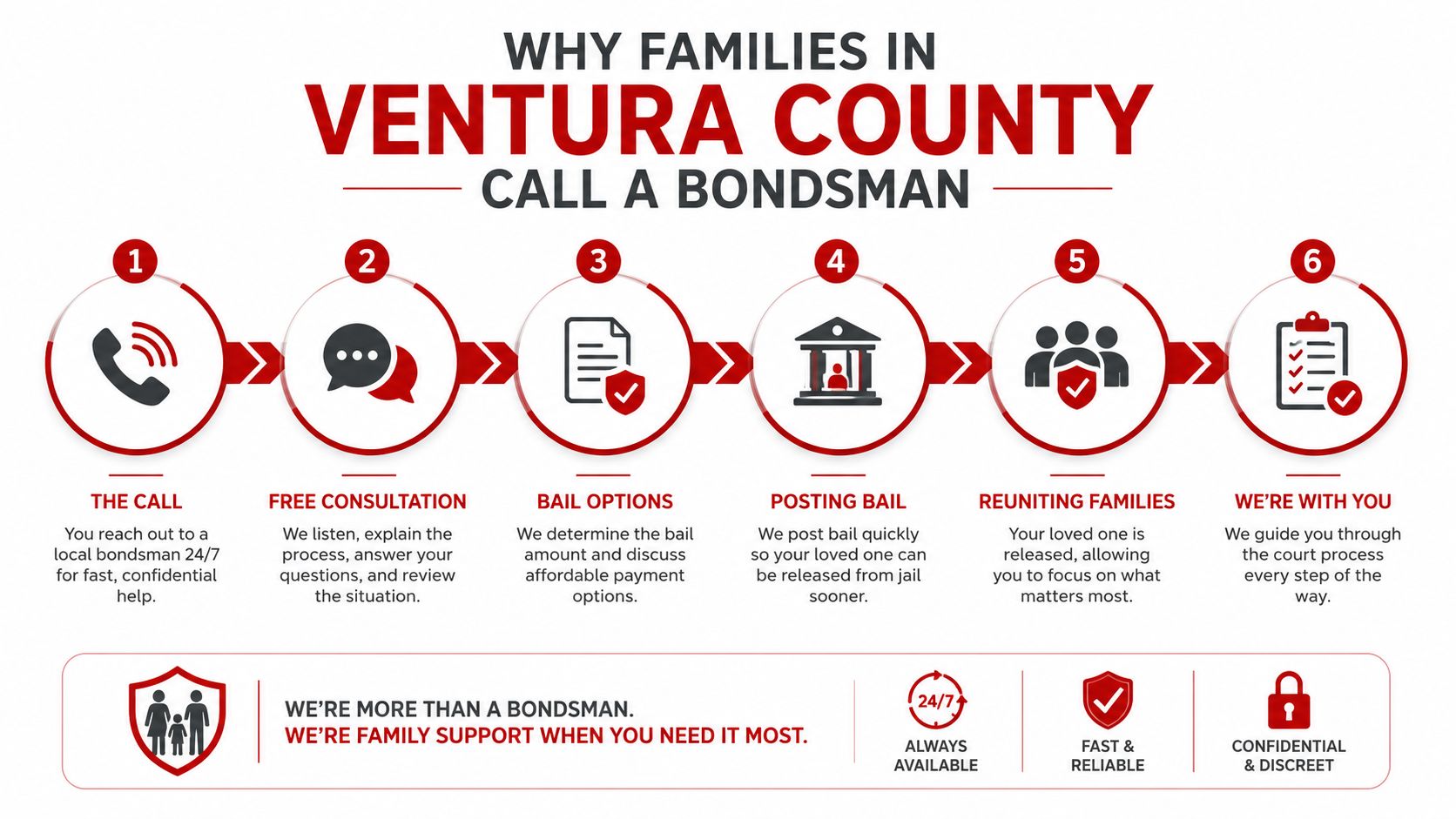
If you are choosing between cash and a bond, timing matters as much as cost. Cash can tie up a large amount until the case ends. A bond usually costs less upfront, gets the release started, and leaves the family with more control over its money.
For families who need to move fast, this fast bail guide lays out the release steps in plain order.
Your Next Steps and Who to Call Right Now
First, confirm the county and the exact charge. Second, pull the current schedule number and check whether the case is a felony, a misdemeanor, or a stacked set of charges. Third, decide whether full cash makes sense or whether the 10% bond premium is the smarter move for your family’s cash flow. Fourth, call a licensed local agent who answers now and knows the Ventura County jail process.
Use the right local help
If the arrest is in Ventura, Oxnard, Camarillo, Port Hueneme, Thousand Oaks, Santa Paula, Moorpark, Fillmore, Ojai, or Santa Barbara, you want someone who works these courts and jails every day. You also want 24-hour response, transparent 10% pricing, no add-on fees, and the ability to handle payment plans, co-signers, and collateral when the case needs it.
If you’re still sorting out the release process, this fast bail guide gives you the practical sequence to follow. Keep it simple, confirm the booking, confirm the amount, and call before you spend another hour guessing.
Bada Bing Bail Bonds is a fit for families who need clear answers, plain English, and someone who can move fast from the first call to the pickup. In Ventura County bail bonds work, speed and clarity beat panic every time.
If you need help right now, Bada Bing Bail Bonds can walk you through the county schedule, the booking status, and the bond paperwork without making it harder than it already is. Visit Bada Bing Bail Bonds to get a local agent on the phone and start the release process tonight.