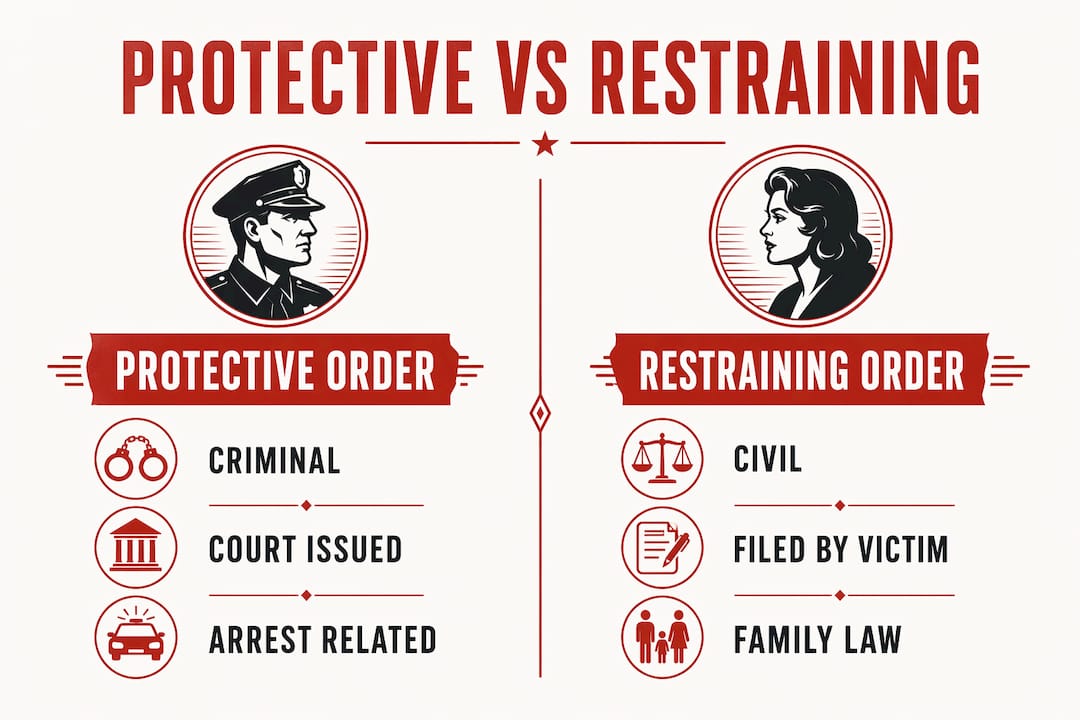
In California, a criminal protective order is tied to an arrest and issued by a criminal court, while a restraining order (most commonly a Domestic Violence Restraining Order, or DVRO) is a civil order the victim files independently. Both can exist at the same time, and either one can add conditions to your loved one’s release, or slow it down, even after you’ve paid the bond.
Pro Tip: Before you call a bail agent, check the court’s online records and the jail’s booking notes for any active orders. Tell your bail agent immediately. Disclosing an order upfront cuts verification time and reduces surprises at the jail window.
Table of Contents
- What’s the difference between a protective order and a restraining order in California?
- Quick comparison: protective orders vs restraining orders in California
- How do these orders affect bail and release in California?
- Practical checklist for families and bail co-signers
- Timeline and costs: what to expect
- What happens if an order is violated?
- Key Takeaways
- What families should actually expect at the jail
- Bada Bing Bail Bonds is ready when orders complicate release
- Useful sources and California court resources
What’s the difference between a protective order and a restraining order in California?
California uses these terms loosely, and even official forms blur the line. Form DV-130 carries both “Restraining Order After Hearing” and “Order of Protection” on the same document. California Family Code §6218 uses “protective order” as an umbrella term. Here’s what actually matters in practice:
Emergency Protective Order (EPO)
- Issued by a police officer or judge at the scene, available 24/7
- Lasts five to seven days to give the victim time to seek a longer civil order
- Triggers immediately after a domestic violence call, before any court appearance
Criminal Protective Order (CPO)
- Issued by a criminal court judge, usually at arraignment, at the prosecutor’s request
- Stays in place throughout the criminal case and sometimes beyond sentencing
- Enforced through the criminal system; violation is a new crime under Penal Code §273.6
Temporary Restraining Order (TRO)
- A civil order the victim files using form DV-100; a judge typically decides the same day or the next business day
- Issued without notice to the defendant (ex parte) and lasts until the full hearing
Domestic Violence Restraining Order (DVRO)
- The long-term civil order issued after a noticed hearing, governed by Family Code §6200
- Can include child custody, child support, and spousal support, which a CPO typically cannot
- Can last up to five years, with extensions available
California courts confirm that both a CPO and a DVRO can be active simultaneously. If they conflict, the stricter order governs.
Quick comparison: protective orders vs restraining orders in California
| Factor | Criminal Protective Order (CPO) | Civil Restraining Order (DVRO/TRO) |
|---|---|---|
| Trigger | Arrest or criminal prosecution | Victim files a civil petition |
| Who issues it | Criminal court judge / prosecutor | Civil/family court judge |
| Duration | Life of the criminal case (and beyond) | TRO: days to weeks; DVRO: up to five years |
| Enforcement | Criminal (arrest for violation) | Civil contempt + possible criminal charges |
| No-contact / stay-away | Yes | Yes |
| Weapons restriction | Yes | Yes |
| Custody / support | Rarely | Yes, routinely |
| Can both exist at once? | Yes | Yes |
| How to modify | Motion in criminal court | Motion in civil/family court |
Key safety rule: When a CPO and a DVRO are both active, always follow the stricter terms. A CPO that bars all contact overrides a DVRO that allows limited communication about children, until the criminal case resolves.
Under 18 U.S.C. §2265, every valid protective or restraining order must be enforced across all 50 states, regardless of what the issuing state called it. The label doesn’t change the legal weight.
How do these orders affect bail and release in California?
Paying bail does not erase court-ordered release conditions. A judge can require no-contact, GPS monitoring, or firearm surrender as prerequisites for release, completely independent of whether a bond is posted. Practitioners confirm that in domestic violence cases, these conditions are often non-negotiable at the initial hearing.
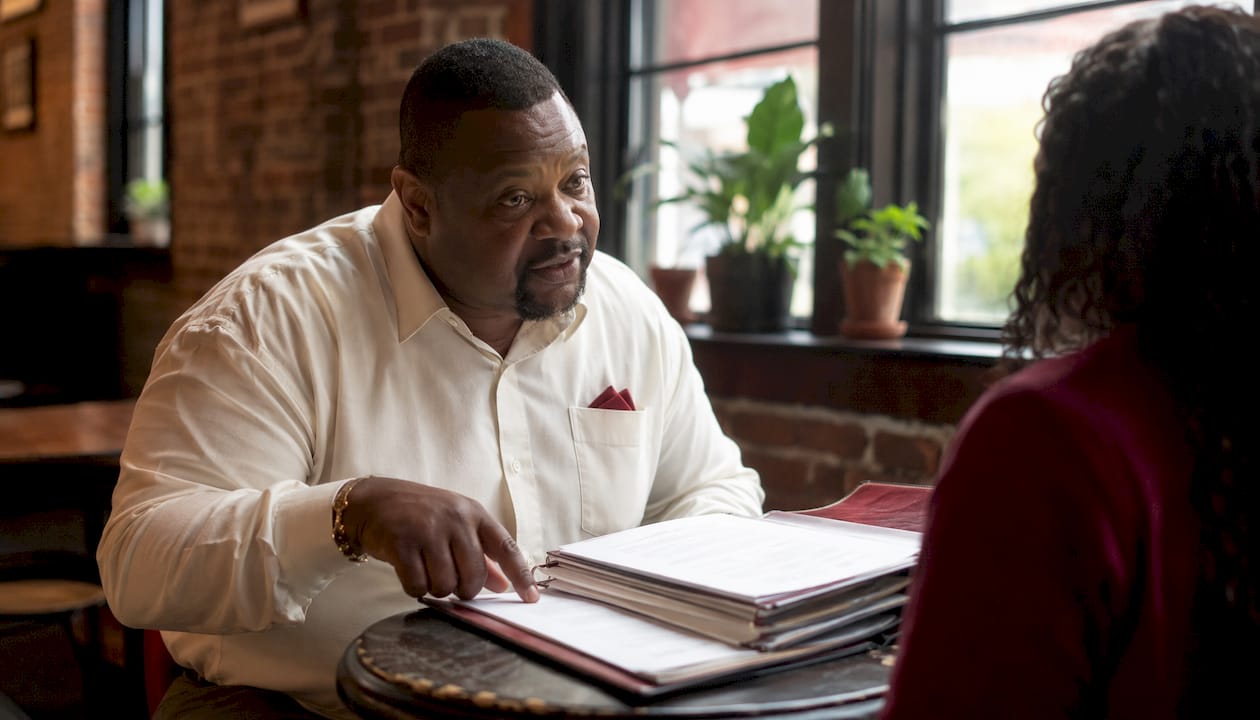
Many California counties also enforce a mandatory 12–48 hour hold after a domestic violence arrest before a judge even reviews bail. Ventura, Santa Barbara, and Orange County each apply local practices under procedures similar to Penal Code §1270.1, meaning your loved one may sit in custody for up to two days before a bond amount is formally set. Understanding why bail conditions matter helps families set realistic expectations from the first phone call.
Here’s what courts typically require before releasing a defendant in a domestic violence case:
- Service of the protective order on the defendant
- Prosecutor notification and, in some cases, a formal hearing
- Confirmation that the defendant has surrendered or will surrender firearms
- Agreement to all judge-ordered release conditions before walking out
Pro Tip: Bail professionals recommend treating any active order as potentially determinative of your loved one’s release timetable. Disclose it to your bail agent immediately and be prepared to wait if a judge must review the matter before release.
Practical checklist for families and bail co-signers
Follow this sequence to reduce delays and avoid a re-arrest after posting bond.
- Get the booking details. Collect the booking number, inmate ID, exact county jail location, arresting agency, and the bail amount or bond set.
- Check for active orders. Search the court’s online case portal, review the jail’s booking notes, or contact the district attorney’s office to confirm whether a CPO or DVRO is on file.
- Gather your documents. Bring the court case number, a copy of any EPO or DVRO if you have it, and proof of your relationship to the defendant if custody issues are involved.
- Call your bail agent with everything. A bail bond agent needs the booking number, any open protective or restraining order case numbers, and the arresting agency to begin verification quickly.
- Understand the conditions before signing. Ask the bail agent to walk you through every release condition the judge has imposed. Violating even one can trigger immediate re-arrest and bond revocation.
- Handle firearm surrender proactively. If the order requires it, arrange surrender before or at release. Failure to comply is a separate criminal offense.
Common complications to prepare for: a no-bail hold (requires a judge to lift it before any bond is accepted), conflicting order terms, and GPS monitoring fees billed separately from the bond premium.
Timeline and costs: what to expect
- EPO: Active within hours of arrest; expires in five to seven days
- TRO: Issued same day or next business day after the victim files; lasts until the full hearing, typically within three weeks
- DVRO final order: Hearing usually scheduled within weeks of the TRO; order can last up to five years, with extensions available near expiration
- CPO: Begins at arraignment and follows the criminal case timeline, sometimes continuing post-sentencing
On costs: bail amounts for domestic violence charges vary widely by county and charge severity. Misdemeanor DV bail in Ventura County typically runs lower than felony charges; see Ventura County DV bail amounts for current ranges. The bail bond premium is typically 10% of the total bail amount, non-refundable, paid to the bail agency. GPS monitoring fees, if court-ordered, are billed separately and are not part of the bond premium. Court fines and civil fees the petitioner may pursue are also distinct from bail costs.
County practices differ. Orange County courts tend to move arraignments faster than some rural courts. Santa Barbara and Ventura County jails have their own booking timelines that affect when a bond can be accepted.
What happens if an order is violated?
Violating a protective or restraining order in California carries real criminal exposure. Under Penal Code §273.6, a violation of an order issued under Family Code §6218 or CCP §527.6 can result in immediate arrest, misdemeanor charges, and escalation to felony charges for repeat violations or violations involving violence.
Steps to take if a violation occurs:
- Call 911 immediately if there is any physical threat or contact
- Document everything: screenshots of messages, photos of any damage, names of witnesses, and a log of dates and times
- Contact the court clerk to report the violation and request enforcement
- Notify the district attorney’s office, especially if a CPO is involved
- If the violation triggers re-arrest, call your bail agent right away; bond revocation is possible and a new bond may be required
Pro Tip: Save all evidence to a cloud account the restrained person cannot access. Courts take documented patterns seriously, and a single well-documented violation often results in tighter restrictions or denial of bail at the next hearing.
Key Takeaways
In California, a criminal protective order and a civil restraining order serve different legal systems, can exist simultaneously, and both can add conditions that delay or restrict release even after bail is paid.
| Point | Details |
|---|---|
| Criminal vs. civil distinction | A CPO comes from a criminal arrest; a DVRO is filed by the victim in civil court. |
| Both orders can coexist | California courts confirm a defendant can be subject to a CPO and a DVRO at the same time. |
| Bail paid ≠ free of conditions | Judges impose no-contact, GPS, and firearm conditions independent of whether bond is posted. |
| Mandatory holds apply | Domestic violence arrests often carry a 12–48 hour hold before bail is even reviewed. |
| Badabingbail speeds the process | Bada Bing Bail Bonds verifies active orders, explains release conditions, and posts bond 24/7 in Ventura, Santa Barbara, and Orange Counties. |
What families should actually expect at the jail
Most families calling about a domestic violence arrest are surprised by one thing: the hold. They’ve scraped together the bond premium, they’ve called a bail agent, and then they learn their loved one can’t be released for another 12–36 hours because a judge hasn’t reviewed the case yet. That’s not a bail problem. That’s a court-imposed condition, and no amount of money changes it.
After 15 years working domestic violence cases across Ventura, Santa Barbara, and Orange Counties, the pattern is consistent. The families who get through it fastest are the ones who call a bail agent early, disclose everything they know about any orders, and don’t try to contact the protected party in the meantime. That last point sounds obvious. It isn’t. A single text message during a hold can trigger a new charge and push the release date back by days.
When custody or children are involved, coordinate with a family law attorney alongside the bail process. The DVRO can affect custody arrangements immediately, and those terms don’t pause while criminal proceedings move forward. Safety comes first, for everyone in the situation.
Bada Bing Bail Bonds is ready when orders complicate release
When a protective or restraining order is in the picture, the bail process gets more complicated fast. Bada Bing Bail has handled domestic violence cases in Ventura, Santa Barbara, and Orange Counties for over 15 years, including cases where EPOs, CPOs, and DVROs were all active at once.
The team verifies active orders, explains every release condition in plain language, and works around mandatory holds so you’re not caught off guard. Financing is available with low down payments for qualifying clients, and Spanish-language support is on hand 24/7. When you call, have the booking number, jail location, bail amount, and any order case numbers ready.
Get help bailing someone out fast or call now for immediate assistance. Flexible bail bond financing is available for families who need it.
Useful sources and California court resources
- California Courts Self-Help: Protective Orders — official overview of order types and terminology, including the DV-130 form
- California Courts: Types of Restraining Orders — chart of which order fits which relationship type
- California Courts: Domestic Violence Restraining Orders — step-by-step on filing a DVRO, TRO process, and what a final order covers
- California Courts DVRO Bench Guide (PDF) — judicial reference covering custody presumptions, order contents, and hearing procedures
- WomensLaw.org: California Restraining Orders — plain-language guide to EPO duration, DVRO timelines, and extension options
- California Family Code §6218 — statutory definition of “protective order” as an umbrella term
- How bail bonds work in California — step-by-step on the bond process, premiums, and co-signer responsibilities
This article is general information, not legal advice. Confirm current order terms, statutes, and local court procedures with a licensed California attorney or the relevant court clerk for your specific situation.