You’re at your desk, the motion is ready, and the hearing date still isn’t locked in. The court line isn’t helping, the clerk isn’t taking reservations the old way, and now the portal is asking for a registration step you didn’t expect. That’s where many get stuck with the Los Angeles Court Reservation System, not because the system is mysterious, but because it hides its sharp edges behind a simple calendar screen.
The practical problem is timing. A reservation can look complete, then disappear if the filing doesn’t follow fast enough, or if the user hasn’t cleared the new access gate. If you handle reservations in Los Angeles often, those workflow traps matter more than the screen design.
Table of Contents
- What the Los Angeles Court Reservation System Does
- Completing the Mandatory Registration and Identity Verification
- Reserving Your Motion Hearing Date Through the Online Portal
- Meeting the Three-Court-Day Filing Deadline to Avoid Cancellation
- Common Reservation Errors and How to Fix Them Quickly
- Coordinating Court Reservations with Bail Bond Clients and Case Strategy
What the Los Angeles Court Reservation System Does
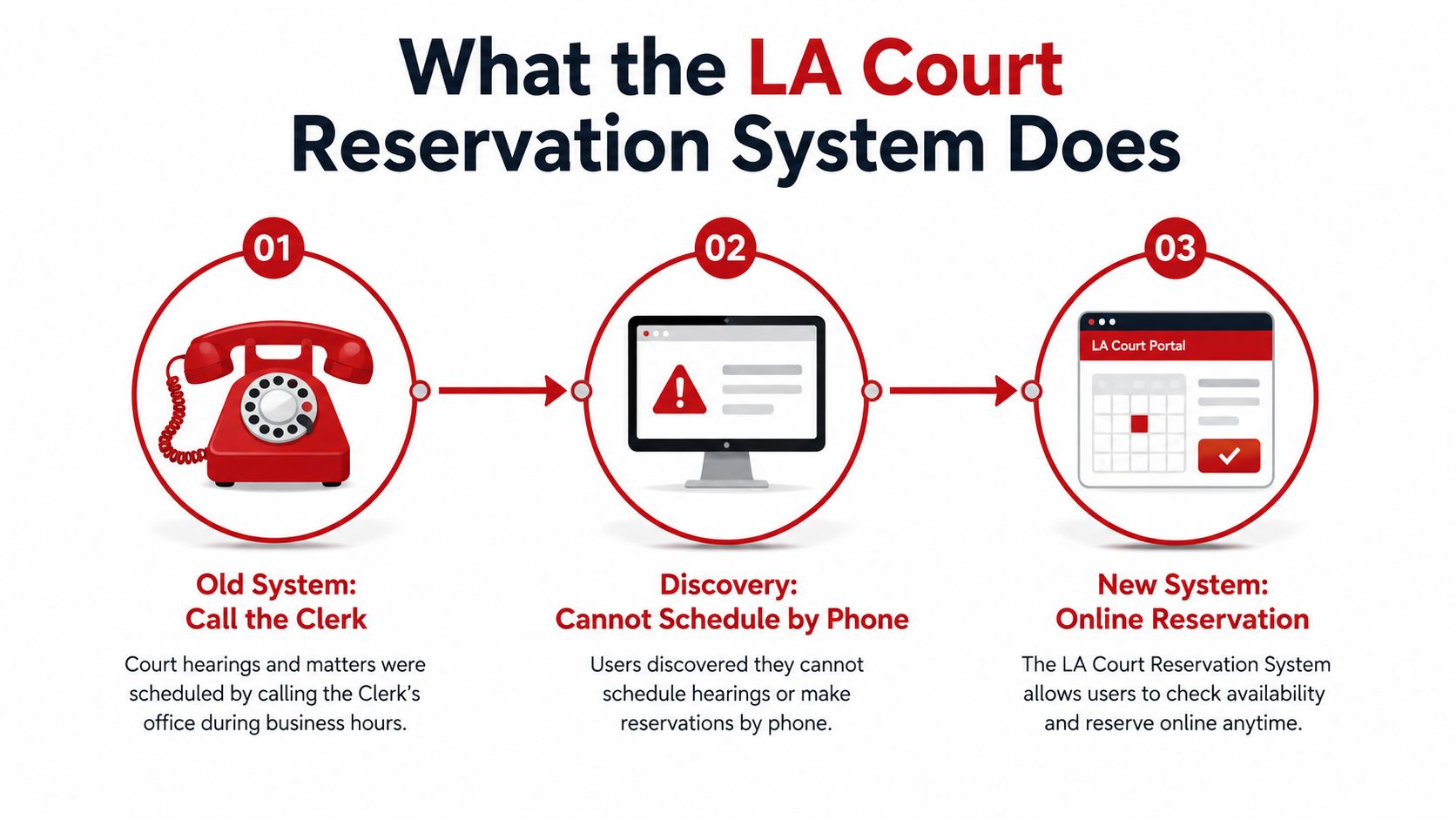
A litigator opens the portal, tries to secure a motion date, and learns quickly that the old habit of calling the courtroom no longer works. That is the entry point for the Los Angeles Court Reservation System, or CRS, a scheduling tool built for civil law-and-motion matters and designed to let attorneys and parties reserve hearing dates without appearing at the courthouse. The court began developing CRS in 2013, rolled it out in June 2013 to the Personal Injury Courtrooms in the central courthouse, and later expanded it to 23 courtrooms in 8 courthouses National Association of Counties award profile.
What CRS replaces
CRS replaces the back-and-forth of calling a clerk, waiting on hold, and hoping a department has open time. In practice, that means the system is not just a convenience layer, it is the official gate for many civil motion reservations. The court also made the system available 24 hours a day, seven days a week, so reservations can be made outside normal business hours, which is often when overloaded litigation teams do the work.
Practical rule: if the motion date is booked through CRS, treat the reservation like a court-controlled action, not an informal calendar hold.
That distinction matters because CRS ties scheduling to filing behavior and fee collection. The court reported that in one month 2,834 reservations were made through CRS, saving an estimated 236 hours of staff time, and it has collected more than $2.78 million in filing fees through the system since inception National Association of Counties award profile. Those figures show how tightly the portal sits inside the court’s workflow.
For a broader look at how court-side logistics affect the rest of a case, this local overview of the Ventura County court system context is useful. Even though CRS is a Los Angeles process, the operational lesson is the same. The court controls the date, the filing deadline controls the reservation, and the portal only works if the user follows the sequence the court has built.
Completing the Mandatory Registration and Identity Verification
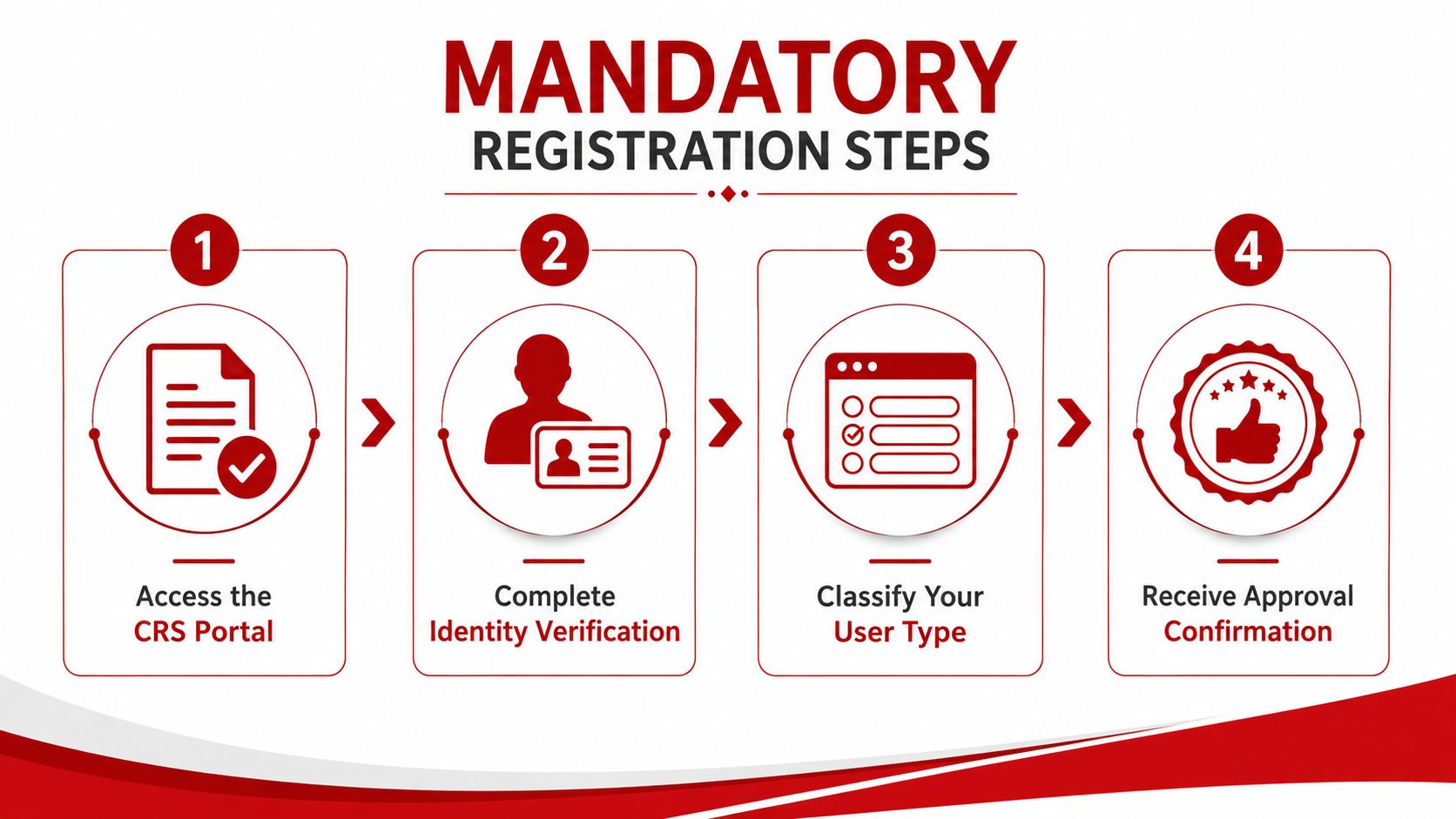
By March 21, 2025, CRS changed from a simple scheduling portal into a gated access system. Before a user can reserve a motion date, the Civil Division now requires a one-time registration, a username and password, and identity-verification details that classify the user as an attorney service firm, law firm, or self-represented user court notice. The court’s own notice makes the purpose plain, it wants to reduce unauthorized reservations and tighten access control.
How to classify the user correctly
The classification isn’t a clerical detail. It tells the court what kind of account is being created, and if you pick the wrong category, you can create avoidable friction later when the reservation workflow and the filer identity don’t line up. A firm account should be a firm account. A self-represented user shouldn’t try to force a business profile just to move faster.
Before starting, have the basics ready. You’ll need the information that supports your registration, your identity details, and the confidence to stop if something doesn’t match. If the system flags the account, the best move is to correct the mismatch before attempting a reservation, because a rushed workaround usually causes a later cancellation or a dead-end confirmation.
Best practice: register before you need the hearing date. Doing it the day you want to reserve is how people lose time they don’t have.
What the gate changes in practice
This registration layer is not just administrative overhead. It means reservation work now starts with credentialing, not with the calendar. That can be uncomfortable for experienced filers who are used to quick access, but the new process is meant to stop unauthorized bookings and make sure the person reserving the date is the person the court expects to see in the workflow.
If the account gets delayed, don’t keep clicking through and hoping the portal will self-correct. Check the identity category first, then confirm that the username and password are active, then revisit the filing plan. For users managing active case timelines, this is the kind of delay that can create a missed court appearance chain reaction, which is why many people pair the reservation process with a separate case-status check like Los Angeles inmate search guidance.
Reserving Your Motion Hearing Date Through the Online Portal
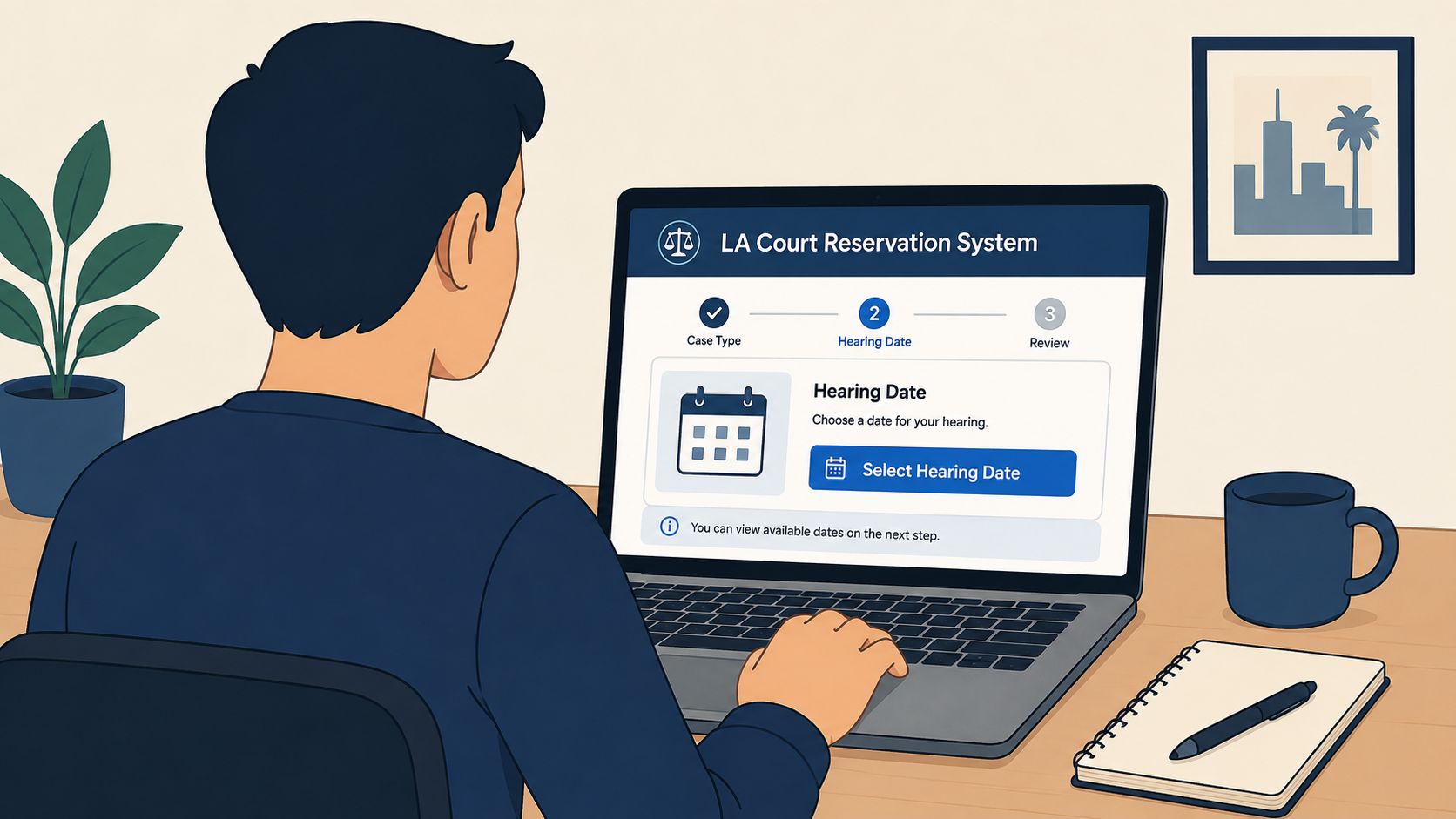
Once registration clears, the reservation process is straightforward if you work in the right order. Select the court, choose the department, review the available dates, and confirm the hearing slot before you move on to the filing step. The system is online around the clock, so the advantage is access, not speed in the abstract. What matters is whether you use that access without creating a mismatch between the reservation and the motion papers.
The correct booking sequence
Start with the correct courthouse and department. CRS became mandatory for Department 19 and Department 77 at the Stanley Mosk Courthouse effective August 3, 2015, and parties had to reserve law-and-motion hearing dates through the court’s website instead of calling courtroom staff legal professionals update. That older rollout is a good reminder that department-specific rules still matter, even when the interface looks uniform.
Then choose the motion date that fits the filing plan, not just the most convenient open slot. If the preferred date is full, do not force a bad fit by picking a department that does not match the motion. A reservation that looks successful but lands in the wrong department can create more trouble than waiting for the next available opening.
The cleanest reservation is the one that matches the motion, the department, and the filing timetable on the first try.
If you are coordinating several related motions, resist the temptation to scatter reservations across departments just to secure dates. That usually creates avoidable conflicts later. Save the confirmation details immediately, including the date, department, and any portal identifiers the court provides, because those details become your proof of booking if a filing question comes up.
For users who are mapping the hearing back to an arrest-related timeline, this procedural primer on arraignment basics can help with court sequencing. The key habit is simple. Book only what you can file on time, and only after the account is fully usable.
Meeting the Three-Court-Day Filing Deadline to Avoid Cancellation
Successful reservations fail. A motion date gets booked, everyone assumes the hearing is safe, and then the papers don’t go in fast enough. Under the court’s February 26, 2024 notice, civil motion reservations are automatically cancelled if the motion documents are not filed within three court days of the reservation date court change notice.
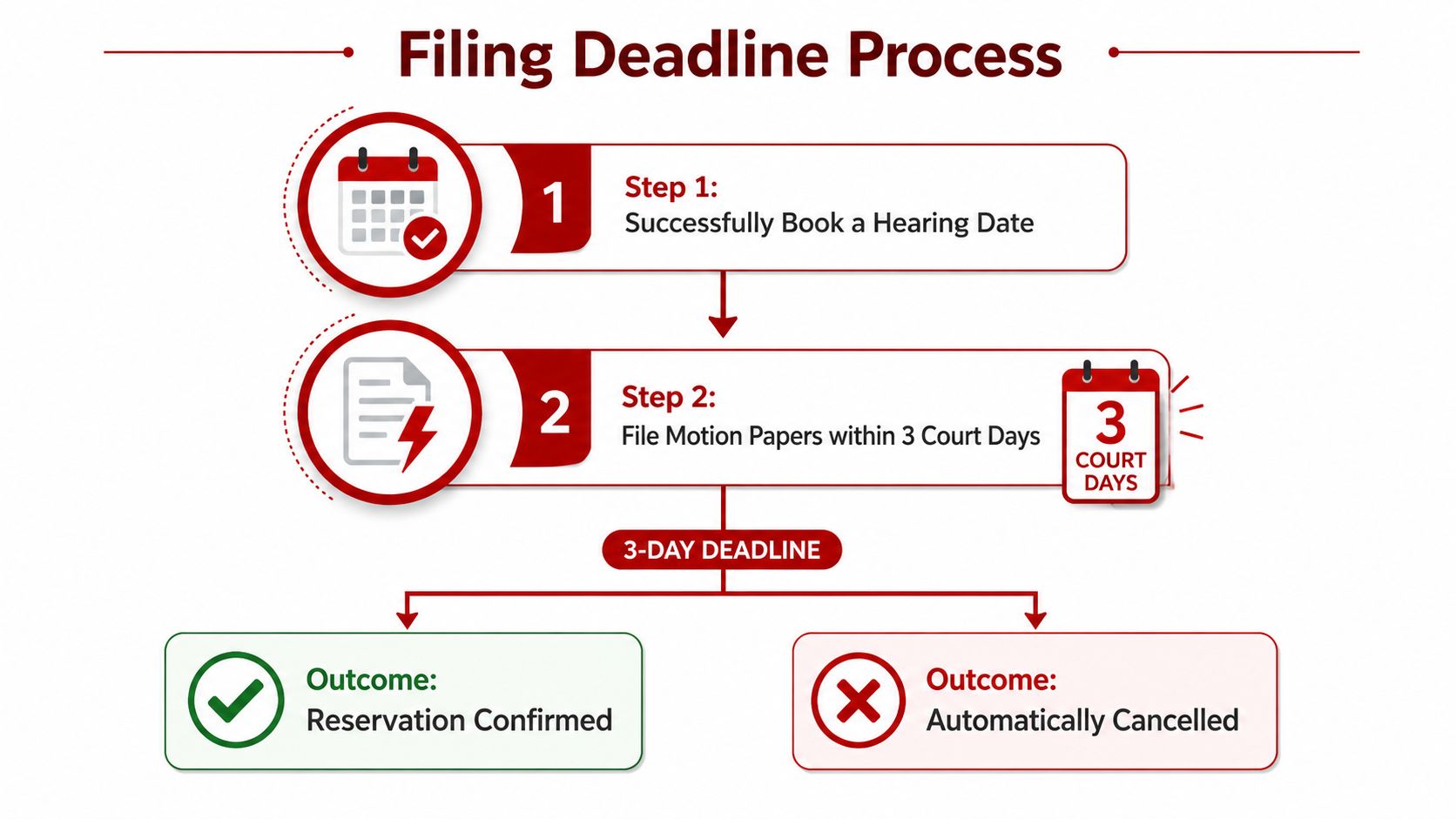
Treat CRS like a short deadline workflow
The safest way to think about CRS is as a workflow with a very short internal deadline. Reserve first, file immediately, and stop treating the hearing slot as secure until the filing step is complete. Weekends and court holidays don’t count as ordinary filing time, so the phrase three court days must be read with care and precision, not casually.
| Stage | What to do | Risk if ignored |
|---|---|---|
| Reservation | Book the hearing date | No hearing slot at all |
| Filing | Submit motion papers within the deadline | Automatic cancellation |
| Follow-up | Confirm the reservation still stands | Losing time and restarting |
The court later added a $20 rescheduling fee if a user changes a reservation after the initial booking, according to a later court notice summarized in the background materials. That fee makes post-booking changes more than an inconvenience. It becomes a cost and a delay, which is exactly why the best filing teams prepare the motion package before they ever open the calendar.
Practical rule: don’t reserve first and “figure out” the filing later. Have the motion ready, then lock the date.
If a cancellation happens, the most damaging assumption is that the same slot will still be there. Usually it won’t be. Once the date disappears, the user has to start again from the reservation step, which can cascade into client disappointment, internal rescheduling, and avoidable motion delays. For anyone comparing missed hearing consequences with missed appearance consequences, this companion guide is useful: what happens if you miss court.
Common Reservation Errors and How to Fix Them Quickly
The failures I see most often are quiet ones. The reservation looks fine on screen, then nothing sticks because the user picked the wrong account type, entered the wrong courtroom, or skipped a registration step the portal now treats as mandatory. In the Los Angeles court reservation system, those mistakes do not usually announce themselves until the hearing date is already at risk.
A common source of confusion is assuming the problem sits with payment when the actual issue is identity verification or an unapproved registration state. I have seen filings stall because the reservation itself was not tied to the correct user category, and I have seen users chase a confirmation that never should have been expected because the booking never cleared the court’s internal checks. When that happens, treat the problem as a workflow issue first, not a calendar problem.
The reservation and filing steps also fail for different reasons, which is why the fix has to follow the sequence the court uses. First confirm the reservation status. Then confirm the registration status. Then confirm whether the filing window was met. That order matters more than guessing at the most visible symptom.
Fast fixes that save the most time
- Check the user category first. If the reservation belongs to an attorney service firm, law firm, or self-represented user, the account type has to match that classification exactly.
- Verify the department and courthouse. A correct reservation in the wrong courtroom can still create a practical failure.
- Look for the confirmation trail. If no confirmation arrived, do not assume the slot is safe.
- Review the filing deadline immediately. If the motion papers were not uploaded within the required window, the booking may already be gone.
- Escalate only after you isolate the problem. Court intervention helps when the issue is procedural, not when the account was built incorrectly.
The fastest fix is usually the least dramatic one. Start with the part the court controls directly, then move to the reservation details, then check payment or confirmation records. That sequence is quicker than troubleshooting everything at once, and it keeps you from wasting time on a reservation that was never valid in the first place.
If the filing process itself is what keeps tripping up the case, this plain-English guide to how bail bonds work in California helps explain why the reservation has to line up with the rest of the case file.
Coordinating Court Reservations with Bail Bond Clients and Case Strategy
Court reservations rarely happen in isolation when a client has already been released. The reservation date affects reminders, check-ins, travel planning, and the paperwork the client needs to bring to court. If a family is juggling a release, a hearing date, and a compliance timeline, the reservation confirmation becomes part of the same case file, not a separate admin task.
A hearing date is only useful if the client actually shows up with the right paperwork and the right expectations.
For families working across counties, that coordination can get messy fast. A person might have a Los Angeles motion date while their support network is still managing local release logistics through Ventura County bail bonds or other bail bonds Ventura searches. In those situations, the reservation needs to be communicated clearly, because a confirmed date means nothing if the client misunderstands the department, the time, or the paperwork they’re supposed to bring.
The same is true when people are dealing with bail bonds Oxnard, Ventura County Jail bail bonds, 24-hour bail bonds Ventura, or fast bail bonds Ventura needs and then pivoting into a Los Angeles appearance. The court date and the release plan have to line up. If they don’t, someone ends up scrambling on the day of the hearing, which is exactly when mistakes cost the most.
For a plain-English overview of the bail process in California, this guide is useful: how bail bonds work in California. The practical takeaway is simple. Keep the reservation confirmation, court reminders, and client contact details together, and treat the hearing date as part of the release compliance plan. That habit helps in Ventura, Oxnard, Camarillo, Port Hueneme, Thousand Oaks, Santa Paula, Moorpark, Fillmore, Ojai, and Santa Barbara just as much as it helps in Los Angeles.
If you need a team that understands the pressure of court deadlines, release logistics, and last-minute scheduling problems, Bada Bing Bail Bonds is ready to help 24/7. They work with families across Southern California, keep the process clear, and move fast when every hour matters.