
You're probably staring at your phone right now, trying to figure out where your loved one is, whether they've been booked, and why nobody is giving you a straight answer. That confusion is normal in the first few hours after a Chula Vista arrest, and it gets worse when people assume every local custody situation works the same way. It doesn't. Chula Vista jail can mean a small city holding process, a county detention transfer, or both, depending on where the arrest started and how far the case has moved.
Table of Contents
- The First Few Hours After an Arrest in Chula Vista
- City Holding Facility vs South Bay Detention Facility
- Understanding the Booking and Release Timeline
- How to Locate an Inmate and Verify Charges
- Navigating Bail Options and the Bondsman Process
- Visitation Rules and Mail Guidelines
- Next Steps for Court Compliance and Support
The First Few Hours After an Arrest in Chula Vista
A late-night arrest feels chaotic because it is chaotic. The Chula Vista Police Department makes the stop, the person gets transported, and then the family starts calling around without knowing whether the hold is at the city facility or already moving into county custody. That's why the first instinct, calling every number you can find, usually wastes time.

Arrest is not the same as booking
An arrest means law enforcement has taken the person into custody. Booking means the jail has processed them, entered the case into the system, and started the custody paperwork. Those are not the same moment, and families often call during the gap between them.
That gap matters because the phone may stay silent while staff fingerprint, photograph, and enter the person's information. If the arrest happened close to shift change, court cutoffs, or a busy intake period, the wait can stretch longer than people expect. The worst move is assuming silence means something went wrong.
Practical rule: Don't chase every rumor. Confirm the booking status first, then decide whether you need bail, a visit, or a court follow-up.
What to do instead of guessing
Start with one clear question, where is the person physically being held right now? If you don't know that yet, don't plan a visit, don't send mail, and don't assume the release clock has started. The first call should be about location and booking status, not long conversations about the case.
For a plain-language breakdown of the first custody steps, use this guide to what happens after you get arrested in San Diego. It matches the mess families face in the first few hours, when details are incomplete and everyone's working off partial information.
The biggest mistake I see is families treating the arrest as the full story. It's not. In the first few hours, the only things that matter are location, booking, and whether the person is still in a temporary hold or already in county processing.
City Holding Facility vs South Bay Detention Facility
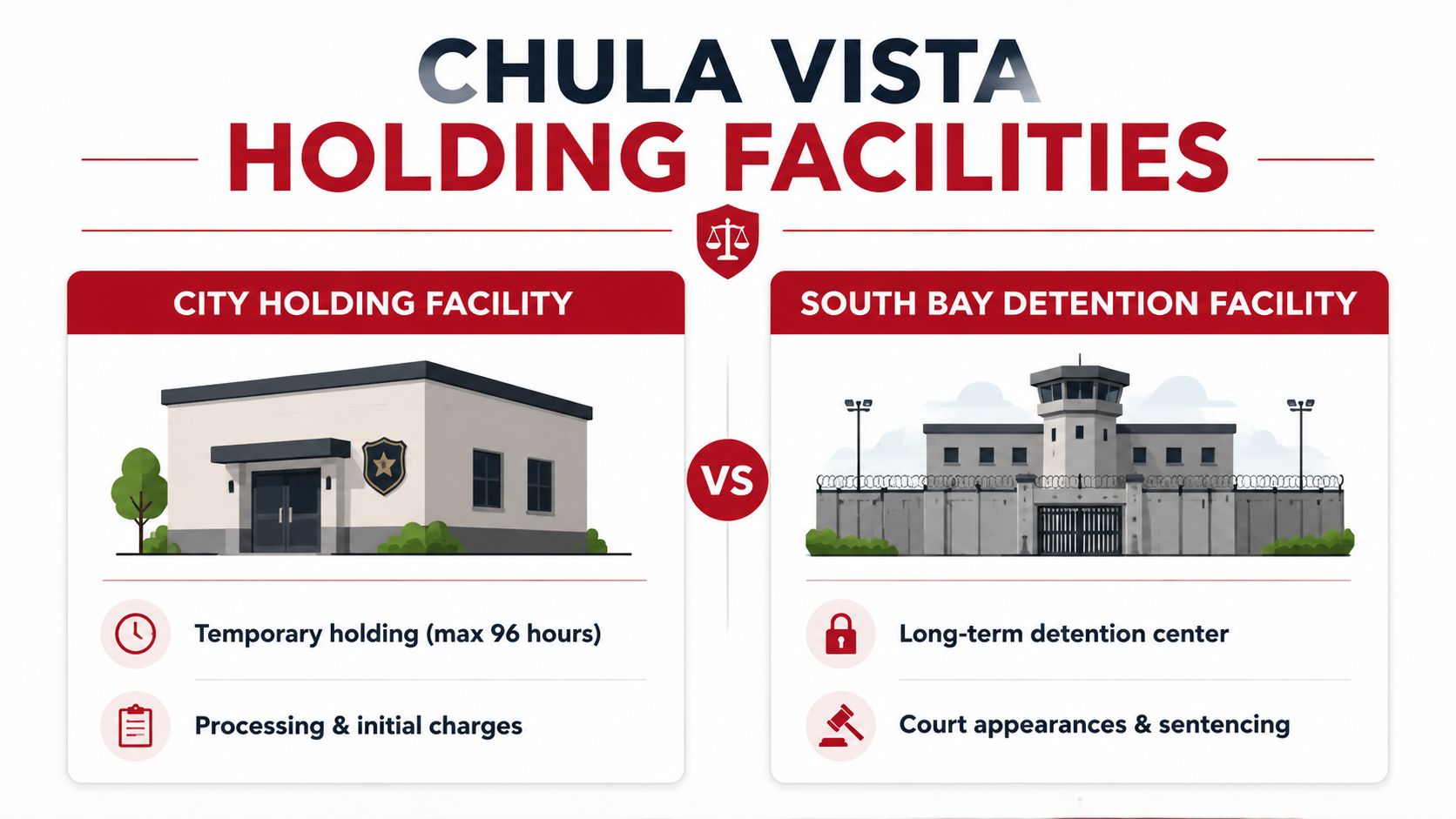
A Chula Vista jail search usually starts with the wrong assumption, that one place handles every arrest. It does not. The city's temporary holding facility and the county's South Bay Detention Facility do different jobs, and if you mix them up, you lose time, call the wrong office, and slow down the first steps toward release.
The city facility is for intake, not long stays
The City of Chula Vista describes its jail as a temporary holding and booking facility, and says it is the first stop for people arrested by the police department. It is built for short-term custody, not extended detention, and the city says it can house up to 50 inmates and contains 13 cells City of Chula Vista police department jail information. That tells you what matters most, this is a local intake point, not the place families should assume will hold someone for long.
County reporting has made the same point in plain terms. A grand jury report described the city jail as a 48-bed municipal facility and noted a July 31, 2014 population of 30, which was about 62% of capacity San Diego County grand jury jail report. For a current arrest, the lesson is simple. The city facility has always been small, and small facilities move people in and out based on booking flow, not family expectations.
South Bay is where the county scale shows up
South Bay Detention Facility, at 500 Third Ave. in Chula Vista, opened in 1982 and has a rated capacity of 386 San Diego County Sheriff facility directory. That is a different operation entirely from the city holding cells. It is the county detention site families need to think about when the arrest has already moved past the first local stop.
The county's later detention report also shows why the split matters. The city jail included holding cells for men, women, booking, and juveniles, plus longer-term adult female inmates through a U.S. Marshals Service contract San Diego County grand jury detention facilities report. That mix creates confusion fast. A person can start in city custody and then move into county processing, so the first job is to verify where they are right now before you do anything else.
Bottom line: If Chula Vista Police made the arrest, the first stop may be the city holding facility, but the case can move into county detention quickly. Confirm the location before you drive anywhere or make release plans.
If you are comparing how different Southern California jails handle early release timing, this local guide to Ventura County inmate release times and bail information gives a useful reference point.
Understanding the Booking and Release Timeline
An arrest in Chula Vista does not move in a neat line from booking to release. The person gets processed, identity gets checked, the case gets entered, and then release depends on charge review, custody status, and whatever the jail or court still needs before paperwork can clear. Families need to stop assuming there is a predictable clock.
Why small facilities still create delays
The Chula Vista city jail runs with a small footprint. It has a limited number of holding cells and booking space, so it can move people fast when the flow is light, then slow down the moment several arrests land at once. That creates confusion for families who hear “they should be out soon” and expect the answer to stay the same.
A simple release can still drag because the person may be waiting on booking completion, records confirmation, or transfer out of the holding cell. If the facility is juggling several custody categories at the same time, the delay is often in the front-end processing, not the bond itself. That is the part families miss.
What speeds things up, what slows things down
Clean identification speeds everything up. So does a confirmed booking number and a clear bail amount. Missing data, custody transfers, and classification review slow the process down fast, and any medical or custody issue that needs staff review can hold things even longer.
Treat release like a sequence. Confirm the booking first. Confirm the charges next. Then confirm whether bail is set and how the posting process works. If you skip those steps, you waste hours chasing the wrong answer.
Practical rule: The fastest release starts with verified facts, not guesses.
If you want a clearer explanation of how the release side works, this guide to Ventura County inmate release times and bail information shows how timing, paperwork, and release checks affect how long someone stays inside.
How to Locate an Inmate and Verify Charges
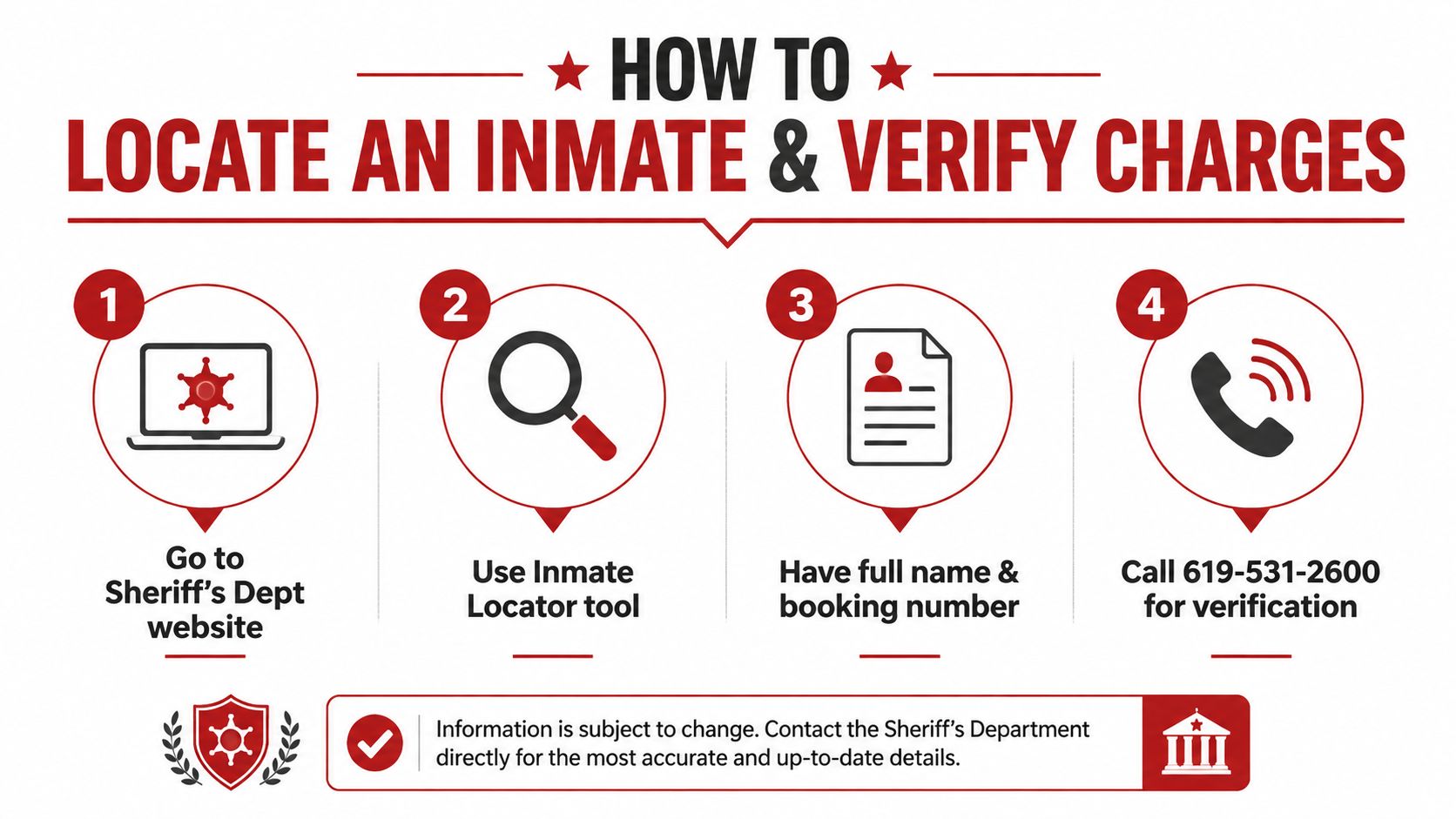
A family calls, someone says the arrest happened in Chula Vista, and the first problem is simple, where is the person being held? Don't start with guesswork. Start with the county lookup, then verify the booking details with the correct office before you act.
Start with the inmate lookup, then confirm the booking details
Use the San Diego County Sheriff's inmate locator to search by name and look for the booking record that matches the person in custody. Once you find a match, check whether the person is listed at the city holding facility or the county detention facility, then write down the booking number exactly as it appears. If there are several people with the same or similar names, that booking number is what keeps you from posting bond on the wrong case or calling the wrong facility.
If you want a simple way to organize that search, use this inmate search in California jails guide as your checklist before you call anyone. It helps you sort the basic facts first, so you are not stuck repeating the same questions to multiple offices.
The city police department also gives families a direct point of contact through its jail page, but that page is basic and does not replace the booking record Chula Vista Police Department jail page. Use it to confirm you are dealing with the right office, not as a substitute for the actual custody information.
Verify the charges before you act
Charges drive the next move. A minor case may clear faster, while a heavier charge can mean bail, extra review, or a different release path. Do not rely on a rumor from the waiting room or a quick text from a friend. Confirm the exact charge list, then ask whether bail has already been set.
Once you have the charges, compare them with the booking details and make sure everything lines up. If the charge information is unclear, stop and verify it before anyone posts money or starts making promises about release. That small step saves families from expensive mistakes.
Plain truth: No booking number, no clean release plan. Get that number first.
Navigating Bail Options and the Bondsman Process
Cash bail sounds simple until families see the full amount. Many people do not have that kind of money sitting around, especially while they are dealing with missed work, child care, and transportation. That is why licensed bail bonds matter. They give families a workable path when time is tight and the release needs to happen now.
Why the bond route is usually the better move
In California, bond premiums are set by law at 10% of the total bail. That gives families a clear cost instead of forcing them to raise the full amount at once. A solid bondsman keeps the rest of the process straightforward, with transparent pricing, payment plans, co-signer options, and collateral solutions for larger or higher-risk bonds.
A good bondsman does more than post paperwork. The agent checks the booking details, explains the charges in plain English, and pushes the file forward so release does not stall while the family is still trying to make sense of the case. That speed matters most in the first day, because a clean bond can move quickly while confusion can hold everything up.
What the co-signer and court obligations really mean
A co-signer is not just a name on paper. They are agreeing to help make sure the defendant shows up in court and follows the terms of release. If the person misses a court date, the bond can be at risk, and families should treat that responsibility seriously.
The smarter approach is simple. Stay organized, keep every court notice, and treat reminders as part of the release plan, not something to sort out later. If you need a plain explanation of how the process works, this guide to Ventura County bail bonds breaks down the agent role without the legal jargon.
Direct advice: If the arrest is fresh and the bail amount is set, do not wait around hoping the system becomes easier to understand. Use the bond process to cut the delay and keep the case moving.
Families often ask whether cash is better than a bond. On paper, cash avoids a premium. In real life, most families need speed, flexibility, and a clear point of contact. That is why a licensed bondsman is usually the smarter move.
Visitation Rules and Mail Guidelines
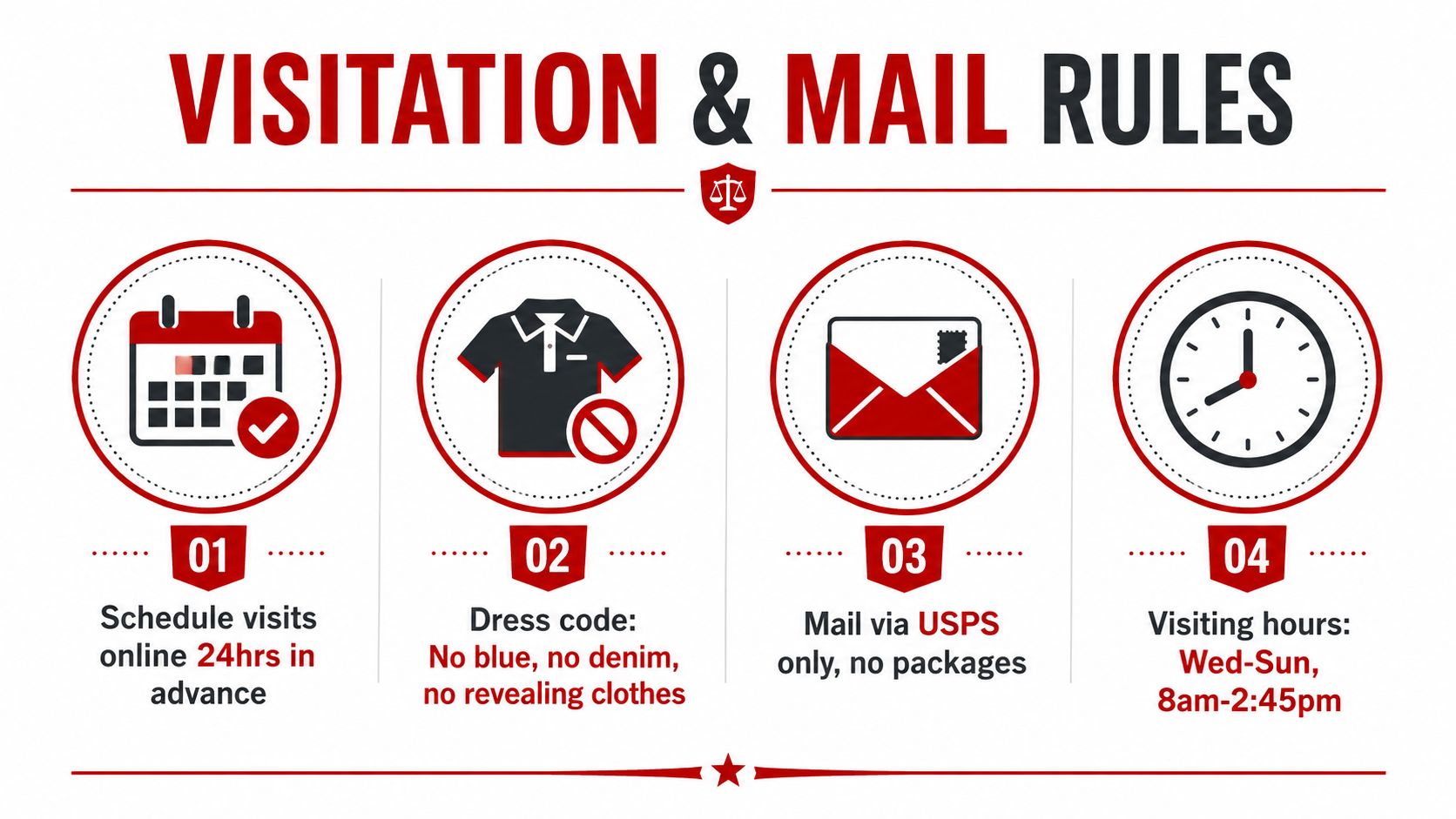
A lot of families get tripped up at the door or at the mailbox. They show up at the wrong time, wear the wrong clothes, or send something the facility will reject. That kind of mistake wastes time and adds stress, and it is easy to avoid if you check the rules before you go.
Know the county schedule before you go
Visitation is controlled, not casual. The county's facility directory spells out reservation calls and visit windows, so families need to check the schedule before making the drive and make sure they are dealing with the right location for the person in custody. If the arrest moved from the small city holding facility to county custody, the rules follow the county facility, not the city booking desk.
Use the county schedule as the starting point, then confirm what applies to the specific inmate before you leave home. The San Diego County Sheriff facility directory is the place to verify the current visitation process and avoid wasting a trip.
Mail has to be simple and predictable
Mail needs to stay plain. Stick to the format the jail allows, use the correct mailing method, and do not try to send items that seem harmless but will get pulled during screening. Packages are where families get burned fastest, because jail staff are strict about what enters custody.
Practical rule: If you are not sure an item is allowed, hold it back. One rejected envelope is annoying. One rejected package can create a bigger problem.
Families also need the right point of reference. The city jail page describes the local holding facility, while the county system handles the larger detention operation that many people end up in after booking Chula Vista city jail page. If you are still trying to figure out where your loved one is, start with what happens at an arraignment and work backward from the booking and custody details.
Next Steps for Court Compliance and Support
Getting out is the first win, not the finish line. After release, the case still moves toward arraignment, and court compliance becomes the thing that protects the bond and keeps the defendant from making a bad situation worse. If the person is unhoused, dealing with mental health issues, pregnant, or struggling with substance use, those needs should be handled early, not ignored until they create another crisis.
The county's jail system already shows how custody and case processing connect to the court process, and this guide to what happens at an arraignment gives families a clear next step. Stay on top of court dates, keep release paperwork accessible, and treat every notice as urgent.
If you need help right now, Bada Bing Bail Bonds can verify the booking, explain the bail in plain English, and move fast when every hour matters. Visit Bada Bing Bail Bonds and get a local agent on the line now so you can stop guessing and start getting your person home.