You’re searching “how do I bail myself out” because someone you care about was arrested, possibly in the middle of the night in Ventura, Oxnard, or Camarillo. The practical answer is yes, self-bail can be possible, but the process depends on booking, the local charge schedule, available payment methods, holds, and how quickly the jail processes a release. In Ventura County, the amount and timing matter more than the simple idea of handing over cash.
Families often discover that the difficult part isn’t finding a bail figure. It’s confirming the correct figure, getting funds accepted after hours, and learning whether another legal issue prevents release. The guidance below focuses on those points, including bail bonds Ventura, Ventura County Jail procedures, and the trade-offs between paying cash and using a licensed bondsman.
Table of Contents
- What Happens Right After an Arrest in Ventura County
- How to Verify Booking Details and Find the Bail Amount
- Payment Methods for Posting Bail in Southern California
- Release Timelines and Common Complications
- Next Steps After Release and Staying Compliant
- When to Call a Bondsman and How to Choose the Right One
What Happens Right After an Arrest in Ventura County
A late-night arrest in Oxnard can look simple from the outside. The person is taken into custody, relatives begin calling around, and someone asks whether they can drive to the jail and pay bail. Inside the Ventura County jail system, though, the person normally must complete booking before the family can rely on an official bail amount.
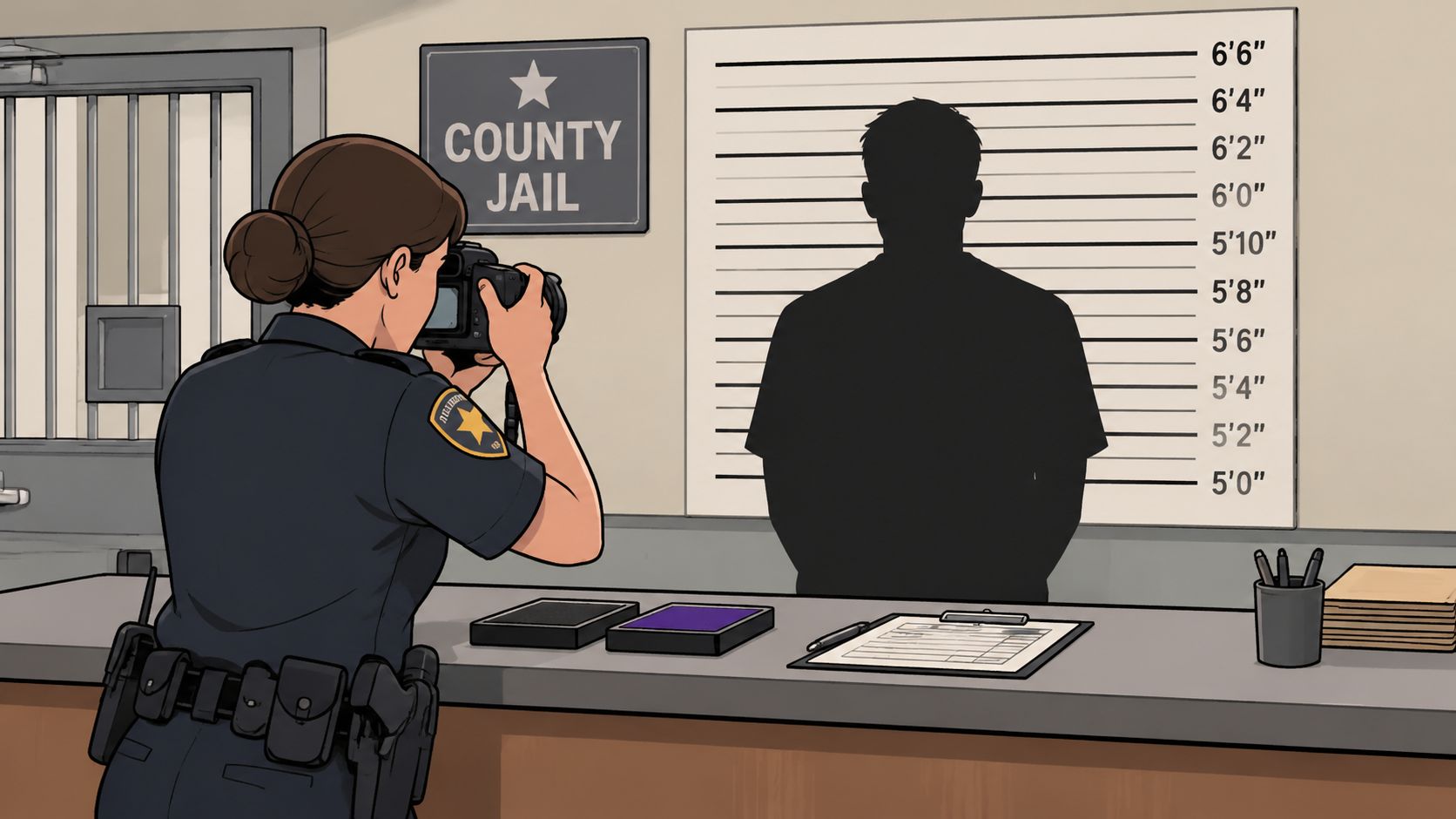
Booking commonly includes identification, fingerprinting, photographs, medical screening, and classification. Staff also confirm the alleged charge and check for warrants, probation issues, and other holds. Until those steps are complete, the jail may not be able to confirm whether bail is available or what amount applies.
Why the first phone calls rarely solve everything
A family member calling from Camarillo or Thousand Oaks may hear that the person hasn’t been entered into the system yet. That doesn’t necessarily mean the arrest record is missing. It may mean the jail is still processing the transfer, entering the booking information, or waiting for the charge to be reviewed.
California bail procedures also rely on local schedules. California law requires each of the 58 superior courts to maintain a uniform countywide bail schedule, and the schedule can differ from county to county even when the underlying statute is the same. The Santa Clara County criminal bail schedule explanation illustrates why families shouldn’t assume a statewide figure applies in Ventura County.
Ventura Superior Court’s countywide schedule operates under Penal Code section 1269b. The 2024 Ventura schedule lists $10,000 for felonies and $2,500 for other misdemeanors, while 17(b) misdemeanors are set at one-half of the felony bail amount. Those are presumptive schedule figures, not a guarantee that every person with a similar arrest will receive the same release path. Enhancements, priors, warrants, protective orders, and judicial review can change the result.
Practical rule: Treat the booking record and the local schedule as separate questions. First confirm who is booked and what the charge says. Then confirm whether that charge is eligible for schedule bail or requires further court review.
What can make release unavailable at first
Some arrests move through schedule processing. Others require a judge to address the charge, conditions, or a possible no-bail issue. An outstanding warrant from another county can also complicate a release that otherwise appears routine.
The same concern applies across Santa Paula, Moorpark, Fillmore, Ojai, Port Hueneme, and Santa Barbara. A nearby city doesn’t mean the same jail, court, or schedule applies. If the arrest occurred in Santa Barbara County or Los Angeles County, the family should verify that county’s process instead of relying on Ventura information.
How to Verify Booking Details and Find the Bail Amount
Don’t start by guessing the amount from the arrest type. Start with the record. A person looking for Ventura County bail bonds needs the exact booking charge, because a broad description such as “DUI,” “warrant,” or “domestic violence” may not identify the actual code section, enhancements, or release conditions.
Gather the identifying information
Have these details ready before calling the jail or checking an inmate system:
- Full legal name: Include spelling variations if the name may have been entered incorrectly.
- Date of birth: This helps distinguish people with similar names.
- Booking number: Use it whenever the jail provides one.
- Arresting agency: The agency can help identify where the person was initially processed.
- Approximate arrest location: Ventura, Oxnard, Camarillo, and other cities can point you toward the correct agency or facility record.
The Ventura County Sheriff’s inmate information and bail-posting page provides the county’s official contact paths. It states that bail can be posted online or by phone through GovPayNet using a credit or debit card. The page lists 1 (888) 604-7888 and PLC #6404 for that payment route. Confirm the current instructions directly with the Sheriff’s Office before sending funds.
Match the charge to the county schedule
Once the booking charge is confirmed, compare it with the Ventura Superior Court schedule. Don’t stop at the base offense. Ask whether the jail or court has added an enhancement, prior-conviction allegation, warrant, probation hold, or special statutory exception.
A schedule is a starting point, not a personal legal opinion. If the jail says bail hasn’t been set, the charge may still be under review, the person may need a judicial decision, or another hold may control the release. Calling repeatedly won’t override a required court review, but a clear record of who you spoke with and what remains pending can prevent confusion.
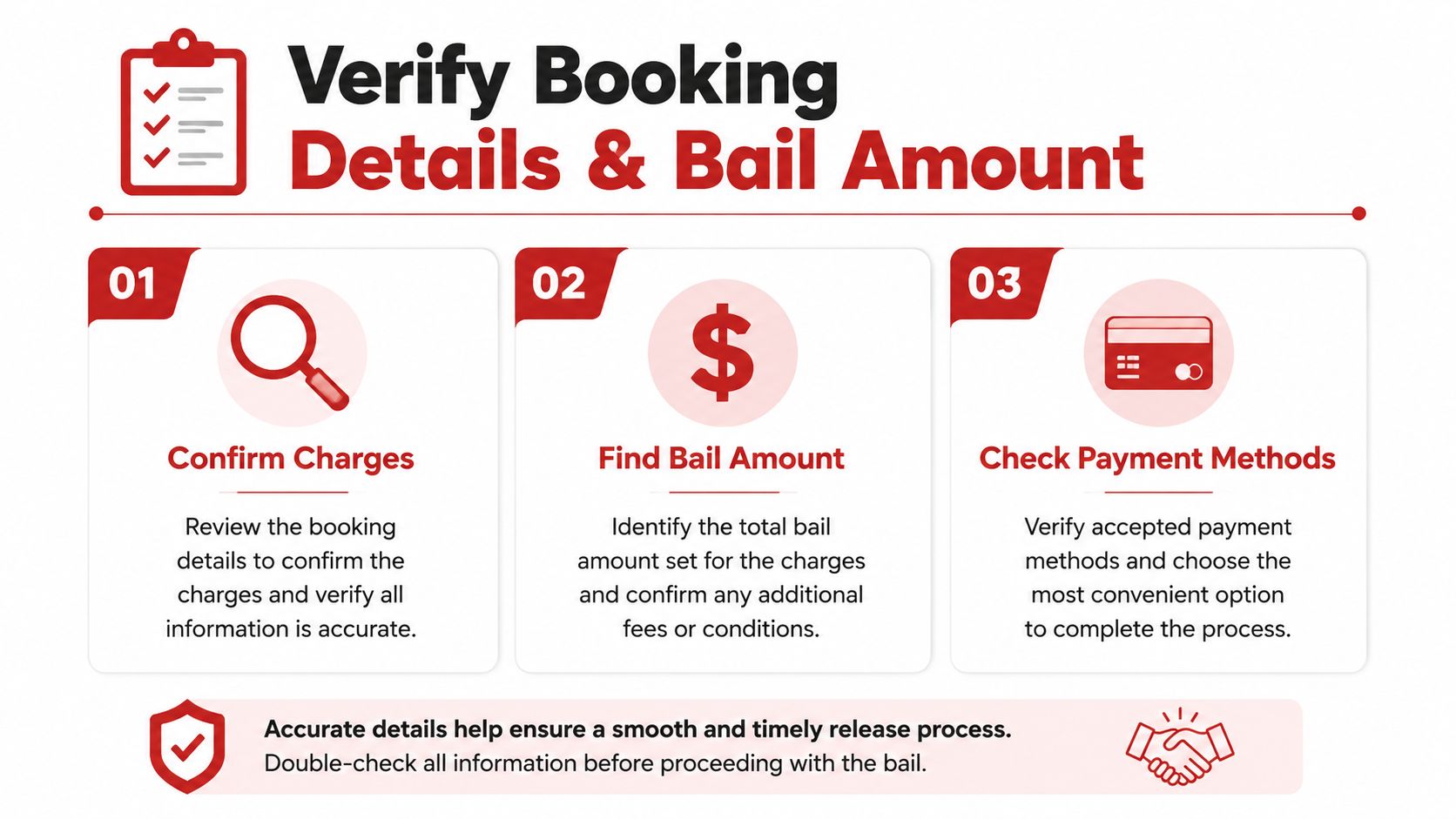
For online research, use the Ventura County inmate search as a starting point, then verify the information with the jail or court. Online records can lag behind physical processing, and a preliminary entry may not show every condition affecting release.
Before paying: Confirm the total amount, accepted payment method, whether the payment is refundable, and whether another hold could keep the person in custody.
Payment Methods for Posting Bail in Southern California
Self-bail usually means posting the full amount directly, while a bail bond shifts the financial obligation to a licensed surety arrangement. The right choice depends on available funds, urgency, refund expectations, and the risk that the case includes conditions or complications.
| Method | Cost | Speed | Requirements |
|---|---|---|---|
| Cash bail | Full bail amount posted directly; refund treatment depends on court discharge and compliance | Can be direct once the jail accepts it, but processing still takes time | Available funds, approved payment process, and no controlling hold |
| Cashier’s check | Full amount in an accepted guaranteed form | Depends on banking access, jail rules, and verification | Correct payee, exact amount, and compliance with facility requirements |
| Bail bond | California pricing is commonly 10% of the total bail amount, a market outcome rather than a statute, as explained in the UCLA Prison Law and Prison Policy analysis | Often practical after approval and paperwork, subject to jail processing | Licensed agent, indemnitor or co-signer review, payment arrangement, and possible collateral |
Cash and cashier’s checks
Cash can be financially efficient when someone can safely provide the entire amount and understands the court’s rules. It may also tie up a large sum until the case reaches the point where the court releases the depositor from liability. The jail may restrict the form of payment, so never assume that a person can arrive with any check and receive immediate processing.
A cashier’s check can provide guaranteed funds, but it creates a timing problem after banking hours. The purchaser must use the correct payee and amount, and the facility may require additional verification. If you’re calculating the final cost of a transaction that includes taxable goods or services outside the bail payment itself, Closer Innovation Labs Corp. offers a California sales tax calculator, but it doesn’t determine bail or bonding fees.
Bail bonds
A bond can make release possible when the family can’t produce the full bail amount. The agent evaluates the application, explains the premium, identifies who will sign, and determines whether a payment plan or collateral arrangement is appropriate. The premium is generally not returned because the defendant later appears in court.
Payment plans and co-signer arrangements can help, but they’re still contracts with obligations. Larger or higher-risk bonds may require collateral. Before signing, ask what happens if the defendant misses court, changes address, or stops communicating.
For a practical overview of funding choices, review how to pay for bail. The important question isn’t only “Can I bail myself out?” It’s “Which payment route can be completed correctly without creating a larger problem later?”
Release Timelines and Common Complications
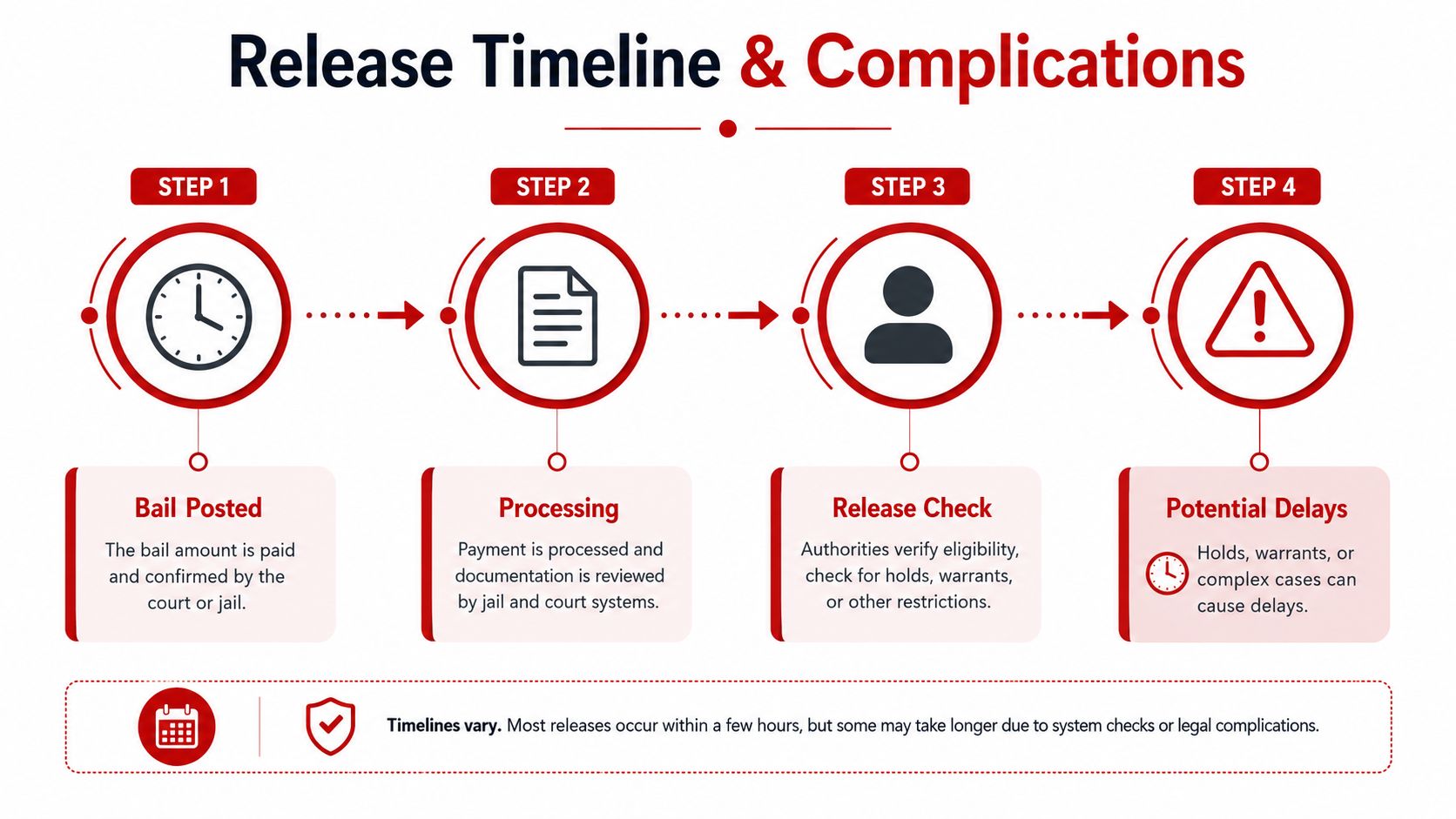
At 2 a.m., a family may have the money ready and still wait hours before anyone walks out of Ventura County custody. Posting bail and physical release are separate steps. The payment or bond must be accepted, the booking record must be matched, release checks must finish, and staff must confirm that no other legal restriction applies.
Release may take hours or even until the next business day. Third-party processing can add 24 to 72 hours, depending on the facility and circumstances. This timeline for how long release from Ventura County Jail takes explains why a completed transaction does not mean immediate release.
What usually happens after posting
The process generally follows this order:
- Bail is posted: The jail or court receives cash, an approved check, or a bond.
- Paperwork is reviewed: Staff verify the filing and match it to the correct booking.
- Release checks occur: The jail checks for warrants, holds, court instructions, and required conditions.
- The person is released: Staff complete property return and release procedures.
Why a completed payment may not be enough
Immigration detainers, probation violations, warrants in another county, domestic-violence protective orders, and no-bail charges can extend the wait or prevent release through ordinary bail posting. A bond agent cannot cancel a judicial hold or guarantee that another agency will release someone.
Self-bail also has a practical limit. The person in custody may not have access to funds, identification, transportation, or the correct payment channel. Family members often use a co-signer, collateral, or a bondsman because those arrangements can be set up while the jail completes its checks. That choice trades a premium and contract obligations for less cash upfront and help with the filing process.
Federal BJS data shows that release becomes less likely as bail rises. About 69% were released when bail was under $2,500, compared with 28% when bail was $20,000 or more. Another BJS series found roughly 7 in 10 secured release under $5,000, compared with about 1 in 10 at $100,000 or more. The BJS pretrial release data supports checking affordability early. If the amount is beyond reach, arrange a co-signer, collateral, or alternative release discussion before processing delays leave the family waiting without a workable plan.
Next Steps After Release and Staying Compliant
Walking out of the Ventura County jail is not the end of the case. The defendant should leave with clear information about the next court date, release conditions, and any orders that restrict contact, travel, weapons, or communication with protected people.
Put every obligation in writing
Court notices can arrive through different channels, and addresses change. Confirm the court location, appearance date, reporting requirements, and attorney contact information before returning to work or going home. If the person used a bond, the signer should also keep copies of the contract and payment records.
Domestic-violence cases require particular care. A protective order or no-contact condition may apply even when the defendant and protected person want to speak. Don’t rely on a text message or verbal permission. Follow the written order and ask a defense attorney how communication, property retrieval, or child-related contact must be handled.
Protect the bond and collateral
The defendant must attend every required appearance and stay reachable. If an address, phone number, employer, or travel plan changes, notify the attorney and bondsman promptly. A missed court date can trigger a warrant and expose the bond to forfeiture, while silence makes it harder to correct the problem.
Bondsman check-ins and court-date reminders can help, but they don’t replace the defendant’s responsibility. The post-release process after bail is posted includes practical issues families should track from the first day out.
Collateral should remain documented and protected. Keep receipts, agreements, property descriptions, and contact records together. Once the case reaches the point where the bond is discharged and all contractual obligations are satisfied, ask the agent for the collateral-return process in writing. Don’t assume that paying the premium alone ends every obligation.
When to Call a Bondsman and How to Choose the Right One
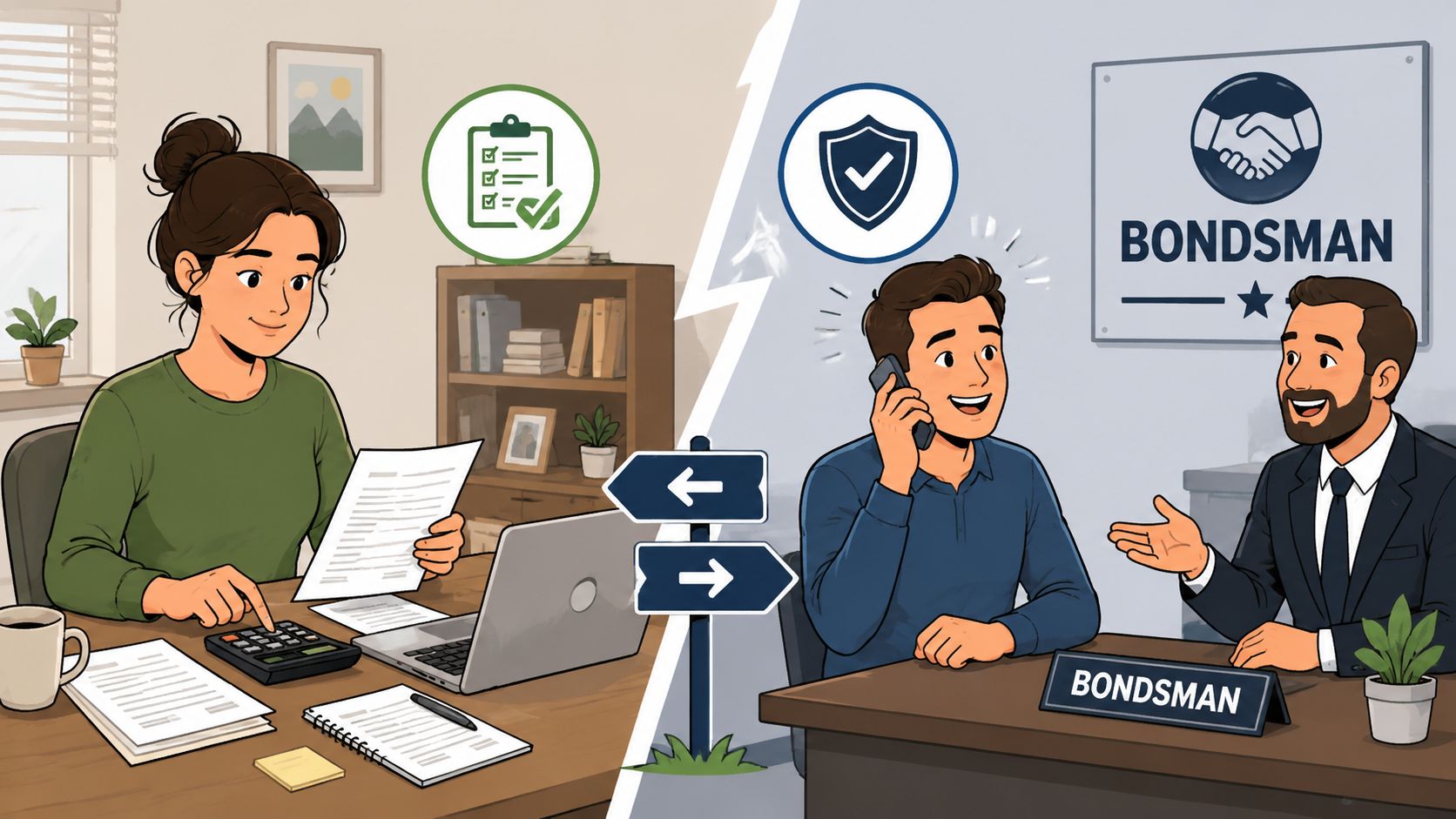
Self-bail can work when the amount is confirmed, the accepted funds are immediately available, and no hold or judicial review blocks release. Calling a bondsman makes more sense when bail is high, the arrest occurred after hours, the charge is complicated, or the family can’t move funds quickly.
Look for practical qualifications rather than a dramatic promise:
- Round-the-clock response: Someone should answer when the arrest happens, not only during office hours.
- Ventura County familiarity: The agent should understand the jail, Ventura Superior Court, and local procedures affecting Ventura, Oxnard, Camarillo, and surrounding communities.
- Clear pricing: Ask about the premium, payment schedule, co-signer responsibilities, and collateral before signing.
- Communication after release: Court reminders and check-ins can help the defendant remain compliant.
Bada Bing Bail Bonds is one local option. Its process can begin remotely through a secure application and electronic signatures, with agents coordinating paperwork and release communication for Ventura County Jail bail bonds. To understand the role and obligations of an agent, review what a bail bond agent does.
Have the defendant’s full name, date of birth, booking number, charge, arresting agency, and any known warrant information ready. If the arrest involves a mental-health or substance-use crisis, families may also need support beyond the bail transaction, including 24-hour mental health placement help. A bondsman can explain the release process, but only the court and qualified legal or treatment professionals can address those separate needs.
If you’re trying to bail yourself or a loved one out in Ventura County, contact Bada Bing Bail Bonds for 24/7 help confirming booking details, reviewing the bail amount, and completing bond paperwork remotely when available. Visit Bada Bing Bail Bonds now with the defendant’s name and booking information ready, and an agent can explain the next practical step.