Your phone lights up late at night. The number is unfamiliar. You answer anyway, and within seconds you hear what nobody wants to hear. A friend, spouse, son, or daughter has been arrested in Alameda County and is calling from jail.
In that moment, people usually ask the same questions. Where are they? How much is bail? Can they get out tonight? What do I need to do right now?
The hard part is that the first answer you get is often just a charge and a dollar amount. That number usually comes from the Alameda County Bail Schedule, and if you’ve never dealt with bail before, it can feel like somebody handed you a legal spreadsheet during a family emergency. This guide is the practical version. It shows you how to use the schedule, what can change, and how families go from that first phone call to getting someone released. If you’re also searching for bail bonds near me, affordable bail bonds, or fast help in nearby markets like Ventura County bail bonds, 24-hour bail bonds Ventura, Oxnard bail bonds, Ventura County Jail bail bonds, the process principles under California law are the same even when the county changes.
Table of Contents
- A Call from an Alameda County Jail What to Do Next
- What Is the Alameda County Bail Schedule
- How to Read the Schedule Misdemeanors vs Felonies
- Why the Scheduled Amount Might Change
- Paying Bail Cash vs Using a Bail Bond
- A Step-by-Step Guide to Posting Bail in Alameda County
- How a 24 Hour Bail Bonds Agency Can Help
- Alameda Bail FAQs Warrants Holds and More
A Call from an Alameda County Jail What to Do Next
The first few minutes matter because panic makes people skip steps. A mother gets a call from Santa Rita Jail in Dublin. Her son talks fast, she can barely hear him, and all she catches is a charge, a booking number, and “please get me out.” Another family gets a call tied to the Glenn E. Dyer Detention Facility in Oakland and doesn’t even know which jail controls the release process. That confusion is normal.
What works is slowing the situation down and getting a short list together. Start with the person’s full legal name, date of birth, where they’re being held, and the charge if they know it. If they mention bail, write the number down exactly as given. Don’t rely on memory. People under stress mishear numbers all the time.
The first three things to do
- Confirm where they are. Alameda County cases often move through booking and holding procedures quickly, so custody location matters.
- Get the charge information. Even a rough description helps you match the likely booking amount to the bail schedule.
- Ask whether there are any holds. A hold can stop release even if someone is ready to post bail.
If you’re still trying to confirm custody, use a practical inmate search guide like how to find someone arrested before you start moving money or paperwork.
Practical rule: Don’t drive anywhere with cash until you’ve confirmed the jail, the charge, and whether the person is actually bail-eligible.
Families in Ventura, Oxnard, Camarillo, Port Hueneme, Thousand Oaks, Santa Paula, Moorpark, Fillmore, Ojai, and Santa Barbara ask the same questions when they call for help under Bail Bonds in Ventura County. Different county, same pressure. The fastest path is always the same. Verify the facts first, then decide whether you’re paying cash or using a bond.
What Is the Alameda County Bail Schedule
At 1:00 a.m., the number that matters most is usually the first one the jail gives you. In Alameda County, that first number often comes from the bail schedule.
The Alameda County Bail Schedule is the county’s official list of preset bail amounts tied to criminal charges. Jail staff and law enforcement use it as the starting point during booking, especially before the person has gone in front of a judge. The point is speed and consistency. Families get a number to work from, and the jail has a standard amount attached to the arrest instead of making it up case by case.
That matters because the schedule is a tool, not just a chart. If you know the charge, you can usually get a realistic sense of the booking amount, decide whether cash bail makes sense, and figure out how fast you can start the release process. A plain-English guide on how bail schedules work helps if you want the bigger picture behind how that booking number gets set.
For families, the practical value is simple. The schedule gives you a working number early, before court hearings start changing the situation. It covers common misdemeanors, felonies, and higher bail categories for more serious allegations. In real cases, that lets you stop guessing and start making decisions.
The trade-off is that the schedule is only the starting point. It does not promise release, and it does not guarantee the amount will stay the same. A judge can raise bail, lower it, or in some cases deny release based on the facts, prior record, public safety concerns, or other holds attached to the case.
Use the schedule the way professionals use it. Treat it as the first price tag on the case, then confirm whether anything is pushing that number up or blocking release altogether.
That mindset saves time. It also keeps families from making the mistake I see all the time. They hear a scheduled amount and assume posting that number is the whole job. It isn’t. The schedule gets you oriented. Getting someone home takes the next steps done in the right order.
How to Read the Schedule Misdemeanors vs Felonies
A family usually gets one useful piece of information early: the charge. That is enough to start using the bail schedule instead of waiting in the dark.
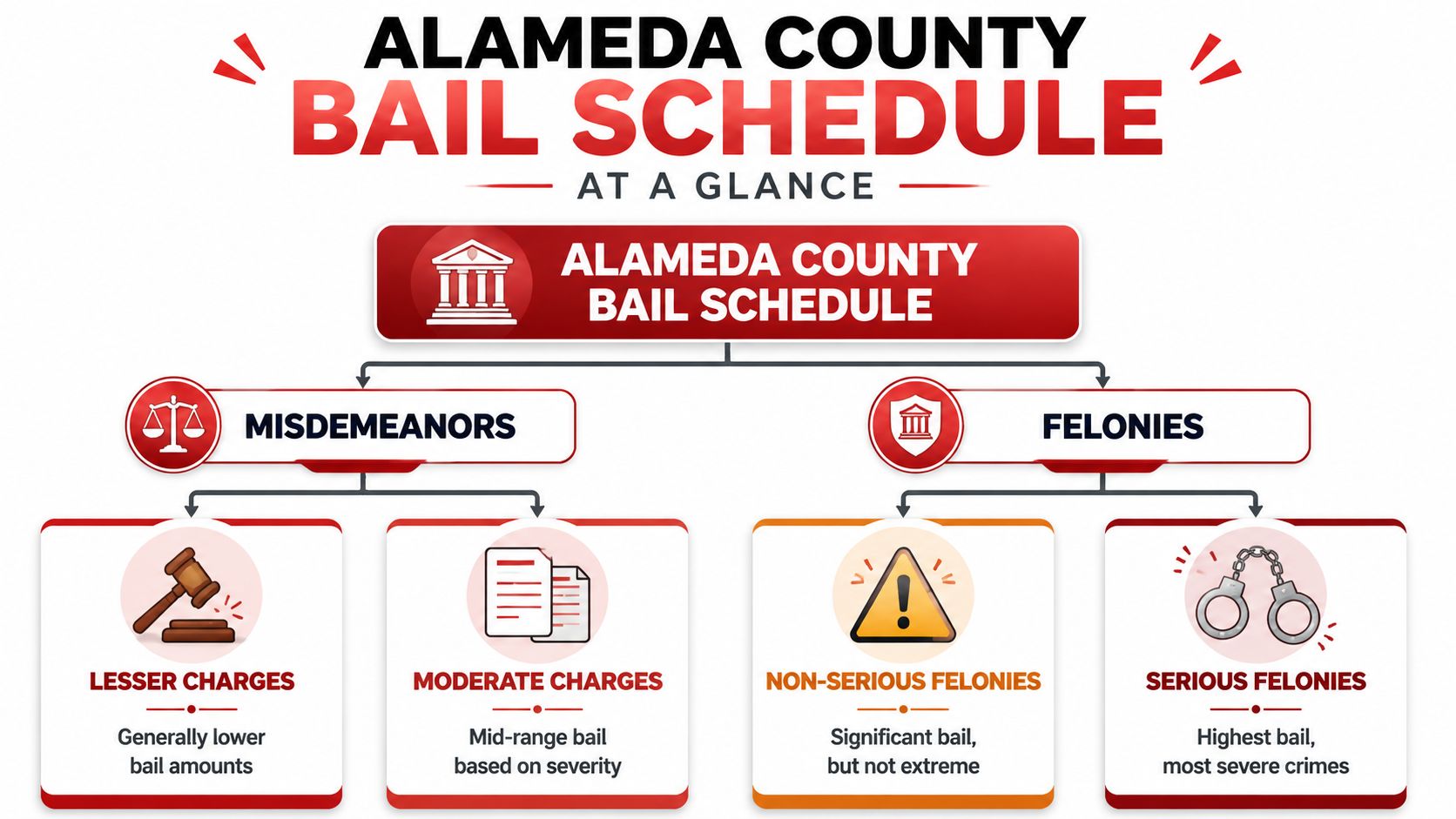
The schedule is easier to read if you stop staring at the statute numbers first and sort the case by level. Start with a simple question: is the arrest for a misdemeanor, a felony, or a wobbler that could be charged either way? That one step tells you which part of the chart matters and whether the booking amount is likely to stay in a lower range or jump fast.
Start with the charge level
As noted earlier in the county schedule, lower-level misdemeanors, standard one-year misdemeanors, and wobblers each have baseline amounts. In practice, that gives families a fast way to estimate where the case sits before they get lost in legal wording.
Here is the quick reference version:
| Charge type | Presumptive amount |
|---|---|
| Six-month maximum misdemeanor | $2,500 |
| One-year misdemeanor | $5,000 |
| Wobbler | $10,000 |
Those numbers help you get oriented. They do not answer every question, but they tell you whether you are looking at a relatively straightforward booking amount or a case that needs closer review.
A wobbler matters more than families expect. The same arrest can be treated much differently depending on the facts, injuries, prior record, or how the prosecutor files it. If you need a plain-English breakdown, this guide on the difference between felony and misdemeanor charges helps make the schedule easier to read.
How to handle charges you do not see listed
Some callers only have a code section from jail paperwork or a rushed phone call. That is common. If the exact offense is not plainly listed, Alameda uses a formula for unlisted charges instead of leaving the amount to guesswork.
The practical takeaway is simple. There is still a rule behind the number, and a bail agent can usually spot the likely range fast once the charge and booking details are confirmed.
Start broad. Figure out whether the case is a misdemeanor, felony, or wobbler first. Then match the charge to the schedule or use the unlisted-charge formula if needed.
What families miss when they read the chart alone
Reading the line item is only half the job. The crucial question is whether the charge level you are hearing over the phone matches how the jail is booking the case.
For example, families hear “misdemeanor” and assume the release process will be quick and cheap. Sometimes that is true. Sometimes the arrest includes multiple counts, a probation issue, or a hold that changes the plan. The schedule is still useful because it gives you a starting number you can work from, but the smart move is to use that number as a tool, then confirm the booking status, holds, and actual release path right away.
That is how professionals read the schedule. First get the likely amount. Then use it to decide whether cash bail is realistic, whether a bond will move faster, and what needs to happen to get your person out.
Why the Scheduled Amount Might Change
A booking bail amount is a starting point, not a promise.
Families hear a number from the jail and build a plan around it. Then court happens, a hold shows up, or the judge reviews facts that were not part of the first booking screen. That is where stress spikes. The better approach is to treat the schedule like a working number you can use right away, while staying ready for the court to raise it, lower it, or keep it the same.
In Alameda County, the scheduled amount can shift once the case gets in front of a judge. The court looks at more than the charge title. It may weigh public safety concerns, prior history, the facts alleged in the arrest report, and whether there is a clear reason to believe the person will return to court.
What usually pushes bail higher
Certain facts tend to bring closer scrutiny:
- Violence or credible threats. Cases involving injury, weapons, or fear of harm usually get a harder look.
- Prior record or missed court dates. If the person has old failures to appear, probation issues, or recent similar charges, the court may see more risk.
- Victim safety concerns. Domestic violence and cases involving a protected person often lead to stricter bail review.
- Multiple cases at once. New charges stacked on top of another open case can change the number fast.
I see families get blindsided by this part. They focus on the line item in the schedule, but the court is looking at the full picture.
What can support a lower amount
The court can also hear facts that support keeping bail where it is or reducing it:
- Strong local ties. Stable housing, family in the area, and long-term community ties matter.
- Steady work or school. A regular routine can help show the person is likely to appear.
- Limited or no criminal history. A cleaner record gives the court less reason to increase bail.
- Clear release plan. Transportation, supervision at home, and a realistic court-appearance plan can help.
None of that guarantees a reduction. It does give the defense something concrete to work with.
For families, the practical move is simple. Get the current booking amount confirmed, ask whether there are holds or enhancements, and prepare for the number to change if the case is reviewed in court. If you are weighing payment options, it helps to understand the difference between cash bail and a bail bond before you start moving money around.
The schedule is still useful. It gives you a fast starting point. A good bail agent uses that number, checks what could change it, and helps you choose the quickest realistic path to release.
Paying Bail Cash vs Using a Bail Bond
The bail amount is only half the decision. The main question is which option gets your person out without creating a second financial crisis at home.
When cash bail makes sense
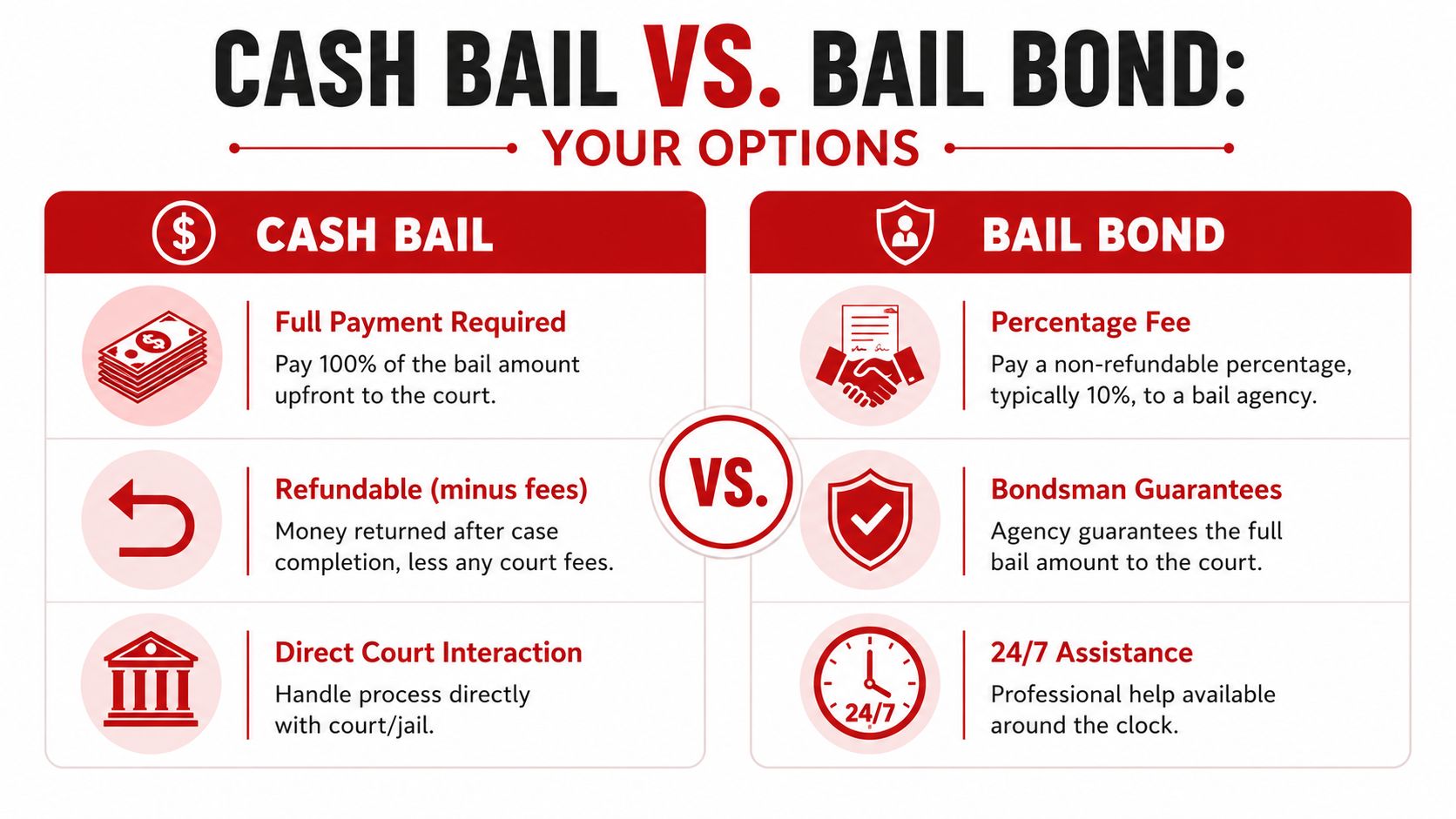
Cash bail means paying the full amount directly to the jail or court. If the case is handled properly and the defendant makes all required appearances, that money is typically returned through the court process.
For some families, that is the cleanest option. If the bail amount is manageable, the funds are available right away, and tying up that money will not put pressure on rent, payroll, childcare, or legal fees, cash can work.
The downside is simple. The full amount is out of your hands until the case moves through court, and that can take time.
Why families use a bail bond
A bail bond lets you secure release without putting up the entire bail amount in cash. In California, the premium is generally set by law as a percentage of the total bail, and that fee pays for the bond. It is not refunded at the end of the case.
That is the trade-off. Cash may come back later, but you have to produce the whole amount now. A bond costs less upfront, but the premium is the cost of getting the person released.
In real life, families usually choose based on cash flow. An arrest rarely happens at a convenient time. People are trying to cover groceries, mortgage payments, car notes, and attorney fees while also figuring out how to get someone home fast.
If you want a plain-English breakdown, this guide on the difference between cash bail and bond explains how the two options work side by side.
A practical way to decide
Use cash bail if all three are true: you can access the full amount immediately, holding that money will not strain the household, and you are comfortable waiting for the court process to return it.
Use a bail bond if speed matters, the full amount would drain savings, or you need to keep money available for the rest of the case.
I tell families this all the time. Do not focus only on what costs less on paper. Focus on what gets your loved one out quickly without putting the whole household in a hole.
A Step-by-Step Guide to Posting Bail in Alameda County
When families handle bail themselves, delays usually come from missing information, wrong assumptions about payment, or showing up before custody details are fully posted. The cleaner your steps, the faster the process moves.
What to gather before you move
Start with the essentials. You want the arrested person’s full name, date of birth, booking number if available, the facility holding them, and the stated bail amount. You should also have your own government-issued ID ready because any payment or bond process will require identification.
Santa Rita Jail in Dublin is Alameda County’s primary detention facility, and many county arrestees are housed there. Some Oakland matters may involve the Glenn E. Dyer Detention Facility depending on stage and handling. Court appearances can also move through Alameda County Superior Court locations, with East County Hall of Justice in Dublin handling Dublin criminal cases and some felony matters transferring to René C. Davidson Courthouse in Oakland, based on the background information from Morris Law’s Dublin criminal defense page.
What the actual posting process looks like
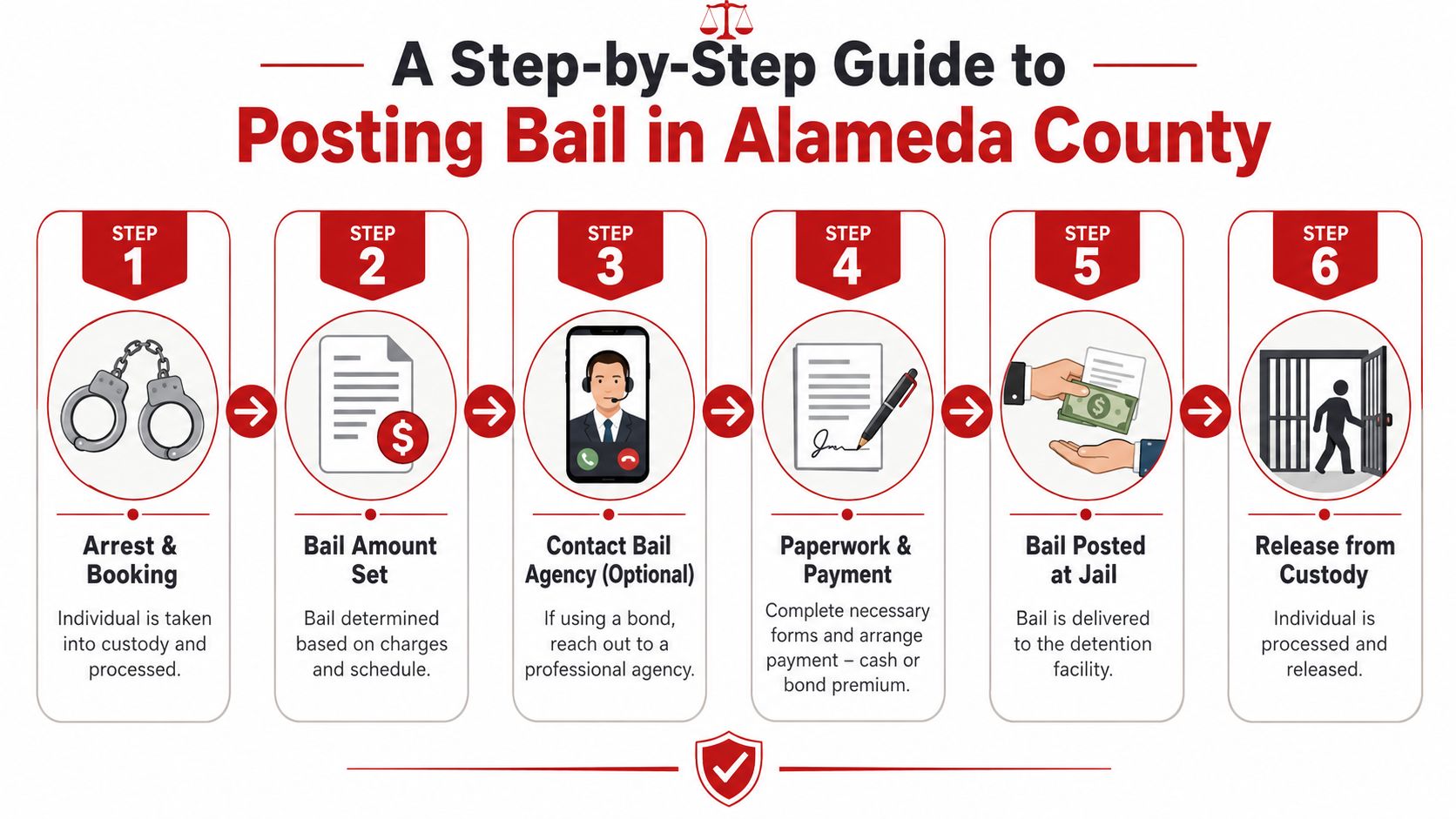
Use this order. It saves time.
-
Confirm booking has processed
If the person has only just arrived, the system may not yet reflect the booking details. Wait for confirmation instead of guessing. -
Verify the bail amount attached to the charge
Match it to the schedule or confirm it through the jail process. -
Choose your payment route
Full cash and bond are different processes. Decide before you start paperwork. -
Prepare identification and payment
If you’re handling this directly, the jail or court will tell you what payment methods are accepted in that situation. Don’t assume every form of payment works everywhere. -
Post the bail
Once payment or bond paperwork is accepted, the release process begins. -
Wait through release processing
Posting bail is not the same as walking out the door immediately. The jail still has to complete release procedures.
The longest part for many families isn’t finding the money. It’s waiting through intake and release workflow after the bond or payment is already done.
What people in nearby counties should know
If you’ve dealt with Bail Bonds near Ventura County Jail, or you’re looking at release logistics in Ventura, Oxnard, Camarillo, Port Hueneme, Thousand Oaks, Santa Paula, Moorpark, Fillmore, Ojai, or Santa Barbara, the county names change but the practical pattern doesn’t. Booking, verification, payment choice, paperwork, posting, and release are the core steps under California bail law.
For location-specific help in Southern California, readers often compare Ventura bail bonds services with what they’re seeing in Alameda County so they understand how local jail handling and court logistics can differ from county to county.
How a 24 Hour Bail Bonds Agency Can Help
A good bail agent doesn’t just write a bond. Its primary value is cutting confusion out of the middle of a bad night.
What good agents actually do
A professional agency verifies custody details, confirms the charge, explains the bond cost in plain English, handles the contract, and communicates with the jail so the family isn’t chasing answers from three different directions. That matters whether you’re calling about an Alameda booking or searching for Bail Bonds in Ventura County, Santa Barbara, or Orange County after an arrest closer to home.
A reliable California overview helps here. If you need the nuts and bolts, read how bail bonds work in California.
The best agencies also help families think through co-signers, collateral, and payment timing without turning the conversation into a lecture. That’s especially important in felony cases where paperwork and risk review may be more demanding.
What slows families down when they try to do it alone
Families usually lose time in four places:
- Misheard information. The charge or amount gets repeated wrong.
- Incomplete documents. Someone is ready to pay but doesn’t have what the jail or agent needs.
- Bad assumptions about timing. People think posting bail means instant release.
- Confusion over financing. They hear terms like affordable bail bonds or 1 percent bail bonds and don’t understand what’s legally fixed versus what may be offered as a payment arrangement.
If you’re looking for a service page that reflects the 24/7 side of this work, trusted 24/7 bail bond help shows what families usually want most. A live answer, straight information, and movement right away.
Alameda Bail FAQs Warrants Holds and More
Can you bail someone out if there is a hold
A hold can stop release even when the bail amount is clear and ready to be paid. Common examples include probation holds, parole holds, immigration detainers, and warrants from another county or agency.
The practical question is not “How much is bail?” It is “What is blocking release?” Those are two different problems. I tell families to ask the jail or the agent for the exact type of hold and which agency placed it. Once you know that, you can figure out whether the person must see a judge, wait for transfer, or clear the hold before any bail posting will matter.
Can you post bail on a warrant
Sometimes. Some warrants carry a preset bail amount, and some do not.
If bail is attached to the warrant, a planned surrender can save time and confusion. The person comes in, gets booked, and bail can be posted once the jail processes the case. If the warrant is no-bail, or if the court wants the person held for a hearing, money will not get them released that day. That is why warrant cases need a quick check before anyone promises a timeline.
What happens to collateral or cash after the case ends
Cash bail posted directly to the court follows one path. Collateral used to secure a bond follows another.
If a family posts full cash bail, the court handles the return after the case ends and any required appearances and conditions are satisfied. That process can take time. If a bond was written and collateral backed that bond, the collateral is usually returned after the bond obligation ends, the case is closed out, and the paperwork is cleared. Delays usually come from missed appearances, open fees, or incomplete discharge from the court.
Families also ask about charge type here because the process can feel different in a misdemeanor, DUI, or felony case. The core questions stay the same. Is bail available, is there a hold, and what will get this person released fastest?
If you need fast, clear help right now, Bada Bing Bail Bonds is available around the clock for families in Ventura, Oxnard, Camarillo, Port Hueneme, Thousand Oaks, Santa Paula, Moorpark, Fillmore, Ojai, Santa Barbara, and across Southern California. Licensed agents explain bail schedules in plain English, confirm booking details, handle paperwork quickly, and walk you through payment plans, co-signer questions, and release timing without judgment. If the situation can move tonight, they’ll help move it tonight.