Your phone rings late at night. A family member says they’ve been arrested in or near Lynwood, and suddenly everything feels urgent. You want one clear answer: how do I get them out, how much will it cost, and what do I need to do right now?
If you’re searching for Bail Bonds Lynwood services, start with this: slow down for a minute and gather the right information before you start calling around. The families who move fastest usually aren’t the ones who panic the hardest. They’re the ones who get organized early, ask direct questions, and understand the actual cost before they sign anything.
Table of Contents
- That Late-Night Call Your First Steps After an Arrest
- Choosing a Reliable Lynwood Bail Bonds Partner
- Understanding the Full Cost of a Bail Bond
- Navigating the Lynwood Jail and Release Process
- After Release Your Responsibilities and Next Steps
- Common Questions About Bail Bonds in Lynwood
- Is the 10% premium refundable if charges are dropped
- Can a bondsman in Lynwood negotiate a lower legal rate
- Does an arrest in Lynwood always mean the person stays in Lynwood
- What information should I have ready at night
- How long does release usually take
- What does collateral usually mean
- Is a payment plan the same thing as a cheaper bond
- Can someone out of state co-sign
That Late-Night Call Your First Steps After an Arrest
Panic makes people waste time. They call five agencies with half the story, argue with the jail, or promise money they haven’t thought through. The first half hour should be simple and focused.
If the person is being held in the Lynwood area, local bail pages identify the Century Regional Detention Facility as a primary facility for Lynwood-area postings at 11705 S Alameda St, Lynwood, CA 90262, and they note that having the defendant’s full name, date of birth, and booking number can speed things up. The jail’s published contact number is (213) 473-6100 according to this Lynwood jail reference.
What to collect before you call
Write these down in one place:
- Full legal name. Nicknames create delays.
- Date of birth. This helps confirm you’re asking about the right person.
- Booking number if you have it. If the arrested person gave it to you, keep it handy.
- Where the arrest happened. Lynwood, South Gate, Compton, or another nearby area can affect where they’re being held.
- Your own role. Parent, spouse, sibling, friend, or employer. That matters when a bondsman asks whether you can co-sign.
A quick Los Angeles County inmate search guide can help you confirm where someone is being held before you start paperwork.
Practical rule: Don’t guess on spelling, birth dates, or the jail location. Small errors can slow everything down.
What not to do in the first half hour
Families often make three mistakes right away.
First, they focus only on “How cheap is it?” In California, rate shopping has limits because the legal premium structure is fixed by law. The smarter question is whether the agency can verify the booking quickly and explain the paperwork clearly.
Second, they start calling the jail over and over. One call for basic confirmation is fine if needed, but repeated calls rarely speed release. Once a bondsman takes the case, that office should handle jail coordination.
Third, they let the arrested person pressure them into agreeing to anything. It’s normal to hear, “Just pay whatever they ask.” Don’t. Get the facts first, especially if you may need to co-sign.
Here’s the calm approach that works:
- Confirm identity details
- Confirm likely housing location
- Ask what paperwork and payment will be required
- Decide who will sign
- Move quickly once the terms are clear
That order saves time because it keeps emotion from overrunning the process.
Choosing a Reliable Lynwood Bail Bonds Partner
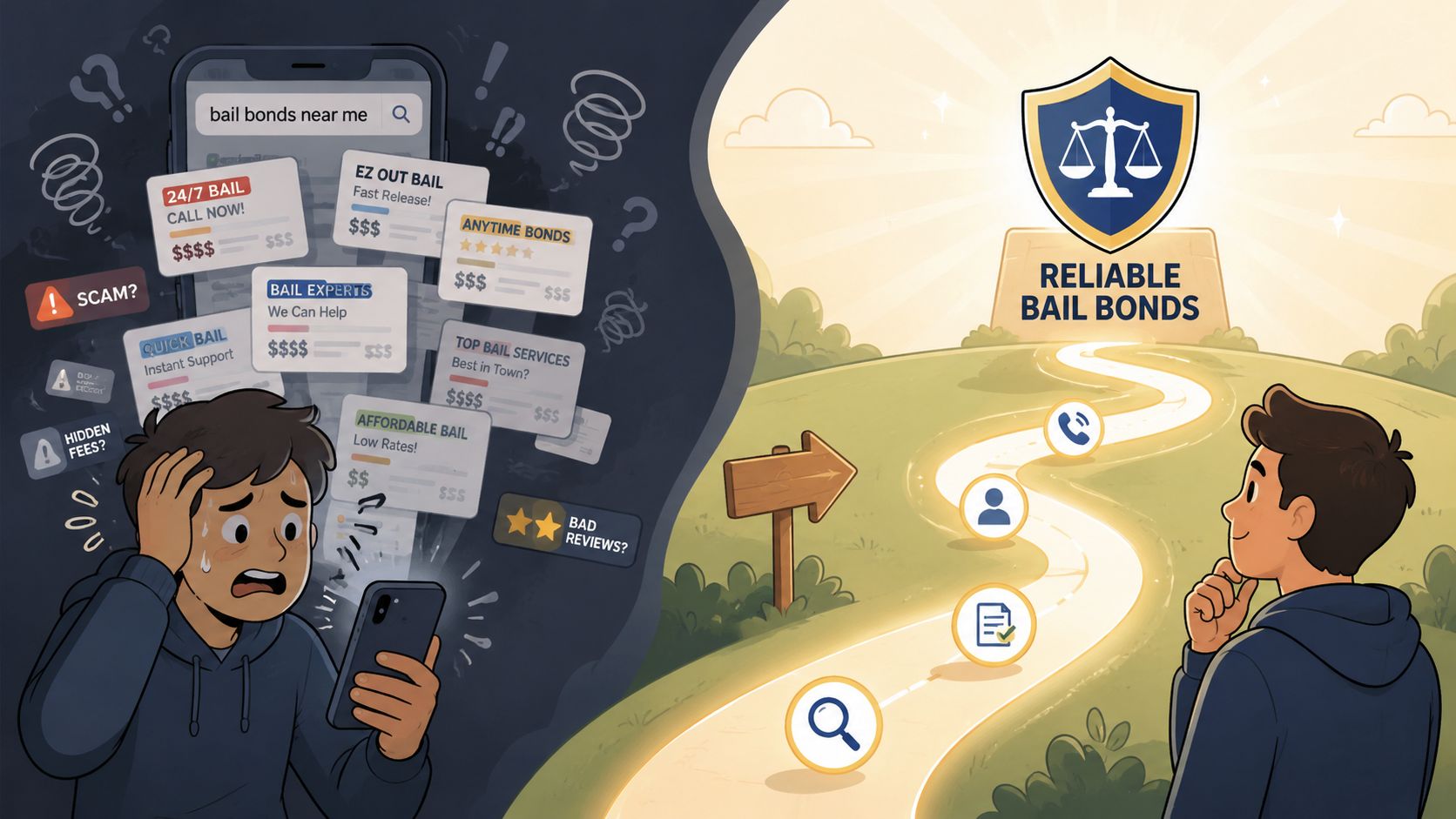
The Lynwood area gives you options. That sounds good until you’re exhausted, worried, and staring at search results in the middle of the night. In that moment, the first agency to answer isn’t automatically the right one.
The U.S. bail bond industry includes 20,886 businesses in 2025, and IBISWorld projects the market at $3.5 billion in 2026, with expected industry growth slowing to 1.2% in 2025 according to IBISWorld’s bail bond services industry profile. In a crowded market, the agencies that stand out usually do so through local procedure knowledge, responsiveness, and clean communication, not by pretending they can legally out-discount everyone else.
What actually matters in a bail emergency
If you need 24 hour bail bonds, judge the office on operational basics.
A reliable Lynwood bail bonds partner should be able to tell you, without rambling, what information they need, who can co-sign, whether collateral may be required, and how paperwork will be handled. They should also explain that release timing depends partly on the facility’s internal processing, not just the moment the bond is posted.
Use this quick screen when you call:
| What to ask | What a solid answer sounds like |
|---|---|
| Are you available right now? | A direct yes, with next steps |
| What do you need from me first? | Name, DOB, booking details, co-signer info |
| Can you explain all costs before I sign? | Clear explanation of premium, financing, and obligations |
| Do you know the Lynwood jail process? | Specific, practical familiarity with local booking and release flow |
One option families look at for round-the-clock service is trusted 24/7 bail bond help, especially when they want an office that can explain things plainly instead of rushing them.
Red flags that should make you pause
Some warning signs are obvious. Others show up only if you ask the right questions.
- Vague pricing. If someone won’t explain the premium, payment plan terms, or possible collateral, keep looking.
- Pressure to sign immediately. Speed matters. Confusion doesn’t help.
- Talk of “special rates” that sound too flexible. In California, legal pricing has strict limits.
- No clear process. If the office can’t explain what happens after payment, that’s a problem.
- No discussion of responsibility. A real professional will talk about court appearance obligations, not just collect money.
A dependable bondsman sounds calm, specific, and transparent. A risky one sounds rushed and slippery.
That’s true whether you’re searching for bail bonds Los Angeles, local Lynwood service, or help for a more serious booking that may later involve felony bail bonds.
Understanding the Full Cost of a Bail Bond
Most families ask the right question, but too narrowly. They ask, “What’s the premium?” when they should be asking, “What am I responsible for if I sign this?”
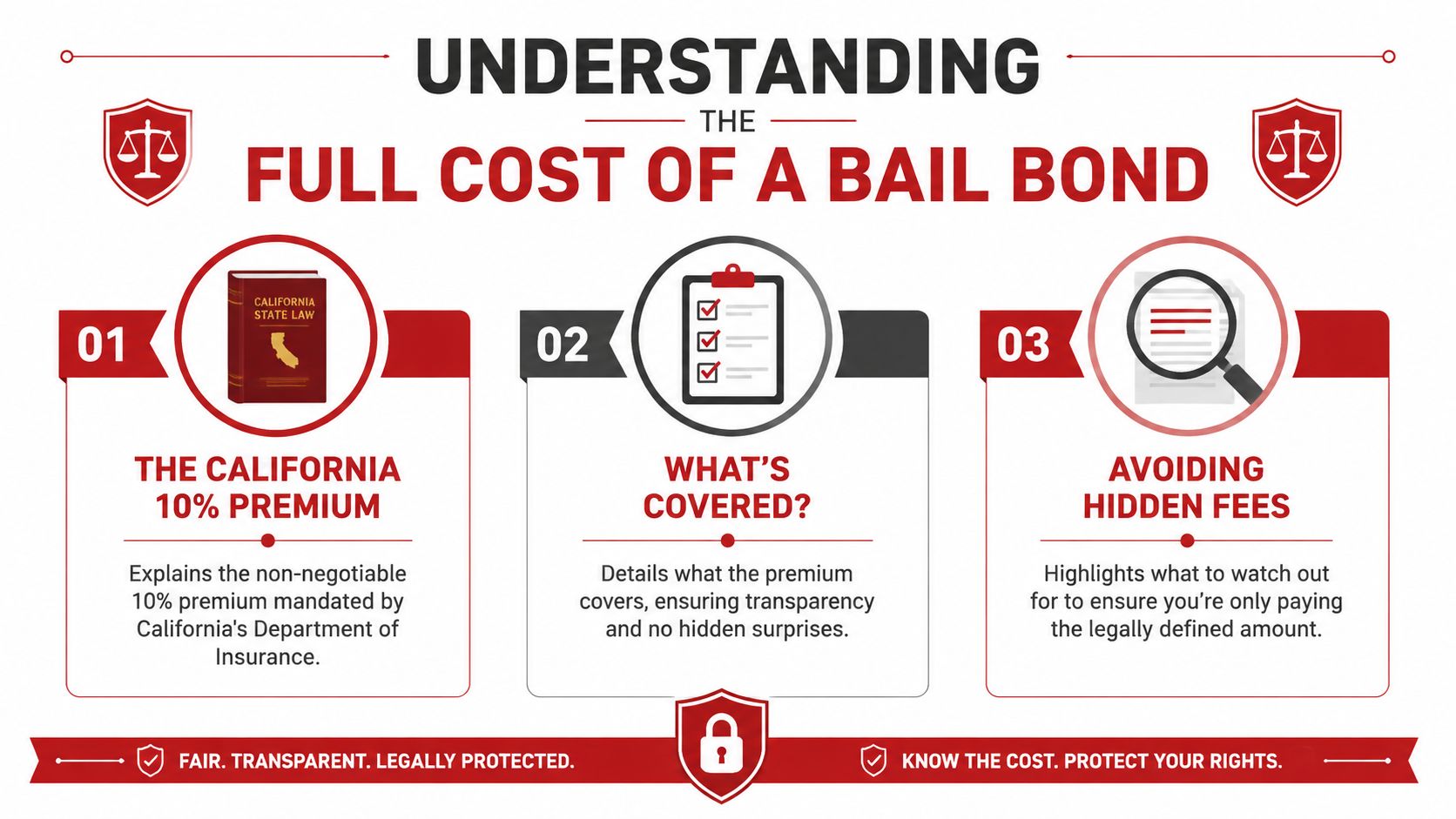
California law is direct on the basic premium. The California Department of Insurance rules under CCR Title 10 fix the bail premium at exactly 10% of the total bail amount. That premium is nonrefundable, even if charges are dropped or the defendant is found innocent. Agencies may charge additional actual, necessary, and reasonable expenses, but those must be transparent and properly disclosed. That’s the financial foundation families need to understand before anything else.
What California law fixes
The legal premium isn’t a deposit. It’s the fee for the surety bond itself.
That distinction matters because families often assume they’ll get the money back when the case ends. They won’t. The bond agency is guaranteeing the full bail amount to the court, and the premium is what the family pays for that guarantee.
If you hear phrases like 1 percent Affordable bail bonds, slow down and ask the next question. In practice, that kind of advertising usually refers to a down payment or financing structure, not a total premium of one percent.
What to remember: A low upfront payment doesn’t always mean a low total cost.
For families who need installment options, it makes sense to review bail bond payment options carefully before signing.
Where families get surprised
The advertised 10% is the start of the discussion, not always the end of the financial risk.
The most common surprises are:
- Financing terms. Verified industry guidance notes that payment plans can carry interest, in some cases as high as 30% if the premium isn’t paid upfront.
- Collateral demands. For larger or higher-risk bonds, agencies may require real estate deeds, vehicle titles, or another asset.
- Co-signer exposure. If the defendant misses court, the co-signer can be held responsible for the full bail amount owed to the agency.
- Misunderstanding refunds. The premium remains nonrefundable even if the criminal case changes later.
People often get hurt financially. They focus on getting a loved one home by morning and ignore the paperwork that controls the next few months.
A simple cost breakdown
Here’s the cleanest way to think about the actual cost of Lynwood bail bonds:
| Cost area | What it means |
|---|---|
| Premium | The legally fixed 10% charge for posting the bond |
| Financing | Possible added cost if you don’t pay that premium upfront |
| Collateral | Property or assets that secure the agency’s risk |
| Co-signer liability | Your obligation if the defendant doesn’t follow court rules |
Another point families should understand is the agency’s risk model. If a defendant fails to appear, the bond company becomes liable for the full bail amount to the court. That’s why offices scrutinize collateral, co-signers, employment, and stability before approving some bonds.
The hidden cost isn’t mystery fees in every case. Often it’s the long tail of the agreement: interest, stress, collateral exposure, and the responsibility you accept for someone else’s choices.
Navigating the Lynwood Jail and Release Process
The hard part of the phone call is deciding to help. Once that decision is made, the next hour becomes a matter of paperwork, jail procedure, and patience.
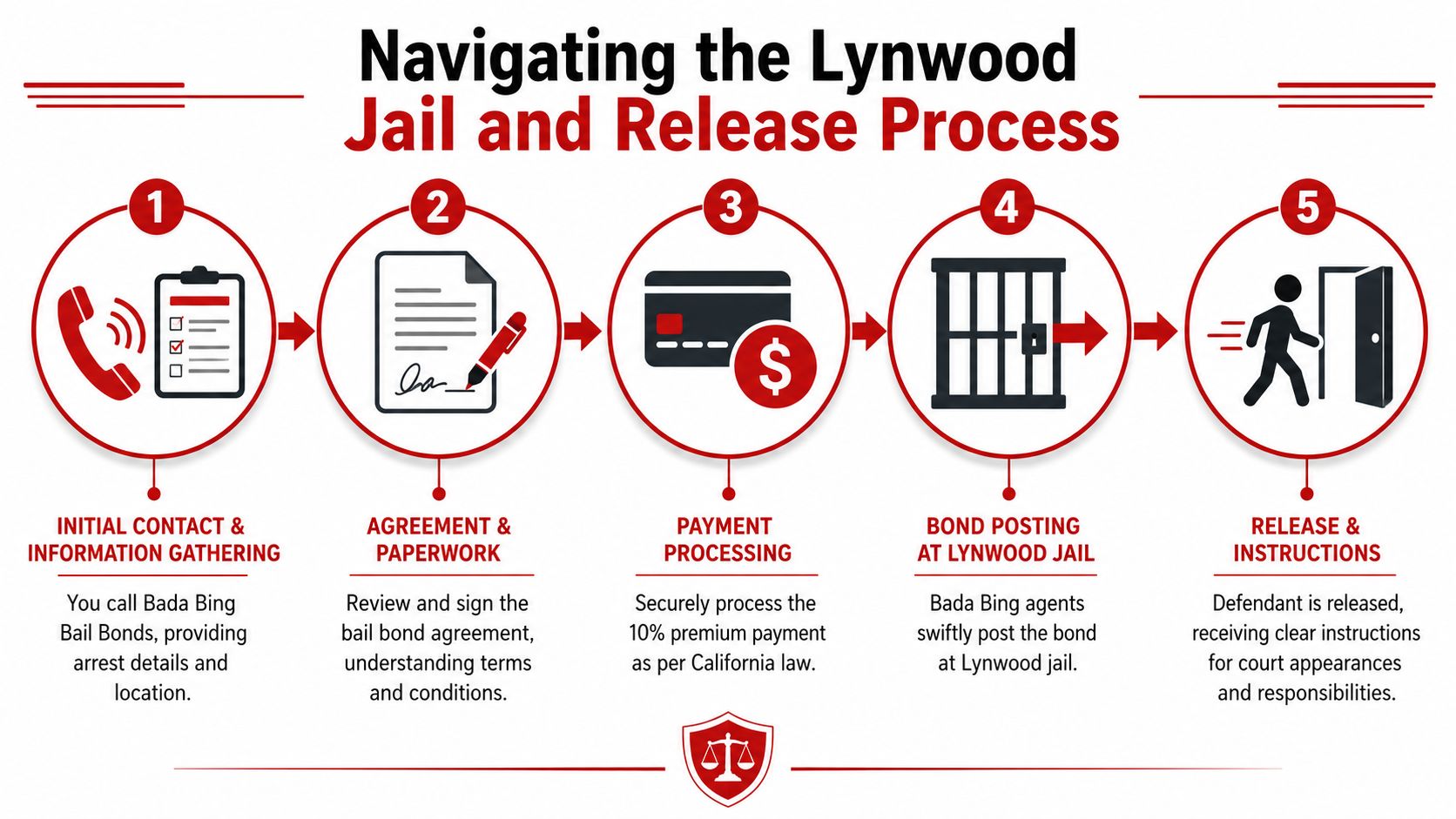
For Lynwood arrests, families are often dealing with the Century Regional Detention Facility at 11705 S Alameda St, Lynwood, CA 90262. To start the bond, a bondsman usually needs the defendant’s full name and date of birth. A booking number helps speed things up if you have it. If you do not, the office can usually still begin checking custody information.
What happens after you agree to proceed
A Lynwood release usually follows a predictable chain of events:
-
Custody details are confirmed
The bondsman verifies where your loved one is being held and checks the bail information tied to that booking. -
The agreement is reviewed
This is the moment to slow down and read. Premium, payment schedule, collateral terms, and the co-signer’s responsibility should all be clear before anything is signed. -
Documents are completed
A lot of this can be handled electronically, which helps on nights when getting across town is not realistic. -
The bond is posted with the jail
Once the bond is accepted, the release process moves into the jail’s hands. -
The jail processes the release
That final step is where waiting starts. Families cannot rush it, and neither can the bond company.
If you are trying to understand how different facilities affect timing across the region, this Los Angeles County bail bond process overview gives useful county-wide context.
A short video can help if you want the process explained in a more visual way.
Why release can still take hours
Posting bond does not mean the person walks out right away. The bond company finishes its part first. After that, jail staff still have to complete release procedures, internal checks, and movement within the facility.
That delay frustrates families because it feels like nothing is happening. Usually, something is happening. It is just happening behind the scenes, on the jail’s timeline.
Common reasons for delay include:
- Heavy booking or release volume inside the jail
- Shift changes
- Internal verification steps
- Housing transfers or transportation within the jail system
This matters for cost, too. A slow release does not usually mean you were charged more. But it can create pressure, especially if a family already stretched to cover the premium, agreed to a payment plan, or pledged collateral expecting a quick release. That is one of the costs people often miss. The financial commitment begins before the person is back home.
If you want a clearer sense of how location changes the release routine, this guide on where you bail someone out in Ventura County shows why each jail’s process can feel a little different.
A correctly posted bond can still lead to a long wait. That usually points to jail processing, not a problem with the bond itself.
After Release Your Responsibilities and Next Steps
Getting someone out is only half the job. The bond stays healthy when the defendant follows instructions and the co-signer stays engaged.
Many families, at this stage, relax too soon. They focus on the release and forget that every future court date matters.
What the defendant must do
The defendant’s obligations are straightforward, even if the case is not.
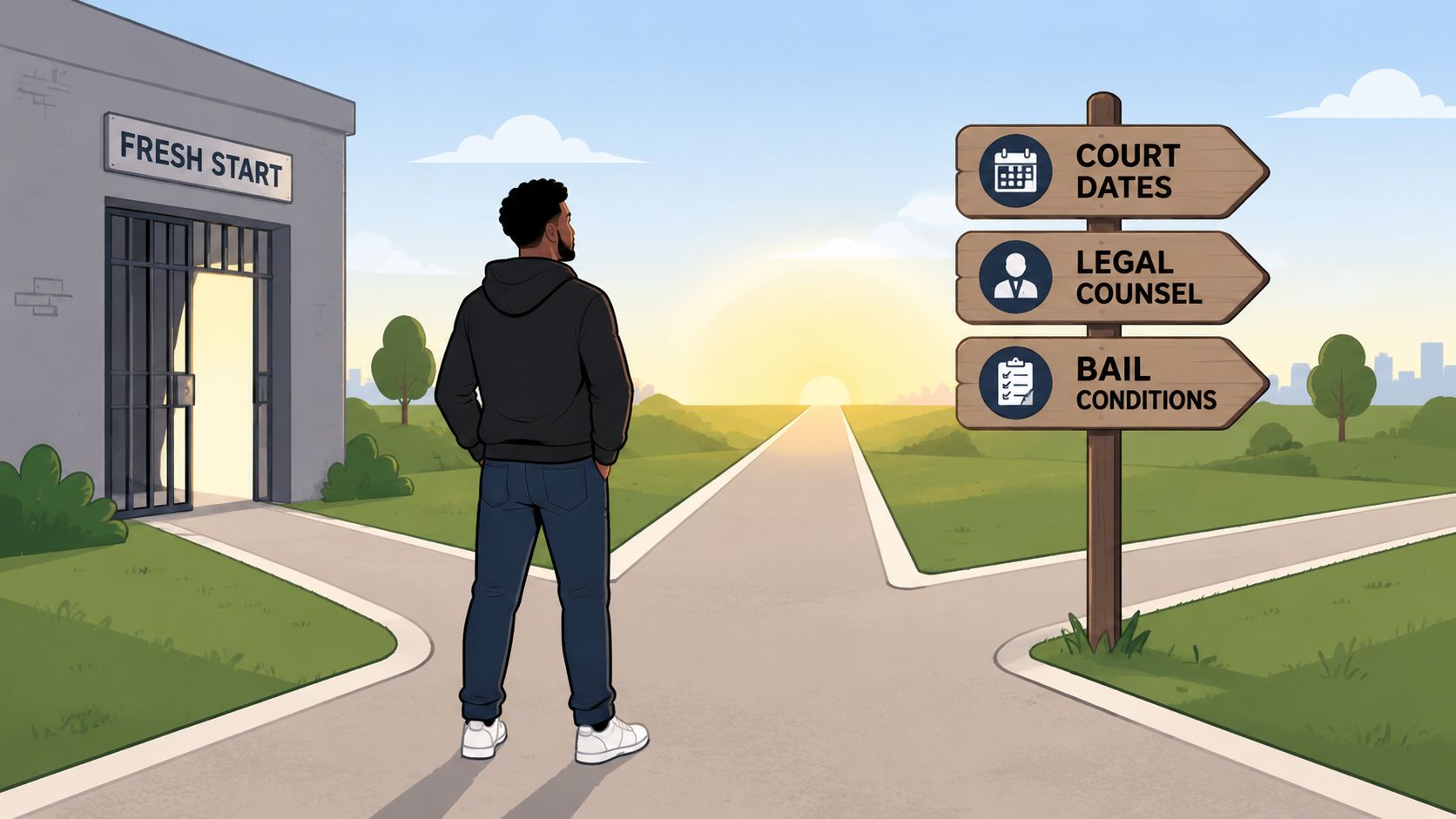
- Appear at every court date. Missing one can trigger serious financial consequences.
- Stay reachable. If the bondsman or attorney needs updated contact information, respond quickly.
- Follow any release conditions. These vary by case and can be stricter in serious matters, including some felony bail bonds cases.
- Keep paperwork organized. Court dates, attorney information, and bond documents should all stay in one place.
Some agencies provide reminders and check-ins. Those aren’t just a courtesy. They help prevent avoidable mistakes.
What the co-signer is agreeing to
The co-signer carries more risk than many people realize. Verified local-market guidance explains that beyond the premium, the financial danger includes financing interest if a payment plan is used and the full value of any collateral pledged. If the defendant fails to appear, the co-signer can be legally obligated to pay the entire bail amount to the bail agency, as explained in this Lynwood bail cost overview.
That means a co-signer should ask blunt questions before signing:
| Question | Why it matters |
|---|---|
| What happens if they miss court? | This defines your exposure |
| Is there collateral involved? | You need to know what asset is at risk |
| Are there financing charges? | Monthly affordability can change fast |
| Who gets notices and reminders? | Communication prevents problems |
If you’re worried about a missed appearance, review what happens if you miss court before the problem becomes urgent.
One practical note. Bada Bing Bail Bonds is one agency that states it offers payment plans, co-signer options, collateral solutions, and post-release reminders for Southern California cases. That kind of support matters because a bail bond agreement doesn’t end when the jail door opens.
Common Questions About Bail Bonds in Lynwood
Is the 10% premium refundable if charges are dropped
No. In California, the premium is the charge for the surety bond. It isn’t held like a refundable deposit.
Can a bondsman in Lynwood negotiate a lower legal rate
Be careful with that idea. California’s premium structure is fixed by law, so the better question is whether the agency offers clear financing terms and transparent paperwork.
Does an arrest in Lynwood always mean the person stays in Lynwood
Not always. Arrest location and holding location can differ. That’s why booking verification matters before anyone signs.
What information should I have ready at night
Have the defendant’s full legal name, date of birth, and booking number if available. Those details help the office locate the booking quickly.
How long does release usually take
It depends on the facility’s internal process once the bond is posted. Delays after posting are common and don’t always mean there’s a problem.
What does collateral usually mean
Collateral is an asset used to secure the bond agency’s risk. Depending on the bond, that might include property or a vehicle interest. If the defendant doesn’t comply, that asset may be at stake.
Is a payment plan the same thing as a cheaper bond
No. A smaller upfront payment can help with cash flow, but it doesn’t erase the legal premium or the possible financing cost tied to that plan.
Can someone out of state co-sign
In many cases, yes, but the office will want to verify identity, responsibility, and ability to meet the contract terms before approving the bond.
When you need clear answers fast, Bada Bing Bail Bonds is one place to start. If your family is trying to understand bail bonds Lynwood, 24 hour bail bonds, financing questions, or the difference between a low down payment and the actual long-term cost, call a licensed agent, get the facts in plain English, and don’t sign anything you don’t fully understand.