A late-night arrest call usually sounds the same. The line is shaky, the details are incomplete, and the first question is almost always, “How do I get them out?” Those in need of bail bonds in Montebello right now likely don't require a lecture. You need a clear answer, a realistic timeline, and a straight explanation of what happens next.
The confusion usually starts at the jail door. Families hear “bail has been posted” and assume release is immediate. In Montebello, it often isn't that simple. Booking has to be completed first, the jail controls the release workflow, and in some cases the person may move into the broader county system before the process is finished.
That's where practical guidance matters more than slogans like “fast” or “affordable.” If you need a wider overview of how release works across the region, this Los Angeles County bail bonds guide gives additional county-level context.
Table of Contents
- A Guide for a Stressful Time
- Immediate Actions After an Arrest in Montebello
- How to Contact a Bail Bondsman and What to Ask
- Understanding California Bail Bond Costs and Payments
- Navigating the Montebello Jail and LA County System
- The Bail Process for Common Charges
- Frequently Asked Questions About Montebello Bail Bonds
A Guide for a Stressful Time
The first hour after an arrest is usually a blur. Someone says they were taken to Montebello. Another person thinks it might be a county facility. Nobody is sure whether bail has been set, whether they can be picked up tonight, or whether the case is “serious enough” to slow everything down.
That uncertainty is normal. What helps is getting out of panic mode and into verification mode. A calm family member who writes down the right details almost always moves the process along faster than a room full of people making calls based on guesswork.
What families usually need first
Most callers want answers to four things:
- Where is the person right now
- Has booking been completed
- What is the bail amount
- What will the release process require from the family
Those questions are more useful than broad searches for “bail bonds near me” or “affordable bail bonds” if nobody has confirmed where the person is being held.
Practical rule: The fastest bail process usually starts with the most accurate information, not the most urgent tone.
What works better than rushing
Families often lose time by assuming the arrest location and the holding location are the same. They also get stuck when one person starts promising payment before anyone knows the actual bond amount or who will sign as indemnitor.
A better approach is simple. Confirm the basic facts, identify the person who will handle the paperwork, and keep one phone thread going instead of five separate versions of the story. That cuts confusion right away and gives you a much better shot at getting a clean answer from the jail and the bond company.
Immediate Actions After an Arrest in Montebello
Start with one instruction: breathe and slow down for a minute. Panic causes mistakes, and mistakes delay release.

Bail help is a standard part of the justice system, not some unusual last resort. IBISWorld estimated the bail bond services industry at $3.5 billion in 2026 and 20,886 businesses in 2025, and industry sources cited there say agents help release more than 2 million people each year through the process of securing release after arrest (IBISWorld bail bond services industry overview).
The first-hour checklist
Here's what to gather before you call anyone:
- Full legal name. Spelling matters. If the name is entered wrong, the jail search can go sideways fast.
- Date of birth. This helps separate your person from anyone with a similar name.
- Likely arrest location. “Montebello” is helpful, but “picked up by Montebello PD near Beverly and Garfield” is better.
- Known charge, if any. Even a rough description helps, such as DUI, domestic dispute, warrant, or probation issue.
- Your relationship to the person. The bond company will want to know whether you're in a position to sign and accept responsibility.
If you need help checking custody details, use a dedicated Los Angeles County inmate search resource instead of relying on social posts or secondhand texts.
What not to do
A lot of families make the same avoidable mistakes:
- Don't post details online. Public posts create confusion, and they don't speed up booking.
- Don't promise money you haven't confirmed. Bail amount, premium, and signing responsibility are separate issues.
- Don't assume “they're in Montebello” means they'll stay there. Jail location can change.
- Don't let six people call at once. One organized point of contact works better.
If you only know the arrest happened in Montebello, that's enough to start. It isn't enough to finish.
The most useful mindset
Think of the first hour as information gathering, not problem solving. Your job is to get facts that can be verified. Once you have them, a licensed bail agent can tell you whether release can be started immediately, whether booking is still pending, and whether the person may be moved into the larger county system.
That's the point where “fast bail bonds Ventura” style expectations don't always match reality on the ground in Los Angeles County. Speed matters, but the jail still controls the gate.
How to Contact a Bail Bondsman and What to Ask
The first call goes more smoothly when you treat it like a handoff, not a desperate plea. You don't need perfect information. You do need to give the agent a clean snapshot of what you know.
A simple opening works well: “My family member was arrested in Montebello. I have their full name, date of birth, and what I believe the charge is. I need to confirm where they are, what bail is set at, and what I'd need to sign.”
If you've never used a bond service before, it helps to understand the agent's role. This overview of what a bail bond agent does gives the basic framework in plain English.
What to say on the call
Keep the first part short and factual:
- Identify the defendant clearly. Full name and date of birth first.
- Say where the arrest happened. If you only know Montebello, say that plainly.
- Share what you know about the charge. Don't guess if you're unsure.
- State whether you're ready to sign. The process can't move without a responsible signer.
That gives the agent enough to begin checking booking status and bond details.
What you should ask back
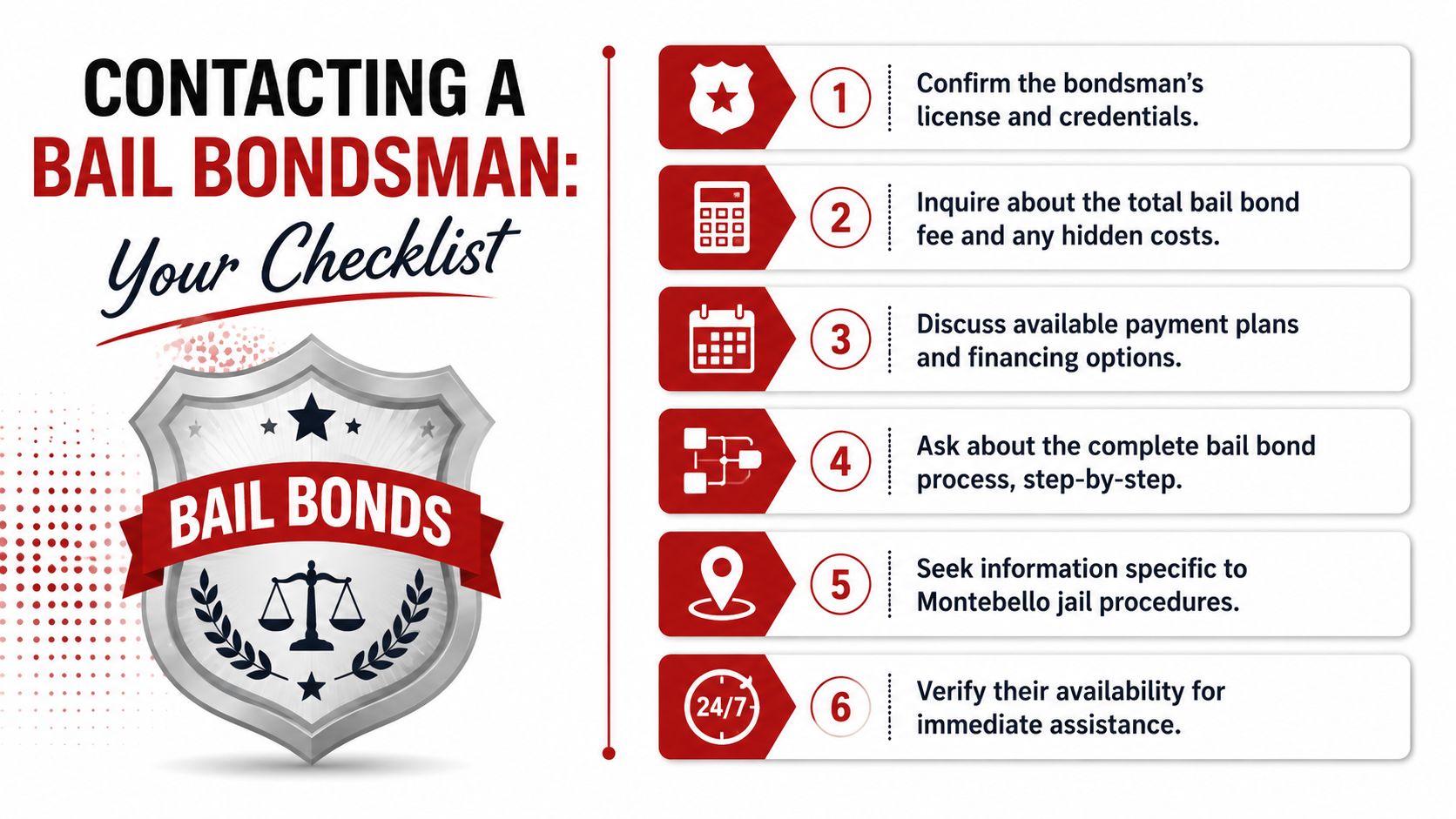
Families often ask only one question: “How fast can you get them out?” That's understandable, but it's not enough. Ask these instead:
| Question | Why it matters |
|---|---|
| What is the total bail amount? | You need the actual court-set figure, not a rumor. |
| What is the premium I would owe? | The premium and the bail amount are not the same thing. |
| Is the premium refundable? | Many families assume it is. It usually is not. |
| Will a co-signer be required? | This tells you who must accept financial responsibility. |
| Is collateral likely in this case? | Larger or higher-risk bonds may require added security. |
| What could delay release after the bond is posted? | Jail workflow often matters more than the paperwork speed. |
What a good answer sounds like
You're listening for clarity. A useful answer explains the bond amount, the premium, whether financing is available, what documents are needed, and what part of the timeline depends on the jail.
One practical option people use in Southern California is Bada Bing Bail Bonds, which handles booking checks, paperwork coordination, and payment-plan discussions for regional cases including Los Angeles bail bonds. The right fit, though, is whichever licensed agent gives you direct answers without blurring the line between the bond premium, payment terms, and your co-signer responsibility.
Ask the agent to separate three things: the bail amount, the premium, and your risk as signer. Those are related, but they are not the same.
What usually wastes time
Long emotional backstories rarely help on the first call. The agent doesn't need to know whether the arrest “was unfair” in order to confirm custody and start the bond process. Legal defense comes later. Release logistics come first.
That focus is often what turns a frantic call into a workable plan.
Understanding California Bail Bond Costs and Payments
Most confusion about bail comes from mixing up the total bail amount with the bond premium. They are not the same.
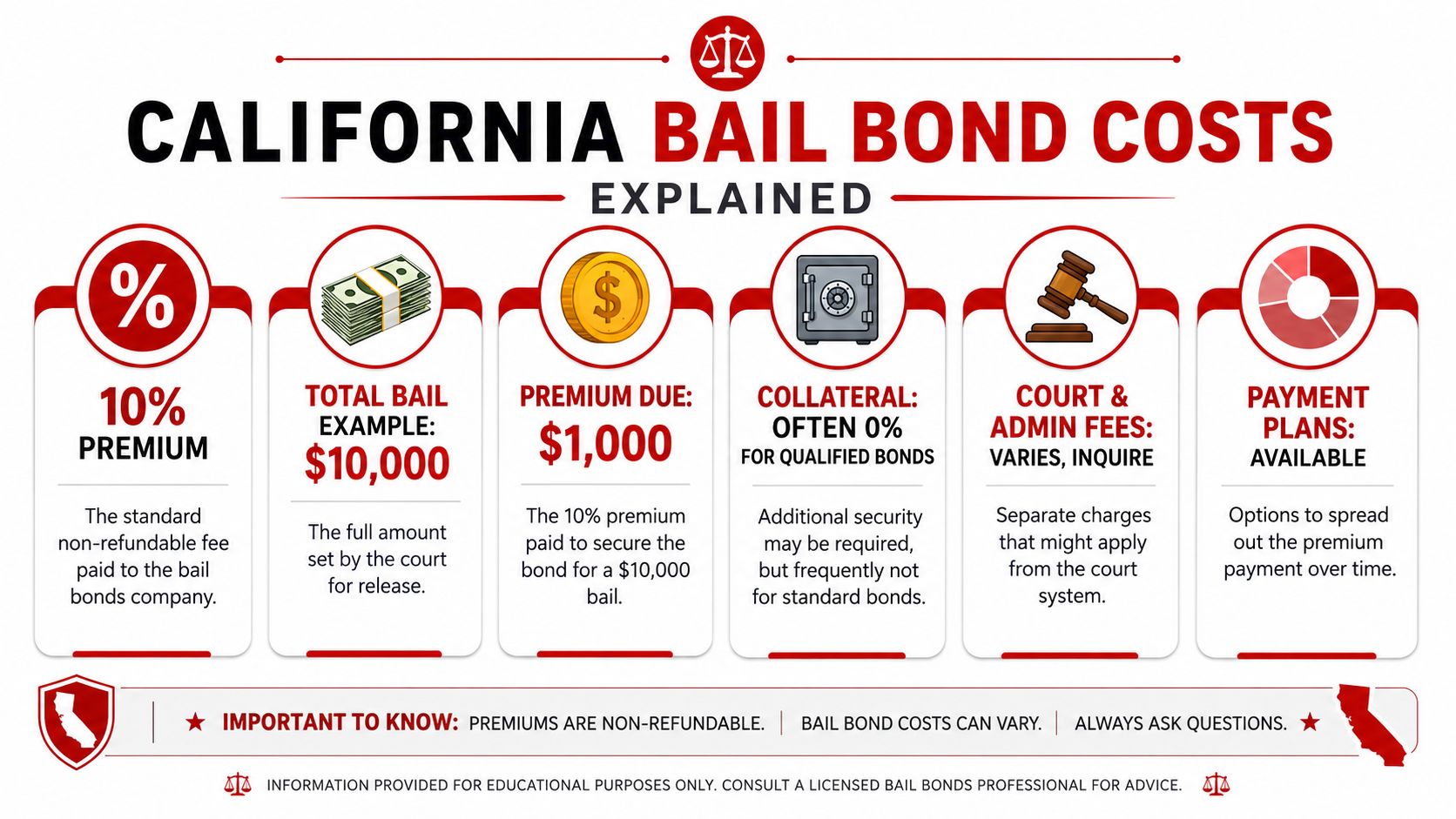
The California Department of Insurance says the premium for a bail bond is most commonly 10% of the total bond, and that premium is generally nonrefundable even if charges are dropped. The department's consumer guidance also explains that for a $50,000 bail, the typical premium would be $5,000, not the full bail amount upfront (California Department of Insurance bail bond consumer guide).
What the premium means
The premium is the fee paid to the bail company for posting the bond. In California, that's the core cost families need to understand first. It is not a deposit you get back at the end just because the case is dismissed or resolved favorably.
That single misunderstanding causes more frustration than almost anything else in this process.
What can be flexible and what isn't
A lot of advertising around affordable bail bonds focuses on low down payments or flexible terms. That can be useful, but it doesn't change the underlying premium obligation.
A Brennan Center analysis notes that commercial bail practice typically uses a 10% to 15% premium, and when clients can't pay upfront, some companies may offer financing plans with interest rates as high as 30%. It also describes the operating structure: the company posts a promissory note for the full amount and is exposed if the defendant misses court or violates release conditions, which is why companies look closely at co-signers and collateral (Brennan Center analysis of commercial bail practice).
The video below gives a quick visual overview before you compare options.
How payment plans fit in
Payment flexibility is about how the premium is paid. It doesn't erase the premium itself. If you're comparing companies, ask whether the payment plan changes your total obligation, whether collateral may be required, and how missed payments are handled.
Families looking at lower upfront options often start by reviewing bail bond payment options and, in some cases, 1 percent bail bonds in Ventura County to understand how down payment offers differ from the full legal obligation.
The co-signer issue families underestimate
The signer, often called the indemnitor, is taking on real responsibility. If the defendant misses court, the problem doesn't stay with the defendant alone. The financial risk can move directly to the person who signed the bond agreement and pledged any collateral.
Bottom line: Don't judge a bond by the down payment offer alone. Judge it by the full premium, the financing terms, and the risk you're accepting as co-signer.
That's why the best phone calls are the ones where the family asks hard questions early instead of finding out the obligations after the paperwork is already underway.
Navigating the Montebello Jail and LA County System
The biggest release delay in Montebello is often not the bond itself. It's the handoff between booking, holding, and possible transfer.
A local Montebello guide notes that no inmate can complete the bail process before booking is finished, and that booking can take about 45 minutes or more. That same practical issue matters even more when the person's case ends up moving into the broader county system, because release timing is controlled by jail workflow rather than the family's urgency (Montebello jail workflow and booking explanation).
What usually happens first
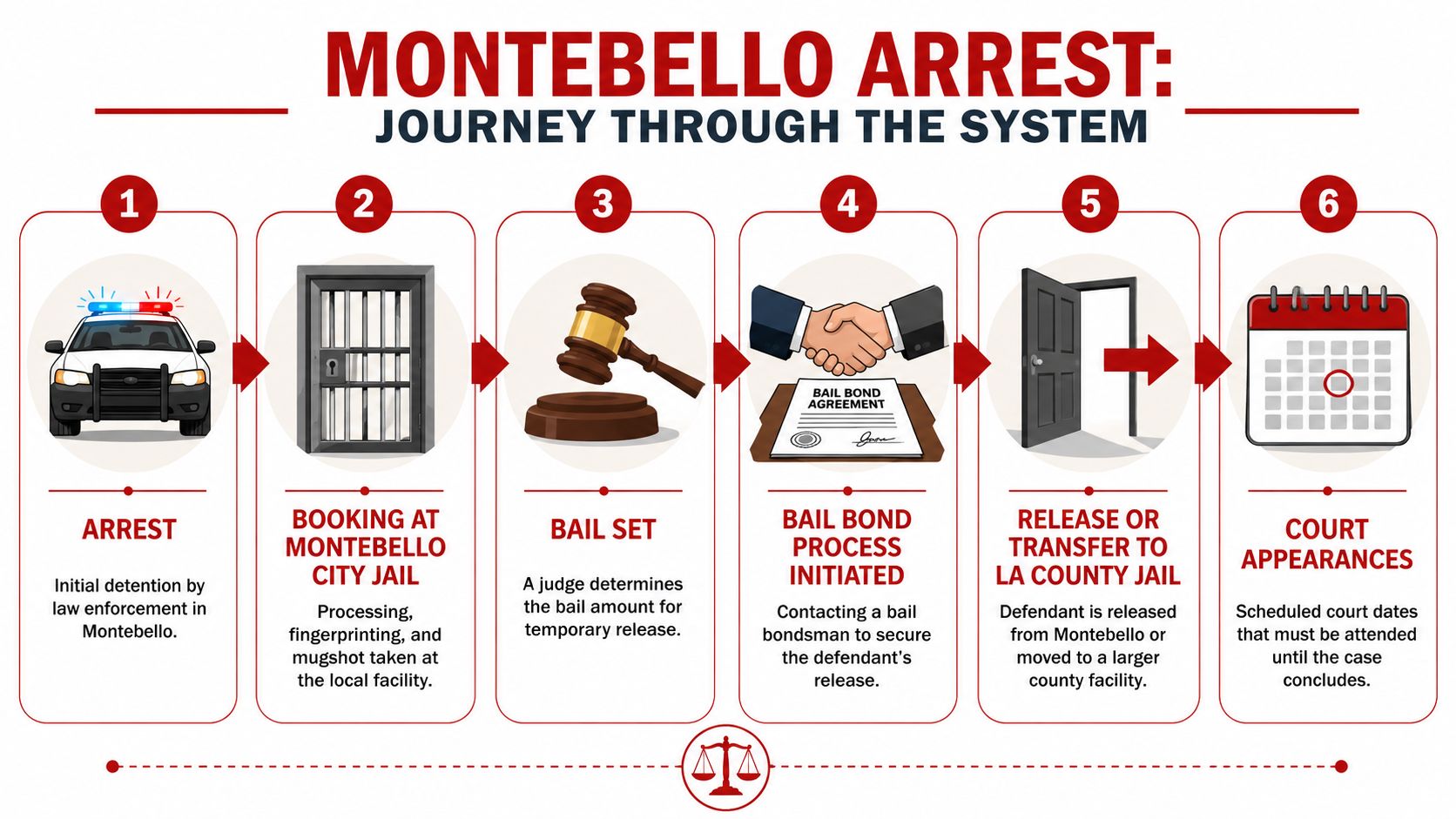
An arrest by Montebello police often starts at the local jail level. That doesn't mean the entire case stays there. Depending on the charge, timing, and custody decisions, the person may remain local for processing or be moved into a larger Los Angeles County facility.
That's why families can hear two statements that both sound contradictory but are both true: “The bond is ready” and “They're not being released yet.”
The part families find confusing
Release isn't triggered by the family's payment alone. The jail still has to complete its own sequence.
A simplified version looks like this:
- Arrest and intake happen first.
- Booking must be completed before the bail process can finish.
- Bond paperwork can be prepared and filed, but the person may still wait inside while staff complete internal steps.
- Transfer can change the timeline if the person is moved into county custody.
- Actual release depends on facility operations, not just when the bond was posted.
Why fast service still has limits
Expectations must remain realistic. A fast bond company can verify custody quickly, prepare documents quickly, and submit the bond quickly. It cannot force the jail to accelerate fingerprinting, internal review, release staffing, or transport timing.
That's also why broad searches like “bail bonds near me” don't always tell you who understands Montebello versus the wider county process. A local arrest can become a county logistics issue very quickly.
The jail controls the release door. The bond company controls the bond filing. Families often blend those into one step, but they are separate.
What to ask when time matters
If your loved one was arrested in Montebello, ask these exact questions when calling for help:
| Ask this | What the answer tells you |
|---|---|
| Has booking been completed yet? | Whether release can even move forward |
| Is the person still at Montebello or being transferred? | Which facility controls the timeline |
| Has bail already been set? | Whether a bond can be filed now |
| Who can sign right away? | Whether paperwork will stall on the family side |
When families understand that structure, they stop treating delay as a mystery. It's usually a workflow issue, not a sign that something has gone wrong.
The Bail Process for Common Charges
Different charges can produce different release issues, even when the basic bond process stays the same. The practical question isn't just “Can bail be posted?” It's “What else might affect release after the bond is ready?”
DUI arrests
A Montebello DUI arrest often feels straightforward to the family because they assume it's a routine booking and release. Sometimes it is. But alcohol-related arrests can involve timing issues around booking, custody status, and release clearance before someone walks out.
If that's the case you're dealing with, a more specific DUI bail bond overview can help you understand how these cases are usually handled.
Domestic violence cases
These are often more emotionally charged from the first phone call. Families want to know whether the person can come home immediately after release. The answer may depend on conditions attached to release, including practical restrictions that have nothing to do with whether the bond itself can be posted.
If you're handling one of these cases, it helps to review domestic violence bail bond guidance before making assumptions about what release will look like.
Misdemeanor cases
Misdemeanor arrests are often described by callers as “minor,” but they still require the same attention to booking status, signer responsibility, and court compliance. The process can be simpler, but it still needs to be handled correctly.
For that reason, some families also look at misdemeanor bail bond information in Ventura County to compare how lower-level charges are typically processed.
What the bond company is actually doing
The operational side matters more than most families realize. In commercial bail practice, the workflow involves confirming the bail amount, calculating the nonrefundable 10% to 15% premium, underwriting the risk, and posting a promissory note with the court. The company's exposure arises if the defendant fails to appear, which is why co-signers and collateral matter so much in higher-risk cases, as described in the earlier Brennan Center citation.
The charge changes some logistics. The discipline stays the same. Confirm the custody status, calculate the premium correctly, get the right signer in place, and don't assume release terms before the jail confirms them.
Frequently Asked Questions About Montebello Bail Bonds
The questions below are the ones families usually ask after they've already made the first call and started realizing there's more to this than a quick payment.
Is the bond premium refundable if the case is dropped
Usually no. That's one of the hardest points for families to hear because they assume a dismissed case means the money comes back. The premium is the fee for the bond service, not a court deposit being held for return at the end.
What is collateral, and will I need it
Collateral is extra security a bond company may require to manage risk. Whether it's needed depends on the case, the bail amount, the defendant's history, and the strength of the co-signer. Some bonds are handled without collateral. Others are not.
Can I really get a bond with no money down
Some companies advertise no-down-payment structures, but that phrase can mask the underlying problem. A Montebello-area guide points out that the critical issue isn't the down payment headline. It's the non-refundable 10% premium and the co-signer's full financial liability for the entire bail amount if the defendant fails to appear in court (Montebello bail bond co-signer and no-money-down explanation).
So yes, low upfront entry may be possible in some situations. That does not mean the financial risk disappears.
“No money down” is a payment structure. It is not a reduction in responsibility.
How long am I responsible as a co-signer
You remain responsible under the bond agreement until the bond is exonerated or otherwise resolved under the terms of the case. That means your obligation doesn't end the minute the person walks out of jail. It continues while the case is active and while court appearances still have to be made.
What should I focus on if I need help right now
Use this order:
- Verify custody location
- Confirm booking status
- Get the actual bail amount
- Understand the premium and payment terms
- Decide who will sign and accept responsibility
That sequence works better than chasing the quickest promise from a search for Los Angeles bail bonds or affordable bail bonds.
If you need help right now, Bada Bing Bail Bonds can explain the Montebello and greater Los Angeles release process, verify booking details, and walk you through what the signer needs to provide so the bond can be handled without extra confusion.