
A Pasadena arrest does not wait until morning. It hits at 2 a.m., maybe from a relative who can barely keep the details straight, and the first question is always the same, can someone get out tonight. The right move is simple, get the jail location, get the booking information, and call a licensed bondsman who answers the phone, because in Pasadena the difference between a fast release and a long night usually comes down to whether the case is at the city jail or already moving through Los Angeles County custody.
If you’re dealing with bail bonds Pasadena CA, don’t waste time guessing. Pasadena has its own police and jail operations at 207 Garfield Ave, Pasadena, CA 91101, but arrests can also move into county facilities depending on the charge and agency involved, and that changes the release clock fast. Families searching late at night need a local process, not theory, and they need someone who knows how the booking pipeline works before the paperwork starts.
Table of Contents
- The First Call After a Pasadena Arrest
- What a Pasadena Bondsman Actually Does on Your Behalf
- How the 10% Premium Works on a Pasadena Case
- Documents, IDs, and What a Co-Signer Should Prepare
- Release Timeline and Pasadena Jail Logistics
- After Release in Pasadena Court Reminders and Compliance
- Practical Tips and Questions to Ask Before You Sign
The First Call After a Pasadena Arrest
At 2 a.m., a family member usually sounds the same, confused, tired, and one bad minute away from panic. They know someone was arrested in Pasadena, but they don’t know whether the person is sitting at the city jail, has already been routed elsewhere, or is still being booked. That’s why the first call has to be practical, not emotional, because the release path starts with identification and location, not with guesses.
Why Pasadena feels different from a generic arrest
Pasadena cases sit inside a very specific setup. The city’s jail and police operations are centered at 207 Garfield Ave, Pasadena, CA 91101, and inmate information is commonly handled through the Pasadena Police Department at (626) 744-4616 and related county channels. That matters because release timing depends on where the booking happened and whether the defendant stays in city custody or moves into a county facility, which can change the rest of the night.
A calm first call should focus on four things, the defendant’s full legal name, date of birth if known, the location of custody, and the charges if anyone has them. If you only have a name, that’s still enough to start, but a working bondsman will verify the rest before promising anything. The reason this matters is simple, booking and release are operational problems as much as financial ones.
Practical rule: the faster the jail is identified, the faster the bond can be posted.
Use the local inmate-search path first when you can, and don’t sit on the call trying to “wait for more information.” The Pasadena-area inmate search process is useful precisely because it keeps the family focused on the right facility instead of wasting time chasing the wrong one. In a real arrest, time is the asset you lose first.
What a Pasadena Bondsman Actually Does on Your Behalf
The first fifteen minutes of a real bail call should feel organized, not salesy. A licensed agent starts by verifying the booking, confirming where the defendant is being held, and checking the bail amount that applies to the charge. California keeps the premium structure simple, but the workflow around it is not simple, because the jail has to accept the bond and the release has to be processed by staff.
The intake should be precise
A good agent asks for the defendant’s full legal name, date of birth, booking number if you have it, and the jail location. Then the agent confirms whether the case is at Pasadena City Jail or has been transferred to a Los Angeles County facility, because that changes how the bond is posted and how long release may take. The family should hear exact answers, not vague language like “it should be fine.”
A licensed bondsman should be doing the verification work while the family is still gathering ID and paperwork.
Once the location is confirmed, the bond paperwork comes next. That includes explaining the premium, the co-signer role, and any collateral or signature obligations before anyone signs anything. A bail bond agent’s role is to post the bond and manage the court-facing side of the process, not to leave the family guessing about who is responsible for what.
Then the posting begins. The bond is filed with the jail, the jail verifies the paperwork, and the release process starts moving through custody channels. A 24/7 operation means a live agent answers directly, not an answering service that takes a message and hopes someone calls back in time. Families don’t need a pitch at that point, they need a straight answer and a file that moves.
How the 10% Premium Works on a Pasadena Case
California does not leave the premium up for debate. The court sets the bail amount, and the consumer cost is most commonly 10% of that amount, plus actual, necessary, and reasonable expenses tied to the transaction, according to the California Department of Insurance (California bail bond premium rules). So if the bail is $50,000, the premium is typically $5,000, while posting the full cash amount with the court would require the whole $50,000.
That’s the part families need to understand tonight. The premium is the fixed cost of the bond, but payment structure can still be flexible depending on the case. A qualified bondsman may offer payment plans, collateral arrangements, or a co-signer structure, but the premium itself isn’t a negotiation game. The court sets the bail, the state sets the premium framework, and the bond agent works inside that structure.
Cash bail versus a bond
| Cost Factor | Cash Bail | Bail Bond |
|---|---|---|
| Money required up front | Full bail amount | Usually 10% premium |
| Who posts the funds | Defendant or family to the court | Licensed bondsman posts the bond |
| Refund if court is completed | Cash can be returned by the court process | Premium is the fee and is not refunded |
| Flexibility | Low | Higher through payment plans or collateral |
On a Pasadena case, that difference is the entire reason families call a bondsman instead of trying to liquidate savings in the middle of the night. A $50,000 bail can be manageable through a bond when cash posting isn’t realistic. This Pasadena cost breakdown keeps the comparison simple, and that’s the point, the premium is predictable even when the arrest itself isn’t.
What’s negotiable is the payment path, not the statutory premium. That’s where a direct local agent matters, because families need a clear number and a real plan, not a vague promise that “something can be worked out.”
Documents, IDs, and What a Co-Signer Should Prepare
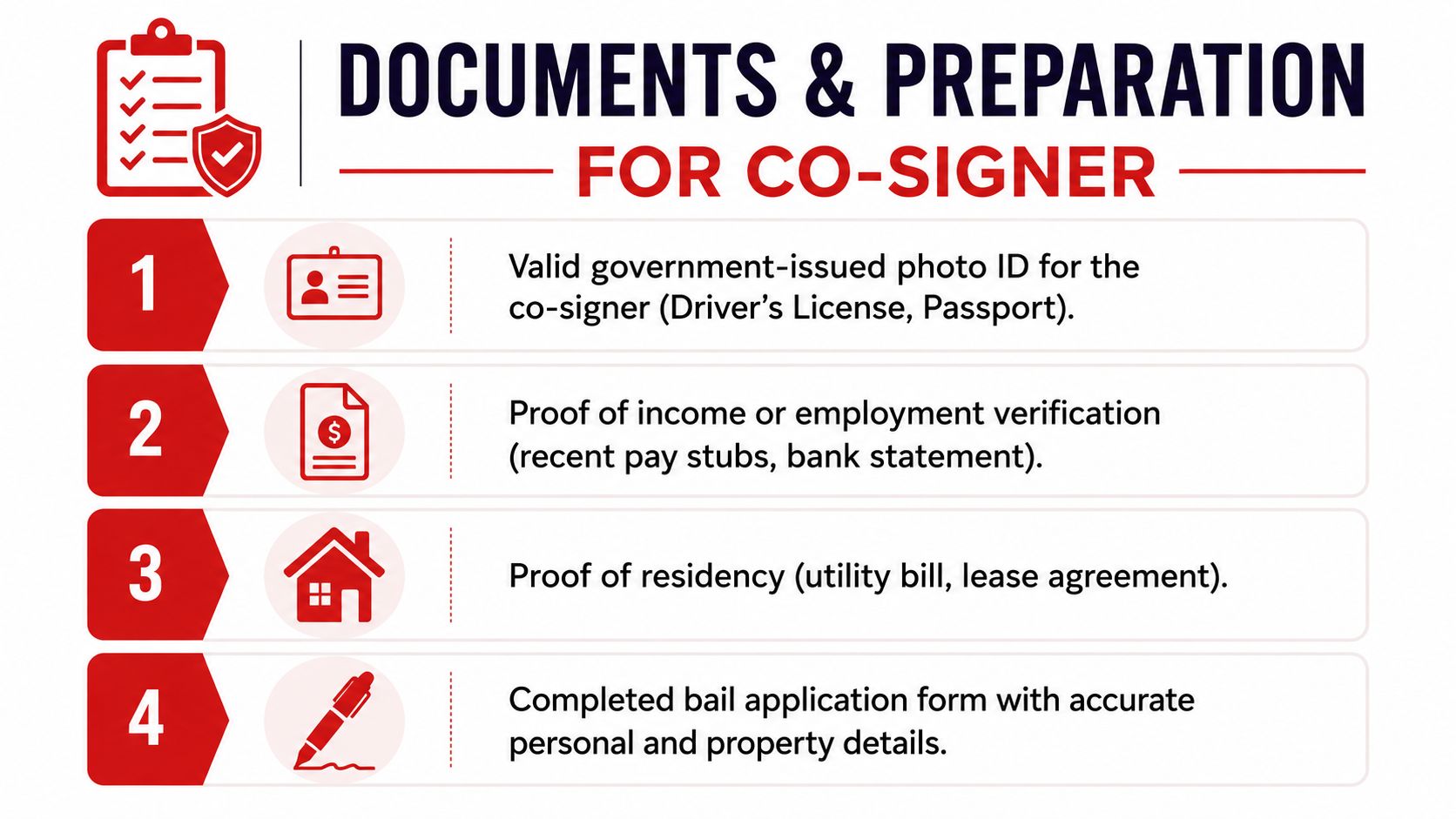
A co-signer should be ready before anyone puts pen to paper. The basic items are straightforward, government photo ID, proof of address, proof of income or employment, and the defendant’s full legal name, date of birth, and booking number if known. If the defendant is already booked, the co-signer should also have the jail contact details ready, including the Pasadena Police Department booking line at (626) 744-4616 when verification is needed.
The defendant may also need practical items ready for release, like basic ID verification and any prescription or medical information that helps the jail process the handoff cleanly. Families shouldn’t overcomplicate this, but they also shouldn’t treat the signature as a formality. The co-signer is vouching for appearance in court and carrying real financial responsibility if the case goes sideways.
What the co-signer is actually agreeing to
If the defendant skips court, the co-signer is part of the conversation immediately.
That’s why the paperwork should be read carefully, especially in cases where the release conditions are restrictive. A domestic violence arrest can include no-contact terms or protective-order issues that change what the defendant is allowed to do after release, and a co-signer needs to understand that before signing. Co-signer responsibilities are not just about putting a name on a contract, they’re about agreeing to a real risk.
Here’s the hard truth, if the family is unclear about the bond terms, stop and ask again. A clean intake means the agent explains the obligation, the jail details, and the practical limits of release in plain English. Anything less is a bad sign.
Release Timeline and Pasadena Jail Logistics
Pasadena release timing is where families get burned by bad information. A small city jail can move faster than a larger county facility, but only if the bond is posted early and the booking data is correct. If the defendant is still in Pasadena City Jail, the path is usually cleaner. If the person has already moved into a Los Angeles County facility, the process slows because there are more layers between posting and release.
The handoff is what takes time
After the bond is filed, the jail still has to verify paperwork, complete the internal processing, and approve the release. That is why two people with similar charges can have different waiting times, one case may be moving inside a smaller facility with a faster queue, while another is stuck in county intake. Families usually wait at home, at the jail, or in a nearby parking lot, and none of those places make the clock move faster.
Don’t let anyone promise a release window unless they know the exact facility and the current booking status.
The timeline visual below captures the basic flow families should expect, booking first, bond posting next, final release last. The details change by staffing, volume, and the time of arrest, but the sequence does not.
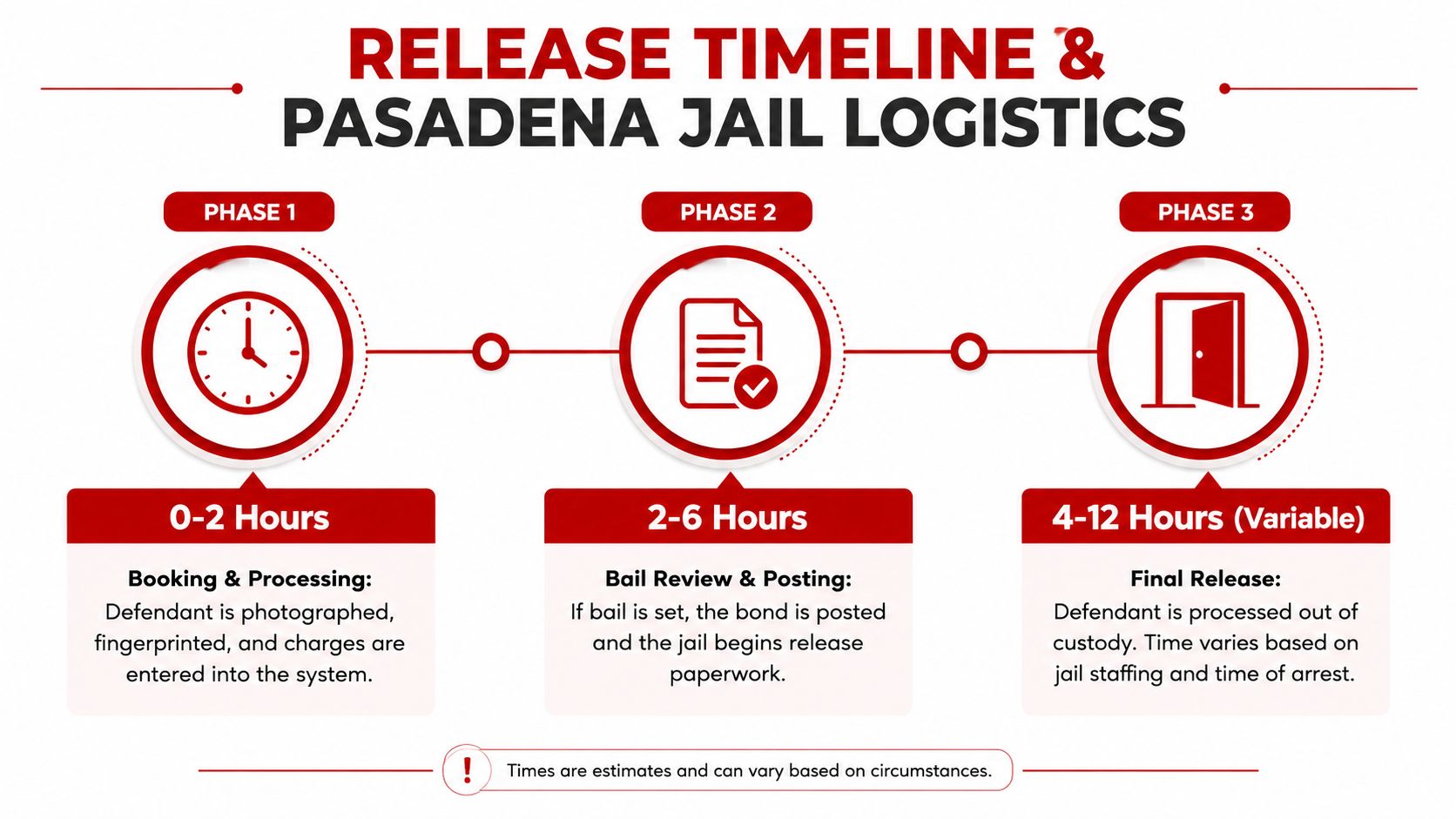
If the timeline starts slipping, ask the bondsman one question, has the bond been posted and accepted by the facility. That cuts through speculation fast. A real local agent should know whether the delay is paperwork, jail processing, or a transfer issue, and should tell you which one it is without hiding behind jargon.
After Release in Pasadena Court Reminders and Compliance
Release is not the finish line. The next morning, the case is already moving toward court, and the bond agent should be reminding the family about the date, not leaving them to manage it alone. Pasadena-area cases move through the Los Angeles County Superior Court system, so the family needs to treat the next court appearance as mandatory, not optional.
A DUI case and a domestic violence case are not handled the same way after release. DUI conditions may involve transportation restrictions or ignition-related compliance, while domestic violence cases can involve protective orders and strict no-contact rules. That difference matters because the bond doesn’t erase the underlying conditions, it just gets the person out while the court process keeps moving.
What happens if the court date is missed
If a defendant misses court, the bondsman starts the recovery and compliance process immediately. That means follow-up with the co-signer, communication about the missed appearance, and steps tied to the bond contract. Collateral is returned only after the case resolves and the bond is cleared, not when the person walks out of jail.
The smartest family move after release is simple, answer every call, keep every reminder, and show up early for court.
What happens after bail is posted is where the bond either stays clean or becomes a problem, and families should know that before they sign. A bondsman who stays engaged after release is protecting the case, the co-signer, and the family’s money. That’s the kind of support people should expect, because the job doesn’t end at the jail door.
Practical Tips and Questions to Ask Before You Sign
Ask direct questions before you commit. What is the total cost tonight, what payment options are available, what collateral, if any, is required, and how fast can the bond be posted at the right facility. If the answers are vague, keep looking, because vague timelines and surprise add-ons are exactly what stressed families don’t need.
You should also ask who answers the phone after midnight. A local 24/7 operation handles the call, the paperwork, and the jail coordination directly, while a referral style setup often pushes the case elsewhere before anyone confirms the booking. That difference matters in Pasadena, where the jail path can change quickly depending on where the arrest was processed.
Watch for these red flags:
- Vague release promises: If someone won’t say whether the case is at Pasadena City Jail or a county facility, they don’t have control of the timeline.
- Unclear pricing: The premium should be explained before signing, not after.
- No written terms: If the agent won’t put the key bond terms in writing, walk away.
A good call should end with a clear number, a clear facility, and a clear plan. If you’re still unsure, pause and ask again, because once the paperwork is signed, the co-signer owns the obligations too. That’s not the moment for guessing.
Bada Bing Bail Bonds works with families who need straight answers, fast posting, and clear terms when a Pasadena arrest can’t wait until morning. If you need a local agent who can verify the booking, explain the premium, and move the bond without wasting time, visit Bada Bing Bail Bonds and make the call now.