
A late-night jail call scrambles people fast. You’re half awake, someone says they’ve been arrested in Orange County, and the questions come all at once. Where are they? How much is bail? Can they get out tonight? Who do I call first?
If you’re searching for bail in Orange County CA, you usually don’t need a lecture. You need a calm plan. The process feels chaotic when you’re in it, but most of the important decisions follow a predictable order: confirm where the person is being held, find the bail amount, decide whether to post full cash bail or use a bond, then deal with the jail’s actual release process.
Orange County adds one practical twist that many guides skip. Bail isn’t only about the amount. It’s also about which facility is handling the release and what hours that location accepts bonds. That one detail can change how quickly someone gets out.
Table of Contents
- Answering the Call What to Do When Someone is Arrested in OC
- First Steps Locating an Inmate and Finding the Bail Amount
- The Core Decision Paying Full Cash Bail vs Using a Bail Bond
- How to Work with an Orange County Bail Bondsman
- Navigating OC Jails Release Times and Logistics
- After Release Responsibilities and Next Steps
- Common Questions About Posting Bail in Orange County
Answering the Call What to Do When Someone is Arrested in OC
Most families start in the same place. A son, spouse, brother, or friend calls from jail and gives you a rushed version of what happened. Sometimes they know the charge. Sometimes they don’t. Sometimes they say they’re in Santa Ana, and sometimes all you get is, “I’m in Orange County. Please help.”
The first job is to slow the situation down. Don’t argue facts with the person in custody. Don’t start promising release times. Get basic information, write it down, and focus on what you can verify.
Start with these:
- Full legal name: Nicknames cause mistakes.
- Date of birth: This helps confirm you’ve got the right person.
- Possible jail location: Even a rough guess helps.
- Booking number if they have it: This speeds up everything.
- Charge information if known: Even partial information is useful.
Practical rule: The fastest families aren’t the loudest. They’re the ones who gather accurate details before making the next call.
If you don’t know where to begin, a simple first move is learning how to find someone arrested. That keeps you from wasting time calling the wrong jail or asking for release on the wrong case.
A lot of panic comes from not knowing what happens next. In real life, Orange County bail work is a sequence. Confirm custody. Confirm bail. Choose how you’ll post it. Then wait on facility processing. Once you understand that order, the situation feels less like a fog and more like a checklist.
First Steps Locating an Inmate and Finding the Bail Amount
The first two answers you need are simple: where are they and what is the bail amount. Everything else depends on those.
Start with identity details
Begin with the Orange County inmate lookup process through the Sheriff’s system. You’ll move faster if you have the person’s full name and date of birth. If you also have the booking number, better. When families don’t have exact spelling, they often lose time because they search too broadly and start second-guessing whether the person is even in custody.
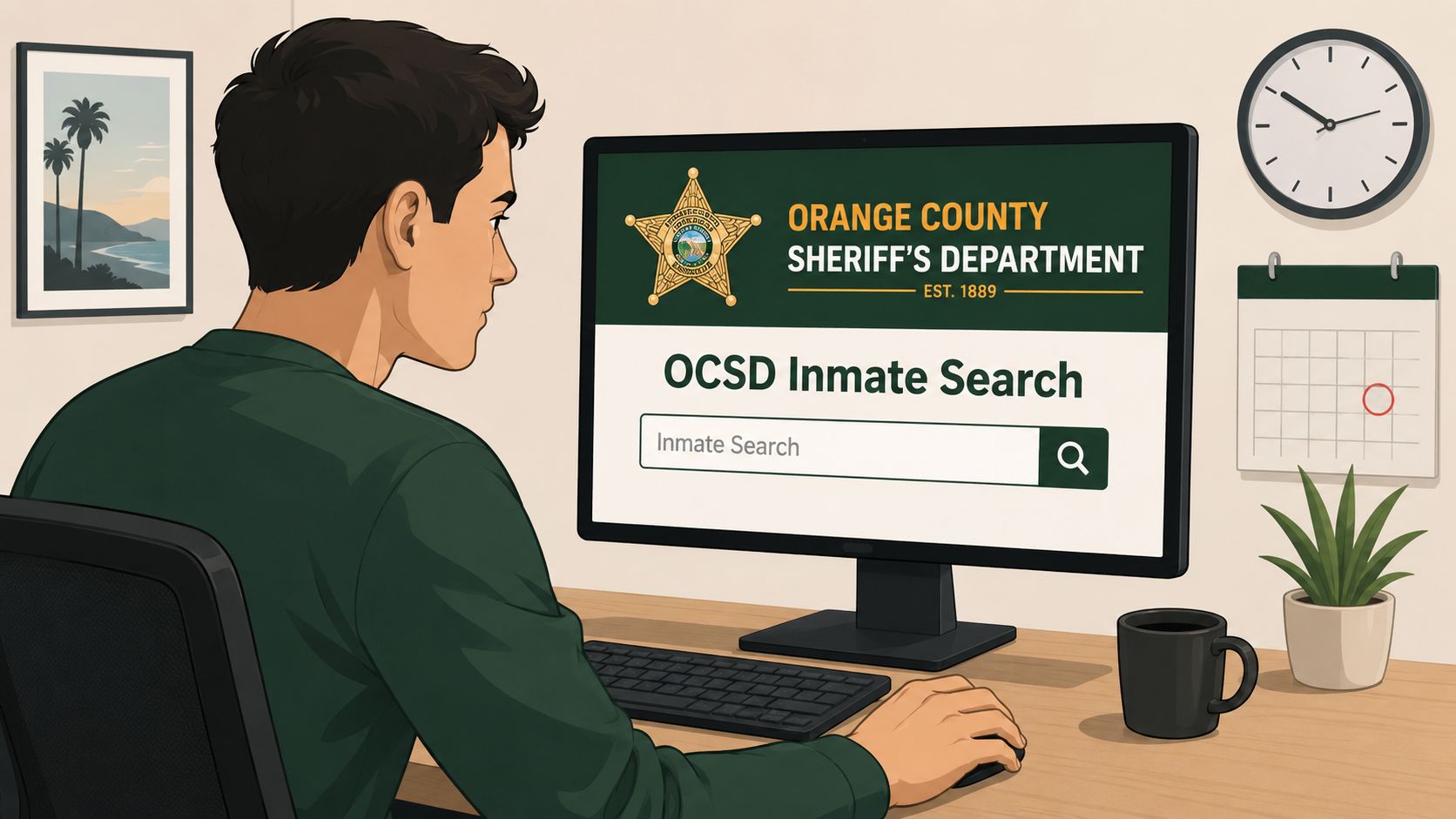
A clean approach works best:
- Confirm the legal name exactly as it appears on ID
- Match the date of birth
- Verify the booking record
- Write down the facility name before calling anyone about release
If the person was just arrested, there can be a short delay before booking information appears. That doesn’t always mean they’re not there. It can mean the booking process is still underway.
How the bail amount starts to make sense
Once you know the booking information, the next issue is bail. Families often expect one flat number for every offense. That isn’t how it works. Charge classification matters a lot.
In the 2025 Orange County bail schedule, a first DUI with alcohol only is listed at $2,500, domestic battery at $10,000, and a fourth DUI at $50,000, while a presumed misdemeanor bail amount can be $500 when no specific amount exists according to the Orange County bail schedule discussion.
That range is why two people arrested on the same night can face very different release decisions.
Bail usually stops feeling abstract once you compare the charge to the schedule. A family expecting a minor amount may suddenly be dealing with a much larger financial choice.
If you want a plain-English breakdown of how scheduled bail amounts are used, this guide on how bail schedules work explained helps fill in the gaps.
A practical note from the field. Don’t assume the person in custody remembers the charge correctly. People are stressed, tired, and sometimes guessing. Always verify the booking and bail information before lining up money, collateral, or a co-signer.
The Core Decision Paying Full Cash Bail vs Using a Bail Bond
Once the bail amount is confirmed, you have to make the money decision that matters most. Do you post the full amount directly, or do you use a bail bond? Families who answer this too fast often regret it later.
The right choice depends on cash on hand, urgency, and how much financial pressure the family can carry during the case.
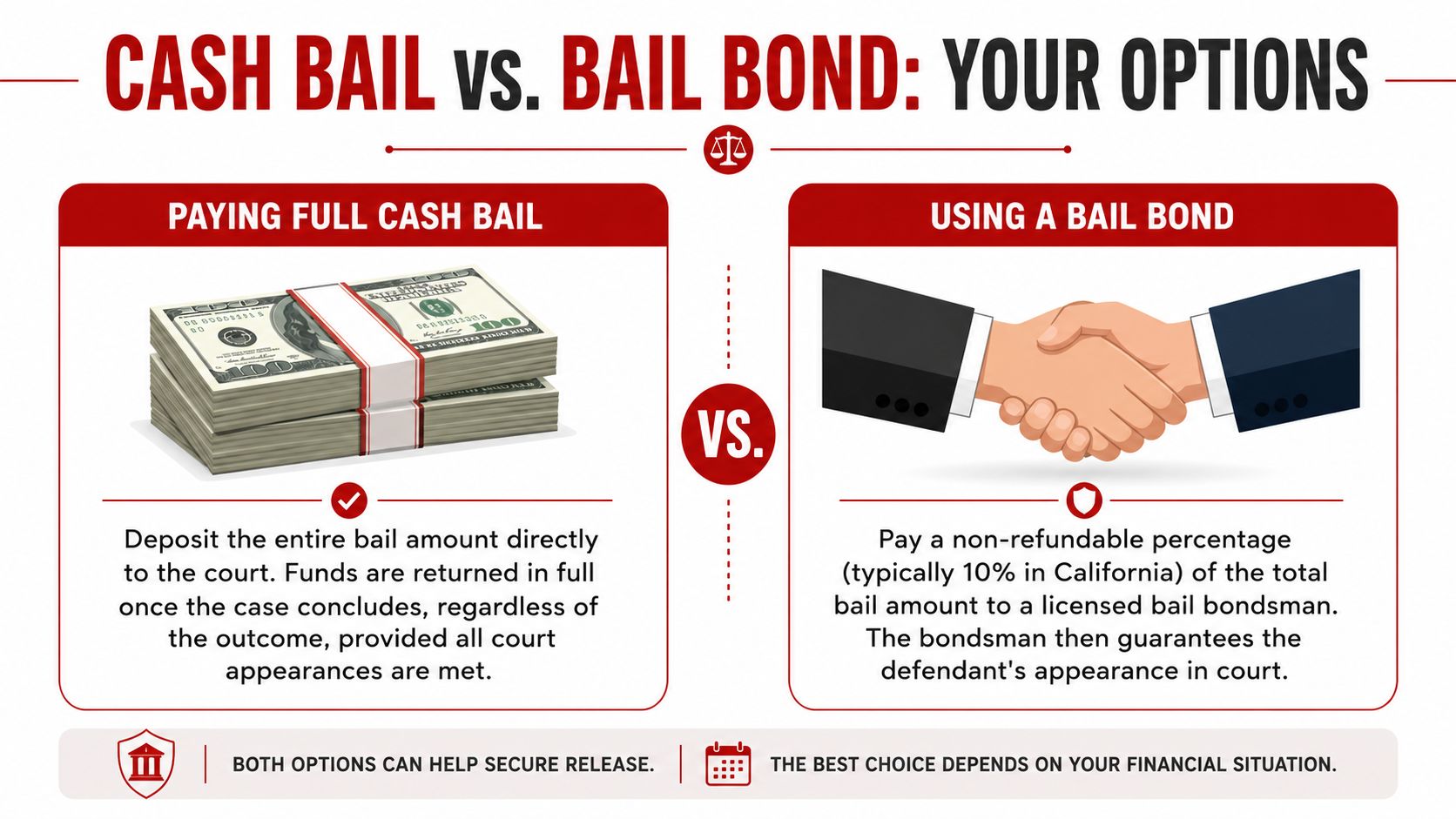
What full cash bail means
Posting full cash bail means paying the entire amount directly through the proper channel. That can make sense if the family has the funds available and wants to avoid paying a separate surety fee.
The main attraction is recovery. Direct cash bail may be returned by the court after the case, depending on the case outcome and court deductions, while a bond premium is a fee for the surety service, as explained in this overview of Orange County cash bail versus bond decisions.
The downside is obvious. Coming up with the full amount can be hard, especially when the bail number is high and the family needs the money for rent, legal fees, or day-to-day bills.
What a bail bond means
A bail bond changes the structure of the payment. In California, bail bond premiums are regulated by the Department of Insurance and are most commonly 10% of the total bail, and the premium is nonrefundable. The state also explains that collateral is not released until the bond is exonerated, according to the California Department of Insurance bail bond consumer guidance.
That means the fee is for the service of posting the bond. It isn’t a deposit you get back because the case gets dismissed or ends favorably.
Many families often get tripped up. They hear “10%” and assume it works like a refundable holding payment. It doesn’t.
Quick side by side view
| Option | Main benefit | Main drawback | Best fit |
|---|---|---|---|
| Full cash bail | Possible recovery of funds later through the court | Requires the entire bail amount up front | Families with immediate access to the full amount |
| Bail bond | Lower up-front cash requirement | Premium is nonrefundable | Families who need release without tying up the full bail amount |
Bottom line: A bail bond is usually a speed and cash-flow decision. It is not the cheaper choice in the long run if your only goal is getting money back later.
If you want a plain comparison before choosing, review the difference between cash bail and bond. That usually clears up the refund question quickly.
How to Work with an Orange County Bail Bondsman
If you choose the bond route, the process moves best when you treat the first call like a handoff, not a brainstorming session. The agent needs correct details, not a long retelling of the arrest.
What to have ready before you call
Have these items in front of you:
- Defendant information: Full legal name, date of birth, and booking number if available
- Jail location: Santa Ana matters. Theo Lacy matters. The facility affects how the release gets handled
- Bail amount: If you don’t know it yet, say that up front
- Your role: Parent, spouse, friend, employer, or other potential co-signer
- Basic financial picture: Whether you can pay the premium immediately and whether collateral may be needed
This matters for bail bonds Orange County, but it’s especially important to recognize that while considering bail bonds Santa Ana or Bail bonds Anaheim, one might incorrectly assume every Orange County release works the same way. It doesn’t. Booking details and facility logistics can change the path.
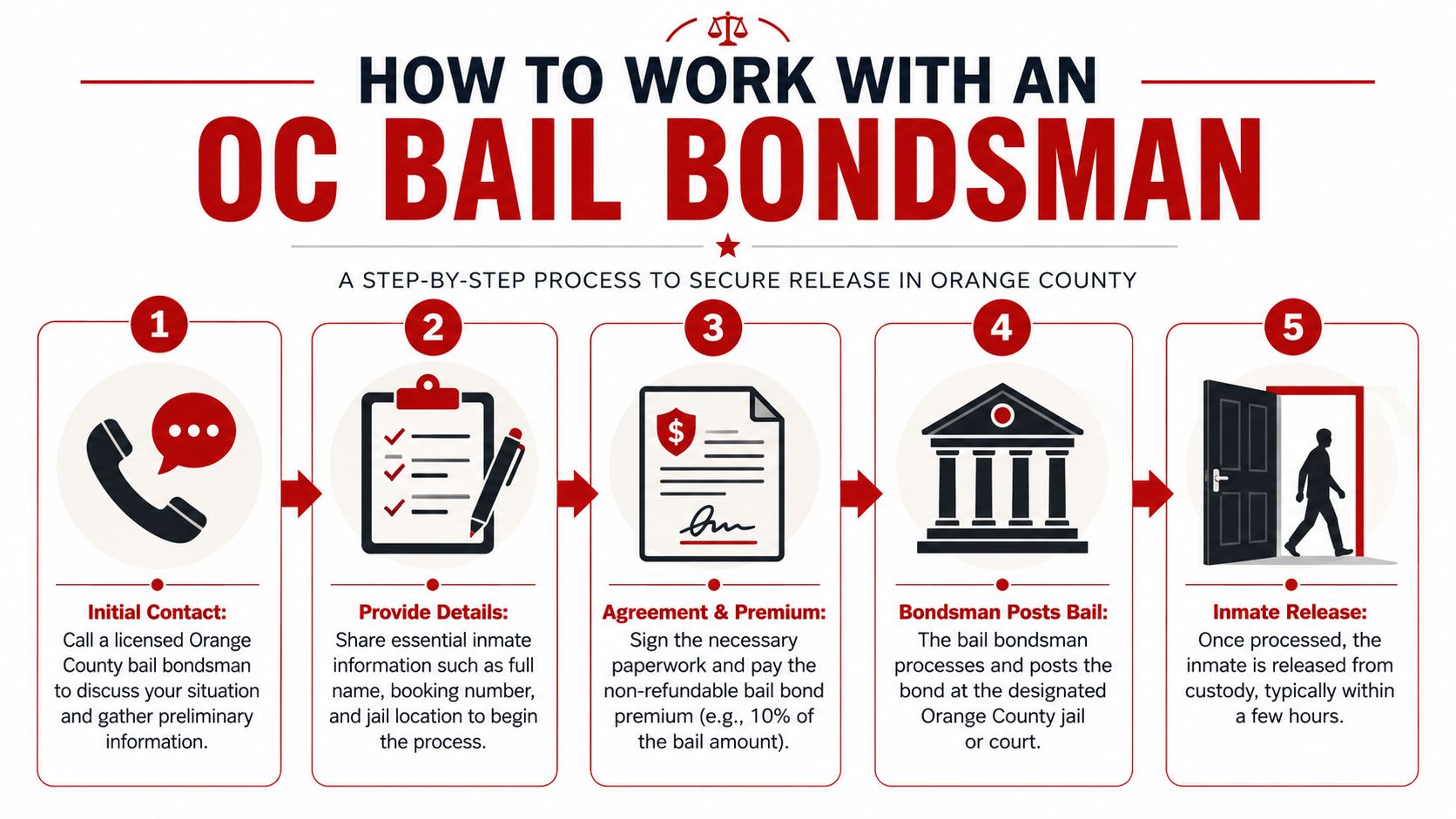
What the process usually looks like
The workflow is usually straightforward:
-
Initial call
You provide booking details and ask whether the case is bondable.
-
Paperwork review
The agent explains the premium, co-signer obligations, and whether collateral is required.
-
Signing
Many agencies can handle much of this electronically, which saves time when family members are not near the jail.
-
Bond posting
The agent posts the bond at the appropriate location.
-
Release processing
The jail still has to verify, process, and physically release the person.
The premium question should stay clear in your mind. As noted earlier, the bond fee is the service cost. It isn’t something you get back later.
A helpful background read is what a bail bond agent does, especially if this is your first arrest situation and the terms feel unfamiliar.
Later in the process, some families also want examples of narrower charge categories. For lower-level cases, pages like misdemeanor bail bonds in Ventura County can still give useful context on how agents discuss charge type, co-signers, and release steps, even though the case here is in Orange County.
Here’s a short explainer that helps many first-time callers:
Questions worth asking early
Ask direct questions. Good ones include:
- Can paperwork start before I travel anywhere
- Will this case likely require collateral
- What information is still missing
- Which facility is handling acceptance
- Who should the released person contact after release
One Orange County option families often look at is Orange County bail bond help through Bada Bing Bail Bonds, which states it handles booking verification, paperwork, payment plans, co-signer options, and jail coordination across Southern California. That’s the kind of practical service checklist you should compare when choosing any agent.
Navigating OC Jails Release Times and Logistics
A family can sign bond paperwork at night and still spend hours waiting for the release. That gap causes a lot of panic in Orange County, especially when nobody explains that bond approval and jail release happen on different timelines.
The first thing to check is the facility. The Orange County Sheriff’s Office accepts bail bonds at two main locations with different schedules. The Intake and Release Center is open 24/7, while Theo Lacy Facility accepts bonds only daily from 8:00 AM to 2:00 PM, according to the Sheriff’s cashier and bail information page.
That difference matters on the ground. If your loved one is tied to Intake Release Center, paperwork can usually get into the system at any hour. If the case runs through Theo Lacy and you miss that acceptance window, the bond may be ready but the jail will not process it until the next day’s hours. Families often hear “the bond is posted” and expect the person to walk out right away. At Theo Lacy, that is often not how the night goes.
Release time also depends on where the person is in the booking process. If booking is still incomplete, jail staff cannot finish release even if money and paperwork are already handled. After that, staff still has to verify the case, apply the bond correctly, and move the person through the release queue.
Here are the delays that catch families off guard:
- Facility acceptance hours: Intake Release Center and Theo Lacy do not work on the same schedule
- Booking status: The person must be fully booked before release processing can finish
- Paperwork review: Jail staff has to confirm identity, charges, and bond details
- Release backlog: A posted bond does not skip the line if the jail is processing other releases first
I tell families to ask one practical question right away. Which facility is accepting this bond, and what time will they take it? That answer usually gives you a more honest release estimate than any general promise about speed.
There is one more issue that can change the plan. The Sheriff’s Office notes that some outside-county cases must be paid in cash. If a family assumes every case can be handled the same way, that mistake can cost hours at exactly the wrong time.
The practical takeaway is simple. Confirm the facility, confirm its acceptance window, and expect a wait even after the bond is posted. In Orange County, the operational difference between Intake Release Center and Theo Lacy is often the reason one person gets out the same day and another stays overnight.
After Release Responsibilities and Next Steps
Getting someone out is a major relief. It’s not the finish line. The case is still active, and the bond stays in play until the court exonerates it.
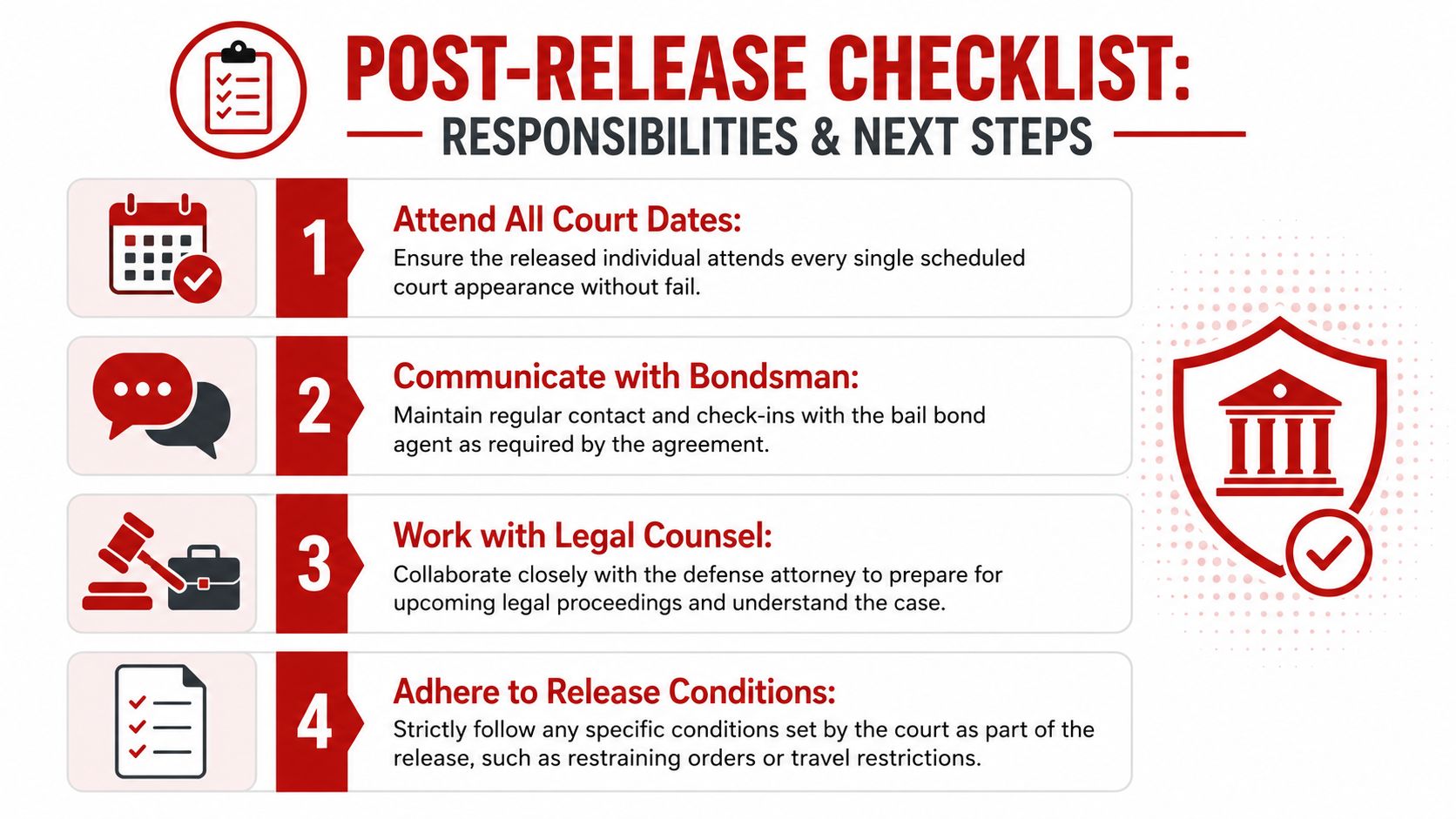
The checklist after someone walks out
The released person should handle the next stage carefully:
- Go to every court date: Missing court is how small problems turn into major ones.
- Stay in contact with the bond agent: If the agreement requires check-ins, take that seriously.
- Follow release conditions: Protective orders, travel limits, or other court instructions are not optional.
- Coordinate with defense counsel: The faster the lawyer gets organized, the better the case usually moves.
- Keep records together: Court papers, bond paperwork, and contact information should stay in one place.
One term families hear late in the process is exoneration. That’s when the court has cleared the bond obligation. Until that happens, any collateral tied to the bond usually remains in place.
The practical approach is simple. Don’t treat release like the end of the emergency. Treat it like the beginning of a compliance period. The smoother the defendant handles court and communication, the smoother the bond closes out.
Common Questions About Posting Bail in Orange County
Phones start ringing fast after an arrest, and the same questions come up every night in Orange County. That makes sense in a county this large. Families are usually trying to solve two problems at once. They need to get someone out, and they need to avoid making an expensive mistake while everyone is stressed and tired.
What if charges get dropped
The answer depends on how bail was posted.
If you paid full cash bail to the court, that money may come back through the court process, minus any lawful fees or deductions tied to the case. If you used a bond, the premium paid to the bail agent is the fee for taking on the risk and doing the release work. That fee does not get refunded just because the prosecutor drops the charges later.
Families get tripped up on this all the time. They hear “case dismissed” and assume every dollar comes back. It does not work that way with a bond.
What if there is a warrant issue
A warrant can slow everything down, and sometimes it changes the release path completely.
Start by confirming the person is booked into the Orange County system. Then ask two direct questions. Is there a hold, and is the inmate bondable right now? Those answers matter more than anyone’s guess about release time. A person at IRC may clear one step quickly and still sit because of a warrant hold, while someone at Theo Lacy may wait on housing, classification, or transport before bail even gets processed.
That is why I tell families not to focus on promises like “he’ll be out in two hours.” Get the booking status first. Then deal with the bail decision.
What are the cheapest bail bonds available
In California, there is only so much room to shop on price because bail premiums are regulated. Key differences usually show up in the terms. Can the company set up payments you can manage? Does the co-signer qualify? Do they need collateral? Can they get paperwork signed fast enough to avoid losing more time in the release queue?
Those details matter a lot in Orange County because jail logistics affect the clock. At the Intake Release Center, booking and release traffic can move in waves, especially during busy night and early morning hours. At Theo Lacy, housing and internal movement often add time that families do not expect. Two companies can quote the same premium and deliver a very different experience if one is slow with paperwork or vague about where the inmate is being held.
If you want a clearer explanation of financing and bond terms, this California bail bonds FAQ with straight answers helps break down the questions people ask under pressure. If your family is comparing options outside OC as well, this page on 1 percent bail bonds in Ventura County gives useful context for how payment plans are usually discussed.
A better question than “who is cheapest” is “who will tell me the full cost, the co-signer risk, and the realistic release timeline based on the jail where my person is sitting?”
If you need immediate help, Bada Bing Bail Bonds handles Southern California bail matters and offers around-the-clock assistance, booking verification, paperwork help, payment plan discussion, and release coordination in plain English so families can make a clear decision under pressure.