The call usually comes at the worst time. A spouse, parent, brother, or close friend says they’re in custody, they’ve been booked into Ventura County Jail or another local facility, and the bail amount sounds impossible. Families in Ventura, Oxnard, Camarillo, Port Hueneme, Thousand Oaks, Santa Paula, Moorpark, Fillmore, Ojai, and nearby Santa Barbara often start in the same place: panic first, questions second.
That panic is understandable. California bail is unusually high. Median bail amounts in California are more than five times greater than in the rest of the U.S., with California averaging $50,000 compared to less than $10,000 nationwide, which is one reason a bail reduction hearing matters so much for local families dealing with California’s elevated bail levels. Anyone seeking bail bonds Ventura, Ventura County bail bonds, 24 hour bail bonds, bail bonds near me, or Ventura County Jail bail bonds may also need to think about whether the original bail amount should be challenged in court.
Table of Contents
- When Bail Is Too High What Families Can Do
- What Is a Bail Reduction Hearing
- Who Qualifies for a Bail Reduction
- The Bail Reduction Hearing Process from Start to Finish
- Evidence and Arguments That Secure Bail Reductions
- How Your Family and a Bondsman Can Help
- Ventura and Oxnard Courthouse Logistics and Next Steps
When Bail Is Too High What Families Can Do
A family gets a booking number. Then they hear the bail amount. Then everything changes.
A mother in Oxnard hears that bail is far beyond what the family can gather overnight. A wife in Ventura starts calling for fast bail bonds Ventura services, hoping there’s a way to move quickly. A parent in Camarillo wonders whether the court will ever listen to the fact that the amount set doesn’t match the family’s reality.
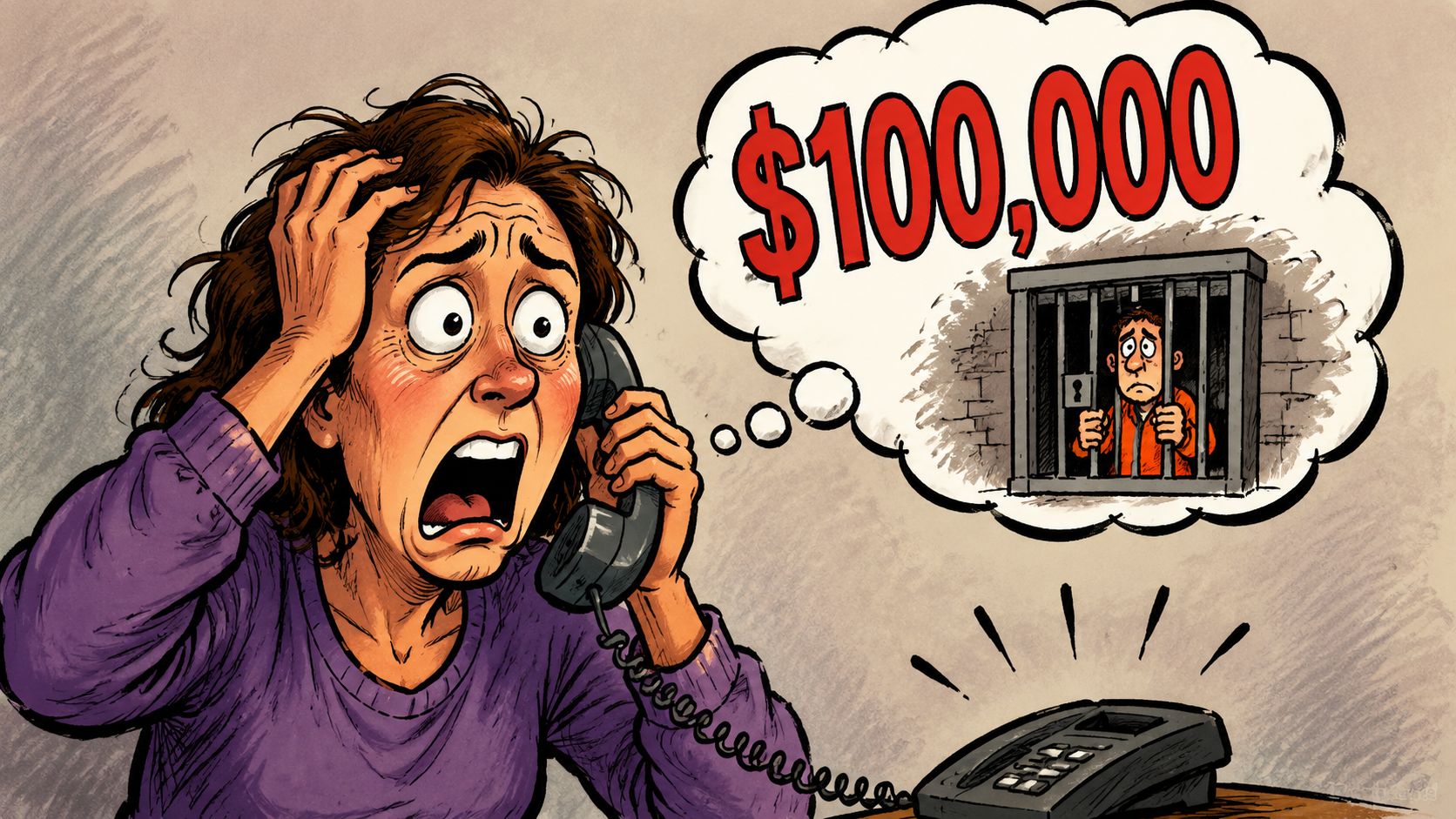
That’s where a bail reduction hearing enters the picture. It isn’t just legal jargon. It’s often the only practical way to challenge an amount that keeps someone in jail because the number on paper is out of reach.
The first decision families make
Some families can move forward with a bond right away. In California, the statutory maximum premium for a bail bond is 10% of the total bail amount, so a $50,000 bail means a standard $5,000 non-refundable fee under California’s bail premium rule. Other families need payment support and start looking into bail bond financing options while they decide whether to fight the bail amount itself.
Practical rule: If the bail amount is unaffordable, treat the hearing as urgent. Waiting too long usually makes a bad situation more expensive and harder on the family.
What families should focus on right now
The most useful early moves are simple:
- Get the booking details right: Jail location, charge level, case status, and the exact bail amount.
- Speak with defense counsel early: The hearing is formal, and timing matters.
- Start gathering paperwork: Pay records, proof of residence, job information, and family obligations often become important.
- Keep expectations realistic: Some cases move fast. Others require a tighter legal argument before the court will lower bail.
For many families in Ventura County, this is the point where panic starts giving way to a plan. The hearing can be the difference between scrambling to cover a massive bond and handling a reduced amount that the family can manage.
What Is a Bail Reduction Hearing
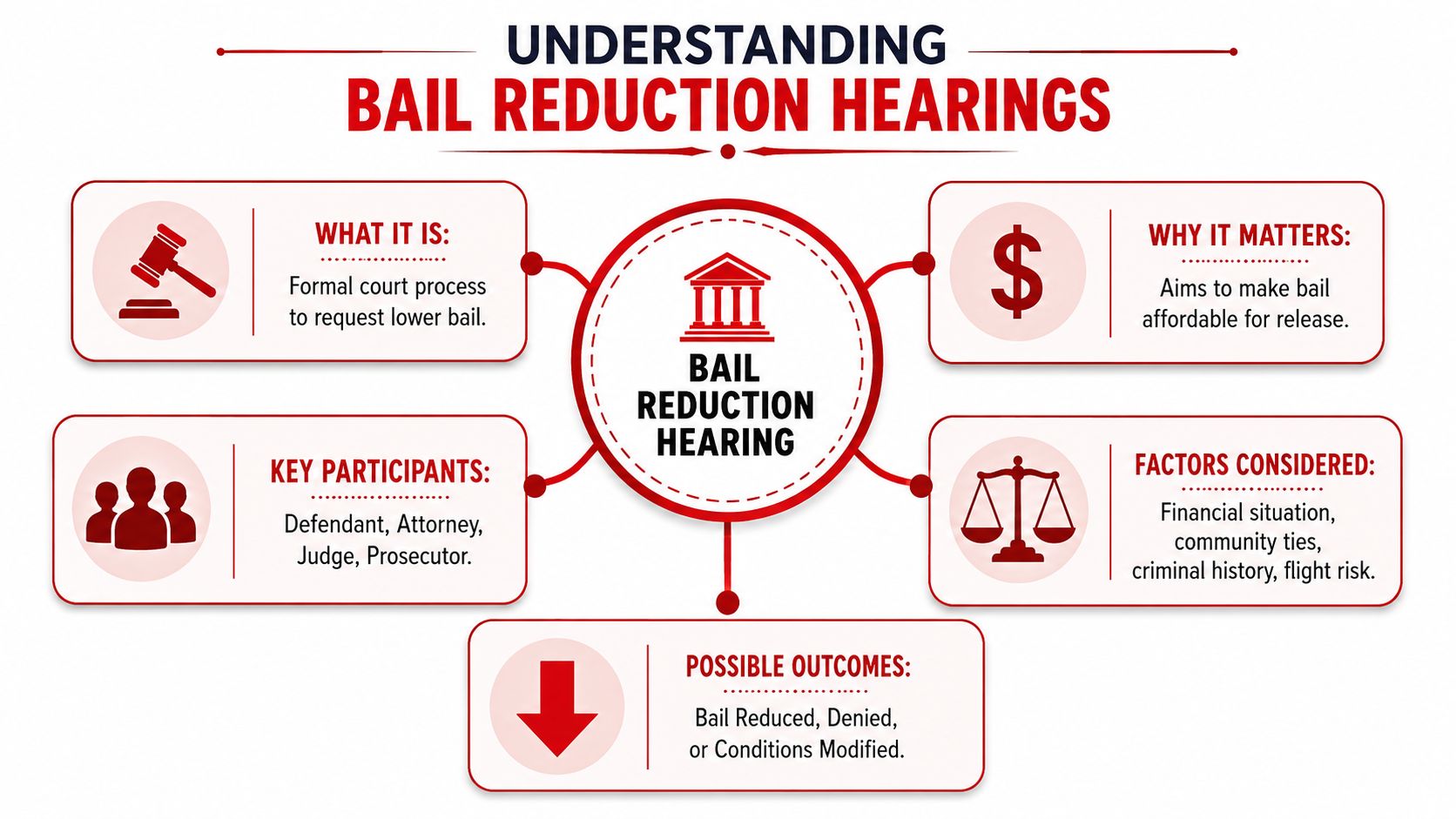
A bail reduction hearing is a formal court proceeding where the defense asks a judge to lower the original bail amount. The basic argument is straightforward: the first number set does not properly reflect the person’s circumstances, ability to pay, or the conditions needed to make release reasonable and safe.
A useful way to think about it is this. The first bail amount often starts with a schedule. The hearing is where the court steps back and asks whether that scheduled amount still makes sense for this person, in this case, with fuller information. If you need a basic overview of release mechanics before getting into the hearing itself, what bail means in California is a good place to start.
Who is in the room
At a minimum, the hearing usually involves:
- The judge: Decides whether bail stays the same, goes down, or release conditions change.
- The defense attorney: Presents the reasons for reduction and the supporting documents.
- The prosecutor: Argues against reduction if the state believes the current amount is justified.
- The defendant: May be present depending on the stage and logistics of the case.
What the hearing is really about
The hearing is not about proving innocence. It’s about pretrial release conditions.
The judge is looking at whether the current bail amount is necessary, affordable, and legally appropriate. That includes concerns about public safety, court appearance, the nature of the charge, and whether money bail has become a detention order in disguise.
A hearing works best when it gives the judge something concrete to reconsider. A speech alone rarely changes the number.
Families often assume they can stand up in court and explain that they can’t pay. In practice, courts respond better when the request is formal, supported, and timed correctly. That is why the phrase bail reduction hearing matters so much more than a casual request for mercy in the hallway or at the last minute in court.
A bondsman can help with release once the number is workable. The hearing is how the family tries to make that number workable in the first place.
Who Qualifies for a Bail Reduction
Most families ask the same question first. Can we even ask for this? In California, the answer is often yes.
The right to ask matters fast
A defendant in California is automatically entitled to a bail review hearing within 5 days of the original bail being set, and to request a reduction the attorney must give the prosecutor at least a two-day written notice. At that hearing, the judge evaluates public safety, ability to pay, criminal history, and community ties, as explained in California bail review procedures.
That timing rule catches families off guard. They think the first court appearance is enough. It often isn’t. A proper motion takes notice, preparation, and documents. It is a formal legal request, not a quick verbal ask.
Key Factors Judges Consider for Bail Reduction
| Factor | What the Judge Looks For |
|---|---|
| Ability to pay | Whether the current bail amount is realistically affordable, and whether it functions as detention because the defendant cannot meet it |
| Public safety | Whether release would create a danger based on the alleged conduct, threats, weapons, injuries, or similar concerns |
| Criminal history | Prior convictions, prior cases, past performance on release, and whether there is a pattern that concerns the court |
| Community ties | Stable residence, family support, local work, and reasons the person is likely to return to court |
| Likelihood of appearing | Whether the person has a practical and credible record of showing up and complying |
| Seriousness of the charge | Whether the case involves more severe allegations that push the court toward a higher level of caution |
Who usually has the strongest argument
Judges tend to respond best when the defense can show two things at once. First, the amount is too high for the actual person in front of the court. Second, lower bail or modified release still protects the public and the court process.
That means strong candidates often include people with:
- Stable local roots: A home in Ventura, Oxnard, Thousand Oaks, or another nearby community.
- Family responsibilities: Children, dependent relatives, or a household that depends on them.
- Work history: Steady employment or a job waiting for them.
- A workable release plan: A place to stay, transportation, and support.
It also means some cases face steeper resistance. If the charge is serious or violent, the court may demand a much stronger showing. Families need to know that going in, because false hope wastes time that should be spent building a better motion.
The Bail Reduction Hearing Process from Start to Finish
Once bail is set, the clock starts running. Families who move early usually have more room to make a better record.
What happens first
The process usually begins at booking. Bail is set or confirmed, the family finds out the amount, and the first calls go out to defense counsel and a local bond office that handles Ventura County Jail bail bonds. If you need the local release basics, how bail works in Ventura County helps clarify the jail and court side of the process.
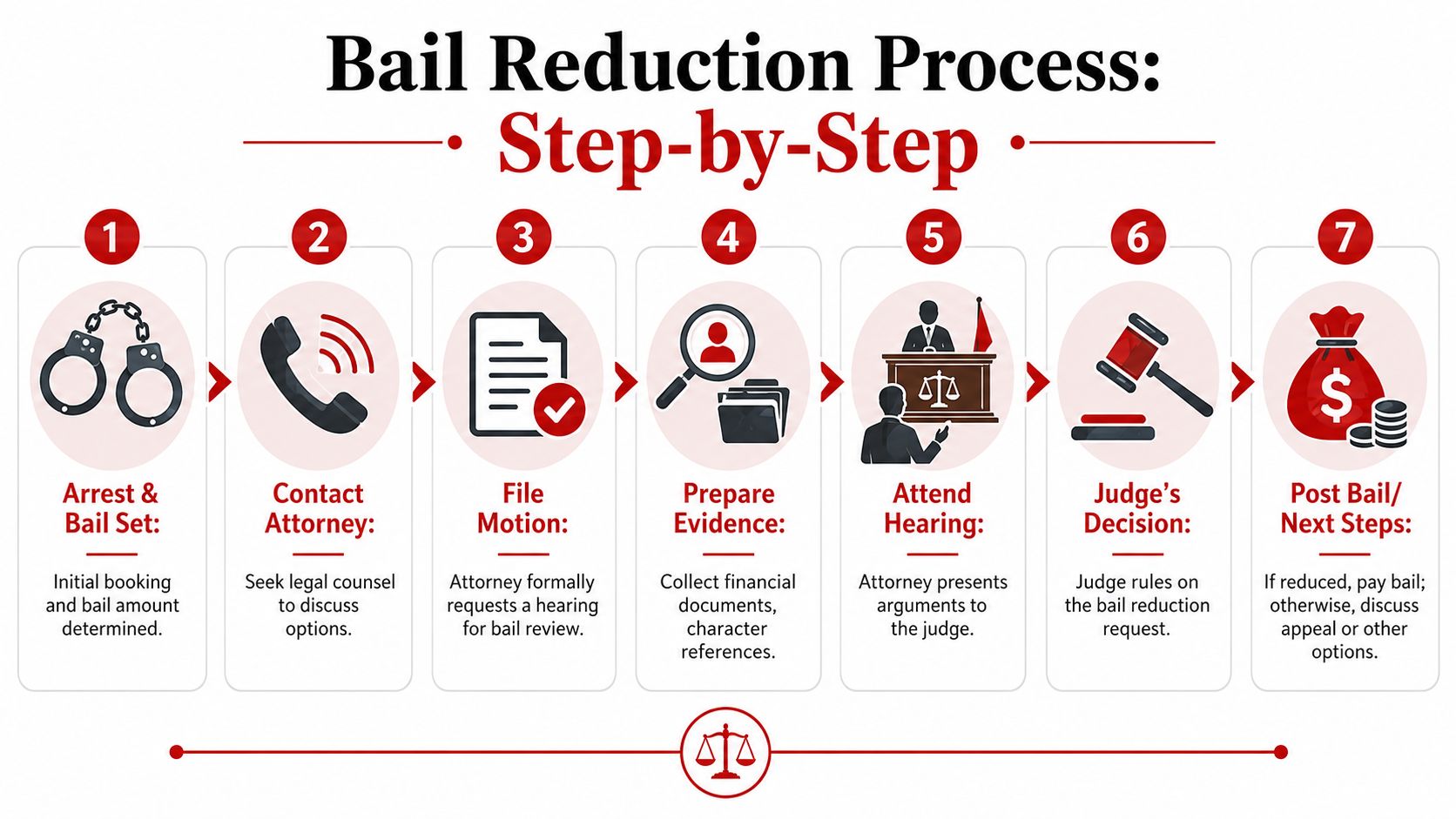
After that, the defense prepares a motion. This usually means collecting records that show financial limits, local ties, employment, and any facts that weren’t considered when bail was first set. The prosecutor must receive proper notice. If that step gets skipped, families can lose valuable time.
A quick courtroom overview can help make the sequence easier to follow:
What the hearing day looks like
On hearing day, the attorney presents the request. The prosecutor pushes back if the state believes the original amount should remain. The judge listens, reviews the file, considers the evidence, and rules.
The possible outcomes are usually:
- Bail is reduced: The family can move quickly to post the lower bond or pay the reduced amount if they have the funds.
- Conditions are adjusted: In some situations the court changes release conditions instead of, or along with, lowering bail.
- The request is denied: The current bail amount remains in place.
Courts treat a formal motion very differently from an informal plea made in the moment.
The biggest mistake I see families make is assuming this process is casual. It isn’t. The timing, the paperwork, and the quality of the supporting evidence all matter. The hearing and the bond process work together. One makes the number more realistic. The other helps act on that result without delay.
Evidence and Arguments That Secure Bail Reductions
Some hearings fail before anyone speaks because the file has nothing new in it. The family is emotional, the attorney asks for mercy, and the judge sees no reason to change what another court officer already did.
That’s why evidence matters more than frustration.
Why timing beats last minute pleading
A 2025 study found that 84% of defendants who filed a formal bail reduction motion with new evidence secured a reduction, while 91% of those who only asked orally at the hearing without new facts received no change, according to the reported findings on formal motions and new evidence.
Those numbers line up with what families often learn the hard way. Judges usually won’t lower bail just because someone asks at the podium. They want a reason that is documented, specific, and fresh.
Show the court what has changed, or what the court didn’t have the first time. Without that, the motion often stalls.
What evidence actually helps
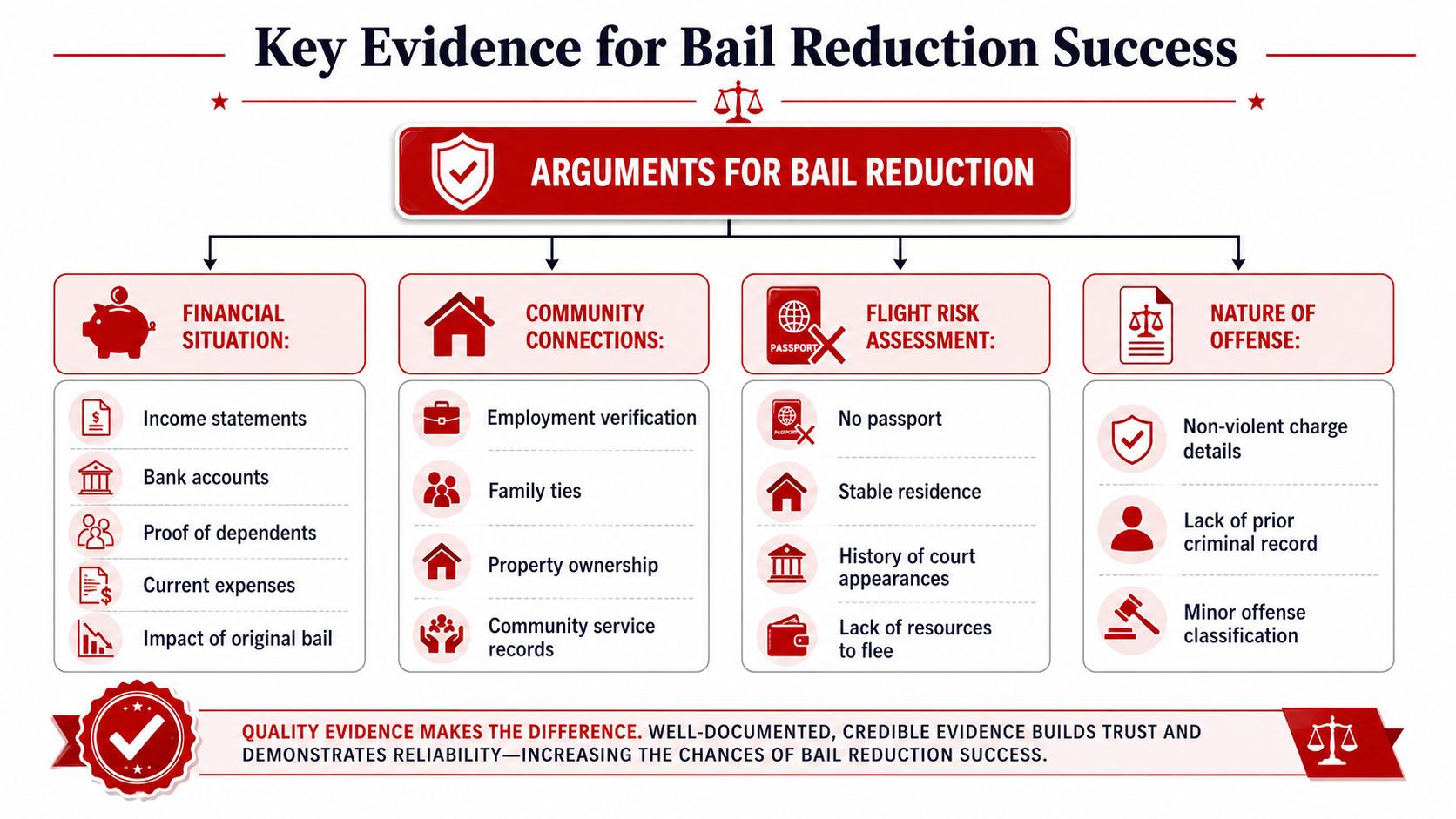
The best evidence usually falls into a few categories, but it needs to be real and current.
- Financial proof: Pay stubs, bank records, proof of rent or mortgage, proof of dependents, and documents showing that the current bail amount cannot realistically be met.
- Employment records: A letter from an employer confirming the job, schedule, and that the person can return if released.
- Housing proof: A lease, utility bill, or family statement showing a stable place to live in Ventura County or nearby.
- Support structure: Letters from family or community members explaining who will help with transportation, supervision, and court reminders.
- Treatment or program enrollment: If relevant, proof that the person is set to begin counseling, treatment, or another stabilizing program.
A separate point matters here too. California law has moved toward the principle that bail cannot be set beyond a person’s means unless detention is legally justified, and repeat motions generally require good cause based on a material change in circumstances under the California discussion of Penal Code section 1289 and Humphrey-related ability-to-pay principles. That means inability to pay can’t be treated as a throwaway detail. It has to be developed and documented.
For families dealing with Ventura County bail bonds, that is where preparation changes outcomes. If the reduced amount becomes manageable, alternatives to full custody may also become part of the conversation, including release on own recognizance in California when the facts support it.
How Your Family and a Bondsman Can Help
Families often feel helpless during this part of the case. They’re not. They just need to focus on the parts they control.
What family should gather right away
A good family support file is practical, not dramatic. The court doesn’t need a long speech about how upsetting the arrest has been. The court needs records that help a judge make a safer, narrower decision.
Start with these:
- Income documents: Recent pay records, benefit records, or proof of unemployment.
- Monthly obligations: Rent, mortgage, child support, utilities, and similar fixed costs.
- Residence records: Lease, deed, utility statement, or a letter confirming the person has a stable address.
- Contact list: Employer, close family members, and anyone willing to provide a reliable character letter.
- Case coordination notes: Booking number, court department, jail location, attorney contact, and upcoming dates.
What a bondsman does during the process
A good bondsman isn’t just waiting for the judge’s decision. They help the family stay organized so that if bail is reduced, release doesn’t get delayed by preventable paperwork problems. If you’re not sure what that role includes, what a bail bond agent does breaks it down clearly.
That support usually includes:
- Checking booking details: Small errors create big delays.
- Explaining premium and paperwork: Families under stress often misunderstand what is refundable and what isn’t.
- Preparing co-signer documents early: If the judge grants relief, the family can move fast instead of starting from zero.
- Tracking release logistics: Jail processing doesn’t always happen on the family’s schedule, which is why people search for 24 hour bail bonds and bail bonds near me at all hours.
The families who move best through this process usually have one person gathering records, one person speaking with counsel, and one person ready to handle bond paperwork.
That kind of coordination matters in Ventura, Oxnard, Thousand Oaks, and Santa Barbara alike. A hearing can open the door. A prepared family is what gets through it.
Ventura and Oxnard Courthouse Logistics and Next Steps
In Ventura County, the legal strategy is only half the problem. The other half is logistics. Families need to know where the hearing is happening, what the local bail schedule looks like, and what to do the moment a judge rules.
Local bail numbers that affect strategy
Ventura County’s own schedule shapes expectations. Ventura County Superior Court’s 2024 Bail Schedule sets the standard felony bail at $10,000 and other misdemeanors at $2,500, but an arrest while on probation can trigger an automatic increase of $10,000 for a felony, according to the Ventura County Superior Court 2024 bail schedule.
That matters because families often assume the number came out of nowhere. Sometimes it didn’t. Sometimes the jump came from a schedule enhancement tied to probation or bail status. Knowing that helps the attorney attack the right issue.
If the family is arranging help in nearby areas, local service information for bail bonds Thousand Oaks and bail bonds Santa Barbara County can also help when the case, residence, or support network crosses county lines.
If the judge grants or denies the motion
If the judge lowers bail, speed matters. The family should immediately confirm the new amount, sign any bond paperwork, and stay available for jail processing updates. That’s when fast bail bonds Ventura service becomes relevant in a practical sense, not the marketing sense. A lower bail amount only helps if the release process starts right away.
If the motion is denied, that doesn’t always end the issue. Another motion may still be possible later if there is good cause and a material change in circumstances, such as new evidence, confirmed employment, or stronger housing support. The key is not to refile the same weak argument and expect a different result.
One more practical point applies after release. If a defendant misses court and bail is forfeited, contracts can add real costs. In Ventura County bond contracts, a missed court date can trigger a minimum fee of $200 for any reason, or 1% of the bond amount with a $250 minimum, whichever is greater, as discussed in the UCLA review of Ventura County bail bond contract terms. Once someone is out, compliance matters just as much as getting out.
Move fast, prepare the motion properly, and don’t treat the hearing like a casual courtroom favor. Judges respond to proof, timing, and a realistic release plan.
If your family needs immediate help with a Ventura County or Santa Barbara release, Bada Bing Bail Bonds is available around the clock. Their licensed team handles bail bonds Ventura, Ventura County Jail pickups, 24 hour bail bonds, and surrounding-area cases with clear pricing, plain-English guidance, and fast coordination from first call through release.