
The booking process for jail in Ventura County typically takes 4 to 8 hours before someone appears in the inmate system. If you search immediately after the arrest and see nothing, don’t panic, because the booking officer may still be completing intake.
At 2 a.m., a sister can spend an hour pacing her kitchen, refreshing the custody search, and wondering whether something went wrong. The phone stays silent, the jail record hasn’t appeared, and every minute feels like a warning. In Ventura County, that silence often means the person is still being processed, not that the arrest disappeared or the jail lost the paperwork.
The important distinction is simple. Arrest starts custody, booking creates the official jail record, and arraignment is the court appearance that follows. A bail bondsman can begin preparing before every administrative step is complete, but the bond usually can’t be filed accurately until the jail confirms the identity, charges, and bail amount.
Table of Contents
- What the Booking Process for Jail Covers
- Step by Step From Arrest to Fingerprints and Mugshots
- How Charges and Bail Get Set in Ventura County
- Posting Bail and How a Bondsman Speeds Release
- What Families Should Do in the First Few Hours
- Timeline From Arrest to Release and Common Questions
What the Booking Process for Jail Covers
At 2 a.m., a family may call before the jail can provide a searchable name. The booking officer controls that first window. Until the facility accepts the person and enters the intake record, the family cannot rely on an online search, and a bondsman cannot file a bond from assumptions.
Booking is the sheriff’s administrative intake procedure between arrest and release. It identifies the person in custody, records the alleged offense, documents personal property, and flags medical or safety concerns. The facility creates a computerized custody record for the jail’s work and later release decisions.
The booking officer is building the jail file. This stage does not decide guilt, determine whether the person committed the alleged offense, or replace a court hearing. Arguing about the facts at the booking desk will not speed the record or release.
The three stages families confuse
Arrest begins when an officer takes someone into custody. The person may remain in a patrol car, at a station, or awaiting transport before the receiving facility accepts them.
Booking starts when the jail receives the person for processing. Deputies verify identity, record the alleged offense, take fingerprints and a mug shot, inventory property, check warrants, complete health screening, and assign housing when required. The resulting entry is what allows the name and case information to appear in the jail system.
Arraignment is a court proceeding. A judge addresses formal charges, the plea, release conditions, and other court matters. It remains separate from the jail’s intake work.
Ventura County families should expect the booking stage to take about 4 to 8 hours. Official jail information also warns that charges may not appear immediately online. During that gap, call a bail bonds Ventura office with the person’s full legal name, date of birth, arresting agency, and likely facility. A bondsman can prepare the application, but cannot accurately quote or file the bond until the jail confirms the charge code and bail figure.
Practical rule: A missing name during the first several hours usually means “not searchable yet,” not “no arrest.”
The family is on the clock with the booking officer’s intake record, not with a lawyer’s explanation of the arrest. Prepare information first, verify the booking entry next, and post bail only when the jail can accept it.
Step by Step From Arrest to Fingerprints and Mugshots
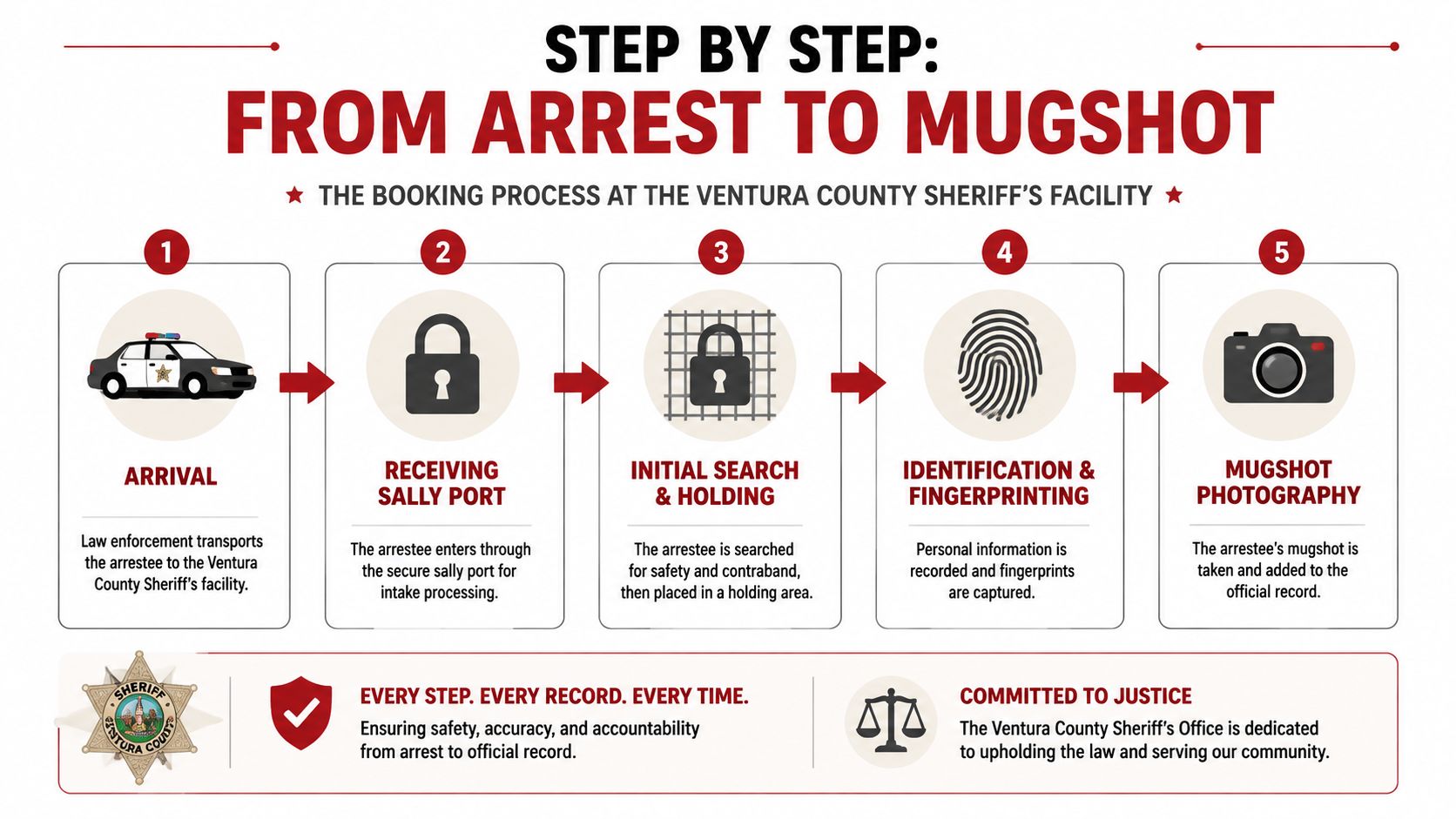
The Ventura County booking process for jail moves through several intake stations. The exact pace changes with staffing, medical concerns, transfers, and the number of people arriving at once. The sequence, however, is predictable enough to help a family understand what the silence means.
Arrival and initial control
The person arrives through the receiving area, where deputies match the arrest report to the person in custody. They confirm identifying information and the arresting agency, then place the person in a holding area while staff complete initial checks.
Deputies search the person for weapons, drugs, or other prohibited items. Personal property, including a wallet, keys, phone, or jewelry, is removed, listed, and stored for return under facility procedures. A person may wait in holding while staff resolve discrepancies in the arrest paperwork or confirm whether another agency has a warrant or hold.
Health and safety screening
Medical screening isn’t a formality. Deputies or medical staff ask about physical conditions, medications, mental health concerns, and suicidal thoughts. A person who reports a medical problem may be directed to medical staff before the rest of the booking continues.
That step can extend the wait, but it protects the person and helps the facility determine the appropriate level of observation and housing. Families shouldn’t interpret a longer delay as proof that bail has been denied.
Identity, fingerprints, and records
Staff enter the person’s identifying information and collect fingerprints through live scan equipment. The process can include all fingers and palm impressions, which are checked against state and federal criminal-justice records. Those checks help confirm identity, identify prior records, and reveal outstanding warrants or other custody issues.
The database entry is often the point families are waiting for, but it may not publish instantly. The jail still has to verify the information and complete the remaining intake steps before the online inmate locator reflects the arrest.
Mug shot, clothing, and housing
The facility photographs the person for the custody record. Staff then exchange street clothing for jail-issued clothing when required, document the property, and classify the person for housing based on charges, prior custody information, medical needs, and other safety considerations.
A family member can think of the process as a queue, not a single event:
- Receiving and search: The person is accepted, searched, and placed in holding.
- Medical review: Staff identify urgent health or safety needs.
- Fingerprint and data entry: Identity and custody information are entered and checked.
- Photograph and clothing exchange: The official booking record takes shape.
- Classification: Staff assign the appropriate housing or holding location.
For families arranging different types of jail bonds, the key question isn’t whether every station is finished. It’s whether the inmate record is active, the charge is visible, and bail is available to post.
How Charges and Bail Get Set in Ventura County
At 2 a.m., the family wants one answer: can someone post bail now? The booking officer controls that answer first. Once staff verify the arrest information, they record the alleged charges and apply the relevant bail schedule when permitted. The name may appear in the jail system before every release step is complete, but a bondsman can start only after the record shows the person, charge, and current bail status.
Ventura County court resources publish a Ventura County bail schedule alongside the Ventura Superior Court Bail Schedule and the Judicial Council Uniform Bail and Penalty Schedules for 2026. Those documents establish the starting bail amount. A jail employee does not choose a random figure at the counter.
The schedule sets a starting point, not a guaranteed release. The charge description, prior convictions, probation or parole status, warrants, immigration-related holds, medical custody issues, and court orders can change the result. A hold can stop release even after the family is ready to pay.
Read the charge before discussing the price
“DUI” or “domestic violence” is not enough for an accurate quote. The specific code, prior history, enhancements, and separate holds can change the amount. Ask the booking officer for the exact charge and current bail figure before signing anything.
Verified Ventura County schedule information lists these presumptive amounts for common situations:
| Charge | Typical Presumptive Bail | Notes |
|---|---|---|
| Misdemeanor DUI | $5,000 | Presumptive amount listed for the misdemeanor DUI category |
| Domestic battery under Penal Code 243(e) | $10,000 | Charge classification affects the starting amount |
| Domestic battery with a prior domestic violence conviction | $20,000 | Prior history increases the presumptive amount |
| DUI with three or more priors within seven years | $50,000 | Prior convictions materially change bail exposure |
These amounts are schedule figures, not the premium a family pays to a bondsman. They also do not answer whether the person faces release conditions or a hold.
California law and the booking sheet
California bail administration follows formal rules and local schedules. The booking record should identify the charge and the amount applying at that stage. Multiple charges may affect the total exposure or release decision.
A bondsman should obtain the booking number, confirm the charge code, and verify the jail’s current bail figure before preparing documents. That prevents the family from signing based on a guess and gives the agent the information needed for the jail’s electronic filing system.
Bail can be available and still not be immediately postable. The file must be complete enough for the jail to accept the bond.
Posting Bail and How a Bondsman Speeds Release
At 2 a.m., the booking officer controls the first deadline. The family needs the person’s name entered in the jail system, the booking information confirmed, and the bail amount available before anyone can post a bond. A bondsman can begin preparing as soon as those details are verified, but the jail must accept the filing before the release process starts.
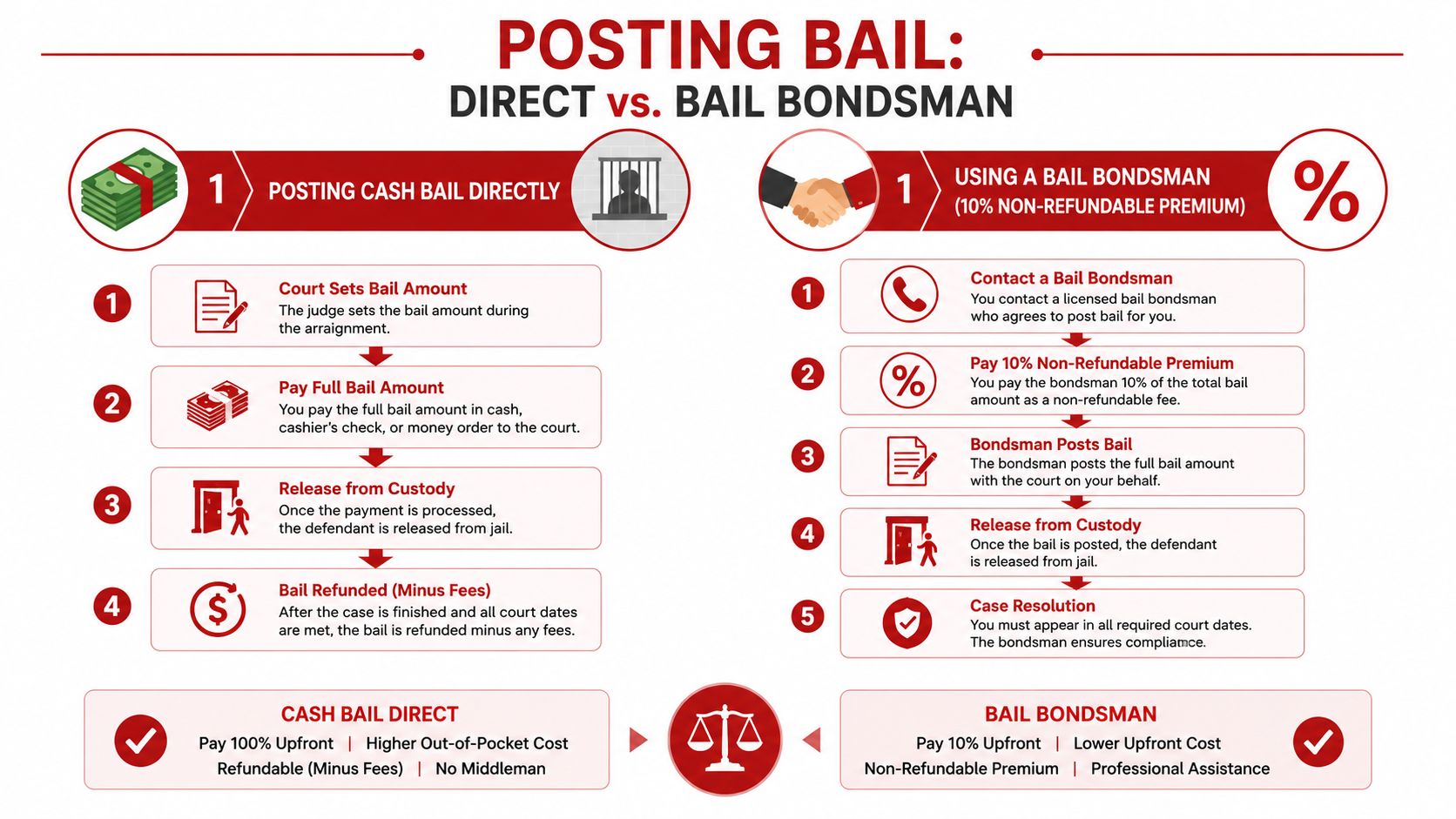
Families have two routes. They can pay the full cash bail through the jail’s accepted procedure, or they can hire a licensed bail bondsman to post a surety bond backed by the agreement with the family.
California bail bond premiums generally equal 10% of the total bail amount and are generally non-refundable. The premium, payment terms, co-signer obligations, and any collateral should be explained before signing. Review how to post bail before sending money or entering a contract.
Cash bail and a surety bond are different
Cash payers provide the entire scheduled bail amount. Jail staff still must verify the payment, check for holds, complete release paperwork, return property, and finish required medical or clothing procedures.
A bondsman posts the bond instead of requiring the family to deliver the entire bail amount. The family pays the premium and completes the agreement. The agent then coordinates the filing with the facility.
The process usually follows this order:
- Verify the booking: The agent confirms the person’s identity, facility, booking number, charges, and bail amount.
- Review the agreement: The indemnitor receives the premium, payment, co-signer, and collateral terms.
- Complete underwriting: The agent verifies identity and reviews the information required for the bond.
- File the bond: The completed bond goes through the jail’s electronic system or other accepted procedure.
- Track clearance: Staff process holds, medical clearance, property, and final release paperwork.
A bondsman cannot skip booking, override a medical hold, or force release when an unresolved warrant blocks the file. The agent can prepare documents while the jail completes its work and submit the bond immediately after the jail accepts it.
Ventura County’s Sheriff identifies the Pre-Trial Detention Facility at 800 South Victoria Avenue in Ventura as a location where bail may be posted and provides a dedicated contact number in its official posting-bail information. That detail helps families in Ventura, Oxnard, Camarillo, Port Hueneme, Thousand Oaks, Santa Paula, Moorpark, Fillmore, Ojai, and Santa Barbara identify which facility controls the release.
For families searching for 24-hour bail bonds Ventura, calling early gives the agent time to gather documents and resolve payment questions before the booking record is ready. The release clock starts after the bond is accepted, not when the first call is made.
What Families Should Do in the First Few Hours
At 2 a.m., the person in custody may not appear in the jail system yet. That does not mean they were released. The booking officer still has to complete intake, identity checks, fingerprints, medical screening, and record entry before the name and bail information become searchable. Your job is to prepare accurate details while the jail completes that work.
Build a verified intake file
Write down the person’s full legal name and date of birth. Add the arresting agency, arrest location, likely receiving facility, and booking number if anyone has it. If the arrest happened in Oxnard, Ventura, Camarillo, or another local city, confirm whether the person went to the Ventura County Pre-Trial Detention Facility or remains at a different holding location.
Use the Sheriff’s facility information to confirm where the person is being held and how bail posting is handled. Give those same details to the bail agent. For a complete walkthrough, review what to do when someone gets arrested before making the first call.
The booking record controls the next step. A bondsman can begin gathering documents once the identity, agency, and facility are known, but the agent cannot file a bond until the jail has entered the person and accepted a bail amount or other release condition.
Avoid mistakes that create delays
Do not treat a missing online record as proof of release. The jail may still be processing the person, and charges or bail may not appear right away.
Do not discuss case facts on a recorded jail phone. Assume custody calls can be recorded. Avoid explaining what happened, blaming someone else, or planning a defense during the call.
Do not wait for every detail before contacting a bondsman. Start with the name, birth date, arresting agency, and facility. Add the booking number and bail amount when they appear.
Do not promise a pickup before release is approved. Arrange transportation, then wait for confirmation that the jail has accepted the bond and finished its release paperwork.
A 24-hour Ventura County bail bonds office can work on documents while the family remains available for updates. The agent may request identification, employment details, co-signer information, payment arrangements, and collateral information for a larger bond. Requirements vary by situation. Ask what applies before signing or paying.
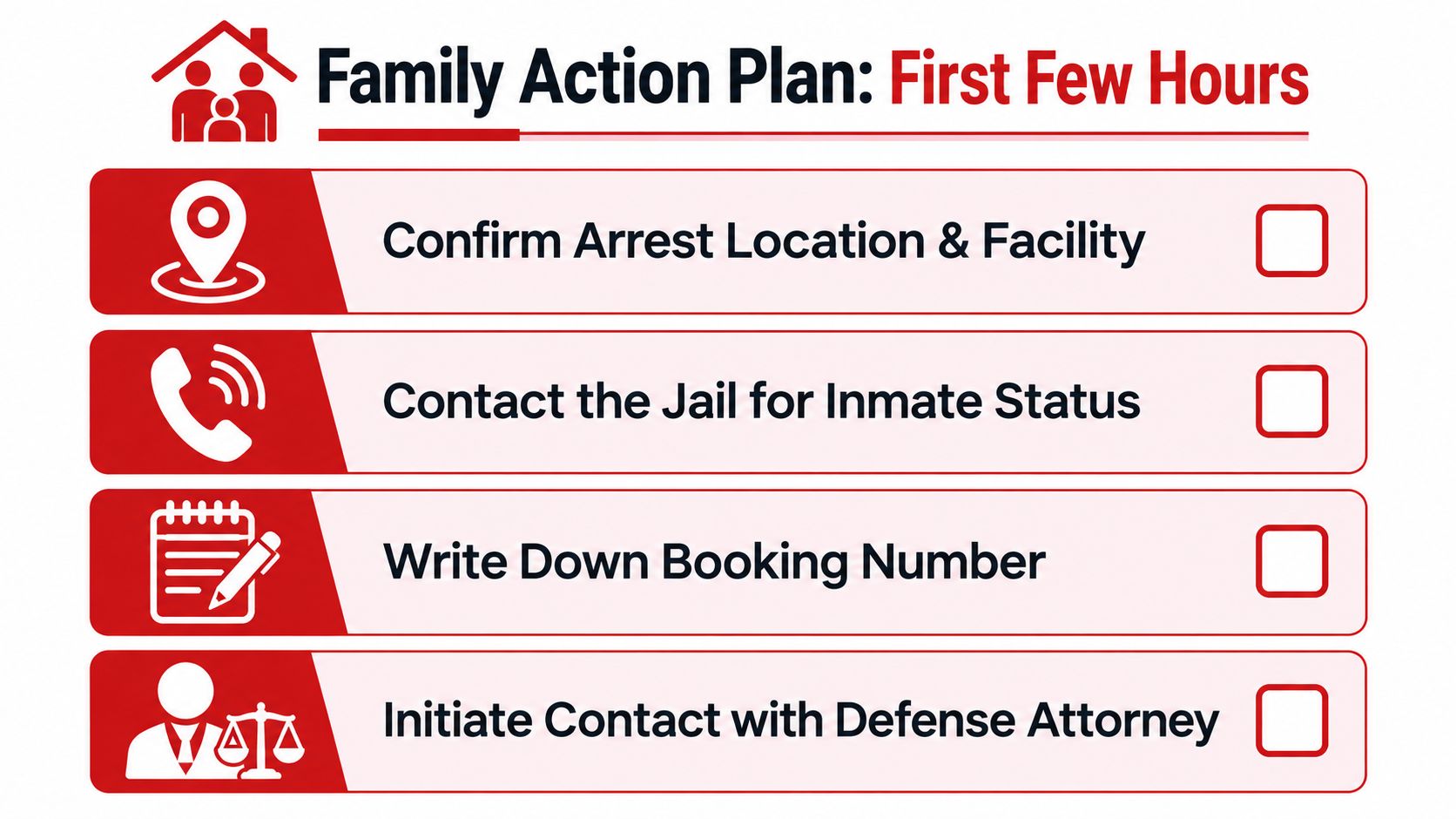
Prepare a simple release kit with identification, an approved payment method, a change of clothes if needed, and transportation home. If the arrest involves DUI, domestic battery, a warrant, or a probation issue, request a defense attorney referral promptly. A bail agent handles release paperwork. A lawyer handles legal advice, court strategy, and questions about the allegations.
Families comparing fast bail bonds Ventura County providers should ask three direct questions: Can someone answer now? Will the agent verify the booking with the jail? Will the agent explain the premium, payment terms, and collateral requirements before filing? Clear answers matter more than a rushed promise.
Timeline From Arrest to Release and Common Questions
At 2 a.m., a family can spend hours calling before the person’s name appears in the jail system. The booking clock starts with arrest and runs through intake, identification, and record entry. The release clock starts later, after bail is set and the jail accepts the payment or bond.
A practical Ventura County sequence is:
- Arrest at the scene: Officers take the person into custody and complete the arrest paperwork.
- Transport: The person is moved to the appropriate receiving facility.
- Arrival and search: Deputies accept custody, search the person, and secure property.
- Identification and fingerprints: Staff verify identity and enter the custody record.
- Photograph and medical screening: The facility completes the identification image and health review.
- Classification: Staff determine the appropriate holding or housing placement.
- Charge and bail entry: The jail records the alleged charges and applicable bail amount.
- Bond posting: The family or bondsman submits the accepted form of bail.
- Release clearance: Staff resolve holds, finish paperwork, return property, and authorize release.
Booking can take one to two hours under ordinary jail conditions, then stretch longer when the facility is busy or several people arrive together. The person’s name may remain absent from the public system while staff complete intake. Families may wait 4 to 8 hours before custody information becomes visible, so an early search is only an initial check. Confirm the booking directly through the appropriate jail contact when the record does not appear.
For the second clock, review jail release times.
Common questions after an arrest
Why doesn’t the inmate appear online? Booking may still be underway, or the public record may not have caught up with the physical intake. Give the facility time to process the arrest, then check again and confirm status through the appropriate jail contact.
Can a bondsman start before charges are filed? A bondsman can gather information, explain the agreement, and prepare documents. The agent can begin the actual bond process only after the facility confirms the bookable record and bail amount. That is why the family should provide the person’s full name, birth information, arrest location, and any case details as soon as possible.
What happens if bail is denied? A hold, court order, or another custody issue may block release through a standard bond. Ask the jail or defense attorney to identify the specific barrier and explain the next legal step.
How long does release take after bond posting? Posting the bond does not authorize an immediate exit. Jail staff still process the release, clear holds, complete required checks, return property, and finish the final paperwork.
Do jail phone calls count as legal advice? No. A recorded custody call cannot replace a defense attorney. Keep the conversation brief and avoid discussing the allegations, then contact counsel about legal advice, court strategy, and release conditions.
For Ventura County Jail bail bonds, preparation helps the moment the booking record goes live. Bada Bing Bail Bonds provides round-the-clock intake, booking verification, explanations of premiums and payment terms, and coordination with the jail through release. Visit Bada Bing Bail Bonds if your loved one is waiting to be booked, or call as soon as the arrest occurs so the paperwork can be ready when the facility confirms the record.