It usually starts with a short, bad phone call. Someone you care about is in custody in Ventura County, the booking officer mentions a domestic violence charge, and then you hear a bail number that sounds impossible. In that moment, families in Ventura, Oxnard, Camarillo, Port Hueneme, Thousand Oaks, Santa Paula, Moorpark, Fillmore, Ojai, and Santa Barbara all ask the same questions. Why is the domestic violence bail amount so high, and what do we do right now?
The hard part is that domestic violence cases move differently from many other arrests. Courts often treat them as higher-risk cases from the start, and the amount can climb fast depending on injuries, prior history, alleged protective order issues, or anything that suggests a safety concern. For those in this situation, theory is often secondary to needing a clear path.
Table of Contents
- The Phone Call No One Expects
- Why Domestic Violence Bail Amounts Are So High
- How Judges Set Bail Amounts in Ventura County
- Navigating California Bail Laws for DV Cases
- Your Three Options for Posting Bail
- The Bada Bing Process for Fast Release in Ventura County
- Beyond Bail The Hidden Risks of Release Conditions
- Common Questions About Domestic Violence Bail
The Phone Call No One Expects
A sister in Oxnard gets a call after midnight. A husband in Camarillo hears that his wife was booked after an argument turned physical. A parent in Thousand Oaks is trying to write down a booking number while the line keeps cutting out. The facts are usually incomplete, emotions are high, and nobody knows whether release will happen tonight, tomorrow, or after court.
The first thing to understand is that panic causes expensive mistakes. Families often start calling around without the basic details the jail needs, or they assume the first number they hear is final. In domestic cases, that isn’t always true. The charge level matters. The county matters. The judge matters. So do the release conditions that come with bail.
If you don’t even know where your loved one is being held, start by using a practical jail lookup resource like how to find someone arrested. That step alone can save time when you’re trying to confirm booking, custody status, and the facility handling the case.
The family that gets organized first usually gets movement first. Name, date of birth, booking number if available, and the jail location are the details that matter most in the first hour.
In Ventura County, local knowledge matters because the process isn’t just about money. It is about knowing how the jail, the court calendar, and the local release workflow fit together. That’s true whether you’re dealing with Ventura, bail bonds Oxnard, or a case tied to Thousand Oaks or Santa Barbara.
Why Domestic Violence Bail Amounts Are So High
Courts don’t look at a domestic violence bail amount the way families do. Most relatives hear a number and think punishment. The court usually hears a number and thinks control. The goal is to reduce immediate risk, protect the alleged victim, and make sure the defendant comes back to court.
That is why domestic violence bail is commonly higher than people expect. A judge or schedule isn’t only looking at whether someone was arrested. The court is also weighing whether release could create pressure on the alleged victim, trigger another confrontation, or lead to someone leaving the area before court.
What the national baseline tells you
The strongest benchmark families should know is this: the median bail amount set for defendants charged with family assault was $35,000, while the mean was $66,000, according to the Bureau of Justice Statistics report on Family Violence. That gap tells you something important. Many common cases already involve a serious financial barrier, and the most severe cases push the average much higher.
That helps explain why a domestic violence arrest in Ventura County can produce a number that feels out of proportion to what the family expected from a single incident report. The court is pricing in risk, not just the charge label.
What the court is really measuring
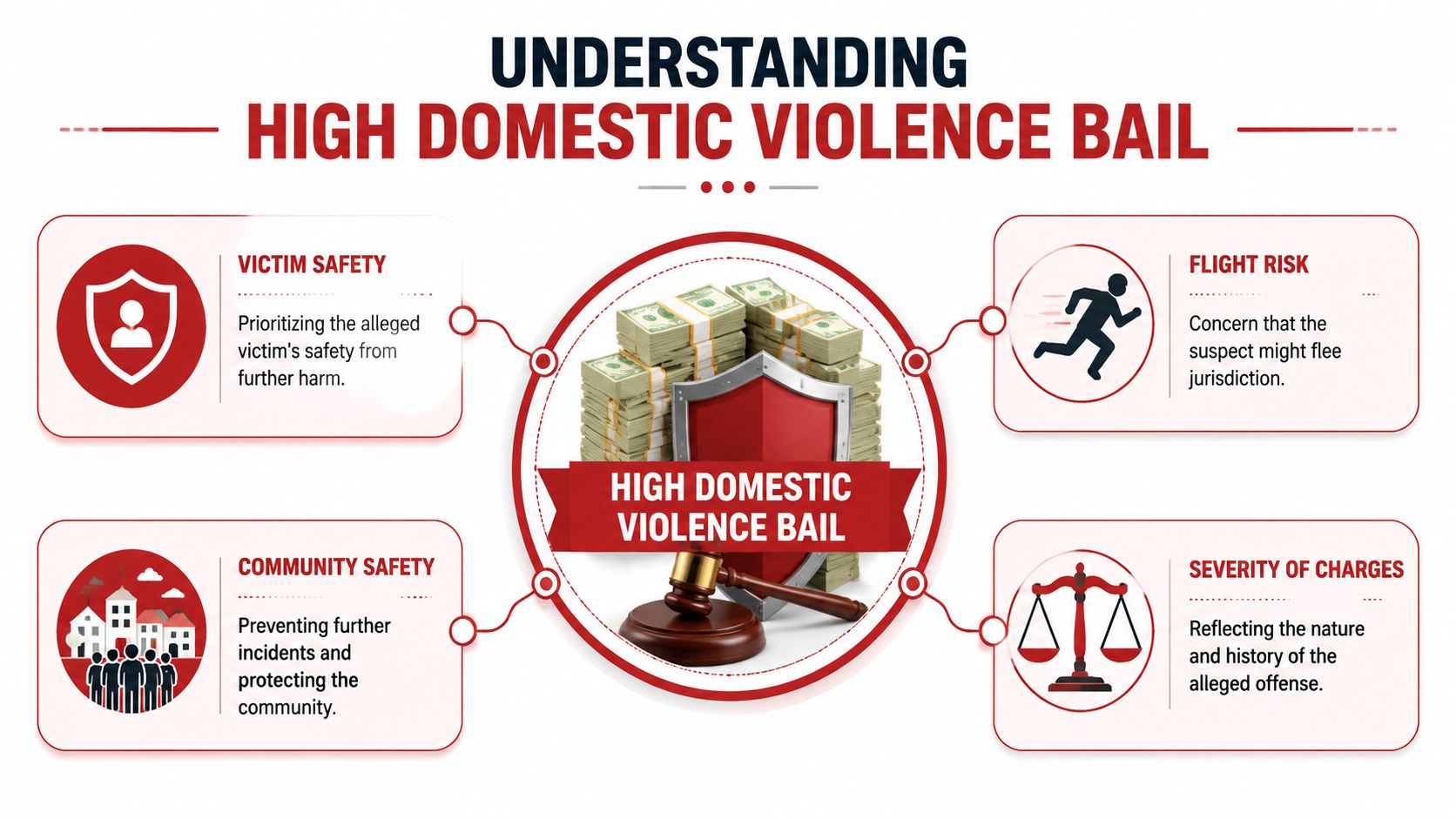
Four things drive the court’s thinking most often:
- Victim safety: The court wants distance, stability, and immediate protection after arrest.
- Flight risk: If the person may avoid court, bail goes up or release becomes harder.
- Community safety: Judges look beyond the home and consider broader public risk.
- Severity of charges: Injuries, prior incidents, and related allegations all matter.
If you’re not sure whether the charge is being handled as a misdemeanor or felony, this quick guide on felony vs. misdemeanor differences is useful because that distinction often changes the entire bail conversation.
Practical rule: In domestic cases, a high number usually means the court sees a safety problem it wants to manage before trial.
How Judges Set Bail Amounts in Ventura County
A lot of families assume bail is random. It isn’t. In Ventura County and nearby courts, judges usually start with a bail schedule and then adjust from there based on the facts in the arrest report, the criminal history they can see, and any factor that affects safety or court appearance.
For domestic cases, that starting point can shift fast. If the allegation involves visible injury, a prior incident, or any suggestion that the accused ignored a court order, the amount can move sharply upward. That’s one reason people searching for Ventura County Jail bail bonds or bail bonds Thousand Oaks often feel blindsided after a domestic booking.
The bail schedule is the starting point
A simple way to think about it is this. The charge opens the door. The facts decide how far it swings.
Misdemeanor domestic violence charges typically see bail set between $5,000 and $10,000. If the charge is a felony, the amount immediately escalates to a range of $50,000 to $100,000 or more, especially if the victim sustained serious injuries, according to this California-focused overview of bail for domestic violence.
Here is a practical reference point:
| Charge Level | Typical Bail Range | Common Aggravating Factors |
|---|---|---|
| Misdemeanor domestic violence | $5,000 to $10,000 | Prior history, allegations of injury, protective order issues |
| Felony domestic violence | $50,000 to $100,000 or more | Serious injuries, weapon allegations, repeat conduct |
If you want a local primer on the mechanics behind county schedules, booking, and release timing, review how bail works in Ventura County.
What pushes the amount higher in real cases
In practice, judges don’t raise bail because a family is anxious or because the story sounds messy. They raise it when the paperwork suggests a bigger risk profile. Common pressure points include:
- Visible injury allegations: Courts react strongly when the report describes significant harm.
- Weapon involvement: If officers mention a weapon, the risk analysis changes immediately.
- Prior domestic history: Even an older case can affect how a new arrest is viewed.
- Protective order concerns: Alleged violations signal to the court that conditions alone may not be enough.
- Failure to appear history: If someone has missed court before, judges notice.
What works for families is getting accurate information quickly. What doesn’t work is arguing with jail staff, relying on secondhand versions of the arrest, or assuming the scheduled amount can’t change.
For local domestic bail matters, a specialized page on domestic violence bail bonds can help clarify case type and release issues. That matters because domestic bail isn’t just about raising funds. It’s about understanding how Ventura and Santa Barbara judges read the facts in front of them.
Navigating California Bail Laws for DV Cases
California bail law has become more confusing for families because the old assumption of a fixed money amount doesn’t always hold. In some cases, courts may consider release on own recognizance. In domestic violence matters, though, that possibility often narrows because judges treat victim safety as a front-end issue, not something to sort out later.
That creates a strange result for families. One person expects an immediate high bail and gets release with strict conditions. Another expects release and sees bail imposed because the court views the facts as dangerous enough to require a stronger control measure.
Why release is less predictable now
A key point many generic bail guides miss is this: under recent California law amendments, judges may presume own recognizance release for some misdemeanors, but domestic violence charges are often treated differently. DV-related contempt charges saw bail eligibility jump to 12% for misdemeanors and 64% for nonviolent felonies. That makes outcomes less predictable in domestic cases.
The practical meaning is simple. Don’t assume zero bail rules apply. Don’t assume the schedule is the final answer either. Judicial discretion matters more than many families realize.
If you need a broader explanation of the release framework, how bail bonds work in California gives the statewide context.
What families should do with that information
Families usually help themselves most by focusing on facts the court cares about:
- Reliable identity details: Exact name and booking information reduce delay and confusion.
- Stable local ties: Residence, family support, and employment can matter at hearing stage.
- No improvising contact: If there is a protected person involved, don’t try to “clear things up” directly.
- Fast coordination with counsel and bond support: Delay often creates more confusion, not better outcomes.
A domestic case can produce either a money bail problem or a release-conditions problem. Sometimes it produces both.
That uncertainty is one reason local process knowledge matters in Ventura, Oxnard, and Santa Barbara courts. The paperwork may look similar from case to case. The actual release path often doesn’t.
Your Three Options for Posting Bail
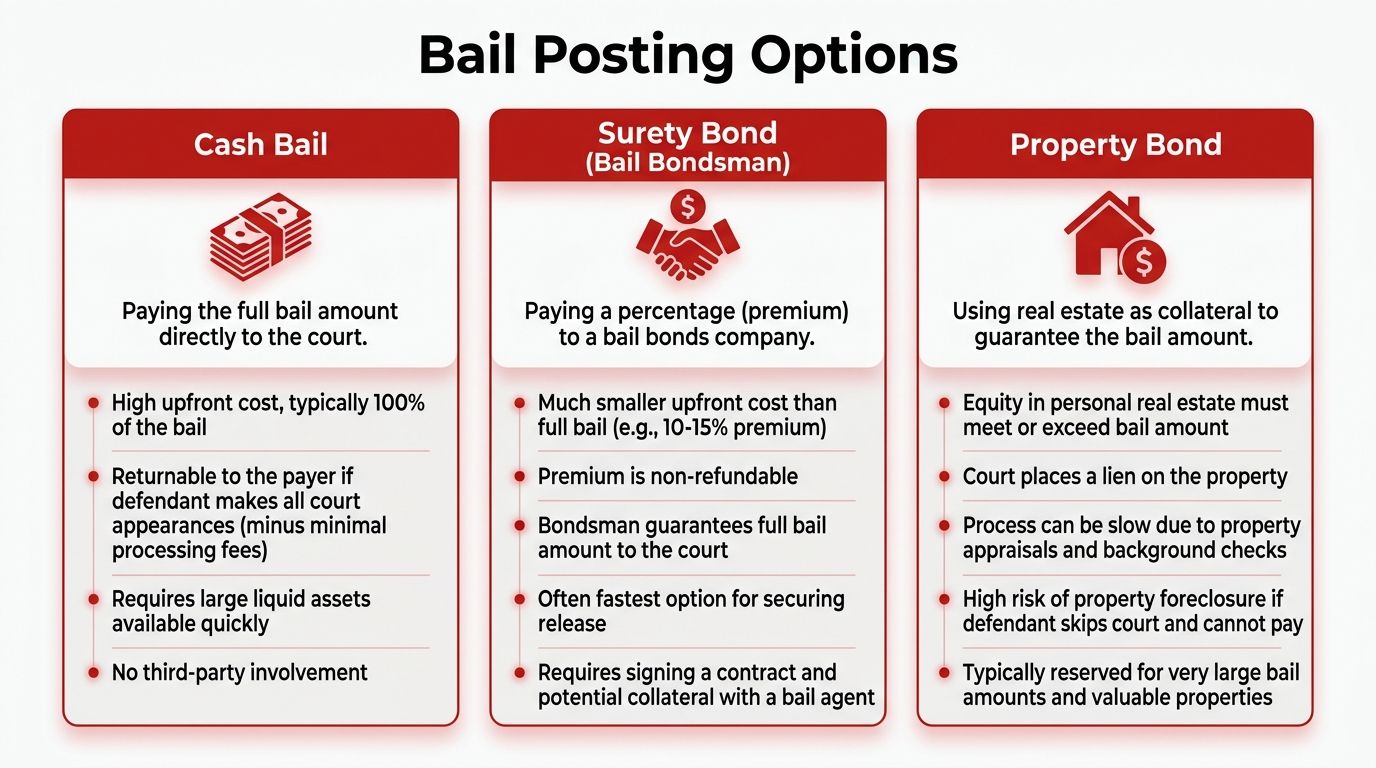
Once bail is set, families usually have three choices. They can pay the full amount directly to the court, use a surety bond through a bail agent, or ask the court to review the amount. Each option has trade-offs, and in domestic cases those trade-offs matter because the amount can be large and the conditions can be strict.
To make the choices easier to compare, this chart lays them out clearly.
Cash bail
Paying cash means turning over the entire bail amount to the court. For a domestic violence bail amount, that can tie up a serious amount of money for a long time. Families choose this route when they have immediate liquidity and want to avoid a surety arrangement.
The downside is obvious. If bail is high, the money is unavailable for rent, legal fees, travel, or basic household needs while the case is pending.
Surety bond through a bail agent
This is the route most families use because it avoids paying the full bail amount up front. In California, bond premiums are set by law at 10% of the total bail. For families looking for domestic bail bonds or 1 percent down bail bonds, that can make a large bail more manageable through approved payment structures rather than one immediate lump sum.
The total stakes in domestic cases are one reason courts treat these charges seriously. A commonly cited estimate says the total economic cost of domestic violence in the U.S. is $3.6 trillion annually, with major portions tied to medical costs and lost productivity, as summarized in this domestic violence statistics page. That figure isn’t a bail rule, but it helps explain the severity lens courts bring to these cases.
If you’re comparing payment structures, bail bond payment options is the right place to review affordability choices.
A short explainer can also help if this is your first time dealing with the process.
Ask the court to review bail
The third option is a bail hearing or bail review through defense counsel. This can work when the scheduled amount doesn’t match the actual facts, or when the defense can present strong local ties and a realistic release plan.
That option is important, but families shouldn’t treat it as instant relief. Hearings take timing, preparation, and attorney involvement. If immediate release matters, many families still arrange bond first and let counsel address later adjustments through court.
The Bada Bing Process for Fast Release in Ventura County
When families need 24 hour bail bonds Ventura County, speed comes from having the right information ready and moving in the right order. A rushed, disorganized start slows release. A clean start shortens the gap between booking and the jail releasing the person.
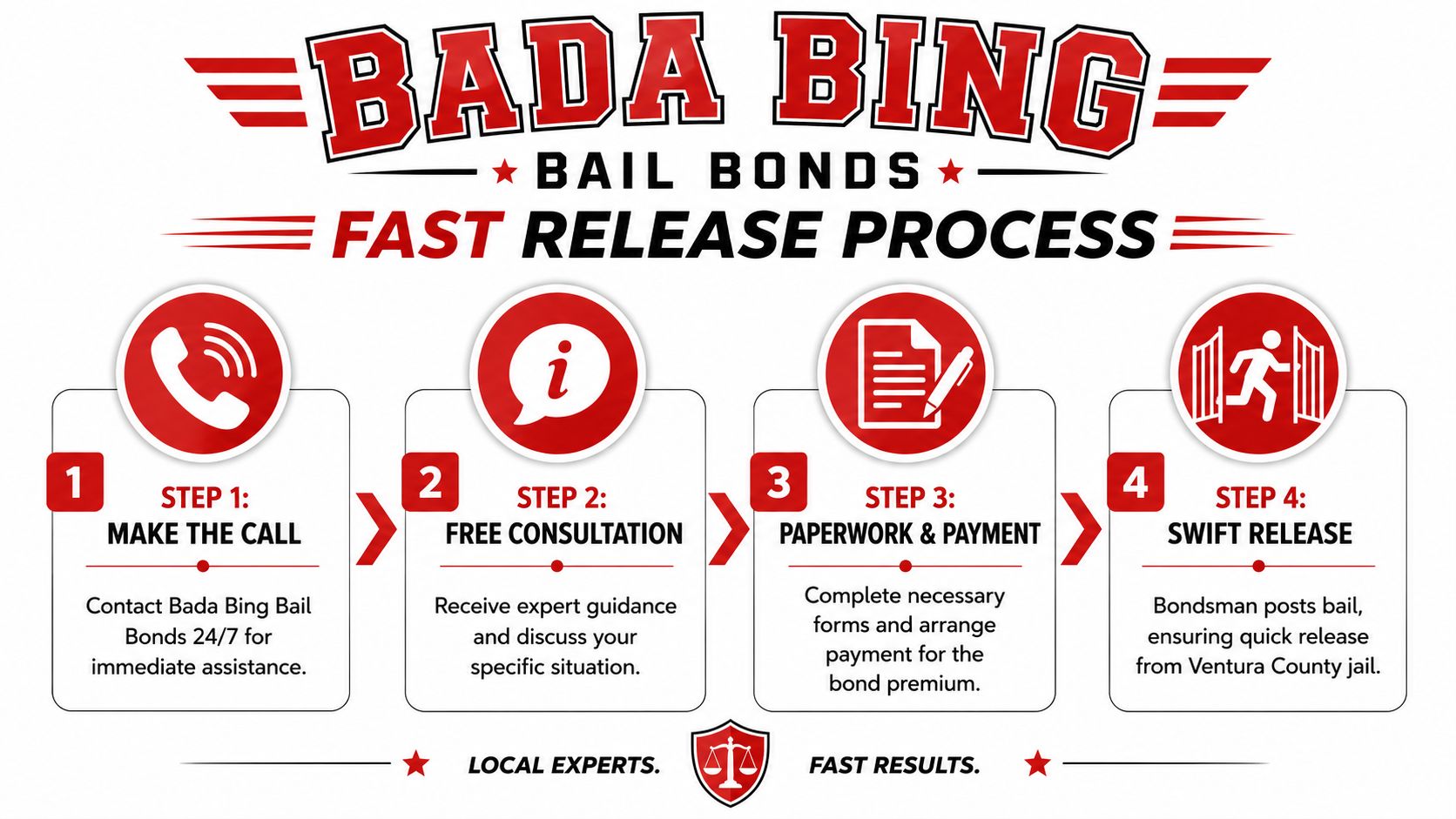
What happens after the first call
The process usually follows four steps:
-
Confirm the booking
Get the exact legal name, date of birth, and booking number if available. Confirm whether the person is at the Ventura County Main Jail or another local facility tied to the arrest.
-
Verify the charge and bail status
Domestic cases can involve a schedule amount, a hold pending review, or release conditions that affect timing. Local knowledge proves essential here.
-
Complete paperwork and payment
Good agencies move documents electronically when possible. That helps families in Ventura, Oxnard, Port Hueneme, Santa Paula, Moorpark, Fillmore, Ojai, and Santa Barbara who can’t get across town quickly.
-
Post the bond and monitor release
After the bond is accepted, jail release timing depends on internal processing, staffing, and custody workflow.
For local help pages, bail bonds Ventura and bail bonds Thousand Oaks are useful if the arrest, family, or court connection is tied to those areas.
What speeds release and what slows it down
Families can help more than they think. These are the factors that usually matter most:
- Fastest path: Accurate booking details, a ready co-signer, and immediate document turnaround.
- Common delay: Wrong spelling of the defendant’s name, unclear jail location, or waiting to gather basic information.
- Another delay point: Domestic release conditions often need to be reviewed carefully before the jail completes release.
- Big mistake: Focusing only on the money and not on the stay-away or no-contact terms attached to release.
The bond gets someone out. The details keep them out.
People often assume the bottleneck is the bond itself. Sometimes it is. Often it isn’t. The actual delay can be jail processing, protective order paperwork, or incomplete family information.
Beyond Bail The Hidden Risks of Release Conditions
Most families focus on the domestic violence bail amount and stop there. In real life, the harder part can start after release. Domestic cases often come with no-contact orders, stay-away terms, travel limits, or move-out conditions. Those aren’t suggestions. They are release rules.
An important point families miss is this: over 40% of bond revocations in DV cases stem from technical compliance violations of non-monetary conditions, like no-contact orders, rather than new criminal charges. That means the biggest risk after release often isn’t a new arrest for a new event. It’s an avoidable violation of the release terms.
Here is what works:
- Read every condition carefully: Don’t rely on memory from a stressful release night.
- Avoid all direct and indirect contact if ordered: Calls, texts, social media, and messages through friends can all create problems.
- Plan housing and transportation before release: Shared homes, shared cars, and routine commute patterns can create accidental violations.
- Ask questions early: If a condition is unclear, get clarification before someone takes a risk.
What doesn’t work is assuming “accidental” contact will be excused. Courts often treat violations in domestic cases with very little patience because they were imposed to prevent immediate problems.
Common Questions About Domestic Violence Bail
Can a domestic violence bail amount be reduced
Yes, sometimes. A defense attorney can ask the court to review the amount. Whether the judge lowers it depends on the charge, the facts in the report, prior history, and whether the court believes release conditions can manage the risk.
Is domestic violence usually zero bail in California
Families shouldn’t assume that. Some misdemeanor cases in California may involve release presumptions, but domestic violence matters are often handled more cautiously and can remain bail-eligible depending on the charge and circumstances.
What if we can’t afford the full amount
That is exactly why many families use Ventura County bail bonds instead of posting full cash bail. A bond avoids tying up the full amount at once, and some cases may qualify for 1 percent down bail bonds or payment arrangements depending on the facts and the bond structure.
How quickly can someone get out of Ventura County Jail
Release speed depends on when the person was booked, whether bail is already set, whether there are domestic release conditions to process, and how busy the jail is. The fastest cases move quickly once paperwork is complete. Other cases take longer because the jail still has to finish its internal release steps.
What happens if the charges are dropped later
If a bond was used, the premium is the fee for posting the bond and is generally not refunded just because the case ends favorably. Families should ask about the financial terms up front so there are no surprises later.
Do no-contact orders really matter that much
Yes. In domestic cases, they matter as much as the money side of bail. A person can secure release and still end up back in custody if they violate the court’s conditions.
If your family needs calm, immediate help with a domestic violence bail amount in Ventura, Oxnard, Camarillo, Port Hueneme, Thousand Oaks, Santa Paula, Moorpark, Fillmore, Ojai, Santa Barbara, or nearby Southern California communities, Bada Bing Bail Bonds is available day and night. They handle the process with fast booking verification, clear pricing, and practical guidance that helps families move quickly without making costly mistakes.