When a case finally ends, most families expect the stress to let up. Then the next question hits right away. How do you get your bail money back?
In Ventura, Oxnard, Camarillo, Port Hueneme, Thousand Oaks, Santa Paula, Moorpark, Fillmore, Ojai, and up through Santa Barbara, people often misunderstand the process. They hear “bail comes back” and assume all bail works the same way. It doesn’t. If you paid cash directly to the court, the refund path is one thing. If you used bail bonds Ventura families often rely on for a fast release, the money flow is completely different.
A lot of confusion starts right after booking and release, when people are focused on getting someone out of jail and not on the paperwork that matters later. If you’re still sorting out the arrest side of the process, this guide on what happens after you get arrested helps connect the dots.
Table of Contents
- The Case Is Over Now What Happens to the Bail Money
- Recovering a Full Cash Bail Payment from the Court
- Why Bail Bond Premiums Are Non-Refundable
- How to Get Your Collateral Back from a Bondsman
- Troubleshooting Forfeited Bail and Refund Delays
- Frequently Asked Questions About Bail Money Recovery
The Case Is Over Now What Happens to the Bail Money
Start with one question. Did you post full cash bail to the court, or did you hire a bondsman? That answer controls everything that happens next in Ventura County bail bonds cases and in Santa Barbara cases too.
If you paid the full amount straight to the court, that money was a deposit held by the court. If the defendant made every required appearance and followed release conditions, the court can return that deposit after the case is done. That applies whether the case ended with a dismissal, a guilty result, or an acquittal, as explained by The Bail Project’s overview of getting bail money back.
If you used a surety bond, the money you paid the bondsman was not a deposit with the court. It was the fee for the bond. That’s the single biggest misunderstanding I see from families looking for fast bail bonds Ventura services late at night or at the Ventura County Jail bail bonds window the next morning.
Practical rule: Cash paid to the court may come back. Money paid as a bond premium does not work that way.
That distinction matters in Ventura, Oxnard, and Camarillo because people often choose a bond to avoid tying up the full bail amount for the life of the case. In Santa Barbara, the same basic split applies. The local jail, court clerk, and release timeline may differ in practice, but the financial logic is the same under California bail laws.
If you only remember one thing from this article, remember this short checklist:
- Cash to court: Refund may be available after the case closes.
- Bond premium to bondsman: Fee is earned when the bond is posted.
- Collateral on a bond: Often returnable if the defendant did everything required.
- Missed court date: That can turn a routine closeout into a financial mess fast.
Recovering a Full Cash Bail Payment from the Court
If you paid cash directly to the court, this is the path that matters. Families in Ventura and Santa Barbara usually want a straight answer, not court jargon. The trigger is simple. The case has to end, and the court has to release or exonerate the bail.
A local cash bail option can make sense when the family has the full amount available and wants that money tied to the court instead of paying a non-refundable bond fee. In Ventura County, some families post directly rather than use bail bonds Oxnard or 24-hour bail bonds Ventura services because they want the possibility of getting most or all of that deposit back later.
What starts the refund process
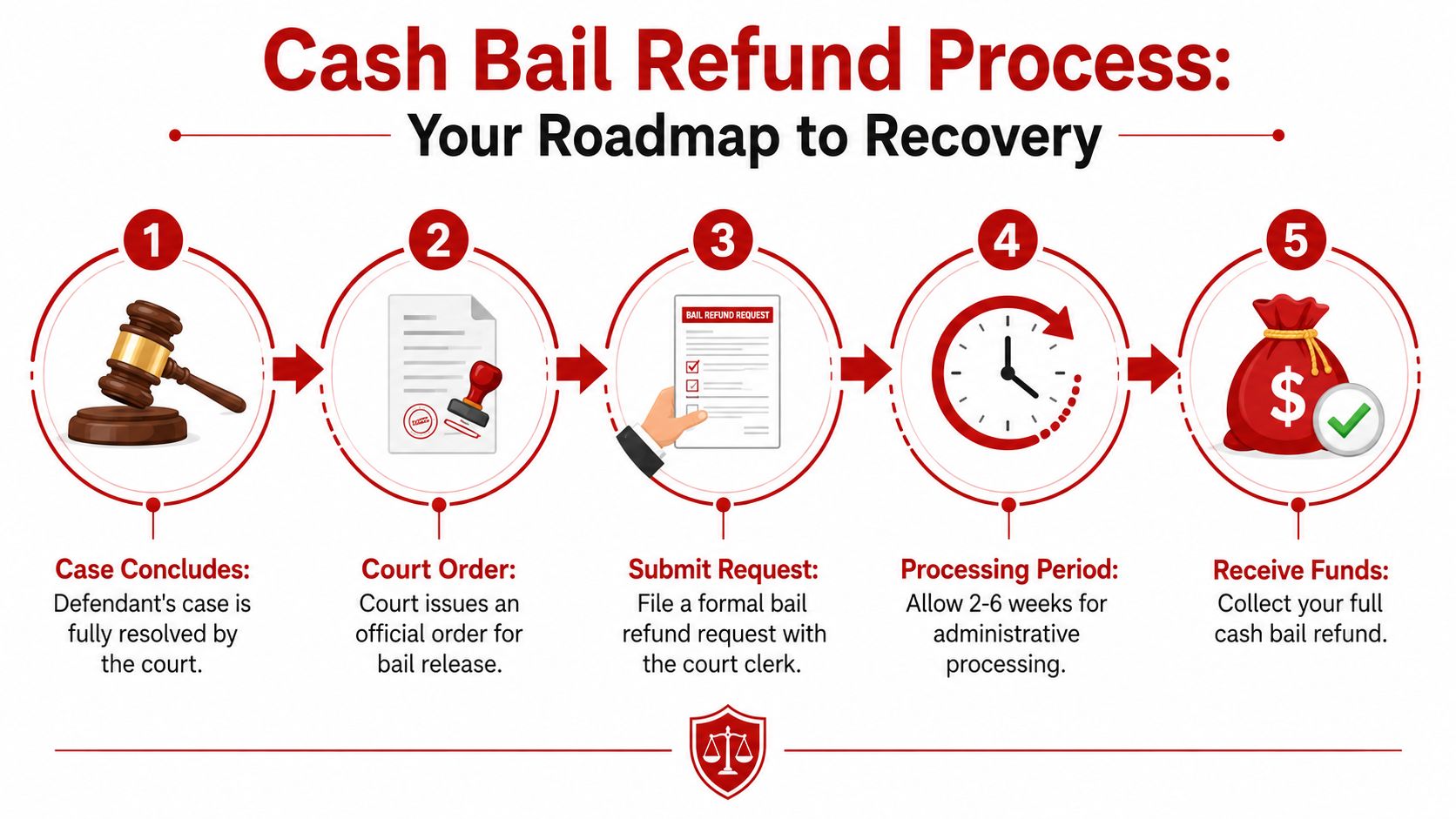
California gives you a legal baseline, but the actual wait is often longer than families expect. For cash bail in California, the refund process is legally mandated to be mailed to the depositor within 30 business days following the case disposition or exoneration order, though practical processing delays frequently extend the total receipt time to 8 to 12 weeks depending on the county’s administrative efficiency. The refund is generally unaffected by the verdict if the defendant complied with all court obligations, according to this California cash bail explanation from Wallin & Klarich.
That means your first job is confirming the case is closed and bail has been exonerated. Those are not always the same day in practice.
Use this checklist:
- Confirm disposition: Ask defense counsel or the clerk whether the case is fully resolved.
- Verify exoneration: Make sure the court released the bail, not just finished a hearing.
- Keep the receipt: The depositor’s paperwork matters if there’s any question later.
- Watch the mail carefully: Refunds are mailed, not handed back over the counter.
- Call if the timeline drags: Ventura and Santa Barbara families should be ready to follow up with the clerk’s office.
A quick visual helps if you’re sorting this out with family members.
Who gets the check and why families get surprised
The refund goes to the depositor of record. That’s the person who posted the cash. It is not automatically made out to the defendant. If a parent, spouse, sibling, or friend posted the money, the check goes to that person.
If your aunt posted the cash, your aunt gets the refund check. That’s true even if the defendant is the one whose case ended.
The other surprise is that “refundable” doesn’t always mean “every dollar comes back untouched.” Courts may deduct administrative fees, fines, court costs, restitution, or other amounts before issuing the check. That’s why some families in Ventura or Santa Barbara expect a full return and end up holding a smaller refund than they planned on.
Here’s the practical breakdown:
| Step | What usually happens |
|---|---|
| Case closes | The court finalizes the matter |
| Bail is exonerated | The court authorizes release of the cash deposit |
| Clerk processing begins | Paperwork and any financial holds are reviewed |
| Deductions are applied if owed | Fines, fees, or restitution may reduce the amount |
| Refund is mailed | The depositor of record receives the check |
If you posted cash at the court and kept your paperwork organized, your odds of a smooth refund are much better. Not faster, necessarily. But smoother.
Why Bail Bond Premiums Are Non-Refundable
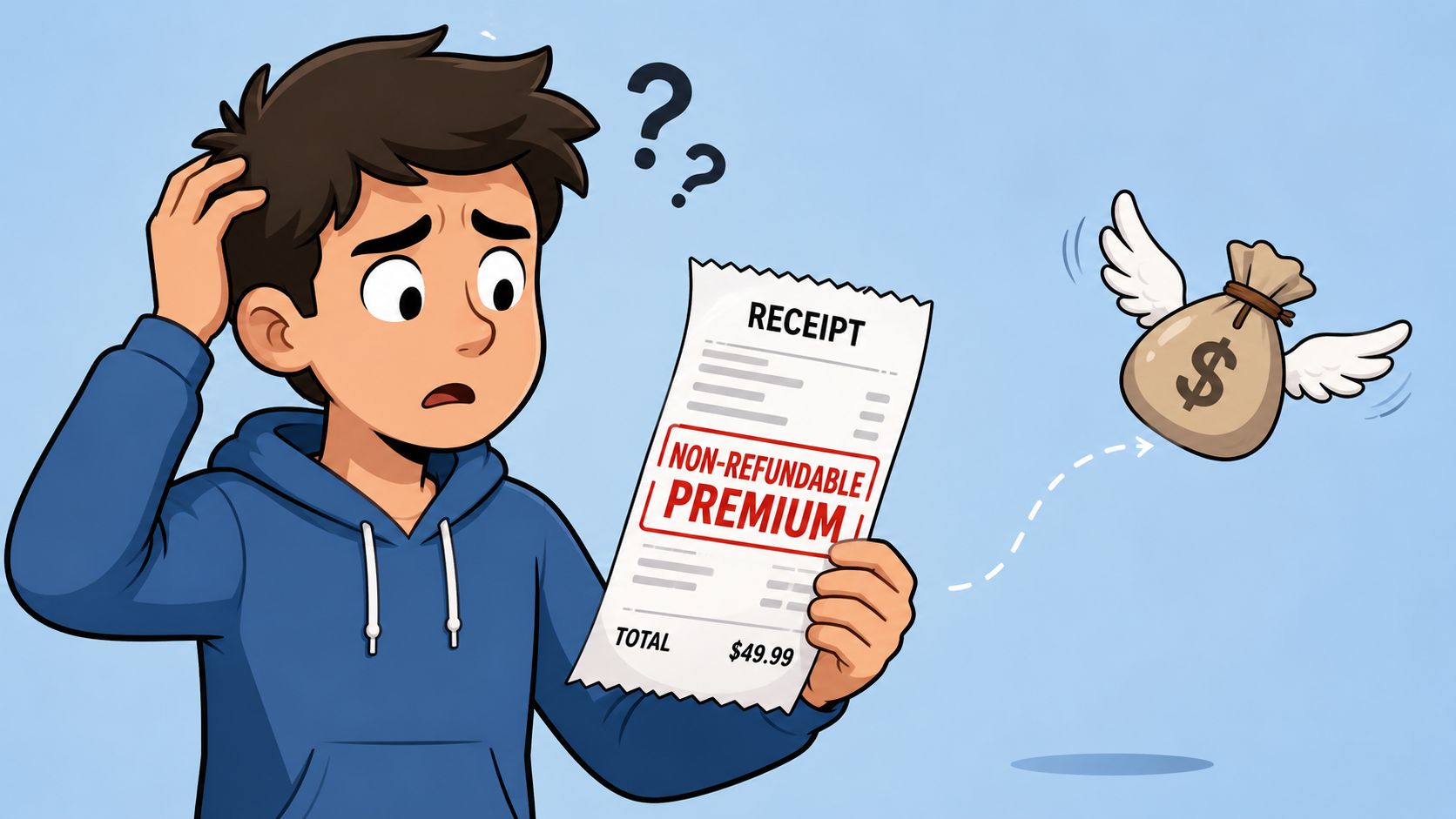
This is the part families don’t love hearing, but it’s better to hear it plainly. A bail bond premium is not a refundable deposit. It’s the charge for the bond service.
In California, that premium is set by law. The bail bond premium is a non-refundable fee fixed by state law at exactly 10% of the total bail amount, regardless of whether the defendant is acquitted, charges are dismissed, or the case is resolved without jail time, as stated by this Ventura-area explanation of California bond premiums. If you want a fuller breakdown of typical charges, this guide on how much bail bonds cost is useful before anyone signs paperwork.
The premium is the fee for the service
Think of the bond premium like paying for a financial guarantee. The bondsman posts the surety bond with the court and takes on the risk tied to the full bail amount. The family pays the premium for that service, for the paperwork, for the posting process, and for the exposure the bond company takes on.
That fee is earned when the bond is written and accepted. It doesn’t turn into a court-held deposit just because the case ends quickly.
Here’s what doesn’t change the premium:
- Charges dropped: The premium still isn’t refunded.
- Case dismissed: Same result.
- Not guilty verdict: Same result.
- Quick resolution: Same result.
California bond contracts are written to make that point unmistakably clear. The premium doesn’t come back because the service already happened.
What does come back in a bond case
People often say, “So I get nothing back?” Not necessarily. In a bond case, the part that may come back is collateral, not the premium.
That distinction matters in Ventura County bail bonds work, especially on larger bonds, probation-related cases, or situations where a co-signer had to pledge something valuable to get the bond approved. The court returns the bond amount to the bondsman when the bond obligation ends and the defendant complied. That’s what clears the way for collateral release.
The premium is the cost of getting someone out. Collateral is the security that may be returned later if everything was done right.
That’s also why experienced families ask a different question after release. Not “Will I get my bond money back?” but “What part of this deal was a fee, and what part was security?”
How to Get Your Collateral Back from a Bondsman
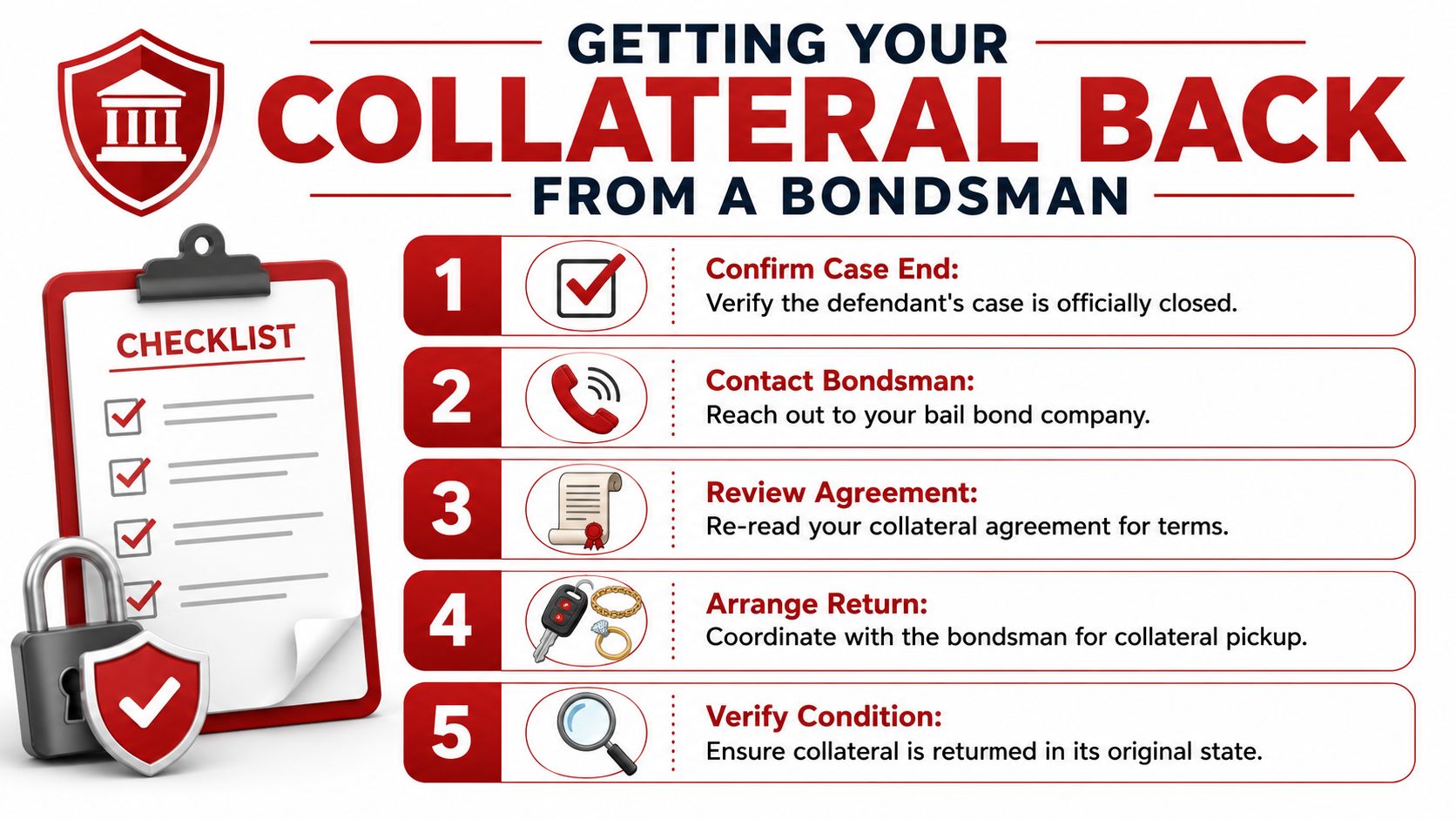
Your case may be over, but that does not put cash or property back in your hands the same day. In Ventura and Santa Barbara bond cases, collateral comes back after the bond is exonerated, the bondsman confirms the file is clear, and the person who pledged the collateral signs whatever release paperwork the agency requires.
That is the part families miss. The court does not hand collateral back to you directly in a bond case. The court clears the bond obligation. Then the bond company releases the collateral.
What collateral usually looks like
Around Ventura, Oxnard, Thousand Oaks, and Santa Barbara, collateral usually means one of four things. Cash. Vehicle paperwork. Jewelry or other valuables. Real property documents tied to a deed of trust or lien filing. If you want a practical breakdown of what agencies may accept, this guide on what can be used as collateral covers the common options.
What matters now is whether the collateral was only security for the bond, or whether the file still has a problem attached to it. If the defendant made every court date and there are no open holds, collateral release is usually a paperwork job. If there was a missed appearance, reinstatement, recovery cost, or other loss to the company, the release can slow down or come with deductions allowed by the contract.
What to do after the case ends
Start with one call to the bond company. Ask, “Has the bond been exonerated, and what do you need from the indemnitor to release collateral?”
Use that wording. It gets you to the core issue fast.
In clean files, the process usually looks like this:
- Court matter is fully finished: No remaining appearances, remands, or transfer issues.
- Bond is exonerated: The court has ended the bond obligation.
- Agency reviews the file: The bondsman checks for any missed court history, recovery expense, or unpaid balance.
- Co-signer signs release papers: This may be a receipt, release of lien, reconveyance request, or property return form.
- Collateral is returned: Cash is picked up or mailed, and property documents are released back to the person who pledged them.
The fastest way to avoid delay
Bring the original bond paperwork if you still have it. Bring the case number. Bring ID for the co-signer or indemnitor listed on the contract.
That saves days of back-and-forth.
For cash collateral, ask whether the agency cuts a check, wires funds, or requires in-person pickup. For vehicle or jewelry collateral, confirm who must appear to sign. For real property, ask whether a reconveyance, lien release, or recording step is still pending with the county.
Local files can move slower than families expect, especially if the case touched more than one court calendar or the defendant had a hold from another county. In Ventura County and Santa Barbara County, the practical move is simple. Do not passively wait for weeks. Call the bond office once the case is closed, confirm exoneration, ask for the release checklist, and get every requested document in right away.
Troubleshooting Forfeited Bail and Refund Delays
Your family expects the case to end and the money to start coming back. Then nothing shows up, or the amount is short, or someone at the clerk’s window says the file still has a hold. In Ventura and Santa Barbara, that usually means one of two things. The bail was forfeited after a missed appearance, or the refund is still tied up in court processing.
When bail is forfeited
Forfeiture is the expensive problem.
If the defendant missed court, the court can order cash bail forfeited. If a bondsman posted a surety bond, the bond company can go after the defendant and the co-signer under the indemnity agreement. By the time a family calls me at this stage, the best options usually depend on speed and paperwork, not arguments about what feels fair.
If a hearing was missed, start with this guide on what happens if you miss court. Then call the defense lawyer and the bond company the same day. In some cases, counsel can get the matter back on calendar fast enough to limit the damage. In others, the window is already closing.
Check these points right away:
- Cash bail case: Ask the court clerk whether bail was declared forfeited, vacated, or still pending because of a failure to appear.
- Bond case: Ask the bond office whether the bond is active, in forfeiture, or surrendered.
- Co-signer liability: Pull out the indemnity agreement and read the repayment and cost provisions.
- Local court status: Confirm whether Ventura or Santa Barbara has set a new appearance date, issued a bench warrant, or entered any order affecting exoneration.
A lot of families wait because they assume the case closing will fix everything. It usually does not. Once forfeiture starts, delay gives you fewer choices.
When the refund is late or smaller than expected
A delay usually means the court file has not finished its accounting steps. A short refund usually means money was applied somewhere before the check was cut. New York City’s cash bail refund page explains the same basic issue families run into elsewhere. Courts can process deductions before releasing the balance.
That is the practical problem in Ventura and Santa Barbara too. Families remember the amount they posted. The court works from the case balance, the depositor record, and the mailing information on file.
When you call the clerk, keep it tight and specific:
| Question to ask | Why it matters |
|---|---|
| Has bail been exonerated | The court usually will not release a refund before exoneration is entered |
| Was a refund check already issued | It may have been mailed to the depositor address on file |
| Were fines, fees, or restitution taken out | That explains why the amount is lower than expected |
| Is there a hold from another case or county | A related matter can slow release of funds |
| Who is listed as the depositor of record | The wrong family member may be waiting for a check that is going elsewhere |
Use the case number, the defendant’s full name, the depositor’s name, and the date the case ended.
That gets better results with Ventura and Santa Barbara court staff because they can pull the record instead of guessing from a last name and a rough timeline. If the clerk says the refund was mailed, verify the address. If the clerk says exoneration has not posted, ask what event the court is still waiting on. If you posted through a bondsman and the issue is collateral, call the bond office directly instead of waiting on the court, because the court does not control return of private collateral.
Frequently Asked Questions About Bail Money Recovery
Cash Bail vs. Bail Bond Getting Your Money Back
| Feature | Cash Bail (Paid to Court) | Bail Bond (Paid to Bondsman) |
|---|---|---|
| Where the money goes | To the court | To the bond company as a premium |
| Can the main payment come back | Often yes, if the defendant complied | No, the premium is non-refundable |
| Who gets money back | The depositor of record | Collateral owner, if collateral was pledged and obligations were met |
| Can deductions happen | Yes, courts may deduct fines, fees, or restitution | The premium itself does not get refunded |
| Biggest risk | Missing court can forfeit the cash | Missing court can create liability for the full bond amount |
If charges were dropped right after release, do you get the money back?
If you posted cash directly with the court, the deposit can still be returned once the court finishes the closeout process and applies any deductions that may be owed. If you used a bond, the premium still doesn’t come back just because the case ended quickly.
Who does the refund check go to?
The court sends it to the depositor of record. That’s the person who posted the cash. This is one of the most important details in family disputes.
What if the refund is taking too long in Ventura or Santa Barbara?
Call the court clerk with the case number, depositor name, and end date of the case. Ask whether bail was exonerated, whether the refund has been processed, and whether any deductions were applied.
How do you get your bail money back if you used collateral on a bond?
You don’t get the premium back. You work on getting the collateral released after the bond is exonerated and the agency closes out the file.
Where can I get more California-specific answers fast?
This page with California bail bond FAQ straight answers covers many of the practical questions people ask after booking, during release, and after the case ends.
If you’re comparing local options, it’s also helpful to review bail bonds Ventura for Ventura, Oxnard, Camarillo, Port Hueneme, Thousand Oaks, Santa Paula, Moorpark, Fillmore, and Ojai, or Santa Barbara County bail bond help if your case is on the Santa Barbara side.
If you need a straight answer about cash bail, collateral, Ventura County bail bonds, Santa Barbara release questions, or 24-hour bail bonds Ventura families can reach any time, contact Bada Bing Bail Bonds. They’re local, open around the clock, and they’ll explain what part of your money can come back, what won’t, and what to do next without wasting your time.