It's late, someone you love has been arrested in Ventura or Oxnard, and you're trying to figure out how to get a cosigner before the next court step. The phone is moving between family members, nobody knows what paperwork matters, and the fear is understandable. At this hour, you need a clear plan, not a lecture.
A bail bond cosigner can help a defendant secure release from Ventura County Jail, but the role isn't a casual favor. The cosigner gives the bail agency a financial guarantee and accepts legal responsibilities that can continue until the court case and bond obligations are resolved. The safest approach is to move quickly while making sure the person signing understands exactly what they're agreeing to.
Table of Contents
- Understanding the Role of a Bail Bond Cosigner
- Who Qualifies to Cosign a Bail Bond in California
- Gathering the Required Cosigner Documents
- The Full Responsibility of a Bail Bond Cosigner
- Alternatives When a Cosigner Is Not an Option
- Common Questions About Cosigning for Bail in Ventura
Understanding the Role of a Bail Bond Cosigner
A cosigner, often called an indemnitor in the bail bond industry, is the person who signs the agreement with the bail agency and agrees to take responsibility for the bond's conditions. The defendant is released after the bond is posted, but the cosigner remains connected to the contract. If the defendant follows every court requirement, the process may proceed without difficulty. If the defendant misses court or violates the agreement, the cosigner may face serious financial consequences.
For a family trying to arrange Ventura County bail bonds, the immediate job is simple:
- Confirm the booking information. Get the defendant's full legal name, date of birth, booking details, charges, and facility.
- Ask who can responsibly sign. The right person isn't merely the closest relative. They need stable finances, valid identification, and enough confidence in the defendant's reliability to accept the risk.
- Call a licensed bail agent. The agent can explain the premium, paperwork, collateral requirements, and release process before anyone signs.
- Read every contract provision. Don't rely on a hurried verbal explanation when the written agreement controls the relationship.
The cosigner usually pays or helps arrange the bond premium, while the bail agency provides the surety to the court. That doesn't mean the cosigner's exposure is limited to the amount paid at signing. The contract can require the cosigner to protect the agency from losses if the defendant fails to appear.
Practical rule: Never ask someone to cosign until you can explain where the defendant is being held, what the bond requires, and what happens if court dates are missed.
The basic distinction between bail and other forms of pretrial release can vary by jurisdiction. For broader background, the Guide to Illinois pretrial release offers useful context, but a Ventura County case must be evaluated under California procedures and the terms set by the local court and bail agency.
Who Qualifies to Cosign a Bail Bond in California
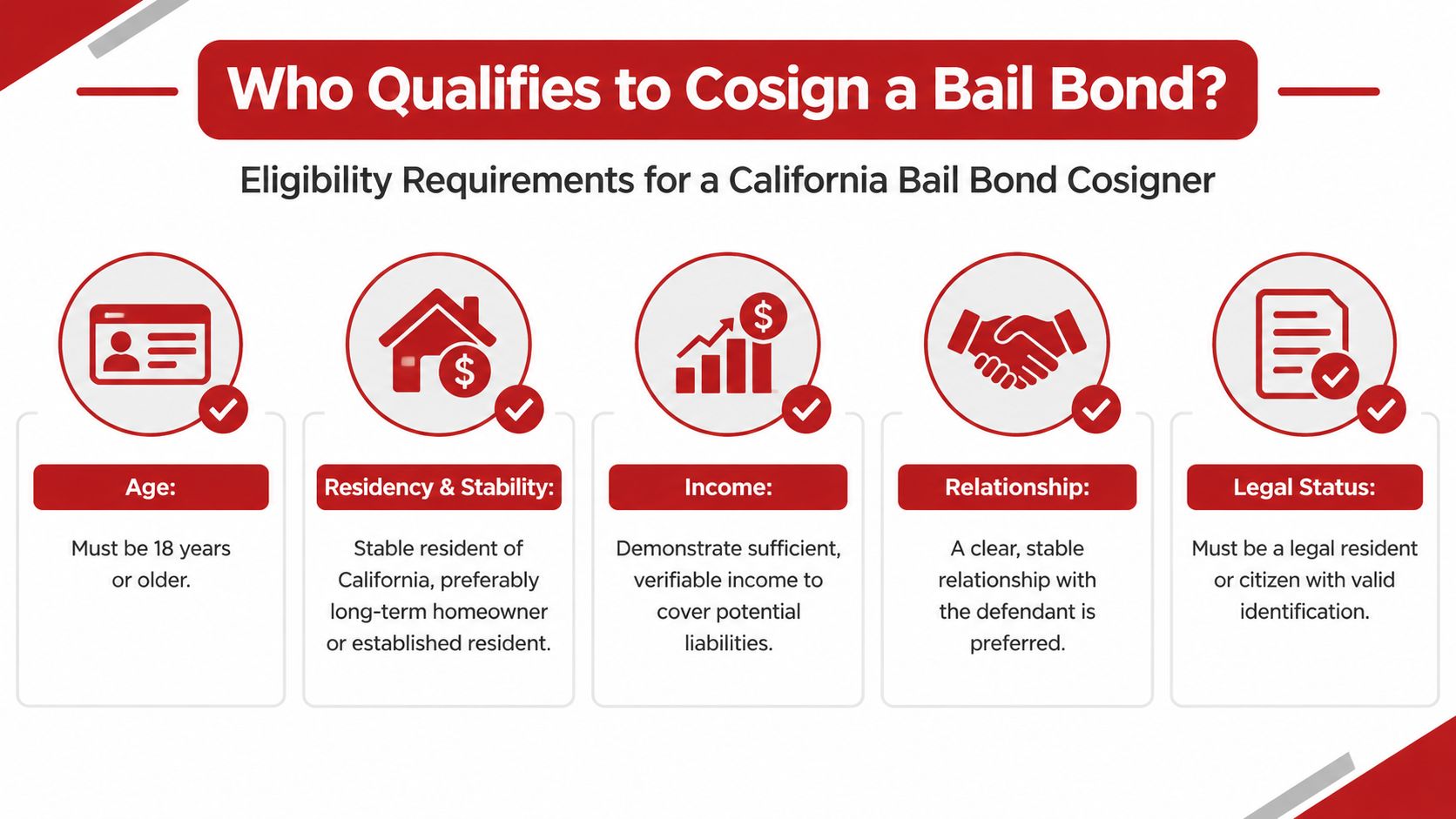
A strong cosigner gives the bail agency confidence that the defendant has a reliable person monitoring the obligation. Agencies commonly look for a cosigner with stable employment, verifiable income, manageable debt, valid identification, and a dependable relationship with the defendant. A person can care a great deal about the defendant and still fail to qualify if their own finances are too strained or their documents can't be verified.
Credit may also matter. Widely cited lender guidance places a preferred cosigner credit score around 670 or higher (supporting guidance on cosigner credit requirements). That figure isn't a universal California bail rule, and a bail agency may evaluate the complete financial picture instead of relying on one score. Still, it gives families a realistic starting point. Someone with strong credit, consistent income, and manageable debt generally presents a more credible guarantee than someone with irregular earnings and unpaid obligations.
Build a practical candidate checklist
Look for these characteristics before making the request:
- Valid identity documents: The person should have government-issued identification and information the agency can verify.
- California stability: A stable residence and clear local ties can make the application easier to evaluate.
- Verifiable income: Pay records, employment information, or other acceptable proof help establish the ability to respond if the defendant creates a loss.
- Manageable debt: A cosigner carrying substantial existing obligations may not provide meaningful financial support.
- A real relationship: A parent, spouse, sibling, close friend, or other trusted person may be considered, but the relationship should be genuine and understood by both parties.
Before asking, be direct. Tell the potential cosigner the defendant's charges, the location of the jail, the expected court obligations, the premium, and the possibility of additional costs if the defendant doesn't appear. Don't promise that the cosigner can walk away later. Removal usually depends on the bond contract, the agency, and the status of the criminal case.
If a family member wants to strengthen their credit before taking on financial obligations in the future, practical education such as these ways to get a 700 credit score may help, but credit improvement won't solve tonight's emergency by itself.
For California-specific expectations, review the California bail bond cosigner requirements before contacting a potential signer. That conversation should end with informed consent, not pressure.
Gathering the Required Cosigner Documents
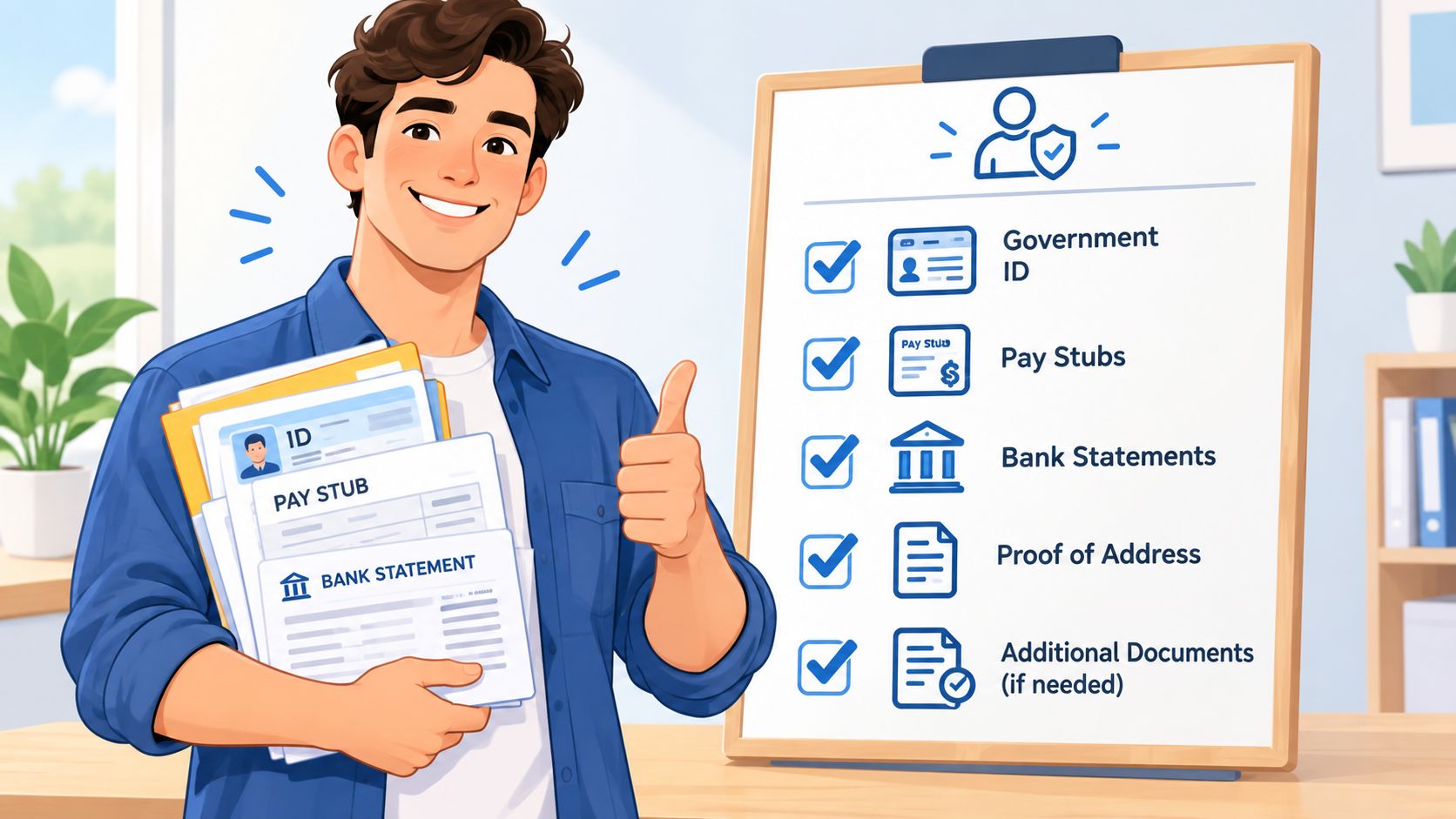
The fastest applications usually begin with organized paperwork. A bail agent has to confirm who the cosigner is, where they live, and whether their financial position supports the agreement. Missing documents can create delays, especially when a family is trying to arrange 24-hour bail bonds Ventura services after a late-night arrest.
Prepare a digital or paper packet containing:
- Government-issued photo ID: A current driver's license, state identification card, or other accepted identification establishes identity.
- Social Security information: The agency may request this for verification and underwriting.
- Proof of residence: A utility bill, lease, mortgage statement, or similar document can confirm the address.
- Proof of income: Recent pay stubs, employment records, tax documents, or other verifiable income evidence may be requested.
- Employment details: Have the employer's name, address, phone number, job title, and length of employment available.
- Contact information: Provide a reliable phone number and email address so documents and signatures don't get lost during the release process.
The exact packet depends on the bond amount, the defendant's circumstances, and the agency's underwriting rules. Ask the agent what's required before sending sensitive documents, and use a secure method for transmission.
Keep the application moving
One person should manage the document checklist. Another family member can confirm the defendant's booking information and communicate with the jail or defense counsel. This prevents three relatives from submitting incomplete forms while nobody confirms the basic facts.
A cosigner who lives outside Ventura County may need extra verification, and some bonds may require additional support or collateral. Ask about those requirements at the start instead of assuming the same process applies to every case.
The bail bond requirements page can help you organize the common information an agency may request. If you're arranging bail bonds Oxnard or release connected to another local facility, give the agent the precise location rather than relying on a general description.
The Full Responsibility of a Bail Bond Cosigner
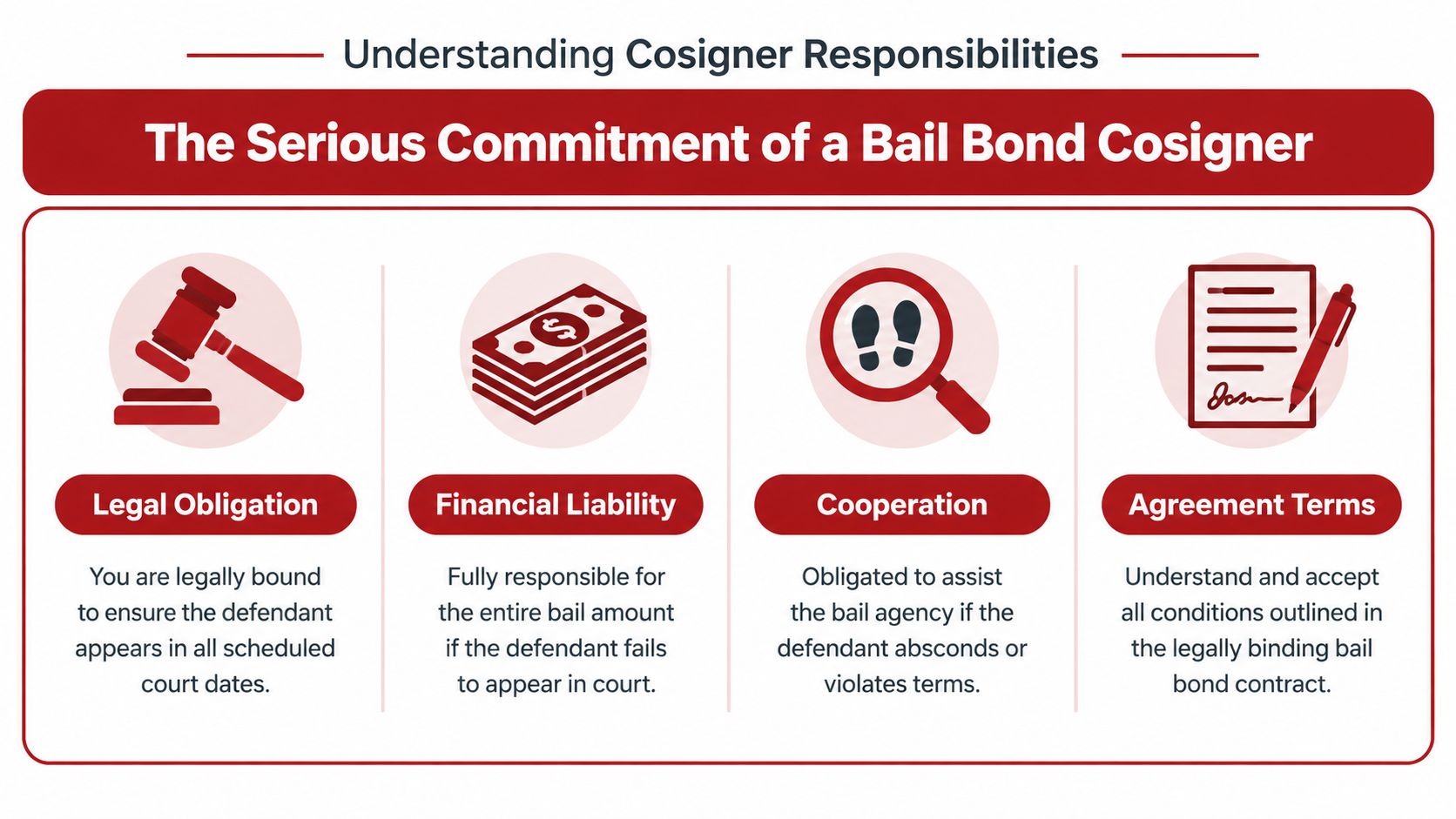
At three in the morning, a family member may be the person who makes release possible. Signing a bail bond also creates a serious legal and financial commitment. The cosigner agrees to the contract and may owe money if the defendant fails to appear or violates conditions that trigger the bond. California law and consumer-protection rules may also require written notice before adverse credit information is reported in certain situations. Read the agreement carefully before signing.
The risk can reach beyond the defendant's release. If the defendant disappears, misses court, or stops cooperating, the cosigner's finances, credit, property, and ability to handle future obligations may come under pressure. A signature is not a favor with no consequences. It is a promise backed by the terms of the contract.
What the cosigner must be ready to do
The contract controls the exact duties, but a cosigner should be prepared to:
- Track court obligations: Know the defendant's court dates and require confirmation that the defendant attended.
- Maintain communication: Keep current phone numbers, addresses, and employment information available to the bail agency.
- Respond to warning signs: Contact the agency immediately if the defendant stops answering, moves without notice, or discusses leaving the area.
- Assist with recovery efforts: If the defendant absconds, cooperate with the bail agency's lawful efforts to locate and surrender the defendant.
- Accept financial exposure: If the bond is forfeited, pay obligations that arise under the signed contract.
California bail rules and local court procedures affect forfeiture, notice, surrender, and exoneration. A bail agent can explain the bond contract and agency process. A criminal defense lawyer is the appropriate source for advice about the charges, protective orders, and legal strategy.
Bail bonds are not ordinary consumer loans, but the paperwork still deserves the same careful attention. The signer should understand every repayment, indemnity, collateral, and notice provision. Do not assume the defendant's promise removes the risk or that a quick signature can be undone later.
Before signing, ask one difficult question: “What will I do if this person stops cooperating?”
Set an exit and response plan before the bond is posted. Decide who will monitor court dates, how the defendant will report address or job changes, and what the cosigner will do if communication stops. Review the cosigner responsibilities guide with the family, then ask the bail agent to explain any clause that remains unclear. The person who signs should know the obligations before release, not after a missed court date.
Alternatives When a Cosigner Is Not an Option
No qualified cosigner doesn't always mean the case has reached a dead end. It means the bail agency needs to evaluate a different form of financial security or a different payment arrangement. Don't ask an unprepared person to sign only because the defendant wants immediate release. A rejected application or later default can leave the family in a worse position.
Start with the agency and ask which alternatives fit the bond:
- Collateral: Real property, a vehicle, or another accepted asset may support the bond when the signer's income or credit profile isn't enough. The agency will usually need ownership records and must assess whether the asset provides reasonable security.
- Additional signer: A bond may be strengthened by more than one qualified indemnitor, depending on the agency's rules and the risk involved.
- Payment arrangements: A bail agency may offer a payment plan for the premium, subject to approval and contract terms. The family should ask for the total obligation, due dates, and any conditions in writing.
- Court-based options: Depending on the charges and the court's decision, the defendant may have options other than a surety bond. A defense attorney or public defender can explain whether those options are available.
A property-backed arrangement can be slower than a simple signature because ownership, liens, value, and documentation require review. Don't conceal a loan, shared ownership, or disputed title. Transparent information lets the agent identify a workable path instead of discovering a problem after paperwork has been signed.
For a clearer explanation of acceptable assets, review what can be used as collateral. If the stress is making it hard to think or decide, practical guidance on coping with overthinking and anxiety may help you slow down enough to compare the obligations carefully.
Bada Bing Bail Bonds handles cosigner applications, payment plans, and collateral discussions for families seeking fast bail bonds Ventura, with agents available around the clock. Ask for a written explanation before choosing any option.
Common Questions About Cosigning for Bail in Ventura
Can a cosigner live outside California?
Possibly. Approval depends on the agency's rules, the bond's risk, and whether the cosigner can verify identity, residence, income, and contact information. An out-of-state signer may need extra documents or collateral. Ask about those requirements before signing anything.
Does signing immediately affect a cosigner's credit score?
Signing does not automatically change a credit score immediately. The obligation can still affect the cosigner's financial position if the defendant fails to comply and a loss or collection issue develops. Ask how notices, reporting, and contract enforcement work.
Can a cosigner be removed?
A change of mind usually does not end the obligation by itself. The agency may require the defendant to surrender, approve a replacement arrangement, or satisfy the bond's conditions before releasing the cosigner. Release from Ventura County Jail does not automatically remove the signer.
What happens if the defendant misses court?
Contact the bail agency immediately. Do not wait for repeated calls or assume the defendant will resolve the problem alone. The cosigner's cooperation may affect the agency's response, while the court may act under California bail procedures.
What should I verify for Ventura County Jail bail bonds?
Confirm the booking location, case information, court date, release conditions, and the agent's pickup and follow-up instructions. Procedures may differ for matters involving Ventura, Oxnard, Camarillo, Thousand Oaks, Santa Paula, Moorpark, Fillmore, Ojai, Port Hueneme, and Santa Barbara, even when the defendant is held through the county system. Review the Ventura bail bonds FAQ for other questions families commonly face.
A cosigner should receive the documents, understand the responsibility, and keep copies of everything signed. Read the bail contract carefully, ask about notice procedures, and stay in contact with the agency until the obligation is formally resolved. That conversation may be difficult, but it should happen before the signature, not after a missed court date.
If you need help arranging bail bonds Ventura, Bada Bing Bail Bonds provides 24-hour answers, cosigner guidance, payment plans, and collateral discussions. Contact an agent with the defendant's booking details so the family can review the available release path and its obligations.