A California bail bond in Ventura County typically costs 10 percent of the total bail amount set by the court schedule, so a $5,000 bail usually means a $500 premium before any actual, necessary, and reasonable transaction expenses. Installment payment plans can spread that premium across scheduled payments instead of requiring the entire amount immediately.
The call often comes late at night. A family in Oxnard learns that a loved one has been booked into Ventura County custody, or someone in Thousand Oaks receives a short message saying, “I need help getting out.” The bail figure sounds impossible, savings are limited, and nobody knows which payment option is legitimate.
That’s where a bail bond payment plan can help. Rather than paying the full premium at once, an approved co-signer may arrange scheduled installments while the bond is posted under a written agreement. The plan doesn’t change the court’s bail amount or erase the responsibility to appear. It gives the family a structured way to manage the legal cost while focusing on release, court dates, and compliance.
Table of Contents
- What Are Installment Payment Plans for Bail Bonds
- How Bail Bond Payment Plans Work in California
- Eligibility Requirements and Documentation
- Common Payment Timelines and Sample Schedules
- Alternatives When a Payment Plan Is Not the Right Fit
- How to Secure a Payment Plan with Bada Bing Bail Bonds
- Frequently Asked Questions About Bail Bond Payment Plans
What Are Installment Payment Plans for Bail Bonds
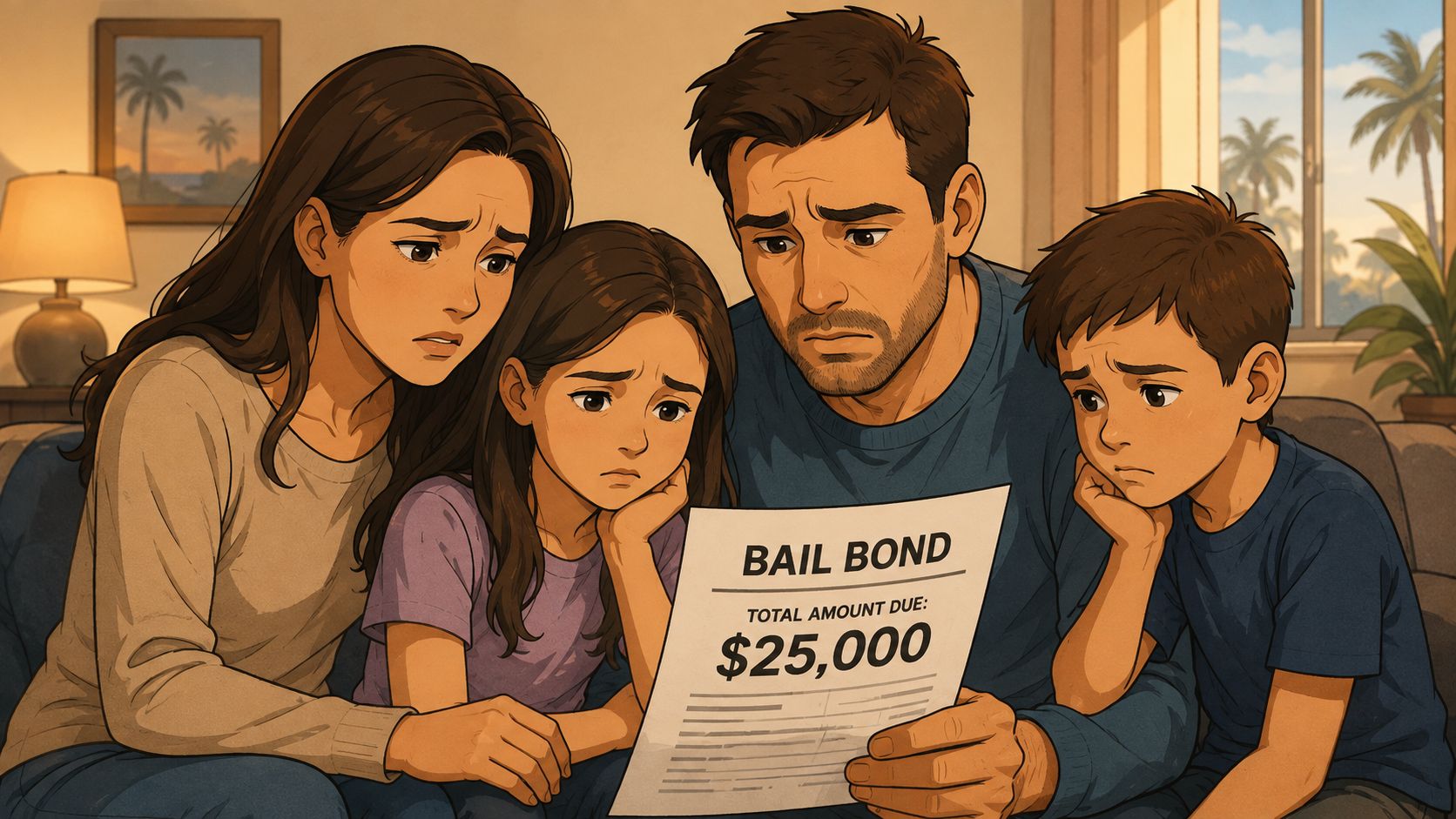
A family in Oxnard may see a $20,000 bail amount after an arrest and assume someone must produce $20,000 in cash immediately. That isn’t always how release works. A surety bond allows a licensed bail agent to post the court-required bond, while the indemnitor pays the lawful premium and accepts contractual responsibility for the agreement.
With installment payment plans for bail bonds, the family pays the premium according to an approved schedule. The initial amount depends on the applicant’s circumstances, the bond size, documentation, and the agency’s underwriting decision. The remaining balance is then set out in writing, with payment dates and consequences for falling behind.
This option serves people who can handle the obligation but can’t safely drain a bank account on short notice. Selling a vehicle, missing rent, or taking money from essential household expenses can create a second emergency. A structured arrangement may preserve cash for transportation, legal representation, childcare, and ordinary bills.
What the plan changes
The plan changes when the premium is paid, not the defendant’s legal duties. The released person must attend every required court appearance, follow release conditions, obey protective or no-contact orders, and remain available to the court. The co-signer must also understand that missed payments and missed court dates can create serious financial exposure.
A payment plan isn’t a favor reserved for unusual cases. It’s a common financing structure for families who need release quickly but need time to complete payment. Still, approval isn’t automatic. The agent has to determine whether the proposed co-signer has enough financial stability and connection to the defendant to support the bond.
Practical rule: Never agree to a payment schedule you can’t maintain. A smaller first payment only helps if the later installments fit your household budget.
Before calling a 24-hour bail bonds Ventura service, gather the booking name, date of birth, arresting agency if known, and current bail information. You can also review bail bond payment options so you know what questions to ask about down payments, installment dates, collateral, and co-signer duties.
How Bail Bond Payment Plans Work in California
California’s premium framework matters because the agent doesn’t choose an arbitrary percentage. The California Department of Insurance explains that the consumer cost of a bail bond is most commonly 10 percent of the total bond amount, plus actual, necessary, and reasonable expenses connected with the transaction. Surety companies file their rates with the department, and agents must charge the filed rate. See the California Department of Insurance bail bond guidance for the state’s consumer explanation.
That means a Ventura County bail bonds quote starts with the bail amount, not with the agent’s personal opinion about the charge. Ventura Superior Court has adopted a countywide bail schedule under Penal Code section 1269b, and that posted schedule is the local reference for presumptive bail amounts. The schedule connects the charge category to an initial bail figure, although the actual case can involve court review, changed conditions, or other legal developments.
The local calculation
The Ventura schedule lists examples such as:
- Unlisted misdemeanor: $2,500 presumptive bail.
- Standard misdemeanor: $5,000 presumptive bail.
- Unlisted felony: $10,000 presumptive bail.
- Assault with a deadly weapon: $20,000 presumptive bail.
- Assault with a deadly weapon with a prior domestic violence conviction: $40,000 presumptive bail.
- Involuntary manslaughter: $50,000 presumptive bail.
- Murder: $500,000 presumptive bail.
- Murder with special circumstances: No bail listed in the cited schedule.
The court schedule is not a promise that every case will follow the same path. It’s the official local starting point for presumptive amounts. A family searching for Ventura County Jail bail bonds should ask the agent to verify the booking and the current court information rather than relying on a generic online estimate.
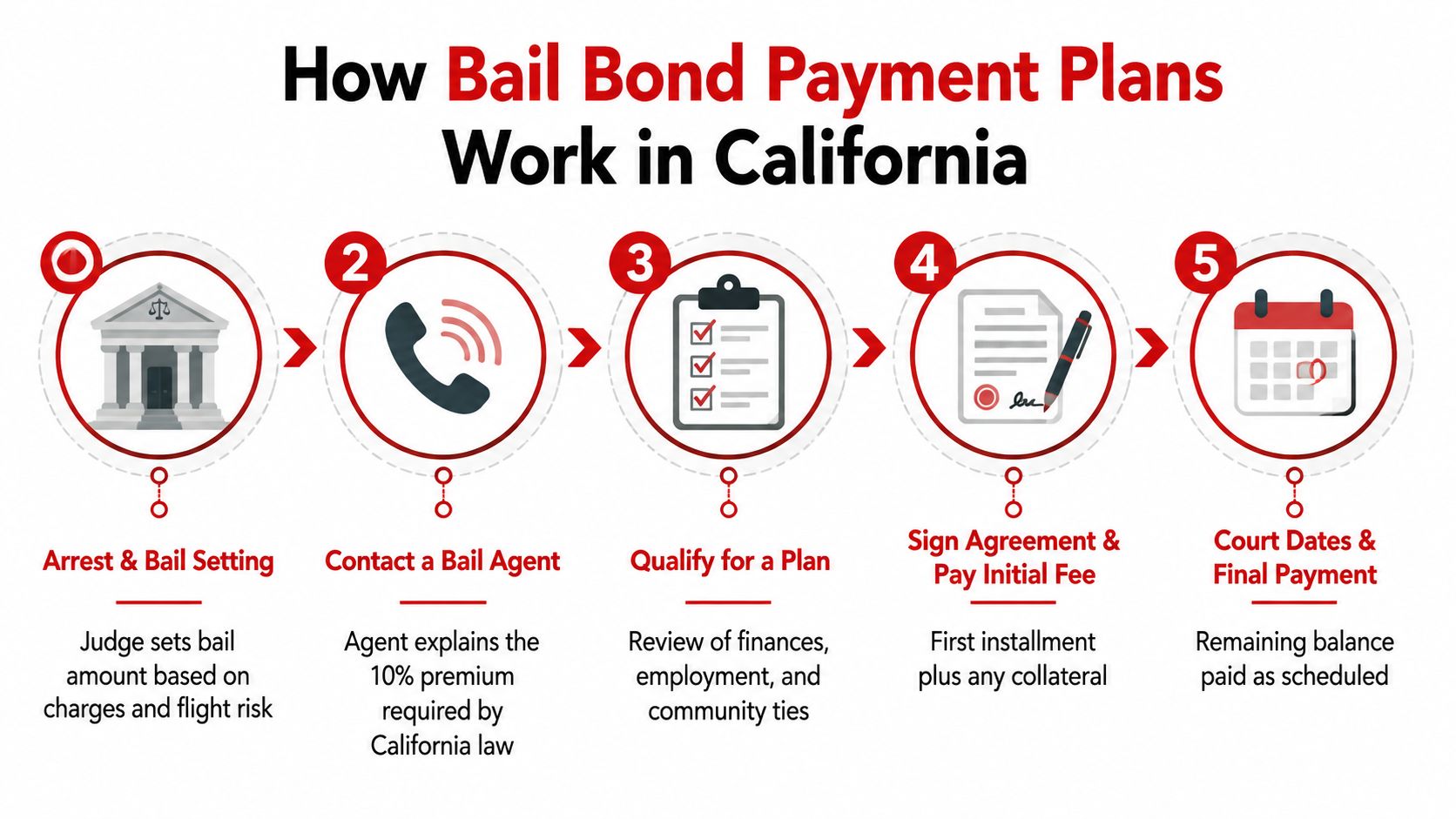
The premium can be divided into installments if the agency approves the arrangement, but actual transaction expenses may be separate and should be explained before signing. The written agreement should identify the total premium, initial payment, remaining balance, due dates, collateral terms, and responsibilities if the defendant fails to appear.
For readers comparing general installment concepts with legal payment obligations, this quick pay payment guide offers broader context about organizing scheduled payments. For the bail-specific process, review how bail bonds work in California.
Eligibility Requirements and Documentation
A payment plan begins with underwriting, not a promise that every applicant receives the same terms. The agent needs to know who will sign, how that person can meet the installments, and whether the defendant has reliable ties to the area.
Start by preparing the basic file:
- Government-issued identification: Bring a valid ID for each proposed signer.
- Income verification: Pay records, bank information, or other evidence may help establish the ability to pay.
- Residence information: Proof of Ventura County residence can help show local stability and make communication easier.
- Employment details: An agent may ask where the co-signer works and how long the employment has continued.
- Collateral information: Larger or higher-risk bonds may require details about property, vehicles, or other assets.
- Defendant information: Provide the booking name, birth date, arrest location, charges if known, and any scheduled court information.
The co-signer is usually the person taking financial responsibility for the agreement. That might be a spouse, parent, relative, friend, or another adult with a genuine relationship to the defendant. The agent may review employment, residence, assets, prior bond history, and the applicant’s ability to keep the defendant connected to the court.
A perfect credit profile isn’t the only issue. Straightforward documentation, stable contact information, realistic income, and a co-signer who understands the contract can matter more than an ideal financial history. Previous bond defaults, unresolved obligations, or a defendant who repeatedly fails to appear can make approval harder and may lead to collateral requirements or stricter terms.
Prepare before the call
Don’t wait until the phone rings to search through every drawer. Put identification and income documents in one place, write down the defendant’s known details, and make a list of assets that could secure the agreement.
Read the agency’s bail bond requirements before signing anything. Ask directly whether the proposed plan requires collateral, whether payments are automatic or manually scheduled, and what happens after a missed installment.
Common Payment Timelines and Sample Schedules
The payment schedule should follow the premium, not the total bail amount. The table below uses presumptive amounts from the Ventura Superior Court schedule and divides the 10 percent premium evenly across sample six-month and twelve-month terms. These are illustrations of arithmetic, not a promise that an agent will approve those exact terms.
| Charge Category | Presumptive Bail | 10% Premium | Sample Monthly Plan (6 Months) | Sample Monthly Plan (12 Months) |
|---|---|---|---|---|
| Standard misdemeanor | $5,000 | $500 | About $83.33 | About $41.67 |
| Unlisted felony | $10,000 | $1,000 | About $166.67 | About $83.33 |
| Assault with a deadly weapon | $20,000 | $2,000 | About $333.33 | About $166.67 |
| Involuntary manslaughter | $50,000 | $5,000 | About $833.33 | About $416.67 |
| Murder | $500,000 | $50,000 | About $8,333.33 | About $4,166.67 |
The source amounts come from the Ventura County bail schedule examples. Actual contracts can include approved down-payment arrangements, collateral, transaction expenses, or different payment timing. Don’t treat a sample as a quote.
How to choose a term
A shorter plan costs more per payment but clears the balance sooner. A longer arrangement lowers the scheduled payment while extending the family’s obligation. The right choice is the one that remains affordable after rent, utilities, food, transportation, legal expenses, and ordinary household needs.
Court scheduling also matters. If a defendant has an early appearance, the family may need to make arrangements quickly. If the case remains open for a longer period, the co-signer should understand how payments continue while the bond remains active.
For general budgeting ideas outside bail, alternatives to no credit loans can help readers compare categories of financing. Bail agreements are different from consumer loans, however, so a family should use the written bond contract as the controlling document. For a fuller explanation of lawful pricing, see how much bail bonds cost.
Alternatives When a Payment Plan Is Not the Right Fit
Installments aren’t automatically the cheapest or safest answer. A family should compare the required payment, speed, asset exposure, and legal responsibility before choosing a structure.
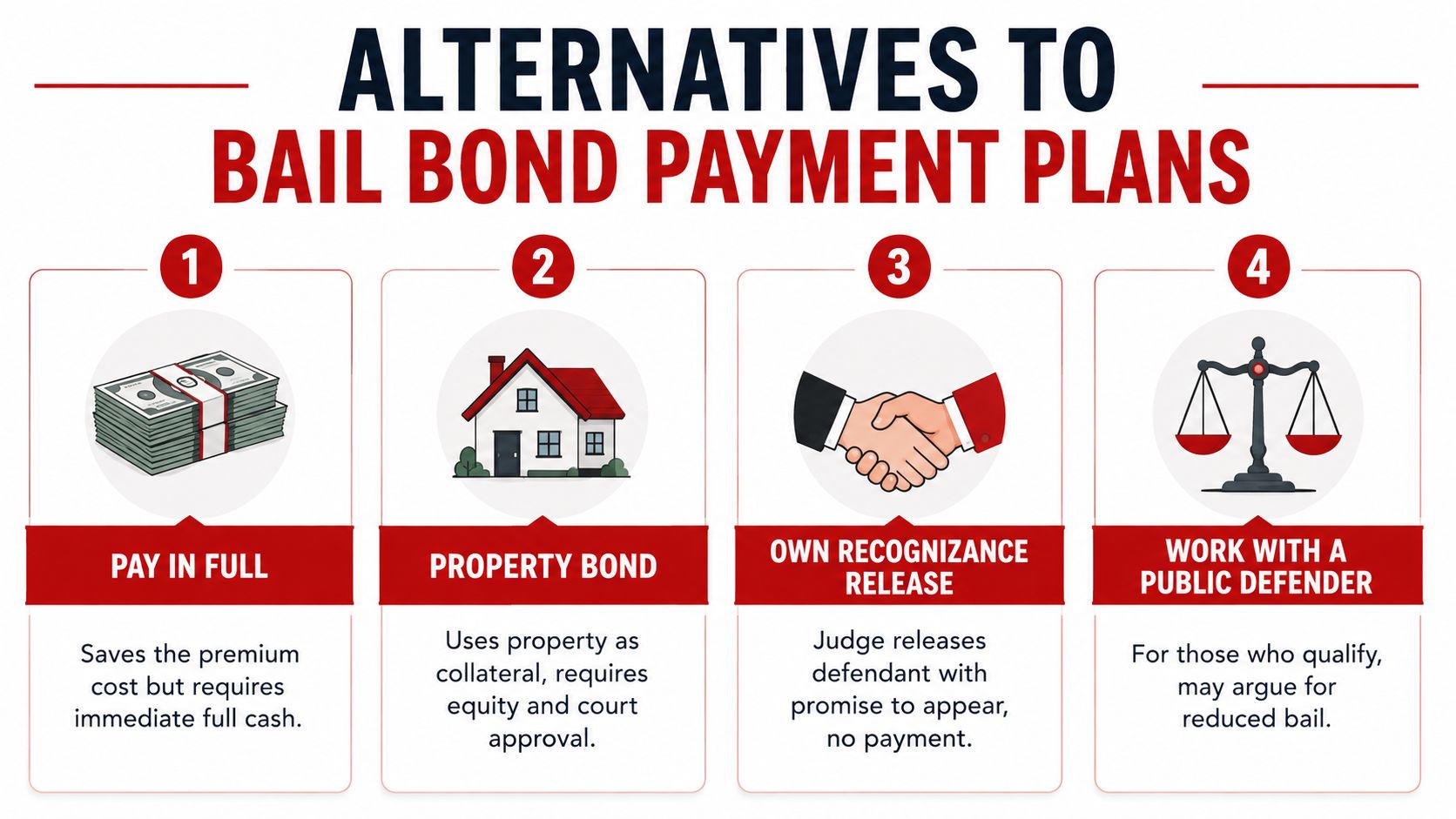
Four paths to consider
Paying the full bail amount in cash may avoid a surety premium, but it requires immediate access to the entire court-set amount. It also leaves the payer responsible for following the court’s refund and forfeiture rules. Ask the court or a qualified attorney how those rules apply before assuming cash is always better.
Using a co-signer can make approval possible when the defendant can’t qualify alone. The co-signer accepts contractual responsibility, so this person must understand that the obligation is real, not a casual signature offered to help someone leave custody.
Offering collateral can support a larger bond or a higher-risk application. Property or vehicles may be considered, but the family must ask how the asset is valued, what documents are required, when the lien or security interest is released, and what happens if the defendant fails to appear.
Requesting release without payment may be possible through a judge’s decision, including own-recognizance release or reduced bail arguments. Eligibility depends on the facts and the court’s assessment, so the defendant should discuss that route with defense counsel or a public defender if eligible.
Match the option to the risk
Use cash only when paying it won’t compromise essential finances and the family understands the court process. Consider collateral only when the asset owner accepts the consequences and the paperwork is clear. Choose a co-signer or payment plan when the household has dependable income but needs to preserve immediate cash.
A traditional loan or credit line may appear convenient, but compare the total repayment cost, approval time, interest, and credit consequences. A bail bond agreement has its own contract terms and should not be treated as interchangeable with ordinary borrowing.
How to Secure a Payment Plan with Bada Bing Bail Bonds
Start with accurate booking information. When you call, provide the defendant’s full legal name, birth date, arresting agency, and any bail figure or booking number you have. If you don’t know the current amount, say so. An agent can work to verify the details rather than forcing the family to guess.
Follow the process in order
- Confirm custody and bail information. The agent checks the booking details, facility, charge information, and whether bail has been set or changed.
- Discuss the payment structure. Ask for the total premium, proposed initial payment, installment dates, collateral requirements, and any actual transaction expenses.
- Submit documents. The co-signer provides identification, residence and income information, employment details, and asset records when requested.
- Review the contract. Read every payment obligation and appearance requirement before signing. Ask what notice the agency gives after a missed payment or court appearance.
- Coordinate posting and release. After approval and completion of the required paperwork, the agent coordinates with the appropriate facility and tracks the release process.
Families searching for bail bonds Oxnard, fast bail bonds Ventura, or assistance near Camarillo, Port Hueneme, Santa Paula, Moorpark, Fillmore, Ojai, and Santa Barbara should give the agent the exact facility location. Jail procedures and release timing can vary, so no responsible agent should guarantee a precise pickup time before verifying custody details.
Bada Bing Bail Bonds offers 24-hour intake, payment-plan discussions, co-signer options, and collateral arrangements for qualifying applicants. The practical next step is to use the start application page or call with the booking information ready, then ask for the complete written terms before committing.
Frequently Asked Questions About Bail Bond Payment Plans
Does a payment plan slow down release
Not necessarily. Release depends on custody verification, bail status, completed paperwork, approval, payment arrangements, and the facility’s processing. A payment plan can support a prompt filing when the family qualifies, but no agent can control every jail release step.
What happens if a payment is missed
Read the contract immediately. A missed installment can place the agreement in default and may lead to collection activity, a demand for payment, collateral consequences, or other action allowed by the contract and applicable law. Call the agent before the due date if a problem is likely. Silence usually makes the situation harder.
Can the premium be paid early
Ask before making an extra payment. Some agreements may allow early payoff, but the written contract controls whether any administrative condition applies. Get confirmation of the remaining balance and request written acknowledgment when the premium has been satisfied.
Do protective orders affect the bond
They can affect the defendant’s release conditions and conduct after release. A protective order or no-contact condition may prohibit communication with an alleged victim, even if the defendant or family believes contact would help. The defendant should follow the order exactly and ask defense counsel about lawful communication through approved channels.
What happens to collateral after the case closes
Collateral should be released according to the bond agreement after the surety’s obligations end and all required conditions are satisfied. Ask what documents or case confirmation the agency needs, and keep copies of the agreement, payment records, and court disposition.
Can the defendant leave Ventura County
Don’t assume release means unrestricted travel. The bond contract, court orders, probation terms, and future appearance requirements may limit movement or require permission. Confirm the conditions with the agent and defense attorney before making travel plans.
A payment plan solves a cash-flow problem, but it doesn’t remove the need for court compliance.
If your family needs a clear payment schedule, co-signer review, or collateral explanation, contact Bada Bing Bail Bonds for 24-hour assistance throughout Ventura County. Have the booking details ready, ask for the total written cost, and let an agent explain the available installment options before you sign.