
Catfishing itself is not a standalone crime in California, but the acts behind it, including fraud, identity theft, extortion, stalking, or online impersonation, can lead to arrest, felony charges, and bail set by the Ventura County Superior Court schedule. In Texas, online impersonation can be a third-degree felony carrying 2 to 10 years in prison and fines up to $10,000, which shows why the conduct matters more than the label.
You may be reading this after someone you love spent months talking to an online partner, sent money, shared private images, or discovered that the person behind the profile never existed. The immediate question is simple: is catfishing a crime, and what happens if police make an arrest in Ventura County?
The practical answer is that California prosecutors don’t charge someone with “catfishing.” They charge the conduct supported by the evidence. A fake identity used only for privacy may not be criminal, while the same identity used to obtain money, threaten someone, misuse another person’s photographs, or maintain a campaign of harassment can put the suspect in Ventura County Jail and create a bail problem for the family.
Table of Contents
- What Catfishing Actually Means Under the Law
- California Criminal Charges That Apply to Catfishing
- When Catfishing Crosses From Civil to Criminal
- How Victims Should Collect Evidence and Report the Crime
- What Happens After a Catfishing Suspect Is Arrested
- Understanding Bail Bonds for Catfishing Charges in Ventura County
- Local Resources and Support for Victims and Families
What Catfishing Actually Means Under the Law
Someone finds a profile, starts a relationship, and keeps communicating for months. The messages feel personal. Then a reverse-image search, a phone call, or a conversation with the actual person reveals the truth. The photographs belonged to someone else, the name was fabricated, and every promise came from a person hiding behind a digital identity.
In ordinary language, catfishing means creating a false online identity to deceive another person. The persona may use a fictional name, another person’s photographs, or stolen personal details. The deception can involve romance, friendship, employment, financial emergencies, private images, or access to personal information.
California law looks at the conduct behind that deception. There isn’t a California statute titled “catfishing,” so an investigator and prosecutor must connect the evidence to an existing offense. That usually means proving what the suspect intended, what the suspect did, and what result followed.
The fake profile isn’t the whole case
A pseudonym used to protect privacy isn’t automatically criminal. A person might avoid using a legal name online without trying to harm or defraud anyone. The legal concern grows when the false persona becomes a method to manipulate another person, obtain something of value, threaten exposure, impersonate a real individual, or maintain unwanted contact.
Practical rule: Investigators don’t ask only who created the profile. They ask what the person obtained, demanded, threatened, or caused through it.
That distinction helps families avoid a common mistake. Finding a fake profile is important, but the profile alone may not establish a prosecutable offense. Messages requesting money, records showing transfers, threats involving intimate images, repeated unwanted contact, and evidence that someone else’s identity was used can change the analysis completely.
For a plain-language overview of the offenses that may arise, review this guide to criminal charges for catfishing. If the conduct involves repeated unwanted contact or surveillance, California’s stalking laws may become relevant, as discussed in this resource on felony stalking.
The key question isn’t merely, “Did this person lie online?” It is, “What did the person do with the lie, and can the victim prove it?”
California Criminal Charges That Apply to Catfishing
The charge depends on the facts, the victim’s loss, the identity used, and the suspect’s intent. A prosecutor may file one offense or several related counts when the fake persona supported different acts.
California statutes provide several possible paths. The table below summarizes the principal categories identified in the requested legal framework. Specific charging decisions and penalties depend on the facts, prior record, enhancements, and the exact statutory subsection.
Common charging theories
Identity theft may arise under Penal Code 530.5 when someone uses another person’s name, photograph, or identifying information without authorization. The evidence should show whose identity was used and how the suspect used it.
Online impersonation under Penal Code 528.5 addresses credible impersonation of another person online with intent to harm, intimidate, or defraud. The prosecution still has to prove the required intent and show that the impersonation was credible enough to create the statutory harm.
Extortion under Penal Code 518 through 527 becomes relevant when the suspect demands money or another concession by threatening to expose intimate images, private messages, secrets, or damaging information. A victim doesn’t need to wait until payment occurs before reporting a threat.
Fraud under Penal Code 484 can apply when deception is used to obtain money or property. Federal wire-fraud theories may also become relevant when communications and financial transactions cross jurisdictions. Romance fraud, which often overlaps with catfishing, produced more than $1.14 billion in reported losses in 2023, according to legal analysis of the issue (Southern Illinois University School of Law analysis).
| Criminal Charge | Penal Code | Classification | Max Jail/Prison Time | Max Fine |
|---|---|---|---|---|
| Identity theft | 530.5 | Misdemeanor or felony, depending on conduct | Depends on the charged subsection | Depends on the charged subsection |
| Online impersonation | 528.5 | Misdemeanor or felony, depending on the facts | Depends on the charged subsection | Depends on the charged subsection |
| Extortion | 518 to 527 | Misdemeanor or felony, depending on the conduct | Depends on the charged offense | Depends on the charged offense |
| Fraud or theft by deception | 484 | Misdemeanor or felony, depending on the loss and facts | Depends on the charged offense | Depends on the charged offense |
| Stalking | 646.9 | Generally a serious criminal charge that can be charged as a misdemeanor or felony | Depends on the charging decision and facts | Depends on the charged offense |
The table isn’t a substitute for reviewing the complaint or booking record. Families should ask the defense lawyer to identify the exact count, classification, and bail basis rather than relying on the word “catfishing.” For a plain explanation of charge classifications, see felony versus misdemeanor.
When Catfishing Crosses From Civil to Criminal
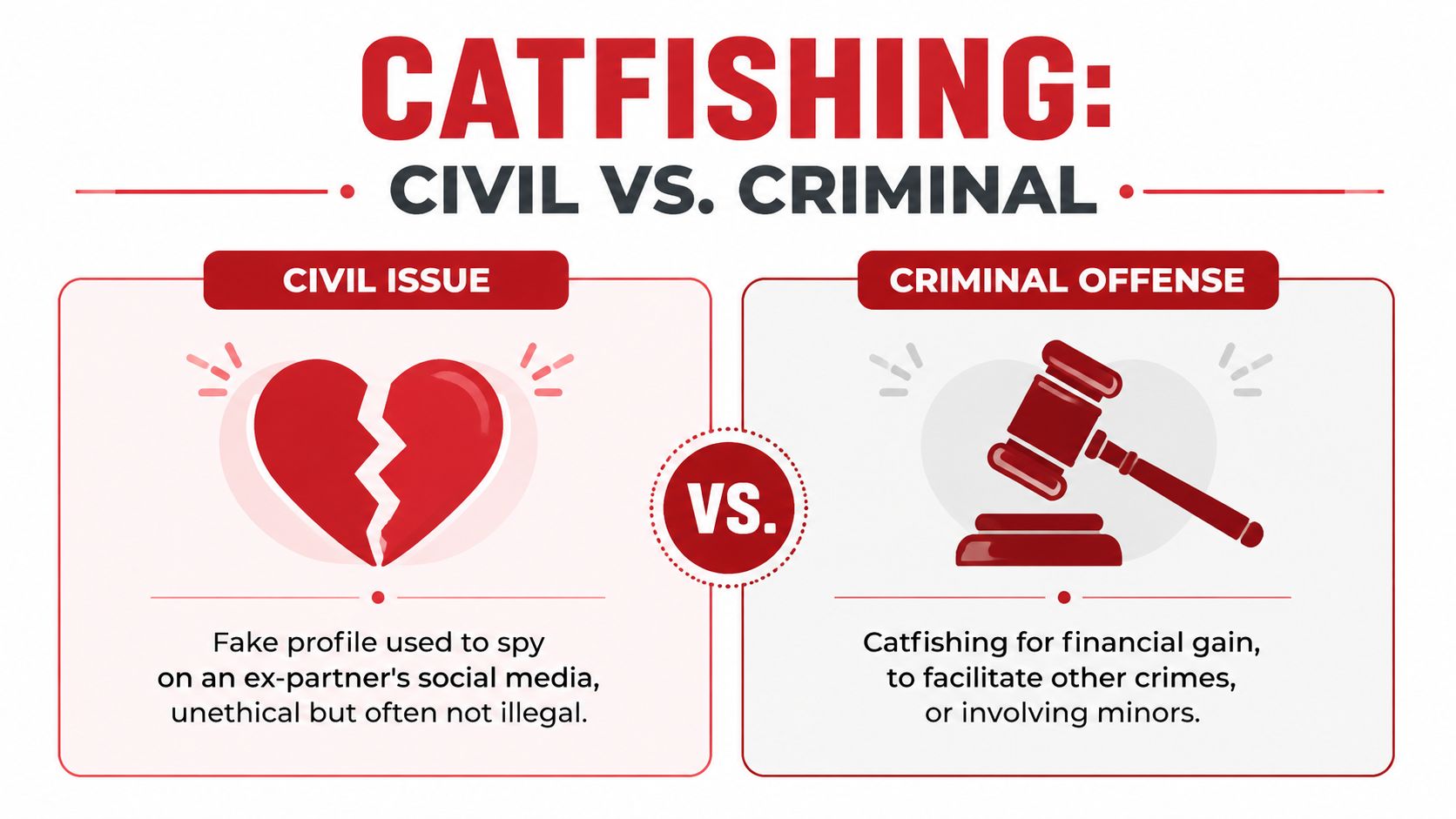
A fake profile can be cruel without immediately creating a criminal case. Someone who uses a false account to watch an ex-partner’s public activity may face serious relationship consequences and potentially civil claims, but the facts may not establish fraud, stalking, impersonation, or another charge.
The legal picture changes when the account becomes a tool for conduct that California already prohibits. Money, threats, stolen identity details, repeated unwanted contact, and coercion all give investigators concrete facts to examine.
Use these decision points
- Financial loss: A request for money supported by a fabricated emergency can point toward fraud. Save the messages and transaction records.
- Threats or coercion: A demand backed by threats to publish images or secrets may support an extortion investigation.
- Real identity misuse: Using another person’s name, photographs, or personal information makes the matter more than a private lie.
- Repeated harassment: A pattern of unwanted messages, monitoring, or intimidation may support a stalking or harassment theory.
- Minors: Any sexual communication, image request, or coercive conduct involving a minor requires immediate law-enforcement attention.
The dividing line is evidence of intent and conduct. A prosecutor generally needs facts showing that the suspect intended to harm, intimidate, defraud, or obtain an unlawful advantage. Emotional distress matters, but it doesn’t automatically convert every dishonest online interaction into a criminal offense.
Civil remedies can still matter. A victim may consider a restraining order, privacy claim, defamation action, or other civil remedy while law enforcement reviews potential criminal charges. Those processes can proceed alongside one another, but they serve different purposes.
If unwanted contact continues, families should discuss available protections with counsel and review California options for restraining orders. Don’t treat a civil option as a reason to delay reporting threats, money demands, identity misuse, or abuse involving a minor.
How Victims Should Collect Evidence and Report the Crime
The suspect may delete the account as soon as the victim stops responding. Preserve the evidence before announcing that you know the truth.
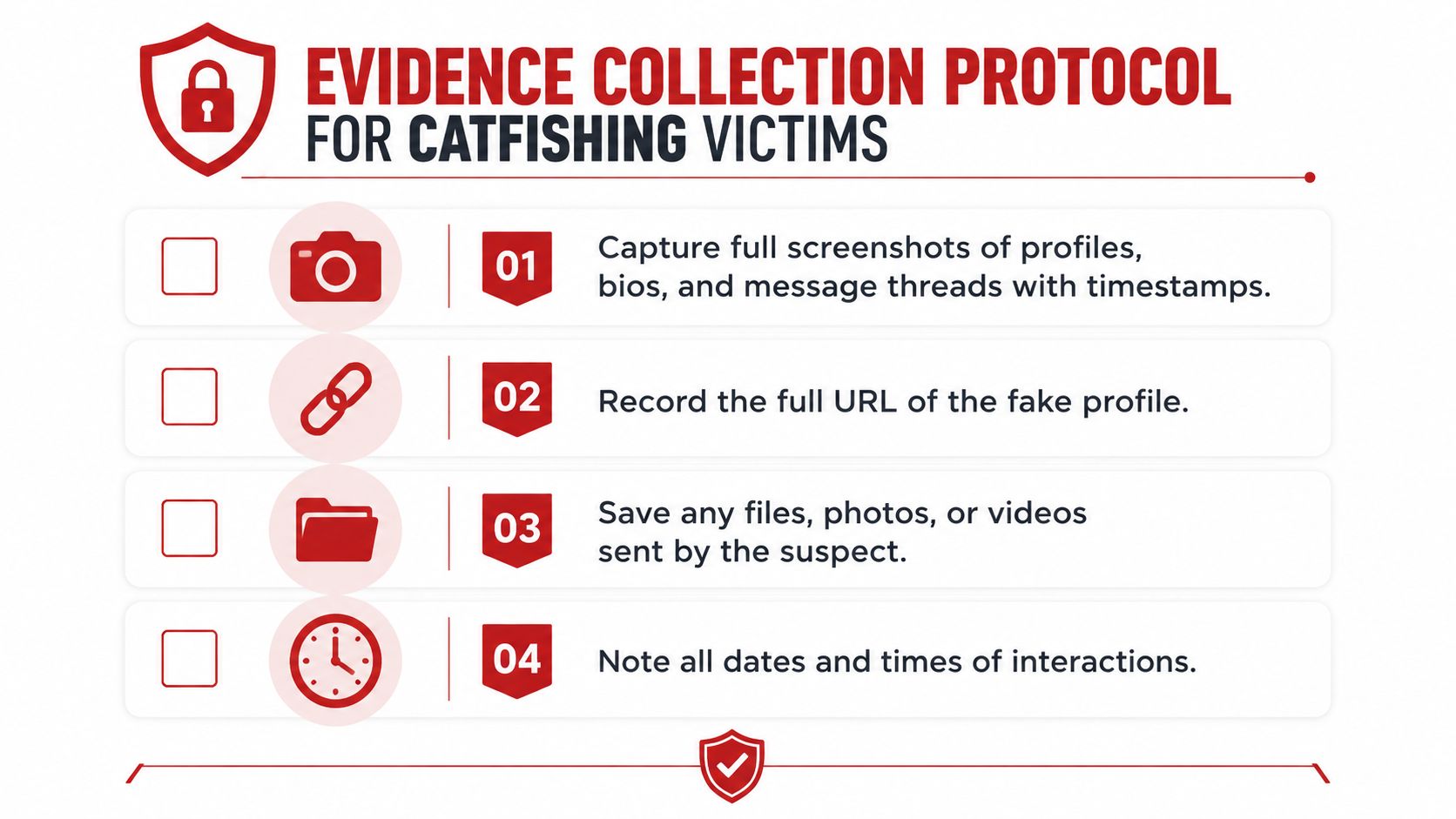
Start by capturing complete screenshots. Include the profile name, biography, photographs, full URL, message thread, visible timestamps, payment requests, and any account identifiers. Cropped images can hide context, so keep the original files and record where and when each screenshot was taken.
Build a usable evidence file
- Capture the profile: Save the entire page, including the biography, username, photographs, and URL.
- Preserve conversations: Export available chat records from the relevant social or dating service, then retain the original export.
- Document payments: Save receipts, transfer confirmations, account statements, gift records, and requests for money.
- Write a timeline: Note the first contact, major promises, requests, threats, image exchanges, and the date the deception was discovered.
- Protect the originals: Store files in a secure location without editing, renaming, or compressing the originals.
The Ventura County Sheriff’s Office or the appropriate local police department will need a clear account of what happened. Detectives may look for the suspect’s account information, available connection data, the amount and destination of any financial loss, and a chronological explanation of contact. Victims should provide facts in an organized format instead of sending dozens of disconnected screenshots.
A federal Internet Crime Complaint Center report can create an additional record when the suspect, platform, bank, or victim is outside California. Reporting doesn’t guarantee recovery, but it gives investigators a structured account of the conduct.
Don’t confront the catfisher. Confrontation can trigger deletion, account changes, retaliation, or new threats. For practical avoid romance scams tips, use the warning signs as prevention guidance, not as a replacement for preserving evidence.
When stalking or threats are present, ask law enforcement or a qualified attorney about immediate protective measures and court procedures in Ventura County. Victim-focused assistance is also available through immediate crime response support.
What Happens After a Catfishing Suspect Is Arrested
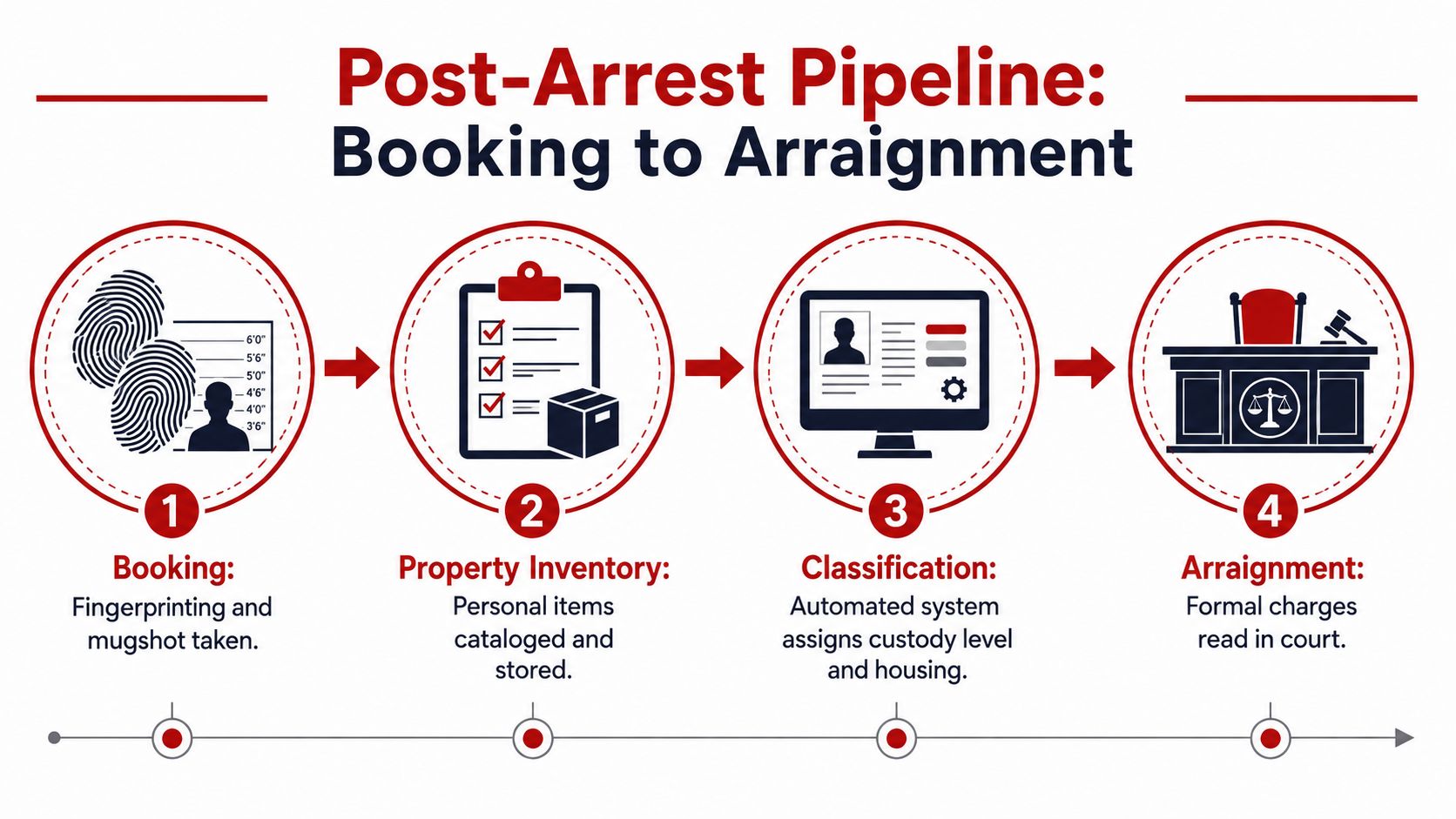
An arrest moves the matter out of the online conversation and into a custody process. At Ventura County Jail, staff complete intake tasks before the defendant can be classified, housed, and presented for the next court stage.
The booking process includes fingerprinting, a mugshot, and an inventory of personal property. A custody classification system then assigns a housing level based on the booking information and institutional considerations.
The first court decisions
The District Attorney’s Office reviews the allegations and available information before charges proceed. The exact timing varies with the booking, reports, charging review, court calendar, and whether investigators need additional information.
At arraignment, the judge addresses the filed charges, the defendant enters a plea, and the court sets or adjusts bail under the applicable Ventura County Superior Court materials. Current Ventura-specific and statewide bail-schedule references are available through the Ventura Superior Court schedules page.
Enhancements and aggravating facts can affect the custody decision. Allegations involving aggravated identity theft, elder fraud, threats, multiple victims, or substantial financial conduct may make the bail review more serious. A family shouldn’t assume that the booking label tells the full story.
Release timing also isn’t controlled solely by the moment a bond is paid. Jail verification, classification, court holds, paperwork, and facility workload can all affect when someone walks out. Call the jail or a licensed bail agent for the current booking status and required release steps.
Family guidance: Get the booking number, exact charges, bail amount, next court date, and any protective or no-contact conditions. Those details matter more than the informal label attached to the arrest.
Understanding Bail Bonds for Catfishing Charges in Ventura County
A Ventura County bail bond is a financial guarantee that helps secure a defendant’s release while the criminal case continues. The court sets bail under its schedule and case-specific authority. A licensed bail agent charges a premium tied to the total bond, while a co-signer accepts responsibility for the defendant’s appearance and the agreement’s terms.
California’s Department of Insurance explains that the court sets the bond amount and that the consumer cost is most commonly 10% of the total bond, plus actual, necessary, and reasonable transaction expenses (California Department of Insurance bail-bond guidance). The premium is generally non-refundable. A California bail reference also notes that it may be reduced to 8% when an attorney refers the accused to the agent (California bail guidance).
What the family should ask before signing
Ask the agent to explain the total premium, payment schedule, co-signer obligations, collateral, and conditions of the agreement. Larger bonds may require collateral such as real-estate equity or a vehicle title, but the agent should explain how the lien or security interest is handled when the court exonerates the bond.
If the defendant misses court, the bond company may become responsible for the full bond amount and may seek the defendant’s return. If the defendant appears as required and the court exonerates the bond, the collateral process follows the agreement and applicable rules. A bail agent isn’t a defense attorney and can’t advise on plea decisions, evidence strategy, or the merits of the charges.
Ventura County families can post bail at the Pre-Trial Detention Facility in Ventura. The Sheriff’s Office lists exact cash, a cashier’s check payable to the Ventura County Superior Court, a bail bond, or a credit or debit card through GovPayNet by phone or online using PLC #6404 as accepted payment methods (Ventura County Sheriff’s Office posting-bail instructions).
| Charge | Penal Code | Bail Range | Classification |
|---|---|---|---|
| Identity misuse | 530.5 | Set under the applicable Ventura County schedule and court order | Misdemeanor or felony, depending on facts |
| Online impersonation | 528.5 | Set under the applicable Ventura County schedule and court order | Misdemeanor or felony, depending on facts |
| Extortion | 518 to 527 | Set under the applicable Ventura County schedule and court order | Misdemeanor or felony, depending on conduct |
| Fraud or theft by deception | 484 | Set under the applicable Ventura County schedule and court order | Misdemeanor or felony, depending on facts |
| Stalking | 646.9 | Set under the applicable Ventura County schedule and court order | Misdemeanor or felony, depending on the charge |
For families searching for felony bail bonds, the right first step is to verify the booking information and court-set amount. Whether you need bail bonds Ventura County, bail bonds Oxnard, Ventura County Jail bail bonds, or fast bail bonds Ventura, don’t rely on an estimated amount from an online conversation.
Local Resources and Support for Victims and Families
Catfishing can leave two separate groups needing help. Victims need evidence preservation, safety planning, reporting, and legal support. Families of an arrested suspect need accurate booking information, a defense attorney, and a clear explanation of the release process.
Use this checklist rather than trying to manage every call from memory:
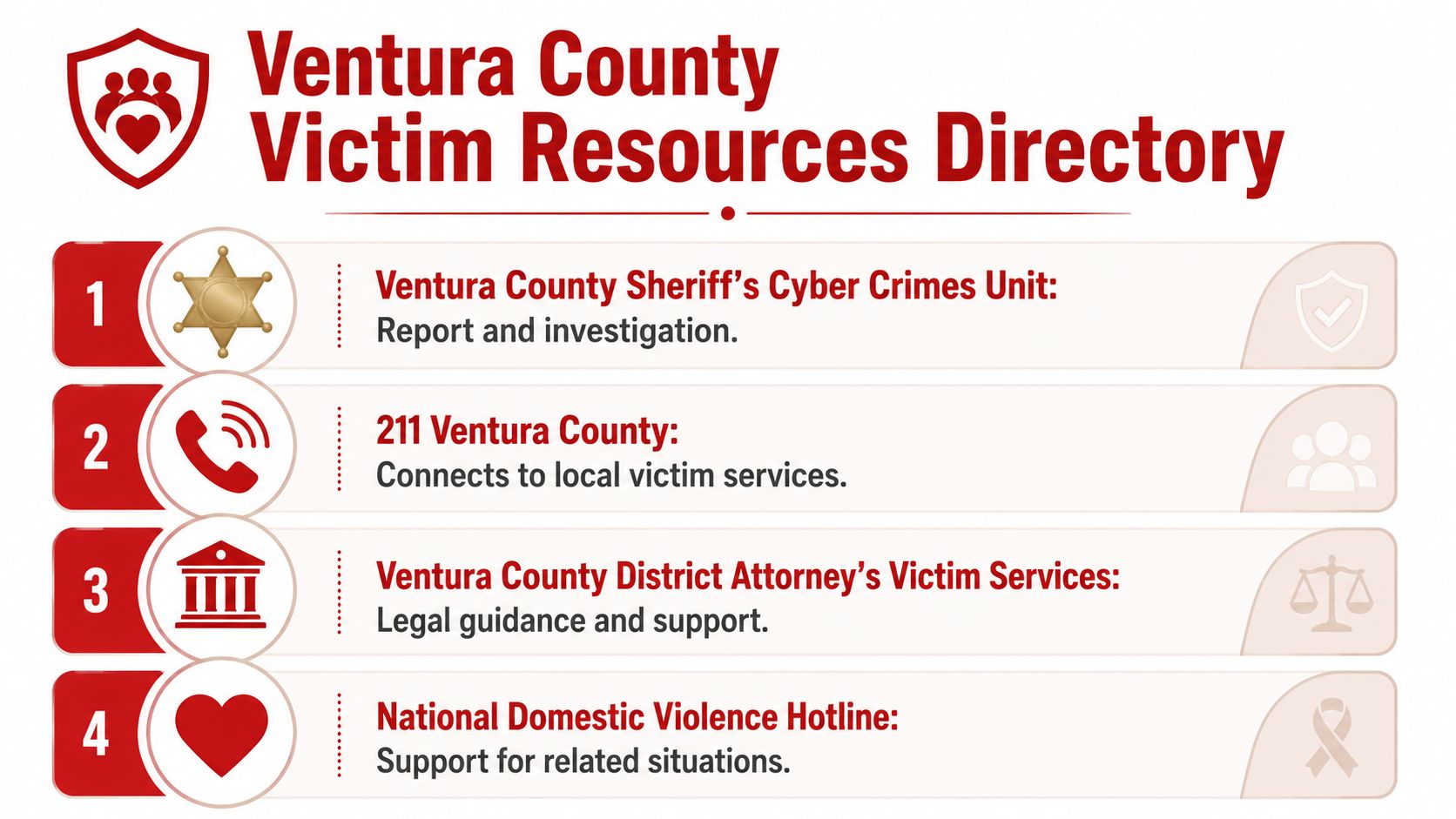
- Law enforcement: Report the conduct to the Ventura County Sheriff’s Office or the local police department with jurisdiction. Bring the timeline, screenshots, URLs, payment records, and threat evidence.
- Victim services: Ask the Ventura County District Attorney’s Victim Services Unit about court accompaniment, restitution questions, and protective-order guidance.
- Financial and identity support: Notify financial institutions, preserve account records, and ask a qualified identity-theft or internet-crime attorney about recovery options.
- Federal reporting: File an Internet Crime Complaint Center report when the conduct crosses state lines or involves an online financial scheme.
- Emergency safety: If threats, stalking, or intimate-image coercion are occurring, contact law enforcement immediately and ask about protective measures.
- Custody help: For a family member booked in Ventura, Oxnard, Camarillo, Port Hueneme, Thousand Oaks, Santa Paula, Moorpark, Fillmore, Ojai, or nearby Santa Barbara, obtain the booking number and contact a licensed local bail agent for current release requirements.
The central lesson is practical: a fake profile may begin as deception, but money demands, threats, identity misuse, stalking, and coercion can create a criminal case. If someone has been arrested, visit Bada Bing Bail Bonds for 24-hour bail bonds Ventura assistance, clear premium and payment-plan information, and help confirming Ventura County booking and release requirements. Their licensed agents can coordinate the paperwork and explain the next steps without offering legal advice or judging the family.