

A late-night call often starts with the same worry: someone you love has been arrested, but nobody can say which jail has them or whether bail is set. The Orange County inmate locator is a practical first check. It can help confirm custody and identify booking details, but an empty result doesn’t prove a person is free, and a record showing bail doesn’t tell you when release will happen.
Treat the search as the beginning of a process. Confirm the person’s identity, check any delay or hold, and verify what the jail needs before you make decisions about bail. If the arrest happened in Ventura County or nearby, the same principle applies: the right next step depends on the person’s confirmed custody status and the agency handling the booking.
Table of Contents
- Why the Locator Is Your First Call, Not Your Last
- Running the Official Orange County Inmate Search
- What to Have Ready Before You Search
- Reading the Result Page Without Getting Lost
- When the Search Returns Nothing
- Warrants, Holds, and Transfers That Change the Plan
- After Custody Is Confirmed, What Comes Next
Why the Locator Is Your First Call, Not Your Last
A family member calls after an arrest and asks, “Can you get them out?” Before anyone can discuss a bond, there’s a more basic question: where is the person, and have they been booked? Searching the official Orange County Sheriff’s Department inmate information page gives you a starting point based on the county’s custody record, rather than a guess from a text message or a secondhand account.
The locator is useful because it can help establish whether a person appears in custody and which facility is associated with the record. That information can make the next call more productive. A bondsman or jail records clerk will usually need identifying details and booking information to confirm the right person and explain the available options.
But a result is not a release time. A record can exist while bail still needs to be confirmed, paperwork needs to be accepted, or a separate hold needs attention. “Found” and “released” are different stages. The locator answers a narrow question about the custody record. It can’t promise when the person will walk out.
Practical rule: Use the official record to establish what’s known, then verify anything that affects the next action with the agency handling the person’s custody.
That distinction matters whether the arrest happened in Orange County or the family is coordinating help from elsewhere in Southern California. People looking for Ventura County bail bonds may also be dealing with arrests in Ventura, Oxnard, Camarillo, Port Hueneme, Thousand Oaks, Santa Paula, Moorpark, Fillmore, Ojai, or Santa Barbara. Each location has its own custody and court process, so don’t assume an Orange County result answers a Ventura County question.
Start with the locator, record what it says, and confirm the details before arranging payment or travel. The useful outcome isn’t finding a name. It’s knowing which agency to contact and what remains unresolved.
Running the Official Orange County Inmate Search
Use the Orange County Sheriff’s Department inmate information page as your first search point. The official court guidance also directs people checking on a detained person to the jail’s online inmate page, the arresting agency, the District Attorney, or court case-access systems, depending on what they need to confirm (Orange County Superior Court guidance for checking custody and court information).
Search with the strongest identifier available
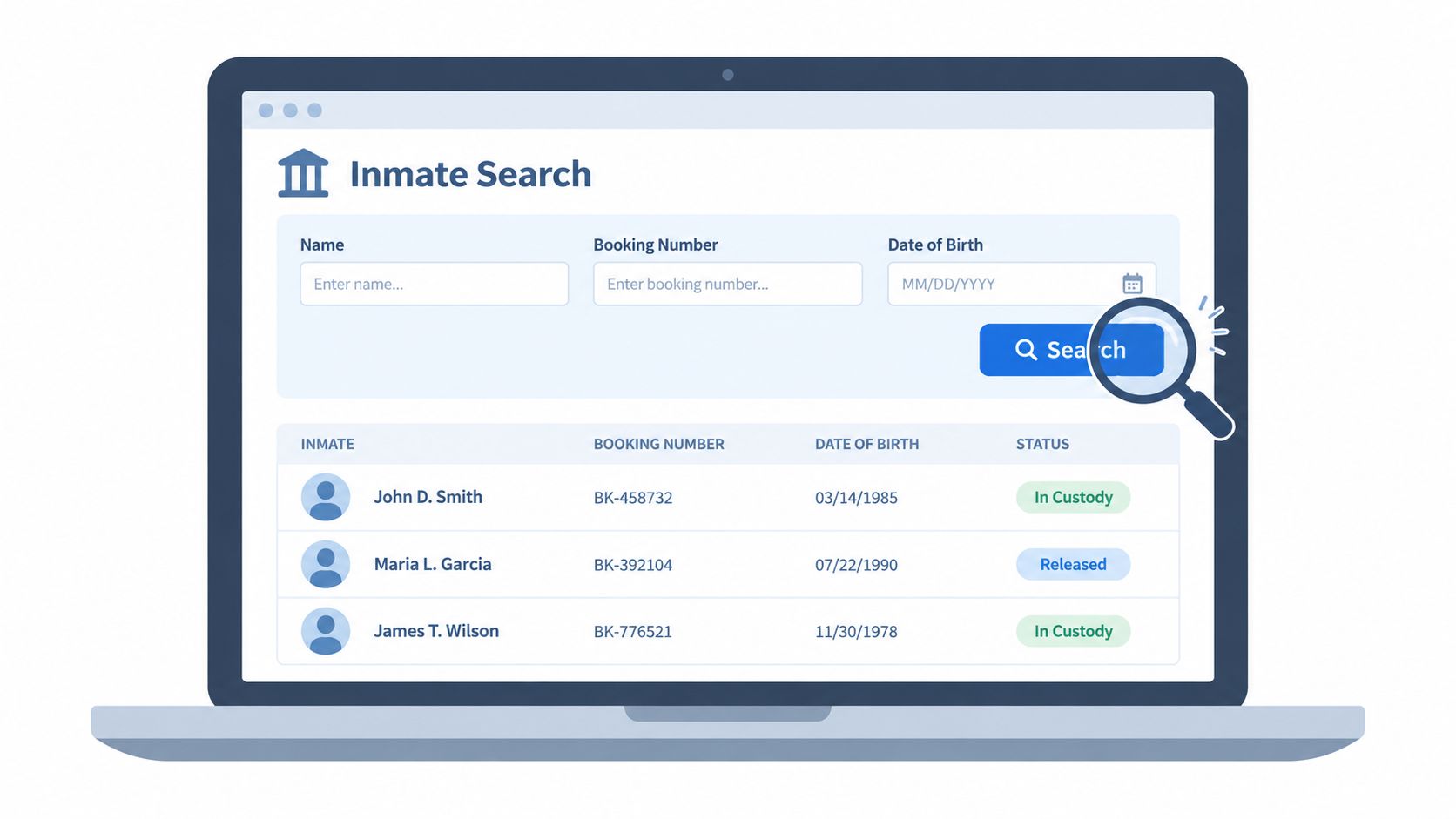
Enter the person’s legal name as accurately as possible. If you know the booking number, use it to narrow the search. Where the page offers a date-of-birth field, add that too. A name by itself can produce uncertainty, especially when the name is common or the person may have been booked under an alias.
Read the result list cautiously. A matching name is a lead, not a confirmed identity. Compare any available details, such as booking information, custody status, and facility, before treating the result as the person you’re looking for.
Check the facility and profile details
Orange County custody records may identify facilities such as the Intake and Release Center or Theo Lacy. A person’s booking or processing location and current housing location may not be the same. Transfers and housing assignments can change, so rely on the current record and confirm with the relevant facility if the location affects your next step.
Open the matching profile and review the details displayed, including custody status, charge information, bail information, any listed court date, and facility. Don’t assume every field is available or current at the same time. If a key item is missing or unclear, ask the jail or arresting agency to verify it rather than filling in the gap yourself.
At two in the morning, a careful match is more useful than a fast assumption. Take a screenshot and note when you searched. That gives you a clear reference if you need to call back or compare an updated result.
What to Have Ready Before You Search
The search goes more smoothly when you have the person’s details in front of you. Don’t rely on memory while you’re switching between calls, messages, and the locator. Write down the information first, then search.
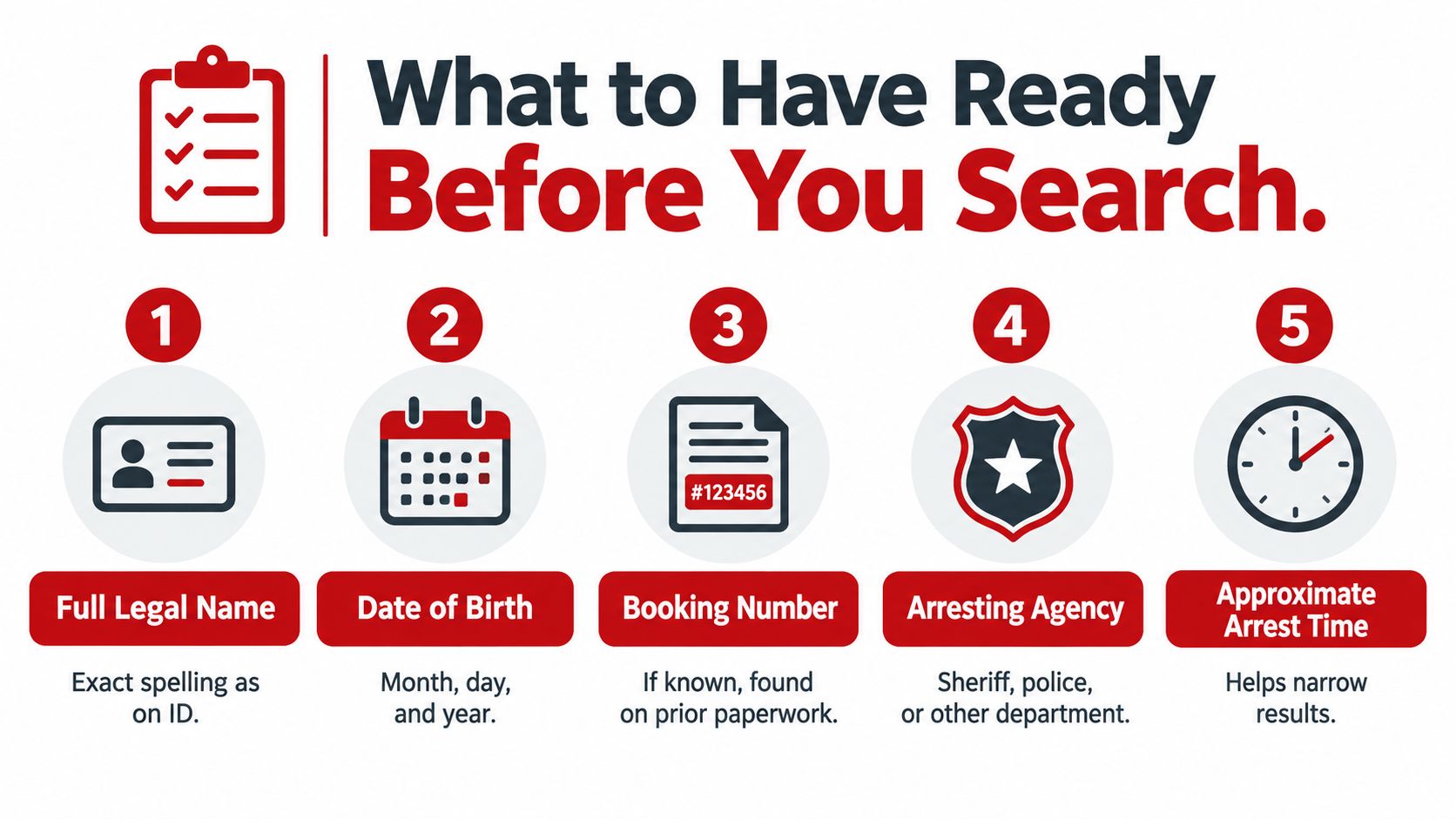
- Full legal name: Use the spelling shown on identification or official paperwork. If the person uses another name, keep that information nearby, but start with the legal name.
- Date of birth: This helps distinguish people with similar names. Include the month, day, and year when you have them.
- Booking number: If you know it, search with it. A booking number can reduce confusion between people with similar names or different spellings.
- Arresting agency: Note whether the arrest involved a sheriff’s office, police department, or another agency. The agency can help confirm whether the person has been transported or booked.
- Approximate arrest time: Record when the arrest likely happened. That gives staff useful context if the public record hasn’t appeared yet.
Keep a note of the search timestamp and screenshot the result, including an empty result. If the information changes, you can tell the next person you call what you checked and when. That’s more useful than saying, “I searched earlier,” without knowing whether it was before or after booking.
For families who need to confirm whether a person has reached Orange County’s intake facility, the Orange County Intake and Release Center information can help orient the next call. Have your notes ready before contacting the jail or a bail agent.
Reading the Result Page Without Getting Lost
A result page is a collection of separate fields, not a single answer about what happens next. Read each item on its own, then verify that the identifying details point to the same person. The Orange County Sheriff’s Department is the primary source for confirming how its records are displayed and what a particular status means.
Separate custody, bail, and release
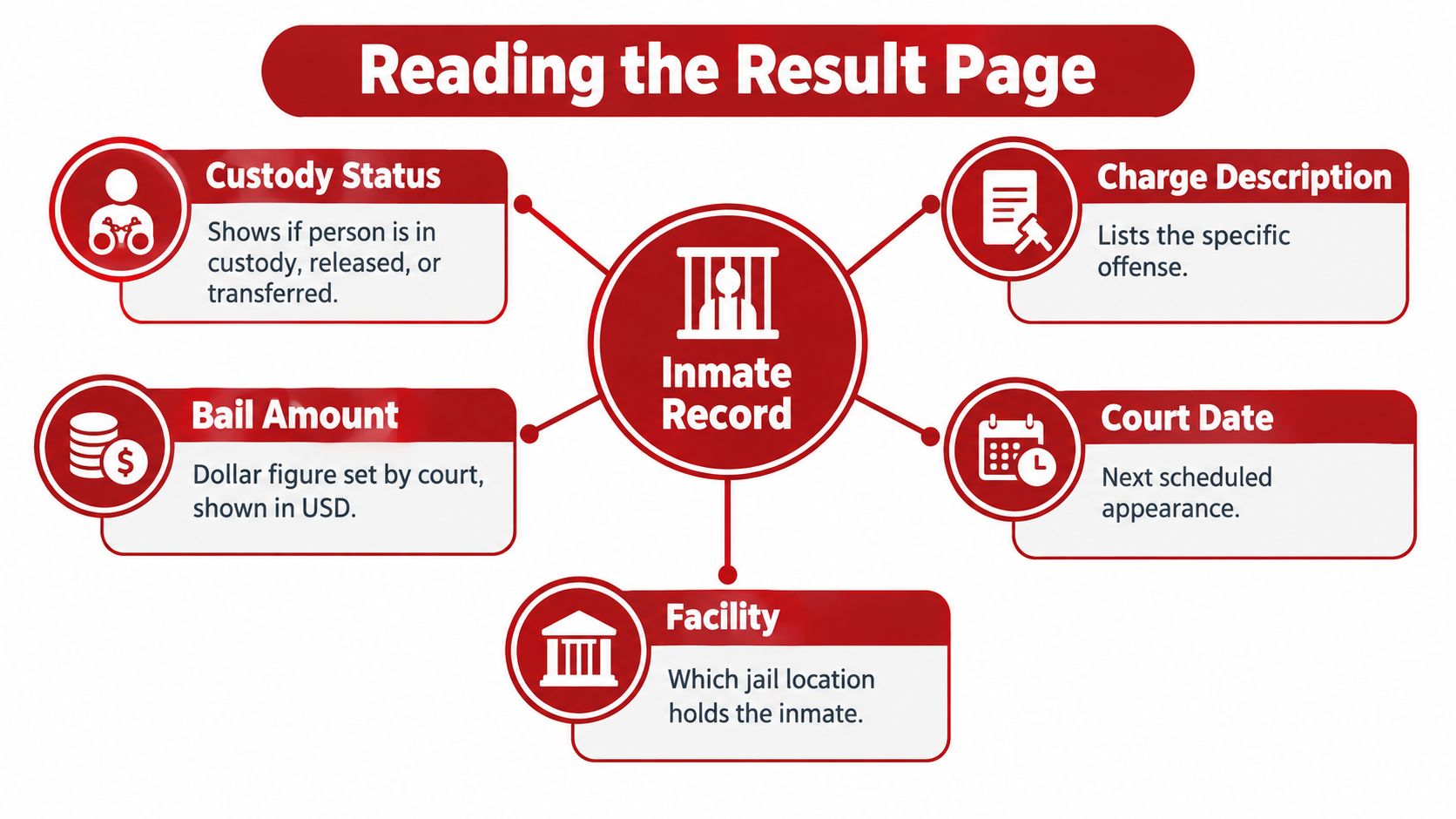
Custody status tells you what the record currently indicates about the person’s custody. “In custody” isn’t a promise that bail is ready to post. “Released” indicates a different status, but if the family is waiting for pickup, confirm with the facility before travelling. If a transfer is shown or suspected, ask which location has current responsibility.
Charges describe the allegations associated with the booking. Read them as booking information, not as a final determination of guilt. If the wording is unfamiliar, ask the jail or a qualified legal professional to explain what the record means in context.
Bail amount and the ability to post bail are related but distinct questions. A displayed amount doesn’t by itself establish that a bond can be accepted immediately. A hold, warrant condition, or court order may affect the available path. For local schedule context, review the Orange County bail schedule information, then confirm the person’s actual status with the responsible agency.
Treat court and facility details as action items
A listed court date is a scheduled appearance, not an estimate of how long release processing will take. The facility field identifies where the person is recorded as being held, but the family should confirm that location before arranging a ride or sending someone to the wrong site.
Watch for terminology that changes the next call. A hold notation, an out-of-county warrant, or a no-bail flag may mean ordinary bond arrangements won’t resolve custody on their own. Don’t interpret an unfamiliar label as a clearance or a final decision. Ask the agency what the notation means and what must happen before release can be considered.
When the Search Returns Nothing
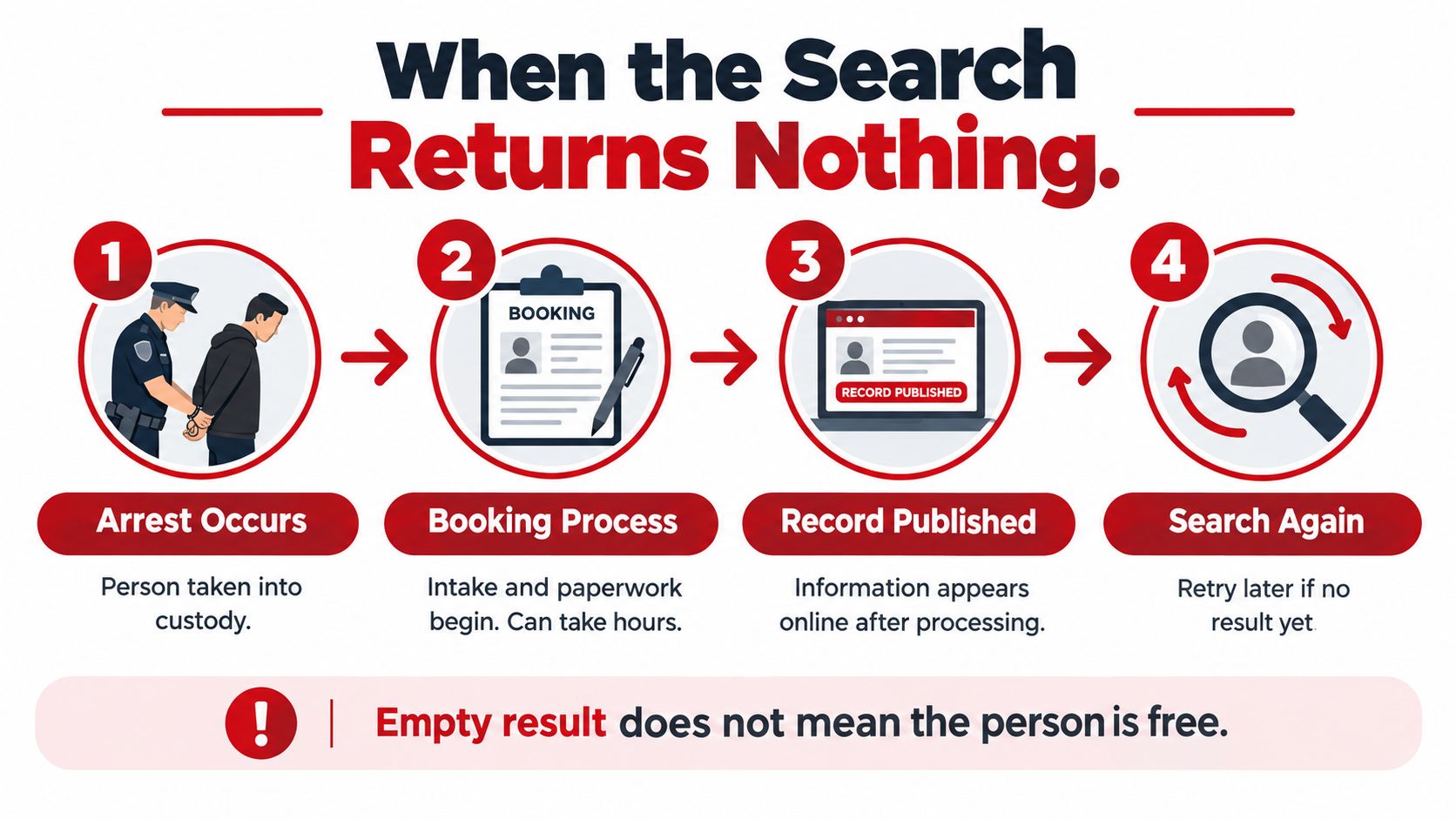
An empty result does not establish that someone has been released or was never arrested. A person may still be in transport, completing intake, or waiting for the public record to update. Orange County’s locator warns that new bookings can take up to four hours to appear, and the county says charge and bail information is usually available only after two to three hours (Orange County Sheriff’s Department inmate information). The status page may update continuously without reflecting events in real time.
Follow a time-based check
If the arrest was recent, don’t draw a conclusion from one search. Recheck after a reasonable interval, and use the arrest details to help staff locate the booking if the record still hasn’t appeared.
- Search again later: Re-enter the legal name and any booking number or date of birth you have.
- Call the arresting agency: Ask whether the person has been transported, is still being processed, or has been booked into county custody.
- Check court access: Look for a filed case or appearance information through Orange County Superior Court case access, while recognizing that a case may not yet be filed.
- Confirm a match: A name match alone is weak. Look for at least one additional identifier, such as date of birth, booking number, arrest date, or charge.
Misspellings, aliases, transfers, and records that aren’t available to the public can complicate a search. Juvenile or sealed records may not appear in ordinary public lookup results. Searching court records before charges are filed can also return nothing even when the person remains detained.
“Not found” is a search result, not a custody determination.
Write down when you searched and who you spoke with. If the person remains unaccounted for, keep calling the agency that made the arrest or the custody facility it identifies. The Orange County booking process information can help explain why an arrest and an online booking record may not appear at the same moment.
Warrants, Holds, and Transfers That Change the Plan
A confirmed custody record doesn’t guarantee that a standard bail payment will lead directly to release. Warrants, outside-county holds, and transfers can change which agency controls the next decision. Before arranging a bond, ask whether the person is eligible for release on that booking and whether another jurisdiction or court has placed a hold.
For a warrant booking, the amount shown on the warrant may govern unless a judge orders otherwise. California law also requires a written order from a competent court or magistrate before a defendant charged in a warrant can be released on bail (California Penal Code § 1269a). That means a phone confirmation or a bond arrangement alone may not satisfy the jail’s release requirements.
An out-of-county hold creates a different problem. Even if bail is available on the local booking, the person may remain in custody until the agency that placed the hold acts. Ask which county or agency issued it, whether it has been confirmed, and whether the person will be transferred or must address another case first.
A recent transfer can also make an older facility listing misleading. Call the location shown in the current record, and ask whether the person has moved or is still being processed. Don’t send a family member to pick someone up until the facility confirms the location and release status.
Families coordinating across Southern California may be dealing with Ventura County bail bonds as well as an Orange County Bail Bonds. California Penal Code § 1269b says authorized jail, law-enforcement, or court personnel may accept bail before a first court appearance, with the amount generally following a warrant or the county’s uniform bail schedule until a judge reviews the case (California Penal Code § 1269b). Check the actual county and booking circumstances before relying on a schedule. A warrant check for Orange County can help identify a separate issue to raise with the responsible agency.
After Custody Is Confirmed, What Comes Next
Once the official record confirms custody, the next useful call is to the jail or a 24/7 bail bondsman who can verify the booking details and explain the available route. If the family needs bail bonds Ventura, bail bonds Oxnard, or bail bonds Thousand Oaks, the first step is still the same: confirm the person, agency, and amount rather than relying on a guess from a search result.
In California, the bail bond premium is set at 10% of the total bail amount. A licensed agent can explain the cost, whether payment plans or a co-signer are available, and whether collateral is needed for the particular bond. Collateral may secure the obligation under the agreement; ask what property is involved, how it is documented, and what must happen before it can be returned.
A bond also doesn’t make release instantaneous. The jail must verify the paperwork and process the release, and a hold or court condition can change the outcome. Ask which facility will handle release and whether the family should wait for confirmation before arranging pickup. The Orange County jail release information can help families understand the release coordination process.
Plan for conditions after release
In domestic-violence cases, don’t treat release as permission to contact the person who called for help or to return to a shared home. A protective order or no-contact condition may restrict communication and location. Read the release paperwork, follow the stated restrictions, and direct questions about the order to the attorney or court. A bail agent can explain the bond process, but shouldn’t replace legal advice about what a court order permits.
The same practical approach applies to Ventura County Jail bail bonds for DUI, warrants, theft, drug offenses, and probation matters. Whether the arrest is in Ventura, Oxnard, Camarillo, Port Hueneme, Thousand Oaks, Santa Paula, Moorpark, Fillmore, Ojai, or Santa Barbara, confirm the custody record and the controlling agency before making payment or travel plans. Bada Bing Bail Bonds operates around the clock and can verify booking details, explain bail costs, discuss payment and co-signer options, and coordinate paperwork for release.
Bada Bing Bail Bonds is available around the clock to help confirm an Orange County booking, explain the bond process, and coordinate with the jail. If you’re trying to arrange release or need help with Ventura County bail bonds, contact Bada Bing Bail Bonds for clear next steps.