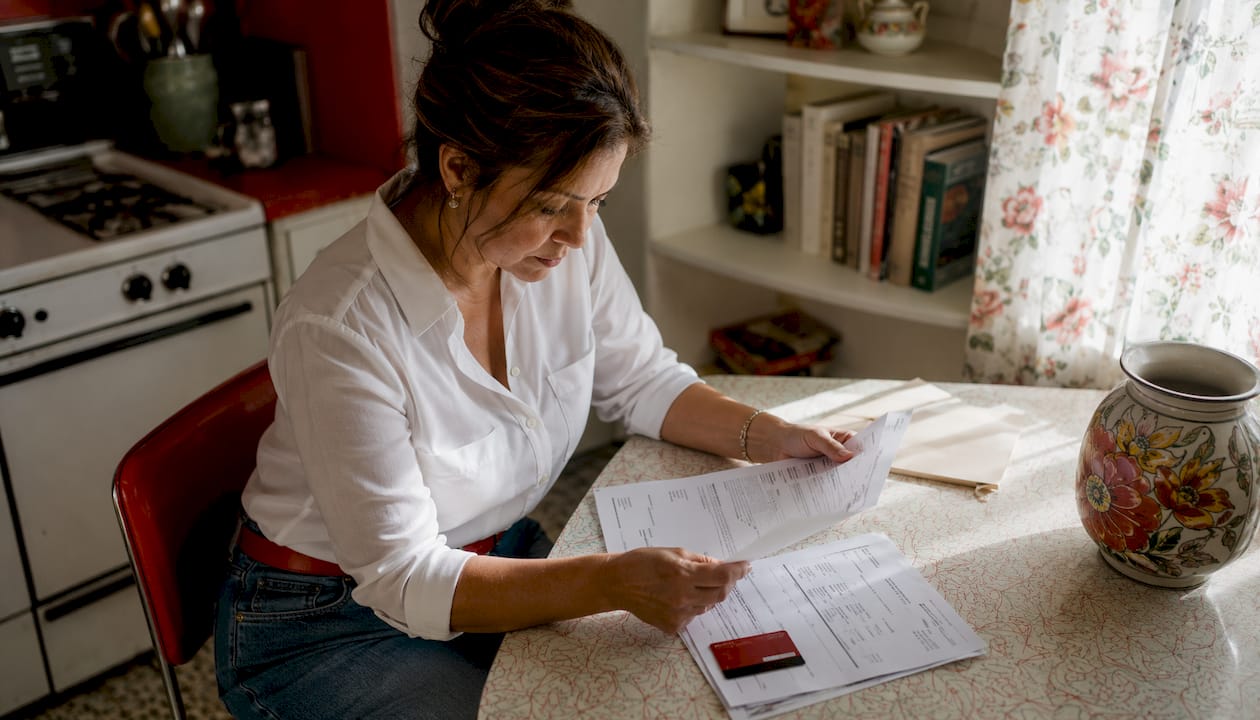
Yes, you can pay bail with a credit card in California, but the rules depend on whether you’re paying the jail directly or working through a licensed bail bondsman. Most families end up using a bondsman and paying the 10% premium by card.
- Paying the jail directly: California Gov. Code §6159 permits courts and public agencies to accept credit or debit cards for bail deposits on non-felony offenses. Card acceptance varies by county, and processors may add an administrative fee.
- Using a bail bondsman: Licensed agents commonly accept credit cards for the non-refundable bail bond premium. The California Department of Insurance regulates rates and licensing.
- Immediate next step: Call the jail to confirm their payment method, then call a licensed local bondsman like Bada Bing Bail Bonds if you need fast release.
Table of Contents
- Can you pay bail with a credit card: direct vs. bondsman
- How do jails and courts actually accept card payments?
- How bail bondsmen accept credit cards, financing, and low-down options
- Step-by-step: fastest way to secure release when paying by card
- What does it actually cost to use a credit card for bail?
- What are your options if a credit card won’t work?
- What should you ask a bail bondsman before signing?
- County-specific tips for Ventura, Santa Barbara, and Orange Counties
- Key Takeaways
- The case for calling a bondsman first
- Bada Bing Bail Bonds: local, licensed, and ready right now
- Where to verify policies, licensing, and county payment rules
Can you pay bail with a credit card: direct vs. bondsman
These are two different transactions, and mixing them up costs families time.
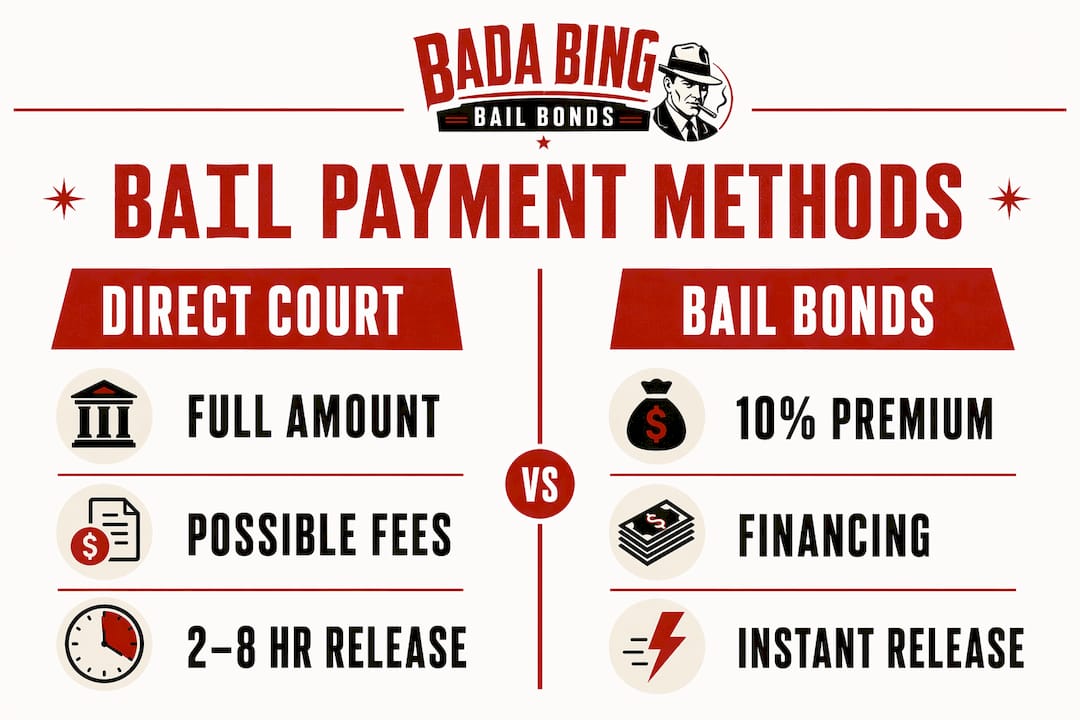
Cash bail means posting the full bail amount directly with the court or jail. If the defendant appears at all required hearings, that money comes back minus administrative fees. The catch: bail amounts in California can run tens of thousands of dollars, and most families don’t have that sitting in a checking account. As California law notes, cash bail often requires the full amount in cash or a cashier’s check, making it impractical for most people.
A bail bond is different. You pay a licensed bail agent a premium, typically around 10% of the total bail, and the agent posts a surety bond with the court covering the full amount. That premium is an agent fee, not a deposit. It does not get refunded regardless of how the case resolves, whether the charges are dropped or the defendant is convicted. Paying by credit card doesn’t change that rule.
The money flow matters:
- Courts hold cash bail deposits and return them (minus fees) after case resolution.
- Bail bond companies post the surety and keep the premium as their earned fee.
- Cards are more commonly accepted by bondsmen than by jails, though both routes exist.
For a deeper look at cash bail vs. bond, the financial and legal differences are worth understanding before you commit.
How do jails and courts actually accept card payments?
Gov. Code §6159 gives courts and public agencies the green light to accept credit and debit cards for bail on offenses not classified as felonies, and for court-ordered fees. The operative word is “may.” Not every county has set up the infrastructure to do it.
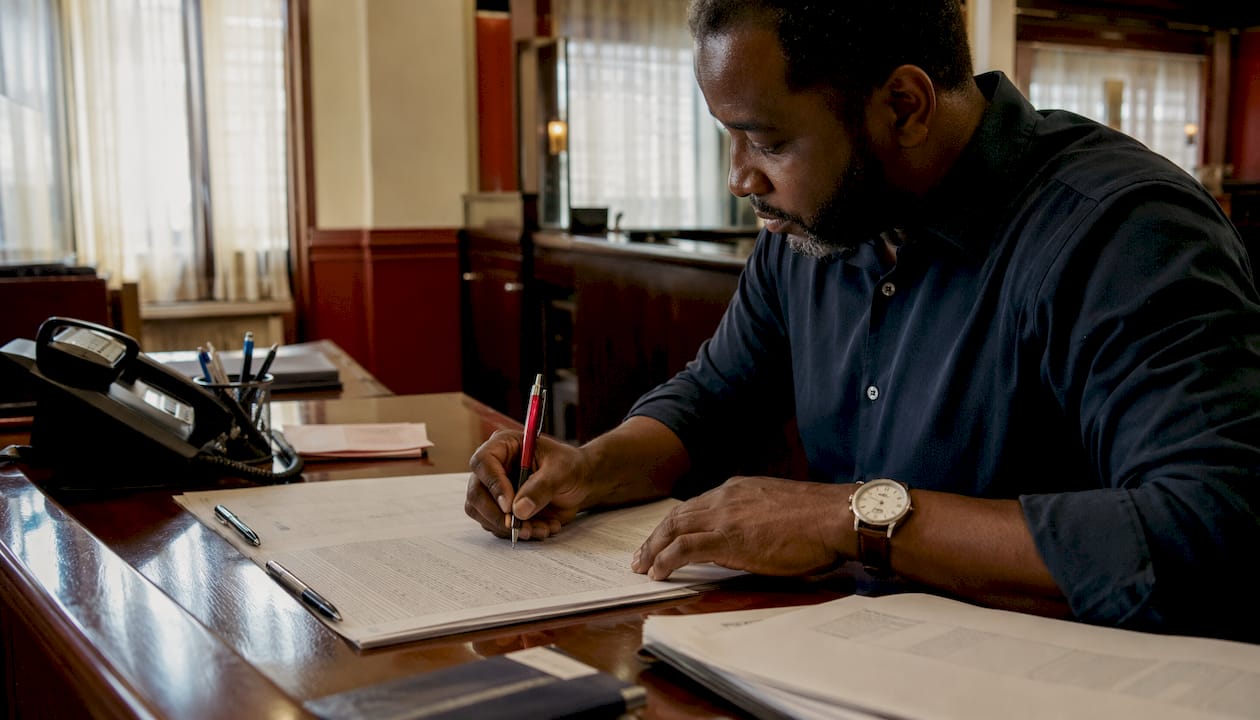
Orange County Superior Court, for example, accepts Visa, Mastercard, Discover, and Diners Club for traffic bail and related fees, with debit cards accepted at select Justice Centers. A cash bail refund, when applicable, takes approximately 6–8 weeks to process through the Orange County Auditor’s office. That timeline matters if you’re counting on that money coming back quickly.
Some jurisdictions go the other direction entirely. The Fullerton Police Department does not accept credit cards and requires checks or money orders payable to the designated court. That’s a city-level policy that applies regardless of what the county court does.
When a jail does accept cards, a third-party processor typically handles the transaction and adds an administrative fee on top of the bail amount. That fee appears as a separate line item on your statement.
Pro Tip: Call the jail’s booking desk before you do anything else. Ask specifically: “Do you accept credit cards for bail, and is there a processing fee?” Get the answer from a live person, not a website, because policies update and web pages lag.
Timeline when paying a jail directly by card: once payment is confirmed, release processing typically takes 2–8 hours depending on the facility’s workload, shift changes, and whether the booking is complete.
How bail bondsmen accept credit cards, financing, and low-down options
Licensed bail agents accept credit cards for the non-refundable premium and related fees. The California Department of Insurance requires surety companies to file their premium rates, and agents must charge those filed rates consistently. Bail bond agents charge a premium that is typically 10% of the total bail amount, as required by filed rates with the California Department of Insurance.
What varies is how the premium gets paid. Options typically include:
- Full premium by credit card at the time of signing.
- Low down payment with the balance financed over time, for qualifying clients.
- Payment plans structured through the agency or a third-party financing arrangement.
Understanding how payment plans for bail work before you sign helps you avoid surprises on the back end. Financing adds cost, but it makes a $5,000 premium manageable when you don’t have it all upfront.
Documentation matters. Before authorizing any card charge, the bond contract should explicitly list the premium amount, any financing or administrative fees, and the bondsman’s license number. A receipt is not optional.
Pro Tip: Ask the bondsman to read you the total amount being charged to your card before they run it. Confirm that figure matches the written agreement in front of you.
Badabingbail’s bail bond payment options page details what’s accepted and how financing works for clients in Ventura, Santa Barbara, and Orange Counties.
Step-by-step: fastest way to secure release when paying by card
- Get the exact bail amount. Call the jail’s booking line or check the county’s online inmate lookup. You need the figure before you can do anything else.
- Call the jail and confirm payment methods. Ask whether they accept credit cards, which portal to use, and whether there’s a processing fee. If they don’t accept cards, move immediately to step 3.
- Choose your route. Paying the court directly? Follow their portal instructions and save the confirmation number. Using a bondsman? Call now, authorize the card for the premium, and complete the bond paperwork. A licensed local agent can get someone out fast while you’re still on the phone.
- Confirm the release timeline and get receipts. Ask the bondsman or jail clerk for an estimated release time. Stay reachable. Get written confirmation of every charge.
What does it actually cost to use a credit card for bail?
Bail bonds charge a non-refundable premium that is usually 10% of the total bail amount. For example, on a $50,000 bail, the premium would be $5,000.
| Cost Item | Direct Court Payment | Bail Bond |
|---|---|---|
| Amount due upfront | Full bail amount | 10% premium |
| Refundable? | Yes, if defendant appears | No |
| Card processing fee | Possible (processor adds it) | Varies by agent |
| Cash advance interest | Possible if issuer treats as advance | Possible if issuer treats as advance |
| Financing fees | Not applicable | Possible if using a payment plan |
One cost many families miss: some credit card issuers classify bail payments as cash advances, which carry higher interest rates and no grace period. Check with your card issuer before you run the charge. If that’s the case, a bail bond financing arrangement may actually cost less over time than letting a cash-advance balance sit on a high-rate card.
Pro Tip: Call your card issuer and ask how they classify bail-related payments before authorizing. If it’s a cash advance, the interest starts the same day.
The cost picture for how much bail bonds cost breaks down further by charge type and county.
What are your options if a credit card won’t work?
Not every situation calls for a card. Here are the realistic alternatives:
- Cash or cashier’s check to the court: Posts immediately, fully refundable if the defendant appears. Requires access to the full bail amount, which is the barrier for most families.
- Money order: Accepted at some jails that don’t take cards (like Fullerton). Same refund rules as cash bail.
- Licensed bail bondsman with financing: Pay a low down payment now, finance the rest. Total cost is higher, but the out-of-pocket today is lower. Badabingbail offers low down payment options for qualifying clients.
- Property bond: The court accepts equity in real property as collateral. Slower to arrange and carries foreclosure risk if the defendant fails to appear.
- Bail-specific loans: Third-party lenders offer loans specifically for bail premiums. Interest rates vary; read the terms carefully before signing.
What should you ask a bail bondsman before signing?
The California Department of Insurance requires agents to be solicited by the arrestee, their attorney, or an adult friend or family member. A bondsman who approaches you unsolicited is already operating outside the rules.
Vetting checklist:
- Confirm the agent’s license number and verify it at the California Department of Insurance website.
- Ask for a written fee agreement before any card is charged.
- Confirm 24/7 availability and that they have direct experience with the specific county jail.
- Request a written receipt immediately after payment.
Red flags:
- Refusal to provide a license number.
- Demands for large cash payments with no paperwork.
- Pressure to sign without time to read the agreement.
- No written receipt offered after payment.
Pro Tip: The California Department of Insurance’s license lookup is free and takes under two minutes. Use it before you hand over a card number.
County-specific tips for Ventura, Santa Barbara, and Orange Counties
Policies differ at the facility level, not just the county level. A city jail within Orange County may have different card-acceptance rules than the county sheriff’s facility.
- Call the specific booking desk first. Ask for the jail’s name, the booking number, and the accepted payment methods. Have the arrestee’s full name, date of birth, and booking date ready before you dial.
- If the jail doesn’t accept cards, call a licensed local bondsman immediately. A bondsman can begin paperwork while you’re still on the phone with the jail, cutting the total time to release. Local agents familiar with Ventura County procedures often have direct lines to booking desks.
- Orange County courts accept major credit cards for traffic bail and related fees at select locations. For criminal bail, confirm directly with the facility.
- Santa Barbara and Ventura County sheriff’s facilities: call the booking line to confirm current card-acceptance policy before assuming anything.
Key Takeaways
Using a credit card to pay bail is possible in California, but whether you pay the jail directly or a bondsman determines the cost, refundability, and speed of release.
| Point | Details |
|---|---|
| Card acceptance varies by county | Call the jail’s booking desk first — some accept cards online, others require checks or money orders. |
| Bail bond premium is non-refundable | The 10% premium paid to a bondsman remains with the agent regardless of case outcome, even if paid by card. |
| Cash advance risk is real | Some card issuers classify bail payments as cash advances; confirm with your issuer before charging. |
| Get written receipts and verify licensing | Confirm the agent’s license with the California Department of Insurance and get a written fee agreement before any charge. |
| Bada Bing Bail offers local, 24/7 help | Licensed in Ventura, Santa Barbara, and Orange Counties with flexible financing and low down payment options for qualifying clients. |
The case for calling a bondsman first
Most families who call a jail directly to post bail by card run into the same wall: the jail doesn’t accept cards, or the bail amount is far more than they can charge. A licensed local agent changes that math. The 10% premium is significant, but it’s a fraction of the full bail, and a bondsman who knows the county booking desk can often coordinate release faster than a family navigating a courthouse portal for the first time. Paperwork that takes a family two hours to sort out takes an experienced agent twenty minutes. When someone is sitting in a cell, that gap matters. The 24/7 availability piece isn’t marketing language — arrests happen at 2 AM on a Saturday, and a bondsman who answers the phone then is worth more than one who opens at 9 AM Monday.
Bada Bing Bail Bonds: local, licensed, and ready right now
When the jail doesn’t take cards and the bail amount is out of reach, Bada Bing Bail is the direct path to a fast release in Ventura, Santa Barbara, and Orange Counties. With over 15 years of local experience, 24/7 availability, and flexible financing including low down payments for qualifying clients, Badabingbail handles the paperwork, the county booking desks, and the timeline so you don’t have to figure it out alone.
Every client gets a written fee agreement and a receipt before any card is charged. No surprises, no pressure. If speed matters right now, get immediate bail help or call to start the bond process immediately.
This article is general information, not legal or financial advice. Confirm current payment policies with the specific jail and verify any bondsman’s license with the California Department of Insurance before authorizing payment.
Where to verify policies, licensing, and county payment rules
- California Gov. Code §6159: The primary legal authority for when courts and public agencies may accept credit or debit cards for bail deposits.
- California Department of Insurance — Bail Bonds: Verify an agent’s license, check filed premium rates, and understand your rights as a consumer before signing anything.
- County jail or city booking page: Search the specific facility by name to find current payment policies. Orange County Superior Court’s traffic bail payment page is one example of a county-level resource.
- Ventura County Sheriff’s Office: Contact the booking desk directly for current bail payment policies at county facilities.
- Badabingbail’s bail bond payment options: Details on credit card acceptance, financing, and low down payment plans for clients in the three-county service area.