
The call usually comes at the worst time. You see an unfamiliar number, answer it, and hear that someone you care about has been arrested for burglary in Ventura County. In that moment, most families ask the same questions. What exactly is the charge, how serious is it, what does bail look like, and what should we do right now?
Panic makes people focus on the wrong thing. They start arguing about whether anything was stolen, whether a door was open, or whether the police are overstating what happened. Those details can matter later, but the first priority is understanding what California law treats as burglary and how that affects custody, charging, and release.
That matters even in a state where reported burglary has been trending down. The Public Policy Institute of California reported that California’s burglary rate fell 9.1% in 2024, dropping from 339 per 100,000 residents in 2023 to 308.2 in 2024, and is 18.8% lower than the 2019 rate of 379.4, marking the lowest level since 1985. But when your family member is sitting in jail in Ventura, Oxnard, Camarillo, Port Hueneme, Thousand Oaks, Santa Paula, Moorpark, Fillmore, Ojai, or Santa Barbara, statewide trends don’t make the booking process feel any lighter.
If you’re trying to make sense of the penal code for burglary in California, start with the charge, then the degree, then the bail decision. If you don’t already know the difference between felony and misdemeanor exposure, this plain-English guide on felony vs. misdemeanor charges in California helps frame why one word on a booking sheet can change everything.
Table of Contents
- An Introduction to California Burglary Charges
- What Legally Constitutes Burglary Under PC 459
- First Degree vs Second Degree Burglary Explained
- Penalties Sentencing and Potential Enhancements
- Common Defenses Against a California Burglary Charge
- Bail for Burglary Charges in Ventura and Santa Barbara
- Your Next Steps After a Burglary Arrest
An Introduction to California Burglary Charges
A burglary arrest creates confusion because the common understanding of burglary is based on everyday language, not legal language. In regular conversation, people hear “burglary” and picture smashed glass, stolen property, and a clear break-in. California law doesn’t require that simple story.
What families usually face first is uncertainty. They don’t know whether the arrest happened at a house, a store, a storage area, or a vehicle. They don’t know whether the case will stay a misdemeanor-level matter or move into felony territory. And they often don’t know whether they’re dealing with Ventura County Jail bail bonds issues, a court appearance in Ventura, Oxnard, or another local courthouse, or a transfer that changes how fast release can happen.
Why families get blindsided
The hardest part is that burglary charges often sound stronger than the facts a family has heard so far. A caller says, “I didn’t take anything,” and relatives assume the charge won’t hold. But burglary law often turns on what prosecutors say the person intended when entering, not what happened afterward.
Practical rule: Don’t assume the case gets weaker just because no property left the scene.
That misunderstanding leads families to delay. They wait for more facts, hoping the jail will sort it out on its own. Meanwhile, booking continues, bail may be set, and the first court appearance gets closer.
What matters in the first hours
The first hours after arrest are about three things:
- Confirming custody location: Families need to verify where the person is booked and whether Ventura County Jail bail bonds steps can start immediately.
- Checking the listed charge: “Burglary” alone isn’t enough. The degree and filing posture matter.
- Protecting the case early: Loose talk on recorded jail calls can damage a defense before an attorney even gets involved.
In practice, families in Ventura, Oxnard, Camarillo, Port Hueneme, Thousand Oaks, Santa Paula, Moorpark, Fillmore, Ojai, and Santa Barbara need clear answers, not legal jargon. The law is technical, but the first move is simple. Find out exactly what the booking sheet says and act on that, not on assumptions.
What Legally Constitutes Burglary Under PC 459
The biggest mistake people make with the penal code for burglary in California is believing burglary requires forced entry and completed theft. Under California law, that’s wrong.
The two elements that drive the case
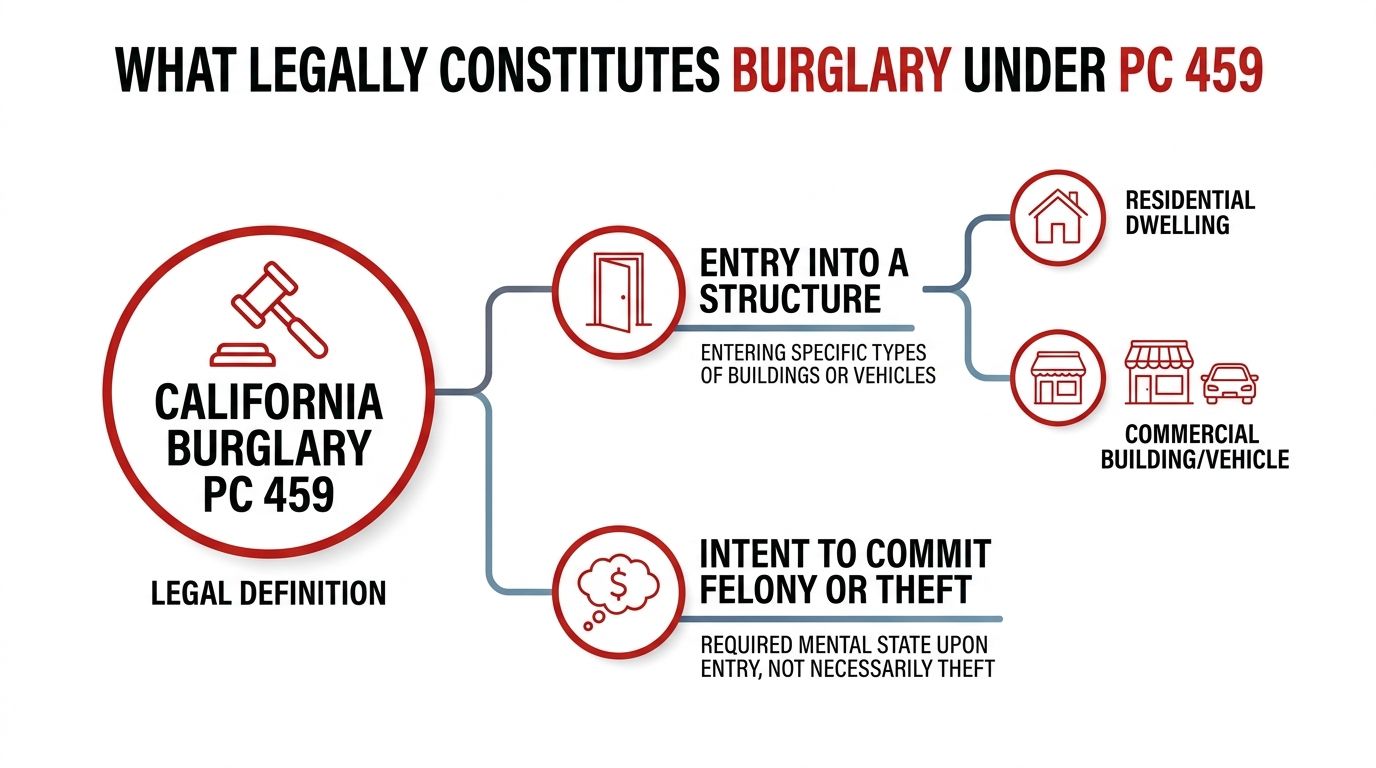
Burglary under PC 459 comes down to entry and intent at the moment of entry.
The key legal point is stated clearly in this explanation of California burglary intent at entry under Penal Code 459. The crime is legally completed at the precise moment of entry into a structure or locked vehicle with the specific intent to commit a felony or theft, regardless of whether the underlying theft is subsequently attempted or accomplished. Any part of the body or an object penetrating the structure’s outer boundary is sufficient for “entry.”
That means a person doesn’t have to walk fully inside. If a hand, foot, or tool crosses the outer boundary, prosecutors may argue the entry element is satisfied. And for most burglary cases, they don’t have to show anyone kicked in a door or shattered a window.
What this means in real life
A person can enter through an open door and still face burglary charges if prosecutors believe the criminal intent already existed. That’s why “the door was not locked” usually doesn’t end the discussion. For homes and businesses, the issue is the mental state at entry.
Locked vehicles are different in one important way. The statute requires a locked vehicle for auto burglary treatment under PC 459. Families often miss that distinction and lump all vehicle-related accusations together.
The phrase “I didn’t take anything” may help on other charges, but it doesn’t erase a burglary accusation if prosecutors believe intent existed at the threshold.
What doesn’t work as a quick explanation
Several common explanations sound good to families but don’t solve the legal problem by themselves:
- “Nothing was stolen.” That doesn’t defeat the charge if the prosecution claims intent existed upon entry.
- “The business was open.” A public storefront can still become part of a burglary case depending on alleged intent.
- “There was no break-in.” Forced entry usually isn’t required for buildings or rooms.
The practical takeaway is simple. If someone you care about has been arrested, don’t evaluate the case by common sense alone. Evaluate it by the legal elements prosecutors will try to prove.
First Degree vs Second Degree Burglary Explained
A family often calls after booking and says, “Nothing was even taken, so how can this be a serious burglary case?” At that point, one of the first practical questions is not whether property left the scene. It is where the alleged entry happened. That answer can shift the case from a charge with some room to fight over filing level to one that starts as a felony and carries much heavier pressure from day one.
California separates burglary into two degrees based largely on the type of structure. The courts describe first-degree burglary as burglary of an inhabited dwelling, and second-degree burglary as every other kind of burglary, as explained by the Judicial Council of California criminal jury instructions on burglary. For families, that distinction matters immediately because it affects bail, charging posture, and how fast defense counsel needs to address the facts surrounding entry and intent.
The split families need to understand early
First-degree burglary usually means an inhabited home, apartment, or other residence where people live. Second-degree burglary usually involves a business, office, store, warehouse, or another non-residential place.
That sounds simple. In practice, it is where people get tripped up.
A person accused of entering a house with intent to steal can face first-degree burglary even if nothing was taken. A person accused of entering a store during business hours with intent to steal may still face burglary, but the case is generally second-degree and the filing options can look different. The key legal fight often stays the same. What was the intent at the moment of entry?
First-Degree vs. Second-Degree Burglary in California
| Attribute | First-Degree Burglary | Second-Degree Burglary |
|---|---|---|
| Typical setting | Inhabited dwelling or residence | Commercial or other non-residential setting |
| Charge level | Always felony | Wobbler, felony or misdemeanor |
| Strike status | Serious felony treatment can apply | Usually does not carry the same immediate strike exposure |
| Practical pressure point | Higher stakes at booking and early hearings | More room to contest filing level and negotiate |
Why this changes the case so quickly
In Ventura County, I tell families not to treat the words “burglary arrest” as one single category. A residential booking usually creates more urgency because the exposure is harsher and the case often gets viewed more aggressively from the start. That affects release planning, how quickly counsel needs to get involved, and how carefully the family should avoid harmful statements.
Second-degree burglary can still be serious. It just presents different pressure points. The defense may have more room to argue over whether the facts support felony treatment, whether the entry was burglary under PC 459, or whether the evidence only shows shoplifting, trespass, or another lesser offense.
If your loved one is already in custody, review how felony bail bonds in Ventura County work as soon as possible. The degree of burglary affects more than sentencing risk. It often shapes the bail amount, the speed of the court process, and the strategy you need in the first 24 hours.
Penalties Sentencing and Potential Enhancements
A family hears “burglary” and usually assumes the sentence turns on whether anything was stolen. In practice, the pressure point often starts earlier than that. Prosecutors look at what they believe the person intended at the moment of entry, and that issue can affect the filing decision, the bail amount, and how fast the defense needs to act in Ventura County.
Base penalties under PC 459
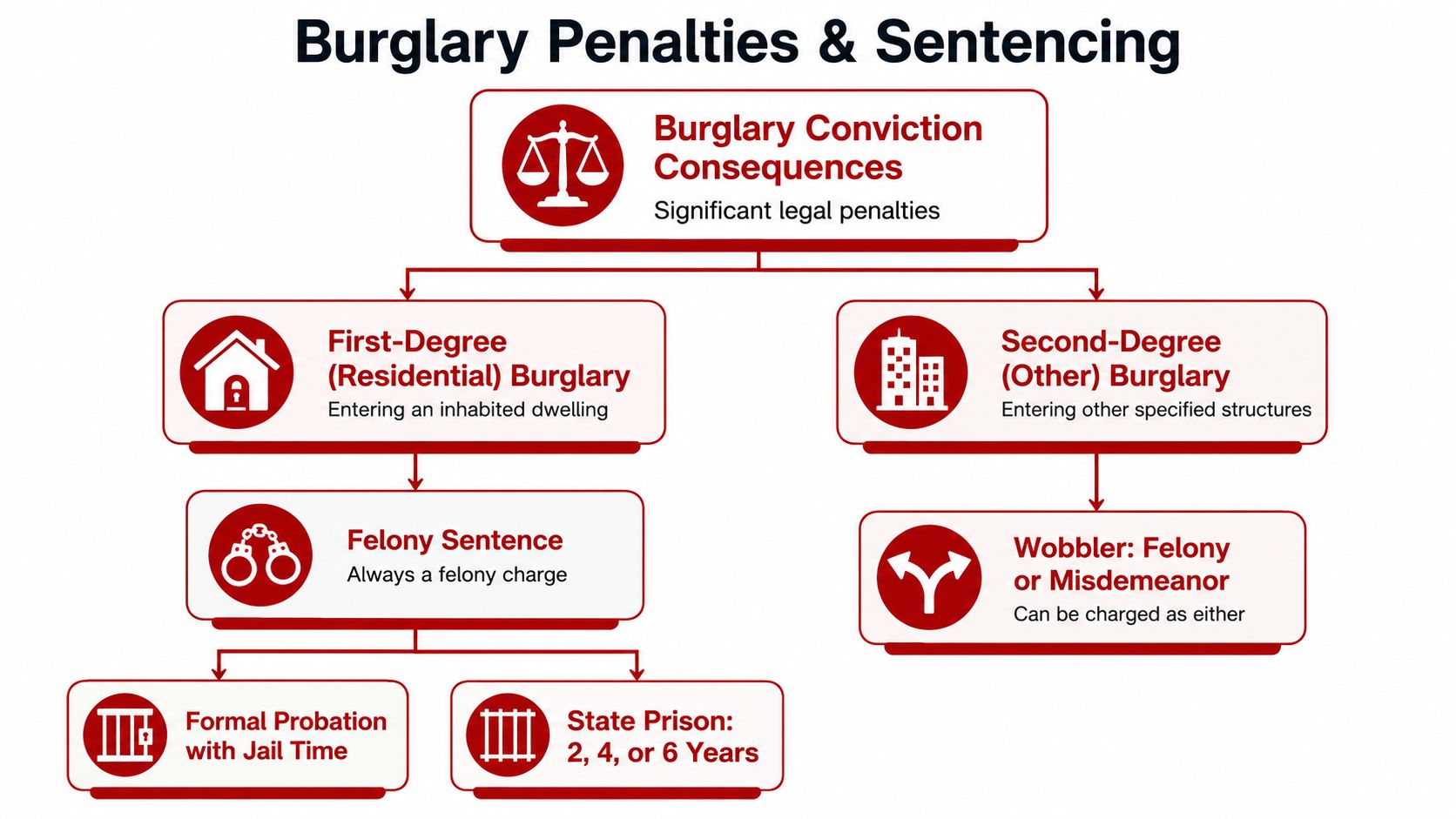
For first-degree burglary, the sentencing exposure is 2, 4, or 6 years in state prison. Fines can also apply. Because this charge involves an inhabited residence, prosecutors and judges often treat it as a higher-risk case from the beginning.
Second-degree burglary has a wider range. If prosecutors file it as a felony, the possible sentence is 16 months, 2 years, or 3 years. If they file it as a misdemeanor, the person may face up to 1 year in county jail and a lower fine exposure.
That difference matters early.
I tell families not to assume a non-residential burglary booking is minor just because no one was hurt or no property left the building. If the prosecution claims there was intent to steal or commit a felony at entry, they may still file aggressively, even when the facts later support a reduction.
What can increase the pressure
Prior theft-related history often makes a second-degree burglary case harder to resolve favorably. It can push prosecutors toward felony filing and make plea discussions tighter from the start. Prior record also affects how the case is framed. A prosecutor may treat the arrest as part of a pattern instead of an isolated mistake.
Other facts can raise the stakes too. Allegations involving an inhabited home, a person present inside, or conduct that suggests planning can all make the case more serious in practice, even before sentencing is discussed in detail.
The key misunderstanding is simple. Burglary does not require completed theft. A person can face burglary exposure if the state claims the required intent existed at entry. That is why defense lawyers often focus immediately on timeline, text messages, surveillance, statements, and permission issues. If intent at the door is weak, the entire value of the case can change.
If your family is also trying to understand filing deadlines and how long the state has to bring or maintain charges, review this guide to California misdemeanor and felony statute of limitations rules.
A short video explanation can also help families sort out the stakes before the first court date:
What families should focus on right away
These are the questions that matter in the first 24 hours:
- What was the alleged intent at entry? This often drives both the charge and the defense strategy.
- Was the case booked in a way that suggests residential exposure or felony treatment? That can affect bail and the urgency of release planning.
- Are there prior theft or burglary convictions? Priors can make the prosecutor less willing to reduce the case quickly.
- Did the police reports overstate what happened at the scene? Initial reports are not always the final version of the facts.
Families help the case most by staying calm, avoiding phone calls that discuss the facts in detail, and getting defense counsel involved early. In burglary cases, small timing details often carry more weight than families expect.
Common Defenses Against a California Burglary Charge
An arrest doesn’t mean the prosecution can prove the case. Burglary charges often look simple on paper and become more complicated once the evidence is tested. Because intent matters so much, the defense often focuses on what the person was trying to do at the time of entry.
Lack of intent
This is often the first defense lawyers examine. If the accused entered without the intent to commit theft or another felony, one of the core burglary elements may be missing.
That can come up in situations where a person entered for a non-criminal reason, acted impulsively without a formed plan, or was somewhere they shouldn’t have been but not for the reason the prosecution claims. Bad facts can still exist without proving burglary.
Consent and mistake
Sometimes the issue isn’t whether entry happened. It’s whether the person believed they had permission or a lawful reason to be there.
A misunderstanding involving a shared space, prior access, a known occupant, or permission that the owner later disputes can change how a defense attorney approaches the case. These aren’t magic words, but they can matter if they weaken the prosecution’s theory of unlawful intent.
If the defense can show the person had consent to enter, or reasonably believed they did, the burglary theory may become much harder to prove.
Identity and police conduct
Some burglary cases rise or fall on the evidence itself. Surveillance may be unclear. Witnesses may be mistaken. Property links may be weak. Police searches may also raise constitutional questions.
A defense lawyer may look at issues like these:
- Mistaken identity: A rushed field identification or poor-quality video can create real doubt.
- Illegal search concerns: If officers obtained key evidence improperly, the defense may challenge whether it should be used.
- Thin circumstantial proof: Presence near a scene doesn’t automatically prove burglary intent.
What families should avoid doing
Families often hurt the case by trying to “explain everything” before a lawyer reviews the file. That usually backfires.
Don’t coach a story. Don’t pressure your loved one to discuss details on recorded calls. Don’t assume social media messages will help. The strongest move is to protect the person’s silence, get counsel involved, and handle release so the defense can work from outside custody whenever possible.
Bail for Burglary Charges in Ventura and Santa Barbara
A burglary arrest often catches families off guard because the allegation can move faster than the facts. Someone may insist, “Nothing was taken,” and still be booked under PC 459. That confusion matters right away, because bail is driven by the charge the jail sees on the booking, not by the family’s view of what happened.
If you’re calling about bail bonds Ventura, bail bonds Oxnard, bail bonds Santa Barbara, or 24 hour bail bonds Ventura County, you need straight answers fast. The first questions are practical. What was the person booked for, is it residential or commercial burglary, and is the jail holding to the schedule amount or waiting on court review?
What bail usually means in practice
Burglary cases often turn on a legal point families miss. The prosecution does not need to prove property was successfully stolen. They focus on whether the person entered with intent to steal or commit another felony. If the booking reflects burglary, bail can be set accordingly even when the family believes this was a misunderstanding, a dispute over permission, or a situation where nothing left the property.
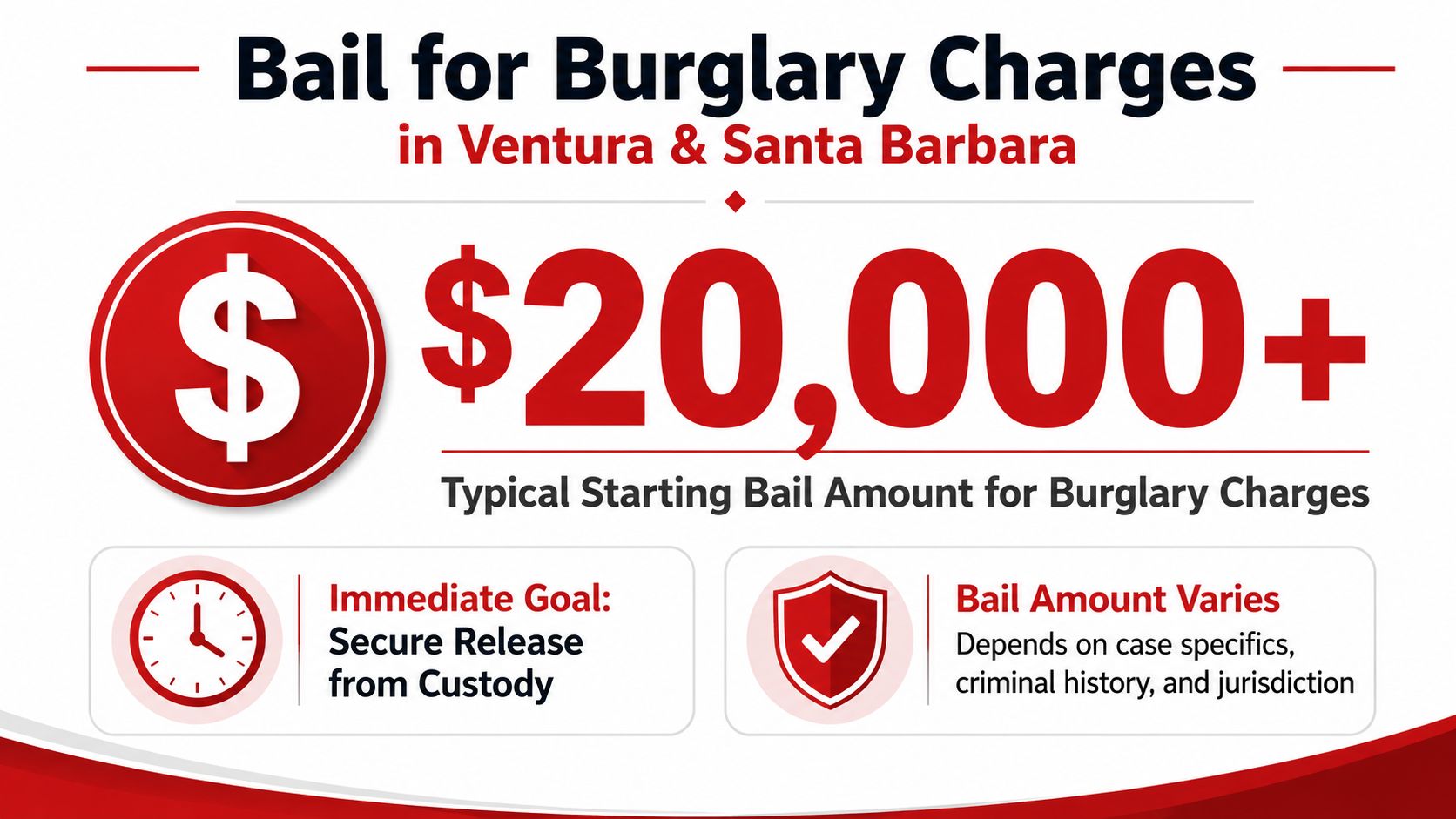
The premium charged by a bail agent in California is capped by law. This explanation of California bail bond premium rules states that the maximum legal bail bond premium is 10% of the total bail amount, meaning a $50,000 bail requires a $5,000 nonrefundable fee.
Families often mix up bail and the premium. Bail is the full amount set by schedule or by the court. The premium is the fee paid to the licensed bondsman to post that bond.
Ventura County also uses a county bail schedule. The Ventura County 2024 bail schedule lists a standard felony bail of $10,000, $2,500 for other misdemeanors, and half the felony amount for 17(b) misdemeanors. Burglary bail can land higher or be handled differently depending on whether the booking suggests first degree burglary, second degree burglary, prior record issues, probation status, or other facts that raise concern for the court.
That is why booking verification comes first.
Why the charge details matter so much
In real cases, the difference between “they stole something” and “they intended to steal when they entered” is not academic. It affects how the case is charged, how a defense lawyer starts attacking the allegation, and how urgently the family should move to secure release.
A person sitting in custody has less privacy, less access to counsel, and more chances to make damaging statements on recorded lines. In Ventura County and Santa Barbara County, getting someone out quickly can give the defense room to address the facts, especially where the dispute is over intent, permission, or who had the right to be there.
Hidden problems families miss
The bond is only part of the risk. This review of California bail bond contract fees notes that contracts can include a minimum fee of $200 for missing a court date, and in bail forfeiture situations, the defendant may be charged 1% of the bond amount or $250, whichever is greater.
Families under stress often focus on release tonight and ignore the rules that apply after release. Court compliance, check-ins, and clear communication matter. A missed date can turn an already expensive burglary case into a much more serious financial problem.
Why local jail knowledge matters
Ventura and Santa Barbara cases do not move in exactly the same way from booking to release. A bondsman who regularly handles East County Jail Bail Bonds, Todd Road Jail Bail Bonds and Ventura County Jail bail bonds can confirm the booking, identify the custody location, start indemnity paperwork, and spot delays before hours are wasted.
That local familiarity helps when the facts are messy, which is common in burglary cases. If the arrest involves a family home, shared residence, business property, or a claim of prior permission, the legal fight may develop later. The release decision cannot wait for that. If you need a local starting point, review this page for bail bonds in Ventura County.
Your Next Steps After a Burglary Arrest
When someone you care about has been booked on burglary, the fastest way to regain control is to stop improvising and follow a short list in order.
Do these things first
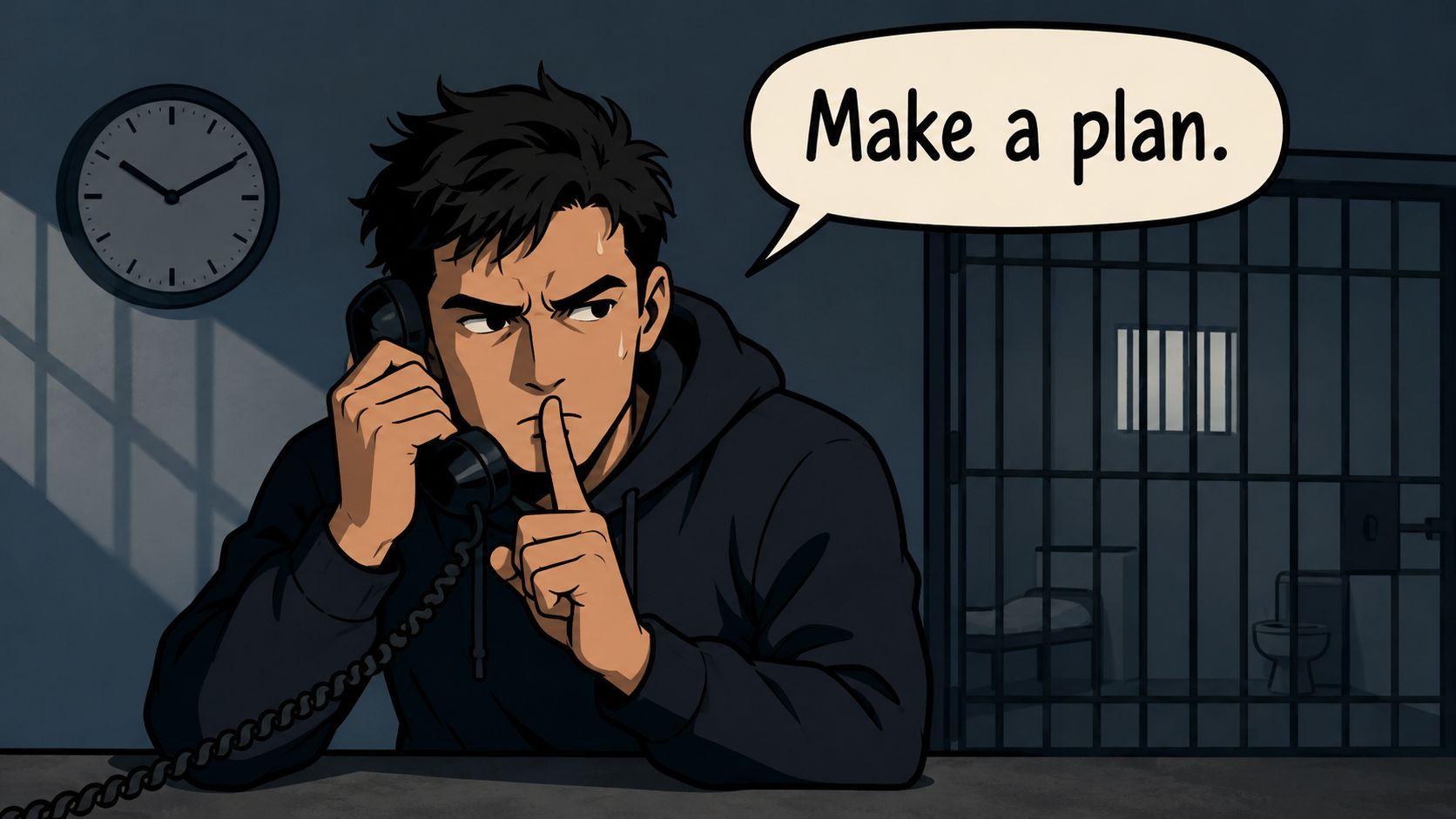
- Tell your loved one to stop talking about the facts on jail calls. Calls are commonly recorded, and casual explanations often become evidence.
- Get the booking details in writing if possible. You need the exact charge, custody location, and identifying information before making decisions.
- Contact a criminal defense attorney quickly. Burglary cases turn on details that shouldn’t be guessed at by family members.
- Start the release process right away. Waiting for “more information” often just means more time in custody.
Think local and act fast
If the arrest happened in Ventura County or nearby, timing matters. Families usually need someone who can verify the booking, explain the next custody step, and move immediately.
If the case touches Santa Barbara County, local familiarity matters there too. Area-specific resources for Santa Barbara County bail bonds, 24/7 trusted bail bond help, and Ventura County Jail bail bond support can help families narrow down what to do next.
Keep the first night simple. Protect the case, confirm the jail, contact counsel, and secure release.
If you’re not sure what the process looks like after booking, this guide on what happens after you get arrested in California helps explain the sequence from custody through court.
When time matters, Bada Bing Bail Bonds gives families a clear path forward. Licensed agents are available around the clock for Ventura, Oxnard, Camarillo, Port Hueneme, Thousand Oaks, Santa Paula, Moorpark, Fillmore, Ojai, Santa Barbara, and surrounding Southern California areas. They explain charges in plain English, verify booking details, and move quickly on release so your family isn’t left guessing in the middle of the night.