The phone usually rings at the worst time. A son gets picked up on the way home from work. A girlfriend gets a short call from county jail. A parent hears, “They said it's a probation violation, and I don't know if I can bail out.”
That's when the panic starts. People assume bail works the same way it does on every other arrest. In California, it doesn't. With a probation hold, the first question isn't “How much is bail?” It's “Is bail even available yet?”
If you're dealing with this in Ventura County, you need straight answers fast. You need to know the difference between a normal bailable booking and a no-bail probation hold, what the jail can tell you, what a bondsman can do, and what steps help your loved one get released sooner instead of wasting a day calling the wrong places.
Table of Contents
- Answering the Urgent Call for Probation Violation Bail
- What Counts as a Probation Violation in California
- The Probation Violation Warrant and Hearing Process
- Step-by-Step Guide to Posting a Bail Bond
- Navigating Ventura and Oxnard Jails After an Arrest
- Why You Cannot Ignore a Probation Violation Warrant
Answering the Urgent Call for Probation Violation Bail
When someone says they were arrested for violating probation, families hear one word and fill in the rest. They think the person missed a class, skipped a payment, or got a new charge. Sometimes they're right. Sometimes they're not. The hard part is that the jail call is usually short, the booking record is vague, and nobody explains whether this is a bondable case or a straight hold for court.
That confusion is common because probation is common. The Bureau of Justice Statistics reported that 3,103,400 adults were on probation at yearend 2023, and that probation increased 1.3% during 2023. This isn't some rare legal corner case. A lot of arrests in county jail involve people already under court supervision.
In practice, the first few hours matter most. Families lose time when they focus only on the charge and ignore the hold. They ask, “How much is the bail?” when the better question is, “Did the court place a probation violation hold that blocks release until a judge reviews it?”
Practical rule: In a California probation violation bail situation, the hold matters more than the rumor. Get the exact booking status before you make assumptions.
Three things usually help right away:
- Confirm the jail location. Ventura County cases can move through different facilities and that affects who has the booking details.
- Ask for the booking status, not just the charge. “Probation violation” by itself doesn't tell you whether release is available.
- Find out if there's a court date already attached. If there's a hearing set, timing becomes everything.
If you're trying to get someone out in Ventura County, stay calm and stay literal. Don't rely on what a friend heard from the arrestee in a rushed call. The path forward depends on the actual hold, the actual warrant, and whether a judge has already set conditions for release.
What Counts as a Probation Violation in California
A probation violation means the person allegedly broke a condition of probation. In California, that can range from a paperwork-type lapse to a fresh arrest. Families often treat all violations as the same. The courts usually don't.
Two kinds of violations that matter right away
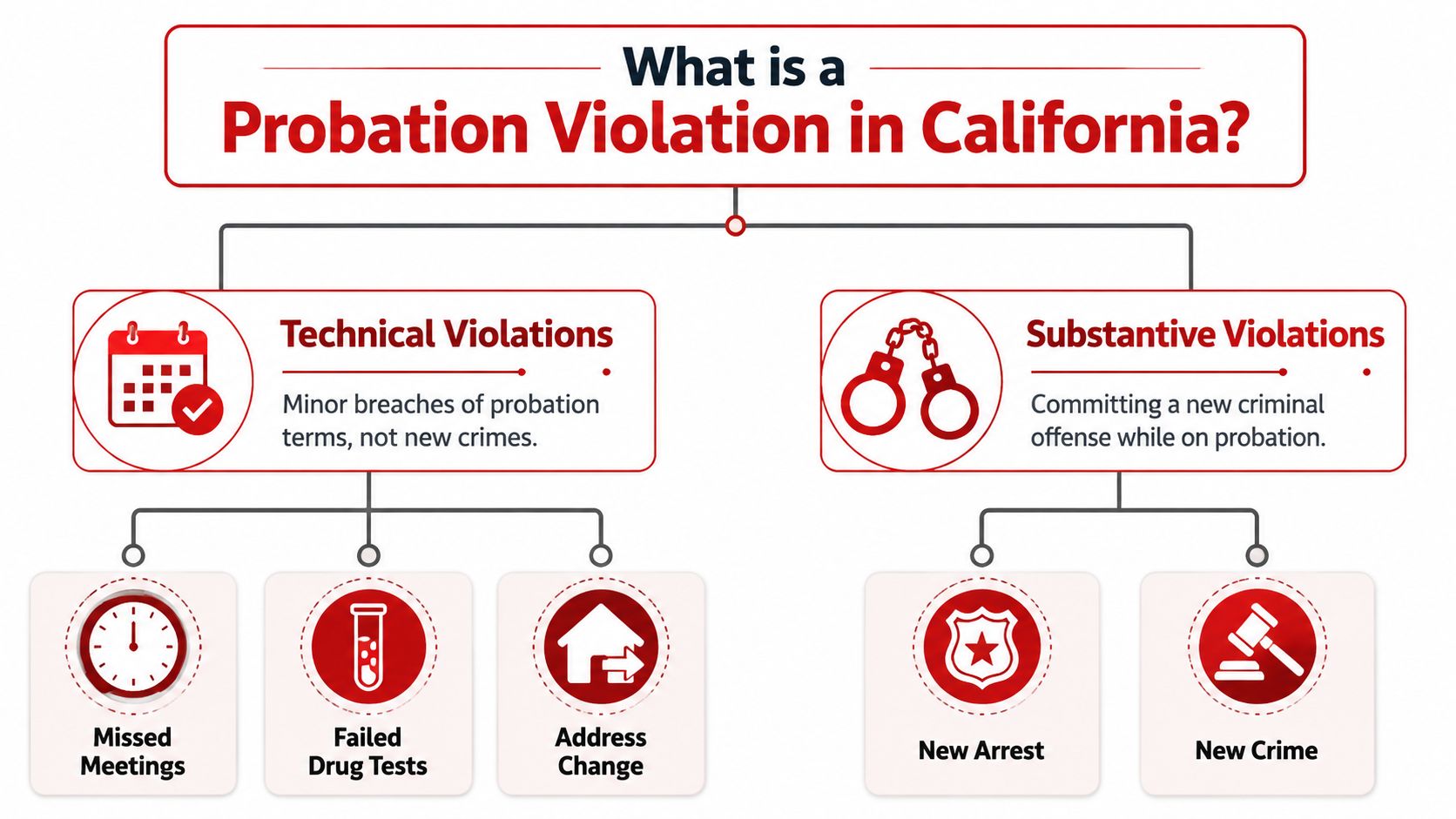
The easiest way to understand it is to split violations into technical and substantive problems.
A technical violation usually means the person didn't follow a probation rule. That can include missing a meeting, failing a drug test, not completing a class, not reporting a new address, or falling behind on a court-ordered requirement. These cases can still lead to custody, especially if the court thinks the person stopped complying.
A substantive violation usually means the person got accused of a new offense while on probation. That changes the temperature of the case fast. Judges often see a new arrest differently from a missed check-in because it suggests the person may not be safely managed in the community.
If you need a Ventura County overview tied to local bail practice, this page on violation of probation bail bonds in Ventura County is useful for the basic local framework.
Why the label matters for release
The reason courts take these cases seriously is simple. Supervision violations feed jail and prison populations in a big way. The Council of State Governments Justice Center found that states spent an estimated $10 billion in 2023 incarcerating people for supervision violations. That's one reason judges, probation officers, and jail staff don't treat a violation as a minor administrative issue.
Here's the practical side for families:
| Situation | What it often suggests | What families should focus on |
|---|---|---|
| Missed appointment or failed program step | Possible technical violation | Find out whether the court issued a warrant and whether there is a hold |
| Failed drug test or noncompliance | Technical issue that can still trigger detention | Gather proof of treatment, work, or stable residence for court |
| New arrest while on probation | Possible substantive violation | Check both the new case and the probation hold separately |
Some technical violations still lead to detention, and some new-case situations still end with bail being set. The label helps, but the booking status tells you what can happen today.
That's why generic advice fails people. “You can usually bail out” isn't good enough. In California, probation violation bail depends on what kind of violation the court believes happened and whether the judge has left room for release before the hearing.
The Probation Violation Warrant and Hearing Process
Families usually first encounter this process backward. They don't see the report, the warrant request, or the court file. They only see the arrest. By then, the important decisions may already be in motion.
How the case usually moves
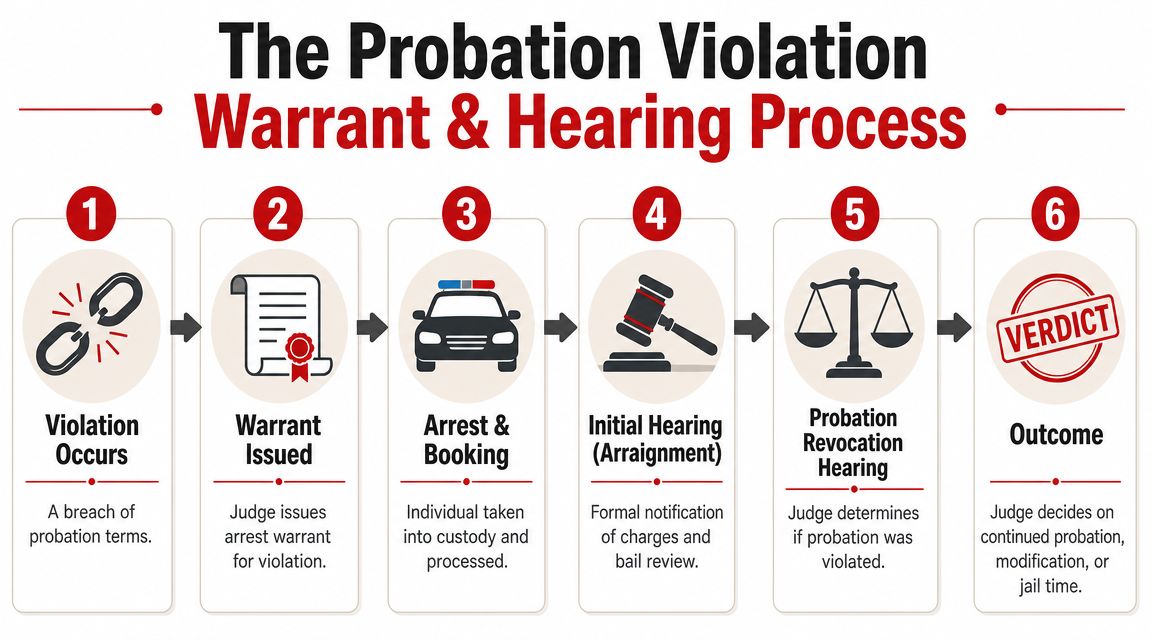
In plain English, the process often looks like this:
- Someone reports noncompliance. That may be a probation officer, the court, or an arrest tied to a new case.
- The judge may issue a warrant. If the court believes the person needs to be brought in, law enforcement can arrest on that basis.
- The person gets booked into jail. Families then start trying to find the bail amount.
- The jail shows either bail information or a hold. This is the turning point.
- The person goes before a judge. The court decides whether to continue detention, set bail, modify conditions, or handle the matter another way.
If you're trying to sort out whether an active warrant is the reason for the hold, local help with Ventura warrant bail bond assistance can help clarify what kind of custody status you're dealing with.
What a no-bail hold really means
A no-bail hold means the jail can't release the person just because a family member is ready to post bond. This is the part that frustrates people most. They think money solves the problem, then they learn the jail is waiting for a judge.
That doesn't mean no release is ever possible. It means release isn't available until court action happens.
The state-by-state difference matters here. The jurisdiction split is real. South Carolina law provides for bond pending a probation hearing, while other jurisdictions can allow a person to be held without bail after probable cause is found. That's why bad online advice causes problems. A family reads that probation violations are “bailable,” but the local court hold says otherwise.
Watch for these common realities in California cases:
- A warrant can carry a no-bail instruction. The jail follows that instruction until the court changes it.
- A new criminal case and a probation matter may run side by side. One may have bail while the other blocks release.
- Court timing controls everything. Nights, weekends, and holidays can slow the moment when a judge reviews the hold.
If the jail says “no bail,” arguing with the booking desk won't fix it. The next useful move is confirming the court date, department, and case status.
A good bondsman should tell you the truth here. If the case is on hold, nobody honest can promise immediate release. What they can do is verify the status, prepare the bond if bail gets set, and help you move quickly once the court opens the door.
Step-by-Step Guide to Posting a Bail Bond
Once a judge sets bail on a probation violation case, the job changes from waiting on court action to moving fast and clean. Families lose time here when they call without the right details, or assume a probation case works like a standard arrest. It often does not. A person can have bail on one case and still sit because another hold has not cleared.
What to gather before you call
Get the basic facts in front of you before you call a bail agent. That cuts down the back-and-forth and helps the agent confirm whether release can happen now or only after another court step.
- Full legal name and date of birth. One wrong letter can slow the booking search.
- Jail location and booking number, if you have it. If you do not, give the arrest location and agency.
- Current custody status. Ask whether bail has been set, whether there is a probation hold, and whether any other case is blocking release.
- A co-signer's information. The bond company usually needs an adult who can sign and take financial responsibility.
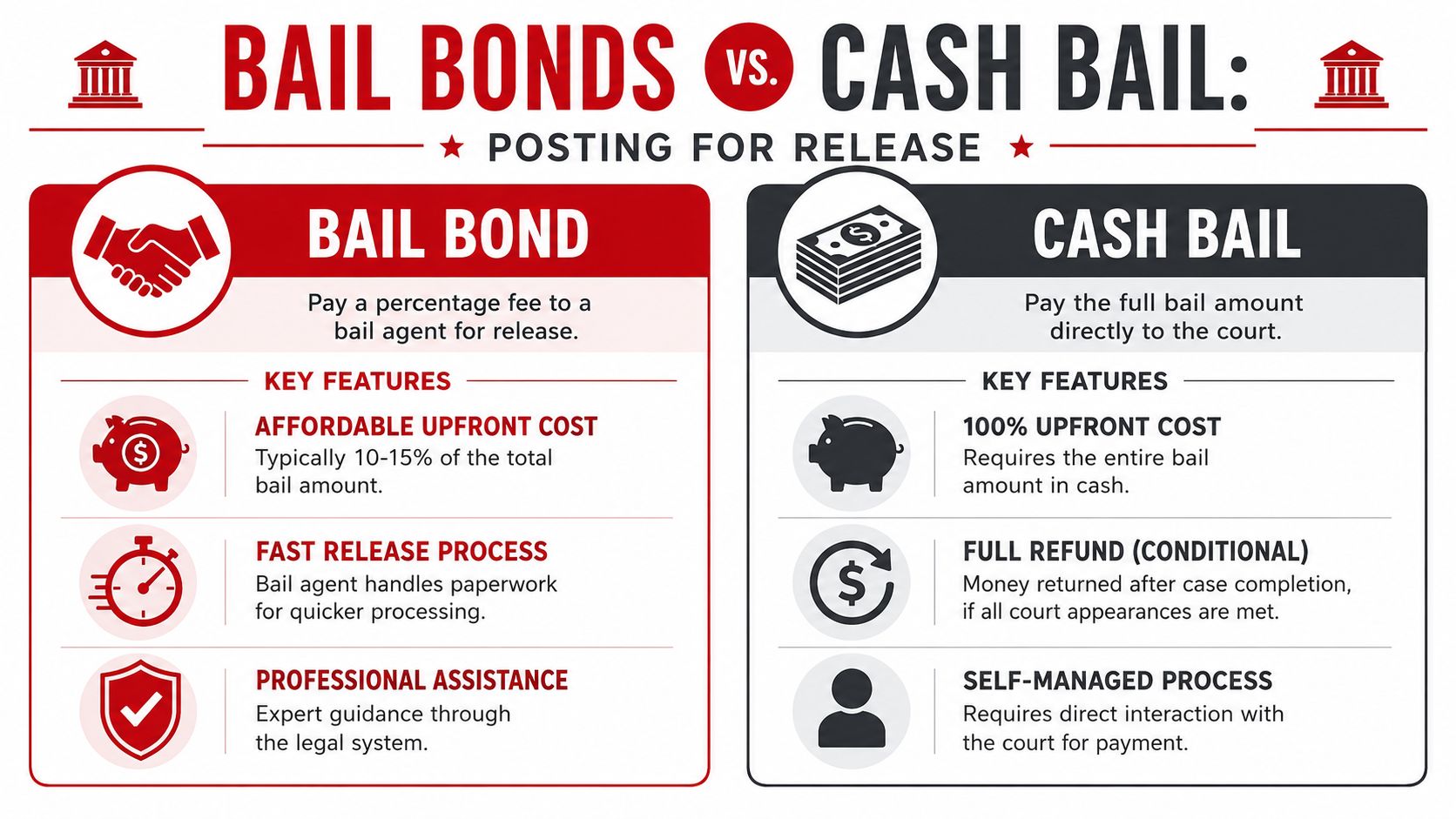
- A payment plan. In California, bail bond premiums are regulated. Larger bonds may also involve collateral or added paperwork depending on risk.
If you need the basics first, this guide on how bail bonds work in California explains the standard bond process in plain language.
A short video can also help if this is your first time dealing with bail:
What the bond process looks like in real life
At this point, families usually start trying to find the bail amount. In a probation violation case, that is only part of the answer. The real question is whether the jail can accept a bond right now.
If the case is bondable, the bond company verifies the booking, the bail amount, and any holds attached to the file. That first check matters because Ventura County custody status can change after the court reviews the probation matter.
Next comes the co-signer paperwork. The signer provides ID, contact information, and agrees to the bond terms. If the bond is high or the case has extra risk factors, the company may ask for collateral or a stronger financial profile.
Then payment is arranged and the bond is posted with the jail. Some families pay all at once. Others need a payment plan. The fastest release usually happens when the signer, payment method, and booking details are ready before the bond is written.
After the bond is posted, the jail still has work to do. Staff must process the release, check for any remaining holds, and complete discharge steps inside the facility. Payment does not put someone at the front of the line.
What helps: accurate booking details, a ready co-signer, and a clear answer on whether the probation case is actually bondable.
What slows things down: guessing on the jail location, giving incomplete names, or paying for a bond before anyone confirms there is no remaining hold.
Bada Bing Bail Bonds handles probation violation cases and can verify booking details, explain the paperwork in plain English, and discuss payment plans or collateral when bail is available. That kind of help matters when a family needs a straight answer fast, especially in the gray area between a true no-bail hold and a case that can be bonded out the same day.
Navigating Ventura and Oxnard Jails After an Arrest
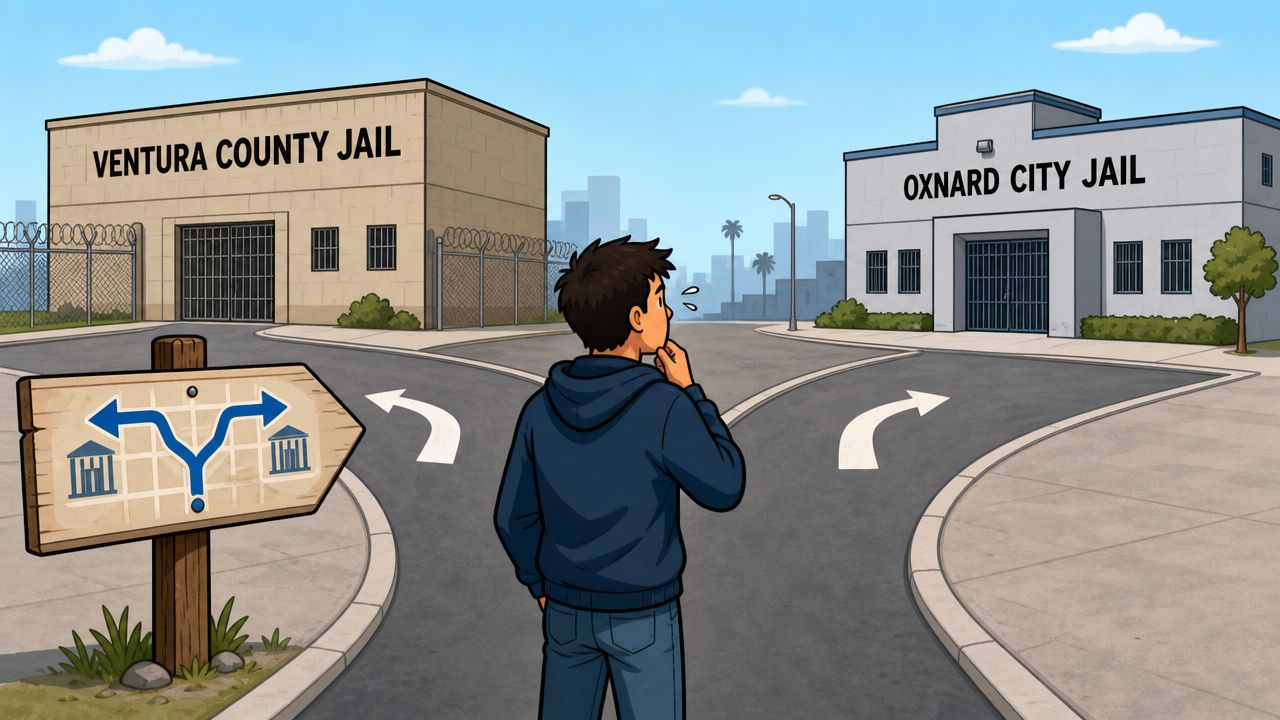
The local part is where families either save time or lose it. In Ventura County, people often call around in circles because they know the arresting agency but not the actual housing facility. By the time they find the right desk, an hour is gone.
What families usually run into first
A Ventura County probation arrest can involve the Ventura County Main Jail or custody processing connected to the Oxnard area, including transfer issues that confuse families. The person who got arrested may tell you one location during the first call and end up housed somewhere else after booking decisions are made.
That's why the first call should focus on facts, not assumptions. Ask where the person is now, whether they're staying there, and whether the booking is complete. If the arrest happened in Oxnard, transfer questions can matter just as much as the bond itself.
If that's the issue, this local guide on bailing someone out in Oxnard before jail transfer can help you understand why timing gets tight.
How to avoid slowdowns at release
Ventura County release times can feel unpredictable from the family side because several things happen after bond is posted. Staff still need to confirm the file, finish release processing, and check for any other hold that blocks the discharge.
The practical mistakes I see most often are simple:
- Calling before booking is complete. The jail may not have usable information yet.
- Ignoring the second hold. A person may clear one issue and still be held on another.
- Sending the wrong co-signer documents. If the paperwork is incomplete, everything stalls.
- Promising a ride too early. Families rush to the jail parking lot while the person is still in internal release processing.
A smoother approach looks like this:
| What to confirm | Why it matters |
|---|---|
| Current housing location | Prevents calls to the wrong facility |
| Booking complete or not | Tells you whether bond can even be processed yet |
| Bail set or no-bail hold | Decides whether a bondsman can act now |
| Any additional warrants or cases | Avoids release surprises |
Ventura County cases move faster when one person in the family handles the calls, keeps the facts straight, and relays the same information to the jail, the lawyer, and the bail agent.
Why You Cannot Ignore a Probation Violation Warrant
A probation warrant doesn't fade out because time passes. It sits there until law enforcement contacts the person or the person deals with it through the court. That's why people get arrested during a traffic stop, at home, or after what they thought was a minor contact with police.
Waiting usually makes the custody problem worse
When someone knows there's a probation problem and avoids it, the court often reads that as further noncompliance. Even if the original issue started small, the failure to address it can make the judge less willing to trust voluntary compliance later.
This gets especially dangerous in Ventura County when a person thinks they'll “take care of it next week.” They keep working, driving, and moving around as usual, then get picked up at a time that gives them the fewest options. Nights and weekends are bad enough on a regular case. They're worse on a probation hold.
If you want the short version of why some warrants block release, this page on what a no bond warrant means explains the basic issue.
What to do today
Take these steps now:
- Verify whether there is an active warrant. Don't rely on rumor.
- Find out whether the person is in custody on a hold or on set bail. That changes everything.
- Get the court date and department if one exists. That gives the defense lawyer and bail agent something concrete to work with.
- Line up the co-signer and documents early. If bail gets set, you don't want to start from zero.
- Stop waiting for the problem to solve itself. It won't.
A probation violation case can still be managed. But delay usually shrinks your options, increases stress on the family, and turns a fixable situation into a custody fight.
If your loved one is sitting in jail on a probation issue in Ventura County, contact Bada Bing Bail Bonds right away for immediate status checks, plain-English guidance on whether the case is bondable, and help moving fast once release is allowed.