Revoke bail meaning is a judge canceling a defendant’s pretrial release and sending them back to custody, usually after a missed court date, a new arrest, or a violation of release conditions. In Massachusetts, bail may be revoked if a released defendant is charged with a new crime or violates a release condition, and the defendant can be held without bail until trial; one legal summary also notes that after revocation comes forfeiture of the bail money or bond, so the loss can be both personal and financial.
If you’re reading this because a loved one just got that call in Ventura County, the first reaction is usually the same, confusion, panic, and a lot of fast questions about whether they’re going back to jail, whether the bond is gone, and whether anything can still be fixed tonight. For a plain-English overview of pretrial release, see what pretrial release means.
Table of Contents
- What It Means When Bail Is Revoked
- Common Reasons Courts Revoke Bail in California
- Revocation vs Forfeiture vs Rearrest
- Immediate Steps to Take After Bail Is Revoked
- How Revocation Affects Your Bond and Collateral
- Options for Reinstatement or Posting a New Bond
- Protecting Your Rights and Moving Forward
What It Means When Bail Is Revoked
A family gets a late-night call, then hears the words nobody wants to hear, bail was revoked. That does not mean the case is over, but it does mean the judge has decided the defendant’s pretrial release is no longer in place, and custody is back on the table right away.
The core meaning in plain English
Under U.S. criminal procedure, revoking bail means the judge cancels release and returns the defendant to custody, usually after a missed appearance, a new arrest, or another release violation. In California practice, that’s the basic mechanic behind the phrase people search when they ask about revoke bail meaning, and it’s the same practical result families care about in Ventura County, the defendant can lose freedom quickly while the court decides what happens next.
Massachusetts makes the seriousness of revocation clear. If a released defendant is charged with a new crime or violates any release condition, bail may be revoked and the defendant can be held without bail until trial; that warning is even placed in the docket as prima facie evidence the defendant was informed, which shows how heavily courts treat the risk.
Practical rule: once revocation is on the table, the clock matters more than the excuse. The faster the family understands the reason, the better the chances of protecting the bond and preparing the next court step.
A judge’s revocation order usually changes the person’s status immediately. That means the defendant may be taken back to jail, and the bond can be exposed to loss if the court also moves toward forfeiture. For families in Ventura, Oxnard, Camarillo, Port Hueneme, Thousand Oaks, Santa Paula, Moorpark, Fillmore, Ojai, and Santa Barbara, that’s why a same-night response is often the difference between a fixable problem and a final one.
What the family feels next
The first problem is rarely legal theory, it’s logistics. Someone has to find out where the defendant is, whether there’s a hold, whether the jail has processed the revocation, and whether a court appearance or hearing is coming fast. Ventura County Jail bail bonds situations often move quickly because jail and court timelines don’t wait for business hours.
If the defendant is already back in custody, the family should stop guessing and start confirming details. Missed calls, a fresh charge, or a release-condition violation can all trigger the problem, but the response has to be based on the exact record, not rumors.
Common Reasons Courts Revoke Bail in California
A lot of families assume bail only gets revoked after a dramatic new felony arrest. That’s not how it always works. Courts can act on smaller but still serious violations, and the judge usually has discretion rather than an automatic yes-or-no rule.
The triggers judges actually care about
The most common trigger is a missed court date, because failure to appear tells the court the defendant might not come back on their own. A new arrest while out on bail is another major trigger, and so is any breach of the release terms the judge already set, such as contact restrictions, drug testing, travel limits, or supervision rules.
Massachusetts guidance says a judge may revoke bail after a new charge or another violation, which matters because it confirms revocation is often discretionary, not automatic. That same practical truth shows up in local California bail practice, the court looks at the breach, the risk, and whether the defendant can still be trusted on release.
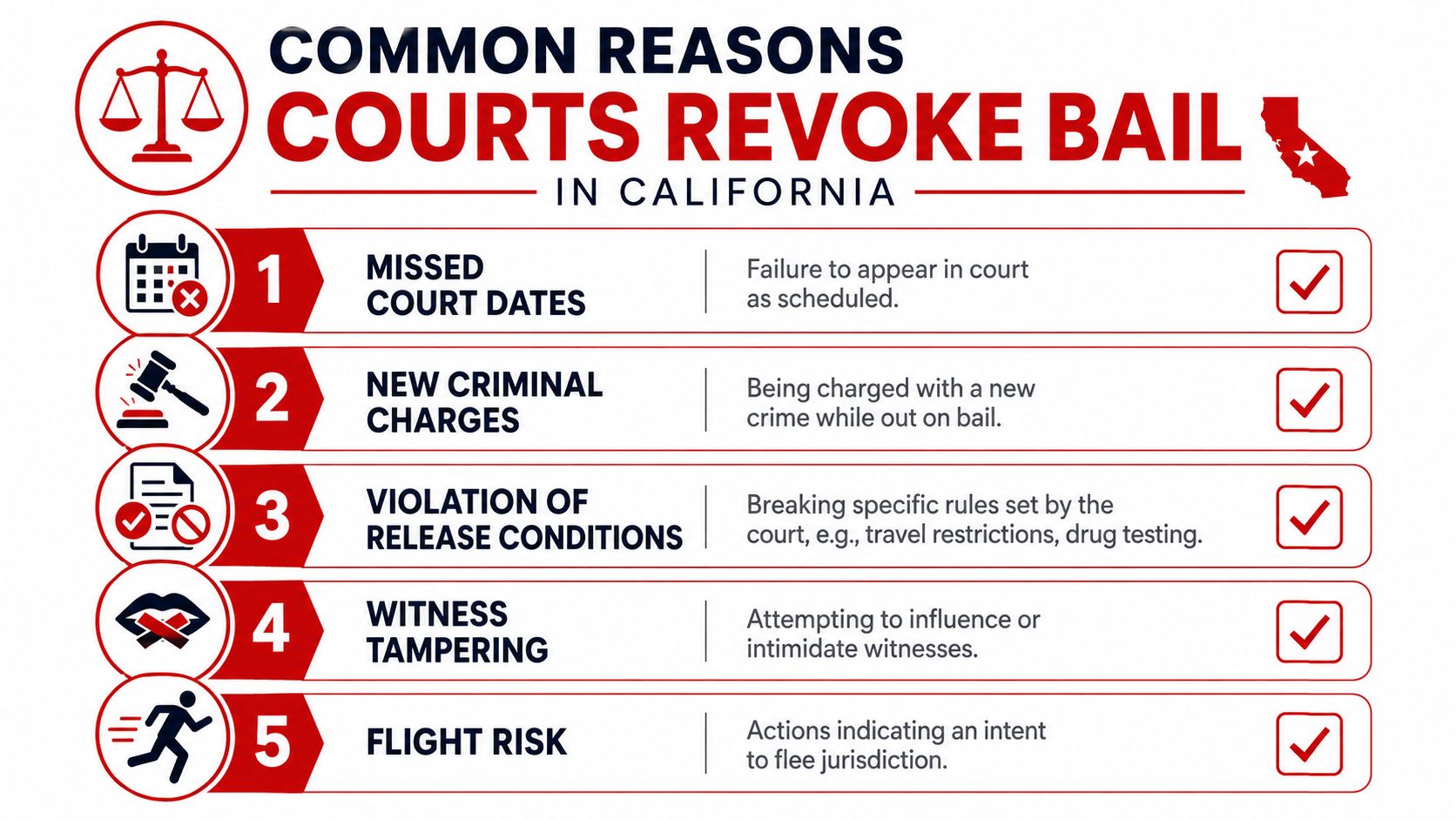
Some violations are more procedural than people realize. A person who leaves the county without permission, ignores a protective order, misses testing, or keeps contacting a protected person can put the bond at risk even if there wasn’t a brand-new arrest. In local practice, those conditions matter because judges treat them as promises attached to release, not optional suggestions.
Why discretion matters in Ventura County
Courts do not have to treat every misstep the same way. A late appearance is not always handled like a fresh arrest, and a one-time mistake is not always treated like a pattern of defiance. Judges look at what happened, whether the violation was intentional, and whether public safety or flight risk has changed.
A revocation motion is often less about punishment than about whether the court still trusts the release order. Once trust is gone, the judge can tighten conditions fast.
Families searching for Ventura Bail Bonds or Oxnard Bail Bonds usually want to know whether there’s still time to correct the problem. Sometimes there is, especially if the issue is a paperwork mistake, a miscommunication, or a condition that can be addressed before the court acts. What happens if you miss court is the right place to start when the issue is failure to appear.
Revocation vs Forfeiture vs Rearrest
These three outcomes often get lumped together, but they’re not the same thing. If you mix them up, you can make bad decisions fast, especially when collateral, co-signers, or a defendant’s release status are on the line.
Revocation is not the same as losing the money
Bail revocation is the court withdrawing release and sending the defendant back to custody. Bail forfeiture is the bond money or collateral being lost because the conditions weren’t met. Rearrest is the physical act of taking the person back into custody, often because of a new offense or a warrant.
That distinction matters because one event can happen without the others. A defendant can be rearrested and still have a bond hearing later. A court can revoke release and then decide forfeiture issues separately. In other words, the legal and financial consequences don’t always move on the same timeline.
| Outcome | What it means | Main consequence |
|---|---|---|
| Bail Revocation | Court withdraws release | Defendant returns to custody |
| Bail Forfeiture | Bond is treated as lost | Money or collateral can be at risk |
| Rearrest | Defendant is taken back in | Custody resumes, often on a new charge or warrant |
Some jurisdictions add procedural steps before revocation becomes final. A consumer-facing legal explanation notes that the process can involve written notice, time to address the security, and other formalities before the court closes the door. That’s why families should not assume the word “revoke” means the same thing in every county or every case.
Why the difference matters financially
If the court is only revoking release, the family may still have time to respond before the financial loss becomes final. If forfeiture is already in play, the focus shifts to whether the bond can be saved, reinstated, or replaced before the deadline runs out. That’s where timing becomes critical for a co-signer or anyone who pledged collateral.
Bottom line: revocation affects custody first, forfeiture affects the money or property, and rearrest affects the body. They can overlap, but they’re not interchangeable.
For Ventura County bail bonds cases, the practical question is whether the family needs to protect freedom, protect collateral, or both. Bail forfeiture in California is the related issue to read next when the financial side is starting to matter.
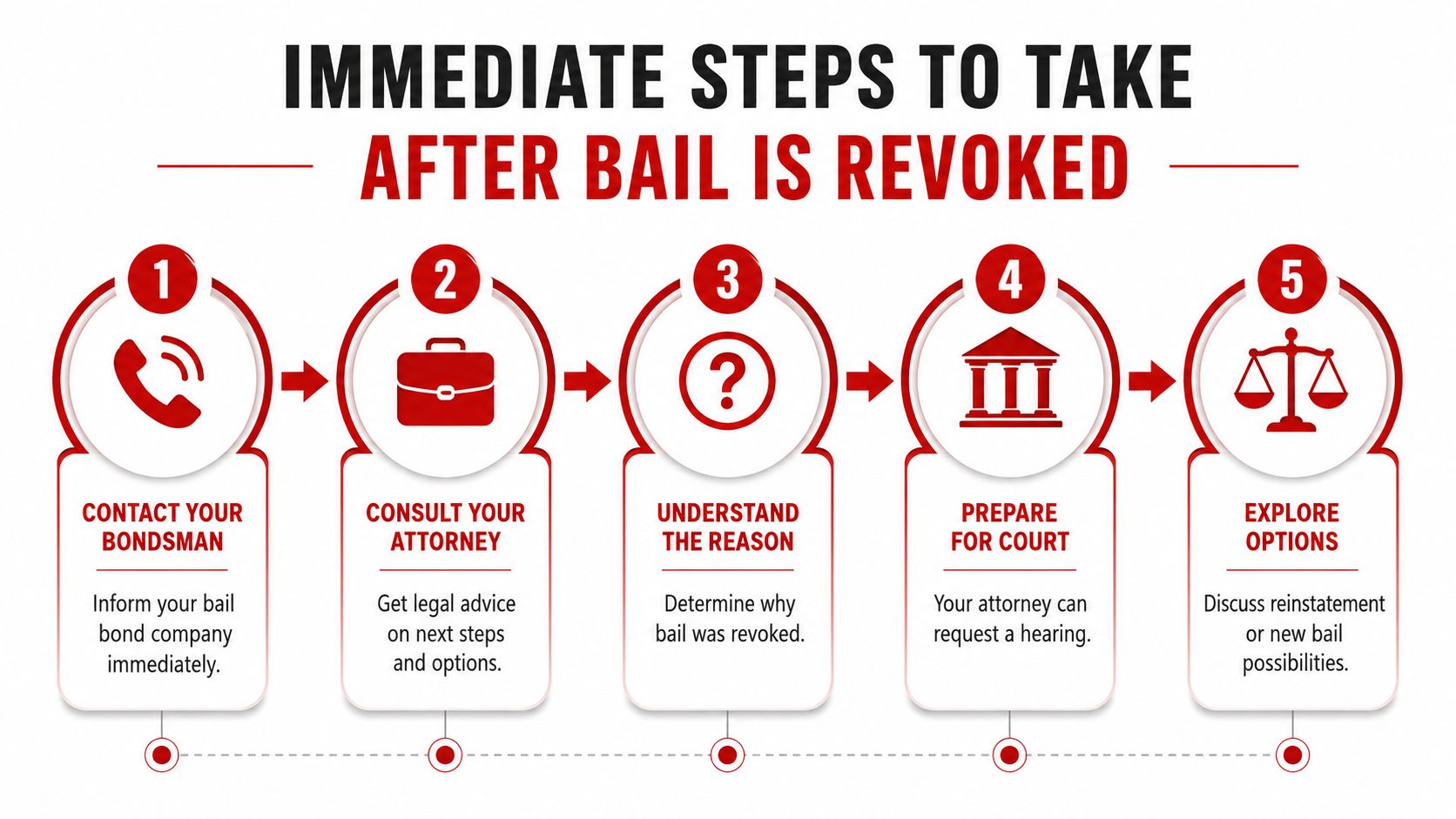
Immediate Steps to Take After Bail Is Revoked
The first 24 hours decide a lot. Calls, paperwork, and court timing all move faster than families expect, especially if the revocation happened after business hours and the jail is already processing the defendant.
Start with the person who posted the bond
The first call should go to the bondsman who posted the original bond, because that company needs to know the status change right away. If the defendant is in Ventura County Jail, the family also needs to confirm booking and custody details with the facility so nobody is working from stale information. Families looking for 24-hour bail bonds near me Ventura help usually need someone who can answer immediately, not the next morning.
The next step is a criminal defense attorney, because revocation is a court issue, not just a paperwork issue. An attorney can look at whether the court used the right procedure, whether there’s a hearing coming, and whether the facts support reinstatement or a new bond.
Do not wait for the court to “figure it out.” If there’s a hearing or a motion pending, silence usually helps the other side, not the family.
Gather the facts before the hearing
Put the basic evidence together fast. That means court notices, text messages, proof of work or treatment attendance, travel records, and anything else that explains why the alleged violation happened. If the claim involves a missed appearance, a bond agent or attorney will want the exact date, the notice method, and any proof that the defendant tried to comply.
The point is not to argue every detail at 2 a.m. The point is to preserve the facts before memories get fuzzy and documents disappear. In many cases, the difference between a reversible problem and a final one is whether the family can prove the defendant still deserves release.
For a visual walkthrough, watch this short explainer.
Prepare for the court’s next move
The court can move toward a hearing, stricter conditions, or continued custody. Families should be ready for all three. If the violation happened in Ventura, Oxnard, Camarillo, Port Hueneme, Thousand Oaks, Santa Paula, Moorpark, Fillmore, Ojai, or Santa Barbara, the practical response is the same, verify the status, get the lawyer involved, and don’t assume the bond can fix itself.
How Revocation Affects Your Bond and Collateral
Families usually worry about the jail first, then the money. That’s the right order emotionally, but financially the bond can become the next emergency if nobody acts quickly.
What happens to the premium and the collateral
In California, the bond premium is set at 10% of the total bail. That fee is the cost of getting the bond posted, and it’s separate from any collateral the family may have pledged to secure a larger or riskier bond. Bada Bing’s published policy is that it keeps costs transparent, with no add-on fees, and it offers payment plans, co-signer options, and collateral solutions for larger or higher-risk bonds.
If the court revokes release, the posted bond money may be exposed to forfeiture, and collateral such as property, vehicles, or cash can be at risk if the bond is not resolved. That’s why revocation is bigger than “he got picked up again.” It can become a financial problem for everyone who signed or pledged property.
The return of collateral usually depends on whether the bond is exonerated or otherwise resolved under the court’s rules. If the court has only started the process, there may still be a chance to stop a final loss. If the bond is already forfeited and the deadlines pass, the exposure gets worse.
What co-signers need to understand
Co-signers are not spectators. If they helped secure the bond, they need to know whether the defendant violated a condition, whether the court has issued notice, and whether a response window is still open. A co-signer who ignores the revocation can end up with the same financial headache the family was trying to avoid.
Bada Bing’s published process also includes court-date reminders and agent check-ins after release, which matters because small compliance problems often become bigger financial ones when nobody catches them early. That kind of tracking doesn’t guarantee a good outcome, but it can reduce avoidable mistakes.
Bond exoneration basics are useful once the court starts sorting out whether the bond can be closed without loss.
Options for Reinstatement or Posting a New Bond
Revocation is serious, but it doesn’t always end the discussion. Judges can still consider whether the defendant should be returned to release under the old bond, a new bond, or modified conditions that better fit the situation.
Reinstatement can still be possible
A bail review hearing can sometimes lead to reinstatement of the original bond, especially when the violation was technical, explainable, or quickly corrected. That usually works best when the defendant has ties to the community, no new public-safety issue, and a clean way to show the court the mistake won’t happen again.
Local knowledge matters here because Ventura County courts care about specifics, not slogans. A judge is more likely to listen when the facts are organized, the explanation is credible, and the response comes fast. A bond agent who knows the local release process can help coordinate paperwork and get the right information in front of the right people.
When a new bond is the realistic path
Sometimes the court won’t reinstate the old bond. In those cases, the family may need to post a new bond, often under tighter conditions or with a different amount. That can happen when the violation looks more serious, when the judge thinks the old release order failed, or when the court wants a cleaner set of terms.
If the violation involved a new crime, a repeated no-show, or a clear breach of a court order, expect the judge to look harder at detention or stricter release terms.
Modified conditions can also be part of the answer. The court may require closer check-ins, more limited travel, or other restrictions that make release possible without ignoring the problem. That’s not ideal, but it can be the difference between custody and a workable path back home.
For families in Ventura County bail bonds situations, the smartest move is not to guess which outcome is likely. It’s to get the facts, prepare the explanation, and move before the court locks in the next step. Bail bond reinstatement is the right topic to read when you’re trying to keep the release alive.
Protecting Your Rights and Moving Forward
The rule is simple, even if the case isn’t. Know why the bail was revoked, act within 24 hours, document everything, and work with people who understand Ventura County procedure. Waiting, guessing, or ignoring notices usually makes the case harder and the financial exposure bigger.
Keep every notice, every court date, and every call log. When the court asks what happened, paper beats panic.
If bail was revoked, the family still has options, but speed and accuracy matter. For immediate help with Ventura County bail situations, contact Bada Bing Bail Bonds for clear guidance, fast response, and help sorting out what can still be fixed tonight.