Your phone lights up late at night. The voice on the other end is shaky. Someone you care about has been arrested, they’re in Riverside County, and they need help now. At that moment, you do not need a lecture. You need a calm plan, the right order of steps, and a clear sense of what to do in the next few minutes.
That’s where a Riverside bail hotline matters. A good hotline isn’t just a phone number. It’s the first move that turns panic into action. If you’re searching because you need answers right now, focus on speed, accurate information, and the fastest legal path to release. Families across Southern California face this every day, whether they’re dealing with Ventura County bail bonds, bail bonds Ventura, bail bonds Oxnard, fast bail bonds Ventura, or a late-night arrest tied to Ventura County Jail bail bonds needs in nearby cities.
Table of Contents
- That Phone Call An Emergency Guide for Right Now
- Information to Gather Before You Call
- Understanding How Riverside Bail Bonds Work
- Navigating Payment Plans and Co-Signer Duties
- The Timeline From Your Call to Their Release
- After Release Ensuring Compliance and Next Steps
That Phone Call An Emergency Guide for Right Now
The first call usually sounds the same. They’re scared, embarrassed, and talking too fast. You’re trying to figure out which jail they’re in, what happened, and whether they’re getting out tonight.
Here’s the truth. The first hour matters because confusion wastes time. In California, approximately 60% of people arrested can afford to post bail, while the remaining 40% stay in jail until trial, and the average bail amount is $50,000, which creates a real financial barrier for families trying to act fast, according to California bail bond statistics. If you’re not ready to post full cash bail, your next move is simple. Call a live agent through a 24-hour bail bonds near me service and start verifying the booking details immediately.
What to do in the next ten minutes
Don’t argue with the person who was arrested. Don’t start calling five different relatives. Get organized.
- Write down the caller’s full name if you’re not completely sure how it appears on booking paperwork.
- Ask which facility they’re in or where they were taken after arrest.
- Find out whether bail has been set or whether they’re still waiting to be booked.
- Keep your phone free because the next call may come from the jail, a court clerk, or the bail agent.
Practical rule: Your first job isn’t solving the whole case. Your first job is confirming where the person is and whether bail is available.
This same pattern shows up whether the arrest happened in Riverside or whether your family usually deals with bail bonds Ventura, 24-hour bail bonds Ventura, Camarillo, Oxnard, Port Hueneme, Thousand Oaks, Santa Paula, Moorpark, Fillmore, Ojai, or Santa Barbara cases. The geography changes. The first move doesn’t. Get the facts, make the call, and stop the clock.
Information to Gather Before You Call
A fast call starts before you dial. If you can gather the right details in a few minutes, you save yourself back-and-forth and help the agent move straight into verification.
Start with identity and location
The most useful details are basic, not fancy. A full legal name matters because jails can hold several people with similar names. Date of birth helps separate your person from everyone else in the system. A booking number is even better because it lets the agent identify the record faster.
If you don’t have all of that, don’t freeze. Start with what you know and fill the gaps by using a California jail inmate search tool. That’s often the quickest way to confirm the facility before you call.
If you know the arrest city but not the jail, say that first. It gives the agent a practical starting point.
Families in Ventura, Oxnard, Camarillo, and Santa Barbara run into the same problem all the time. They know where the arrest happened, but they don’t know where the booking ended up. That’s common. Get the city, the full name, and the date of birth first.
Use this checklist before you dial
| Information Needed | Why It’s Important | Where to Find It |
|---|---|---|
| Full legal name | Prevents mix-ups with similar names | Jail call, text messages, ID, family records |
| Date of birth | Helps confirm the right person in custody | Family member, ID, prior records |
| Booking number | Speeds up case lookup | Jail website, inmate search, booking desk |
| Arrest location | Helps narrow down facility and agency | Caller, police paperwork, family witnesses |
| Jail or detention facility | Tells the agent where the bond must be posted | Inmate locator, jail staff, caller |
| Bail amount if available | Determines the bond cost and payment options | Jail records, court information, booking desk |
| Charges if known | Helps explain process and timing | Arrest paperwork, jail record, caller |
| Your relationship to the defendant | Important for co-signer discussions | Your own confirmation |
A few local details also help if you’re in Ventura County. The county includes Ventura, Oxnard, Camarillo, Port Hueneme, Thousand Oaks, Santa Paula, Moorpark, Fillmore, and Ojai, and many families search for Ventura County bail bonds because they need local jail and court guidance right away.
For court reference, Ventura County Superior Court’s 2024 bail schedule sets standard felony bail at $10,000, other misdemeanors at $2,500, and 17(b) misdemeanors at $5,000, with certain enhancements adding $5,000 to $10,000. If you know the charge category, that can help you ask smarter questions on the first call.
Understanding How Riverside Bail Bonds Work
A common pitfall exists on one point. The perception is that “bail” and “bail bond” mean the same thing. This is incorrect.
Cash bail versus a bail bond
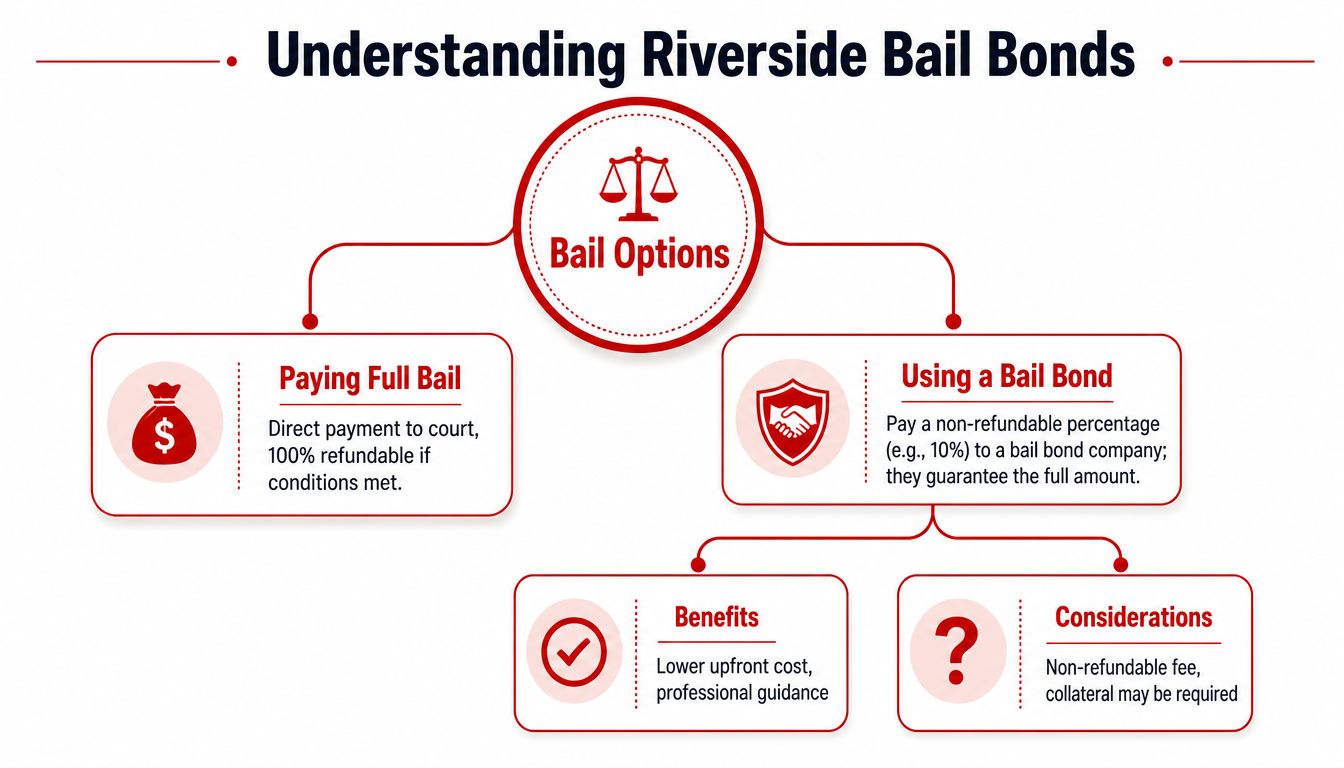
If the court sets bail, you usually have two broad paths. You can pay the full amount directly to the court, or you can use a licensed bail bond agency that posts a bond on the defendant’s behalf. Think of the bond like a financial guarantee. The agency promises the court the full amount if the defendant doesn’t comply, and in return the client pays a premium for that service.
For families under stress, this is usually the deciding issue. Coming up with the full amount is hard. That’s why people call a Riverside bail hotline in the first place.
If you need the plain-English version of the process, this guide on how bail bonds work in California is the right starting point.
What the ten percent really means
California makes this part straightforward. Bail bond premiums are legally mandated at exactly 10% of the total bail amount, and for a $10,000 bail, the non-refundable fee is precisely $1,000, as explained by Riverside bail bond cost guidance.
Key point: That premium is the fee for the bond service. It is not a deposit you get back at the end of the case.
That matters because some families hear “the case might get dismissed” and assume the bond fee comes back. It doesn’t. The premium pays for the agency taking the risk and posting the guarantee.
California bail law creates consistency here, which is good for consumers. You shouldn’t be guessing at the base premium from one licensed agent to the next. That same basic pricing structure is relevant whether someone is dealing with Riverside, Ventura County Jail bail bonds, bail bonds Ventura, or bail bonds Oxnard. The surrounding facts can change, but the legal premium structure is the backbone of the decision.
For local jail logistics in Ventura County, the Ventura County Sheriff’s bail posting page explains that bail can be posted at the Pre-Trial Detention Facility at 800 South Victoria Avenue, Ventura and lists accepted payment methods including cash, cashier’s checks payable to Ventura County Superior Court, bail bonds, and online credit or debit card processing through GovPayNet with PLC #6404.
Navigating Payment Plans and Co-Signer Duties
Families often stop breathing for a minute and ask the important question. “What if I can’t cover it all today?” Fair question. A bond lowers the upfront cost compared with full cash bail, but that doesn’t mean the premium feels small.
How payment plans fit into the decision
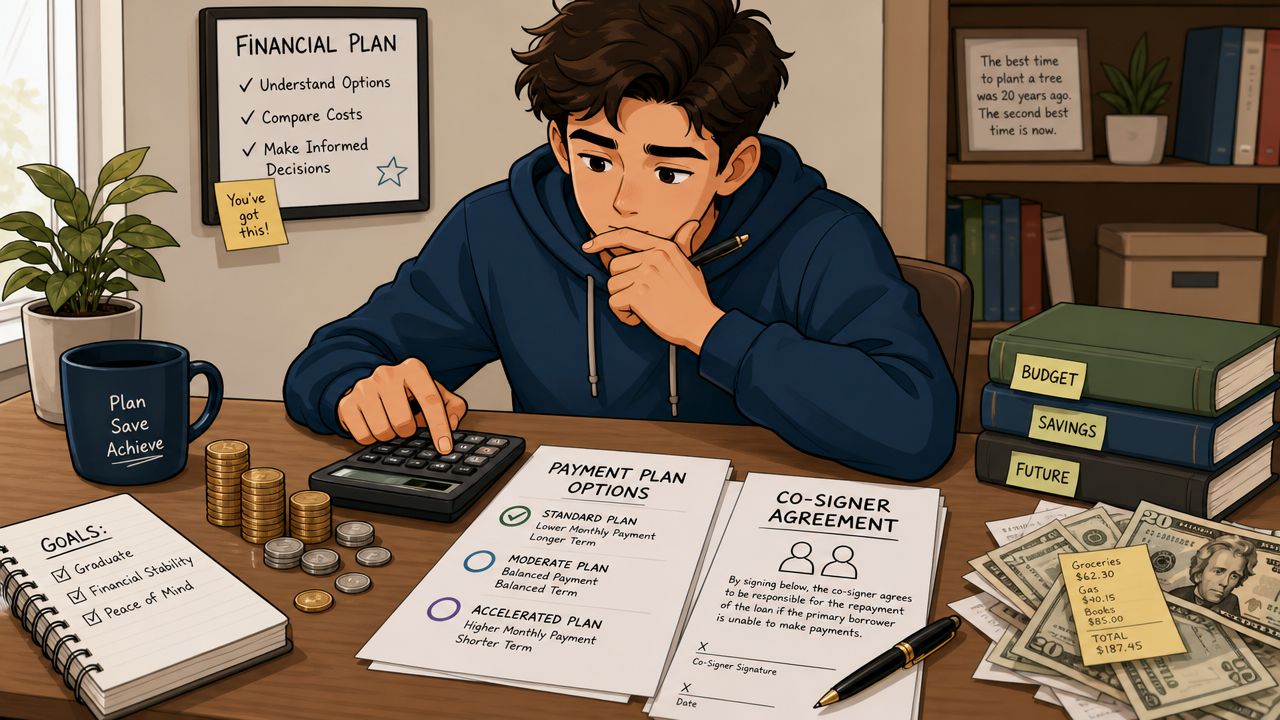
Payment plans can make the situation manageable, especially when the family has income but not immediate cash. The practical issue isn’t just cost. It’s whether the agent believes the agreement is realistic and whether the person signing understands the obligation.
California also allows a fast digital start. The California Department of Insurance bail information page states that the posting process often takes 5 to 10 minutes online via DocuSign, email, or fax, followed by immediate bond submission at the local Riverside County jail. That speed matters when everyone is trying to move before the jail release queue backs up.
A co-signer should read the terms carefully before agreeing. If you need the role explained in plain language, review what a co-signer for a bail bond does.
Fast paperwork is helpful. Blind paperwork is dangerous. Read what you sign.
What a co-signer is really agreeing to
A co-signer, also called an indemnitor, is not doing a favor with no risk attached. The co-signer is backing the bond and taking responsibility for compliance if the defendant doesn’t follow the rules.
Here’s the clean breakdown.
Pros for the family
- Release without full cash bail: The family may secure release without producing the entire court bail amount.
- Shared financial path: A co-signer can help facilitate payment arrangements when the defendant can’t qualify alone.
- Practical coordination: One responsible adult keeps communication organized and reduces confusion.
Cons for the co-signer
- Financial responsibility: If the defendant disappears or violates the bond terms, the co-signer may face serious financial consequences.
- Possible collateral requirements: Larger or higher-risk bonds may require property, valuables, or other security.
- Ongoing involvement: The co-signer may need to help keep the defendant on track with court dates and agency contact.
This same financial decision comes up in fast bail bonds Ventura calls just as often as it does in Riverside. The names of the facilities and courts differ, but the question is the same. Can the family make a sound agreement without creating a second crisis at home? If the answer is no, slow down and ask harder questions before anyone signs.
The Timeline From Your Call to Their Release
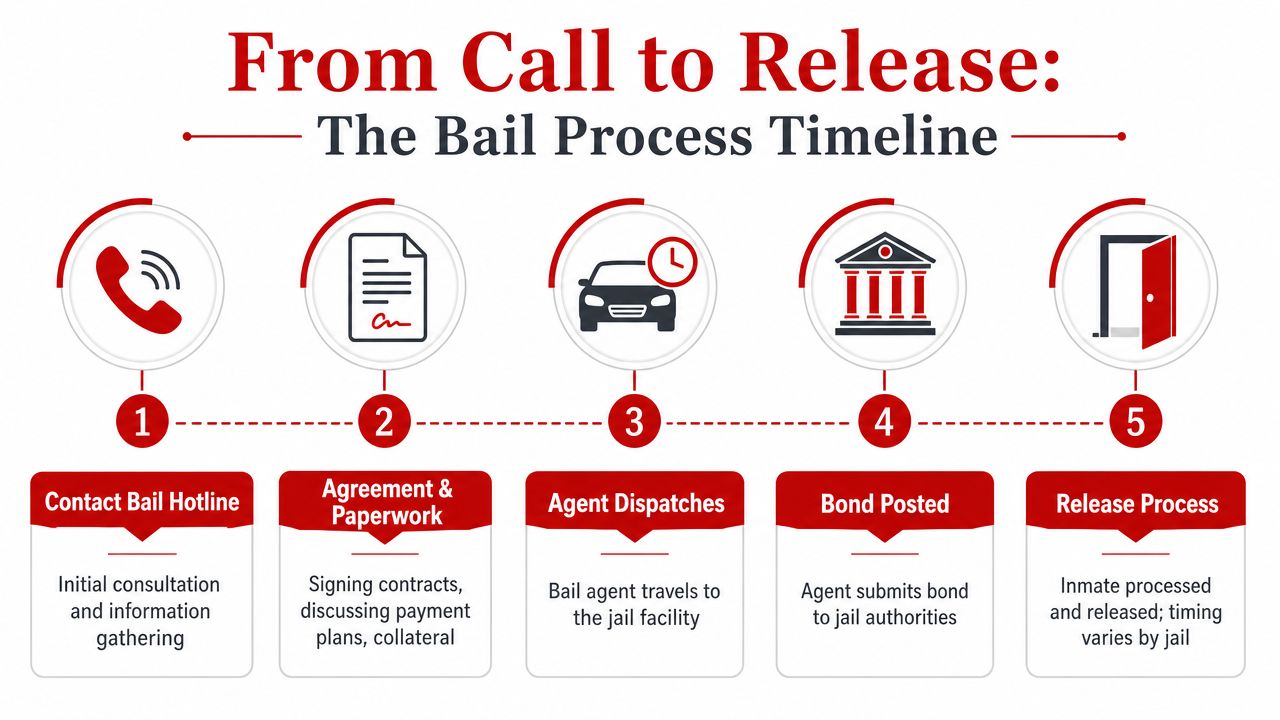
You make the call. We confirm who they are, where they are, and whether the bond can be posted right away. Once that part is handled, the process becomes a waiting game with a clear order. Knowing that order keeps you from making bad assumptions and wasting time.
What happens first
After the call, the agent verifies the booking, prepares the bond, gets signatures, and submits everything to the correct facility. Then the jail takes over. That final part is the one families misread most often. Posting the bond starts the release process. It does not mean the person is walking out immediately.
If you want a local comparison for jail-side delays, this guide on how long release from Ventura County Jail can take shows the same pattern. The bond work can move fast. Jail processing still controls the actual release.
A typical sequence looks like this:
-
Call and verification
The agent confirms the defendant’s identity, booking status, bail amount, and where the bond must be posted. -
Agreement and signatures
The co-signer reviews the contract, signs the paperwork, and handles the payment arrangement. -
Bond submission
The bond is posted with the right jail or court. -
Jail release processing
Jail staff run their internal checks, complete release paperwork, and clear the person for discharge.
Why release can still take time
Release timing depends on the jail’s workload, staffing, shift changes, internal procedures, and whether the facility is backed up. Weekends, holidays, and busy booking periods can slow everything down. That delay is frustrating, but it is common.
Here is the advice I give every family. Do not promise the defendant’s ride is already on the way. Do not start calling everyone with an exact pickup time. Stay by your phone, keep the ringer on, and wait for confirmation that release is complete before driving over.
If the case touches Ventura, Oxnard, Camarillo, Port Hueneme, Thousand Oaks, Santa Paula, Moorpark, Fillmore, Ojai, or Santa Barbara, the same rule applies. Bond posted and released are two different stages. Keep those separate in your head, and you will make better decisions while you wait.
After Release Ensuring Compliance and Next Steps
Getting them out is the first win. Keeping them out is the next job.
Once released, the defendant needs to attend every court date, follow any release conditions, and stay reachable. Missed court doesn’t create a small problem. It creates a new one. The family should save all paperwork, calendar every appearance immediately, and keep one person in charge of updates so communication doesn’t get sloppy.
The money side also needs to stay clear. In California, the bail bond premium is a nonrefundable fee set by state law at exactly 10% of the total bail amount, so for a $50,000 bail, the client pays $5,000 to the agency regardless of case outcome, as explained in this California bail bond cost breakdown. Don’t plan your household budget around getting that fee back.
If you’re helping with Ventura County bail bonds, bail bonds Ventura, bail bonds Oxnard, or Ventura County Jail bail bonds, the same advice holds. Stay organized, stay compliant, and treat every court date like it’s mandatory, because it is.
If you need immediate help, call Bada Bing Bail Bonds. Their agents are available 24/7, they know Southern California jail procedures, and they can help you verify booking details, explain the next step clearly, and start the release process without wasting time.