The phone rings late. A brother, spouse, parent, or friend says they’ve been arrested and taken to the Santa Ana Main Jail. The call is short, rushed, and confusing. You’re left trying to figure out where they are, whether they can be bailed out, and what you’re supposed to do first.
That first hour matters most. Families often lose time by calling the wrong jail, waiting for someone to “show up in the system,” or driving over before they know whether the person is housed there. A calmer approach works better. Confirm the location. Get the booking information. Find out whether bail is available. Then move in the right order.
If this arrest is brand new, start with a basic overview of what happens after you get arrested. It helps if you’ve never dealt with jail intake before.
What follows is the practical version of this process. No legal jargon. No guesswork. Just the steps that help families get answers and move toward release as fast as the system allows.
Table of Contents
- A Guide for When You Get The Call
- Santa Ana Main Jail Location Contact and Inmate Search
- The Booking Intake and Release Process Explained
- Visiting Rules and Inmate Communication
- How Bail Bonds Work at the Santa Ana Jail
- Common Charges and Potential Jail Transfers
- Your Step-by-Step Plan to Secure a Fast Release
A Guide for When You Get The Call
Most families hear the same thing first. “I’m at the main jail.” That sounds simple, but it usually isn’t. Santa Ana has both city and county detention references floating around in conversation, and stressed callers often don’t know the official name of the facility holding them.
The better move is to slow down and ask for a few specific details. Get the person’s full legal name, date of birth if you know it, what agency arrested them, and any charge they mentioned. If they can give you a booking number, even better. If they can’t, that’s normal. Early calls are often made before the full booking process is finished.
What to do in the first few minutes
Start with these priorities:
- Confirm the facility: Don’t assume “Santa Ana Main Jail” means the same thing everyone thinks it means.
- Write everything down: Misspelled names and wrong birth dates waste time.
- Expect delays early: Someone can be physically inside the jail system before their status is easy to verify.
- Stay available by phone: Jails move on their own schedule, and return calls can come at odd hours.
Practical rule: The family member who stays organized usually moves the release process faster than the family member who panics and calls five places at once.
What families usually worry about first
The first questions are almost always the same:
- Where are they really being held?
- Can I talk to them?
- Is bail set yet?
- How long will release take once bail is posted?
Those are the right questions. They’re also the questions that separate jail bureaucracy from a guided release process. The system moves in steps. Families who understand those steps make fewer mistakes.
If you’re also looking for help in nearby counties, the same basics apply whether you need bail bonds Ventura, Ventura County bail bonds, 24-hour bail bonds Ventura, bail bonds Oxnard, or Ventura County Jail bail bonds. Orange County and Ventura County run differently, but families face the same pressure. Find the person, verify the bail status, and act quickly once release becomes possible.
Santa Ana Main Jail Location Contact and Inmate Search
You get a short call, the line is bad, and all you catch is “Santa Ana.” That is usually where families lose time. In practice, “Santa Ana Main Jail” usually refers to the Orange County Central Jail Complex at 550 N. Flower Street, Santa Ana, California. The inmate information line is (714) 647-4666. Public parking is available in the structure across from the Santa Ana Police Department, according to Orange County Central Jail Complex facility information.
Before you get in the car, confirm the exact facility. Families often hear “Santa Ana Jail” and assume city jail, county jail, and intake are all the same place. They are not, and that mix-up can cost hours. A good California jail inmate search guide helps you narrow down where the person is being held before you start calling, visiting, or arranging bail.
Santa Ana Main Jail key information
| Information | Details |
|---|---|
| Facility name | Orange County Central Jail Complex |
| Common name | Santa Ana Main Jail |
| Address | 550 N. Flower Street, Santa Ana, California |
| Inmate information line | (714) 647-4666 |
| Parking | Public parking structure across from the Santa Ana Police Department |
How to confirm someone is there
Use the same checklist I give families during the first call:
- Search the full legal name: Use the exact name on the person’s ID if you have it.
- Verify the date of birth: One wrong number can send you looking at the wrong record.
- Try again if the arrest was recent: A person can be in custody before the system updates for public search.
- Call the jail if online results are unclear: A live confirmation can save you from driving to the wrong place.
- Ask which part of the complex is handling the inmate: That affects later steps like visitation, property questions, and release coordination.
One practical point matters here. The first information you get is often incomplete. A caller may say they are in Santa Ana because that is where they were arrested, where they were transported, or the only location they remember hearing. The custody record is the piece to trust.
Do not confuse the county jail with a local holding cell
A person can be arrested by a city police department and still end up in the Orange County jail system for booking and housing. That happens all the time.
If different relatives are getting different answers, slow the process down and verify the custody location first. That single step usually prevents the biggest early mistake.
The Booking Intake and Release Process Explained
The Santa Ana Main Jail runs intake and release through the County Jail Intake and Release Center at 550 N. Flower Street, and that center operates 24/7 to manage new bookings and process pre-trial detainees within required timeframes, according to the Orange County Sheriff’s custody operations page.
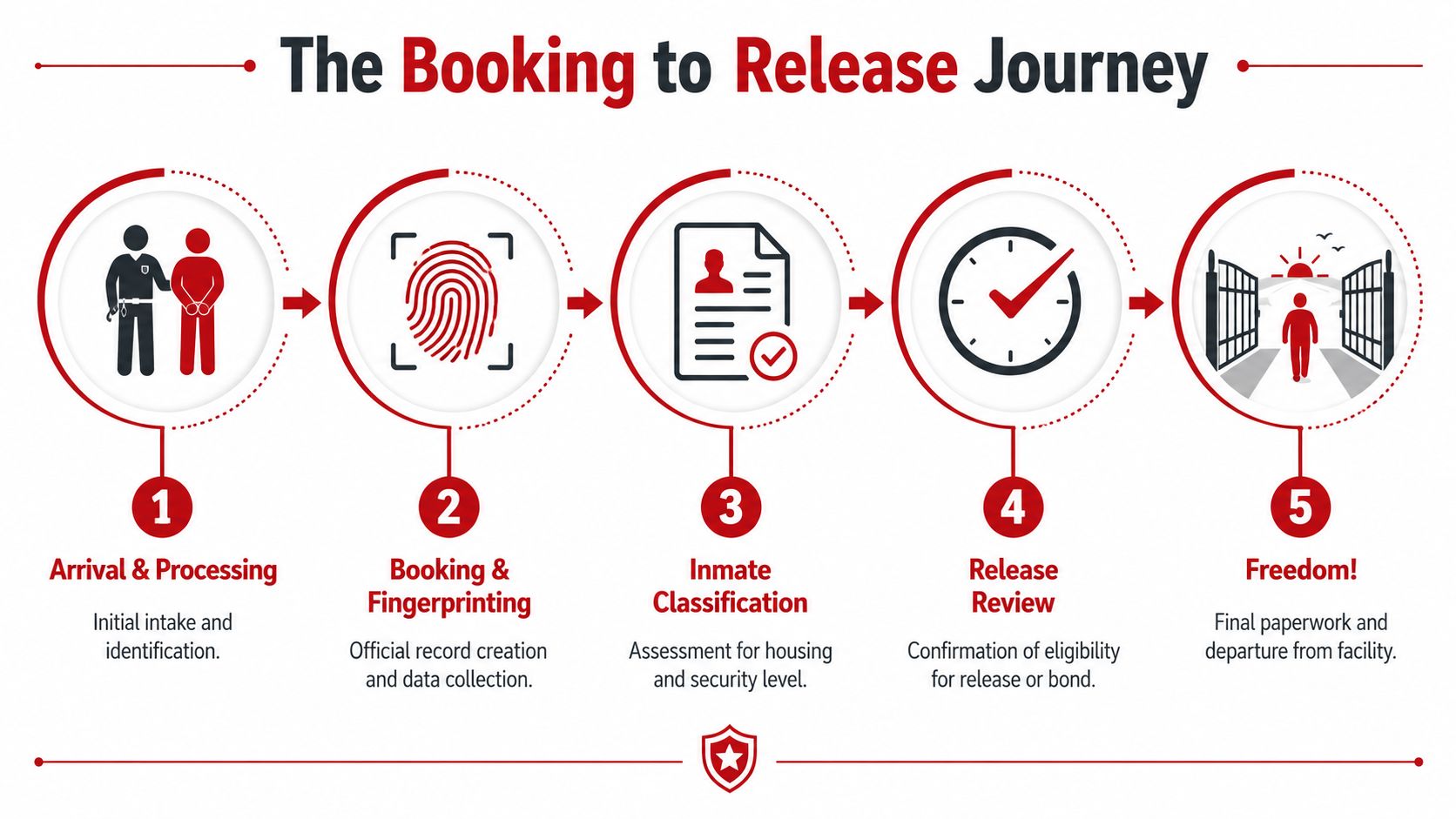
Families often think bail is the first step. It usually isn’t. Booking comes first. Until the jail completes intake tasks, there may be nothing to post and no release to trigger.
What happens during intake
A typical path looks like this:
-
Arrival and identification
The jail receives the arrested person from the arresting agency and starts the intake file. -
Booking and fingerprinting
Staff build the official custody record and collect identifying information. -
Classification and housing review
The jail decides where the person will be housed based on charge type and security concerns. -
Medical and mental health screening
This part can create delays, but it matters. The jail has to clear or address immediate issues before moving the person through the system. -
Release review after bail is posted or release is approved
Even after bond or bail is handled, the person still has to go through final processing out.
Why families feel like nothing is happening
From the outside, booking looks slow because most of it happens behind closed doors. A person can be in custody, but not yet searchable in the way families expect. That gap creates panic, especially overnight or on weekends.
If you need a realistic comparison for timing, a good general reference is how long release from county jail can take. Different counties vary, but the same bottlenecks show up again and again. Intake, classification, paperwork, and release queue.
Release doesn’t start the moment money changes hands. It starts when the jail finishes the rest of its process.
What helps and what doesn’t
What helps is having accurate information ready when bail becomes available. Full name, date of birth, booking number if assigned, and a clean understanding of the charge. What doesn’t help is showing up at the jail counter hoping someone will speed things up because you’re waiting outside.
Jail staff work the queue they have. Families do better when they prepare for that reality instead of fighting it. Once intake is underway, the next practical issue is contact. People want to visit, speak, and confirm the inmate is okay.
Visiting Rules and Inmate Communication
A lot of families lose time here. They rush to the jail, hope someone will let them in, and end up standing at the counter without a visit, without answers, and with more stress than they started with. Santa Ana Main Jail does not work on family urgency. It works on jail procedure.
Start with the rule that affects almost everyone. Visits must be scheduled in advance, and the jail limits when those appointments happen. If you want the current Orange County custody rules in one place, review the Orange County bail and jail process guide before you start calling and driving around.
What to do before you try to visit
Do these steps in order:
- Confirm the inmate is still at Santa Ana Main Jail. People can be moved, and a wasted trip helps no one.
- Call ahead before making plans. Visiting schedules and availability can change.
- Use the same legal name and identifying details each time. Mismatched information creates delays.
- Bring valid government-issued ID. If jail staff cannot verify you, the visit can be denied.
- Arrive early enough to clear check-in. A late arrival can cost you the appointment.
That process feels rigid because it is rigid. Jail staff are handling security, movement, and headcount first. Family convenience comes well after that.
Phone contact usually happens before an in-person visit. A person in custody may call you while you are still trying to confirm where they are housed or when you can see them. That gap is common, especially early in the case, so do not measure progress by how easy it is to get information from the jail.
Use any call wisely. Get the full legal name, date of birth, booking number if they have it, medical concerns, and whether they think bail was mentioned. Write it down right away. One accurate phone call can save hours of guessing.
If your loved one sounds sick, confused, or unstable
Treat that as a priority. Stay calm and get specific. Ask what medication they take, when they last took it, whether they told staff, and whether they are having trouble breathing, thinking clearly, or staying safe.
Then report the concern clearly through the jail’s proper channels. General statements like “something seems wrong” do not get much traction. Specific details do. Names of medications, diagnosed conditions, recent symptoms, and the time you spoke with them give staff something they can act on.
Visiting matters, but families usually get the fastest relief by focusing on accurate communication and release steps at the same time. That is the practical trade-off. A visit may comfort everyone for a short window. Good information and quick action usually do more to get your person home.
How Bail Bonds Work at the Santa Ana Jail
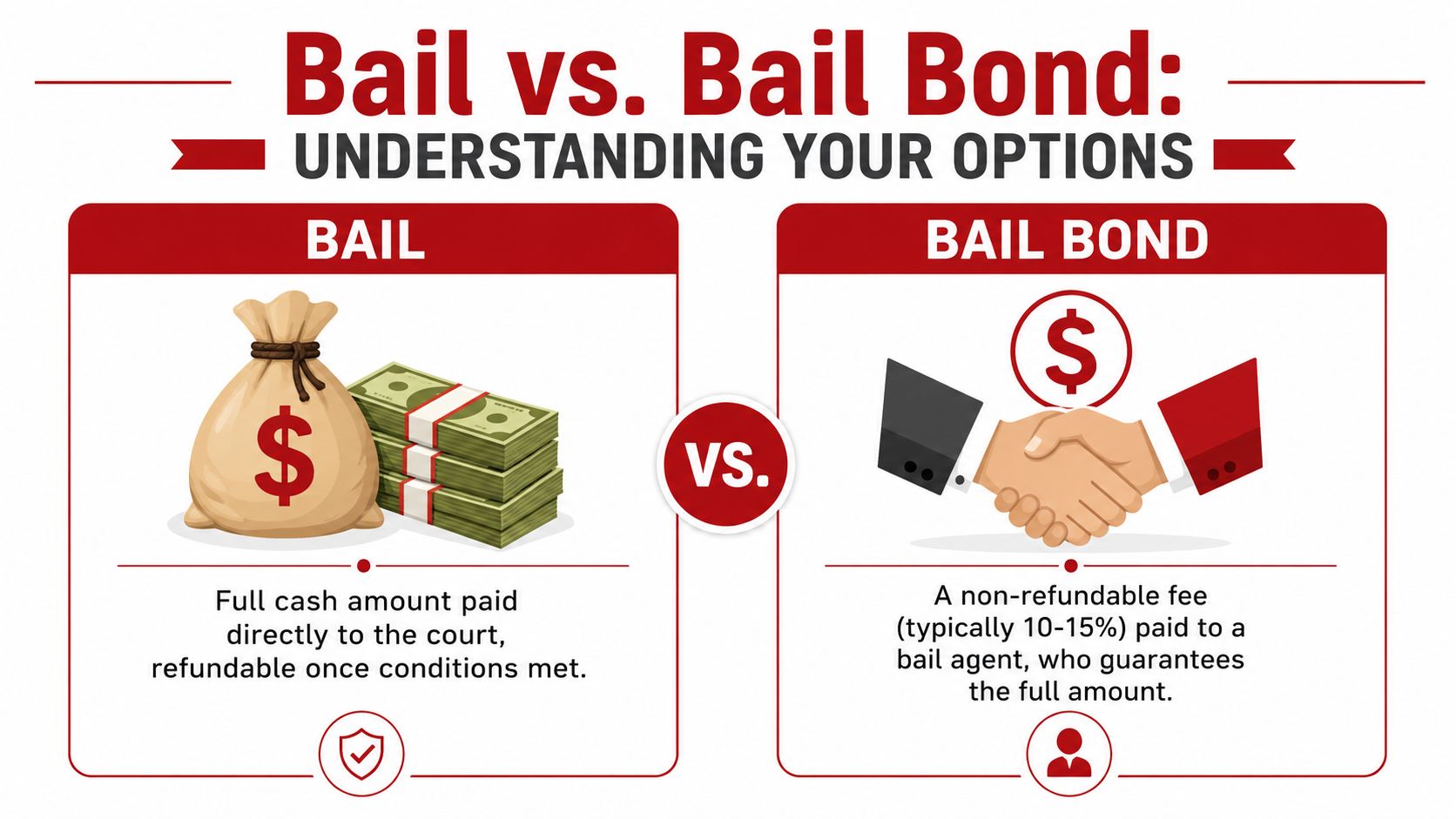
Bail is the amount the court requires as a financial guarantee that the defendant will return to court. A bail bond is different. Instead of paying the full amount directly, a licensed bail agent posts a bond for the full amount after collecting the legally set premium from the family or co-signer.
In California, that premium is 10% of the total bail. That matters because many families don’t have the full cash amount available on short notice. If you need the Orange County process explained in plain terms, Orange County bail information is a useful starting point.
Bail versus bond in plain English
Think of cash bail as paying the whole security deposit yourself. Think of a bail bond as paying the required premium so a bail company guarantees the rest.
That’s why people search for Santa Ana bail bonds, and 24 hour bail bonds Orange County in the middle of the night. They’re not looking for theory. They need the fastest workable path to release.
Why speed matters in this jail
Time in custody isn’t just inconvenient. It can be risky. According to an ACLU report on deaths in Orange County custody, the most common circumstances for death in Orange County custody stem from failures in intake “triage,” suicide, and untreated physical or mental illness.
That doesn’t mean every booking turns into a crisis. It does mean families are right to treat the first hours seriously. If release is available, moving promptly is often the safest practical decision.
Important: If the inmate has a medical condition, mental health history, or signs of withdrawal, treat speed as a priority and keep records of what the family knows.
What usually slows the bond process
A bond doesn’t stall because the idea is complicated. It stalls because the information is incomplete. Common delay points include:
- Wrong inmate details: One wrong digit in a birth date can stop progress.
- Unclear charge status: Some cases need more booking time before bail can be confirmed.
- Missing co-signer information: If paperwork can’t be completed cleanly, the release timeline slips.
- Jail-side release queue: Even after the bond is accepted, the jail still controls the actual release timing.
Families dealing with Orange County custody often use Santa Ana bail bonds support because local jail procedures move on their own clock, and getting the paperwork right the first time matters.
Common Charges and Potential Jail Transfers
People land in the Santa Ana Main Jail for many different reasons, but families usually call about the same categories of charges. DUI. Domestic violence. Drug allegations. Theft. Warrants. Probation problems. Those are the calls that come in fast and often, and they usually come with very little information.
The jail environment also reflects ongoing drug-related enforcement and custody issues. In 2019, officers at Orange County Jail discovered 203 contraband items, including over 14 grams of cocaine and 282 Suboxone strips, according to an Orange County Sheriff post on jail contraband and violence. That doesn’t tell you what your loved one is charged with, but it does show why the jail treats drug-related cases, searches, and security restrictions so seriously.
Charges that often lead to quick family action
These are the situations where families usually need immediate answers:
- DUI arrests: Often urgent because the person may have been taken in after a traffic stop and the family has no idea where they were transported.
- Domestic violence allegations: These cases can involve protective orders or conditions that affect release planning.
- Drug offenses: Bail and hold conditions can vary depending on the allegations and the person’s history.
- Warrants and probation issues: These can become more complicated than the original family call makes them sound.
Why transfers happen
The Santa Ana Main Jail is often a processing point, not always the last stop. Some inmates remain there. Others may be moved within Orange County custody depending on classification, housing needs, or case status.
That’s why families dealing with a male inmate often look for help specific to the Orange County Central Men’s Jail bail process. In other situations, especially when a transfer occurs after initial booking, the next step may involve Theo Lacy Jail bail bonds in Orange County.
A transfer doesn’t necessarily mean the case got worse. It often means the jail system placed the inmate where it had space, classification fit, or longer-term housing.
Families do best when they keep checking location status instead of assuming the first housing assignment will stay the same.
Your Step-by-Step Plan to Secure a Fast Release
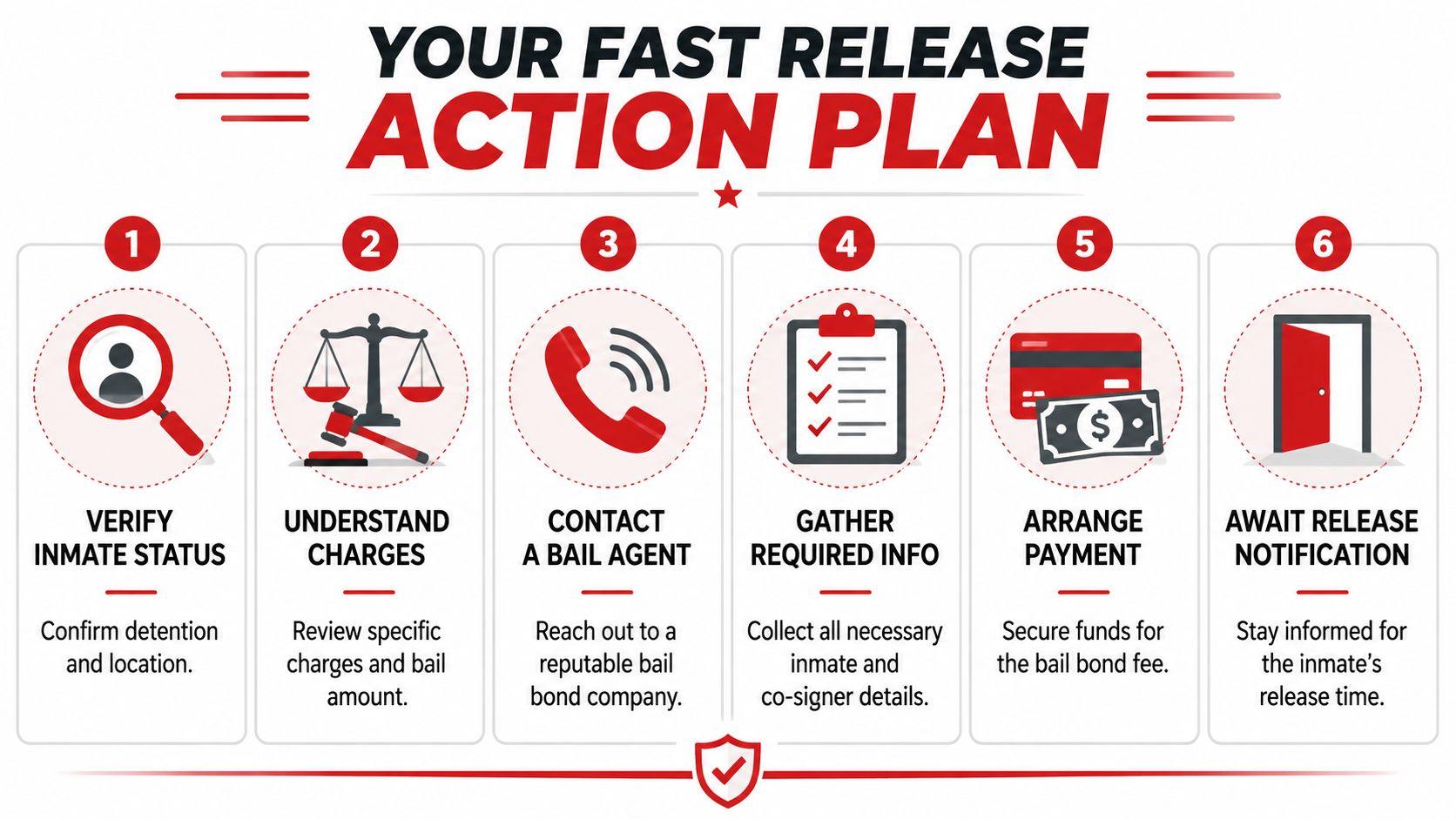
When a loved one is sitting in the Santa Ana Main Jail, speed comes from doing the right things in the right order. Not from calling everyone you know. Not from rushing to the jail counter. Not from waiting around for “more information” if bail is already available.
The action plan that works
-
Verify inmate status
Confirm the person is in the Orange County jail system and note the exact facility name. -
Understand the charge and bail amount
Don’t rely on what was said during the first jail call if it sounded rushed or incomplete. -
Gather the right information
Have the inmate’s full legal name, date of birth, booking number if available, and your own co-signer details ready. -
Use a true round-the-clock service
If you need help at night, on a weekend, or during a holiday, look for 24/7 bail bond assistance trusted by hundreds. The release process doesn’t pause just because regular business hours ended. -
Handle paperwork quickly and accurately
Most delays come from missing information, not from the form itself. -
Prepare for pickup and next steps
Once the inmate is released, they may be tired, disoriented, hungry, or worried about court. Plan transportation and keep the next court obligation organized from the start.
What families should avoid
A few mistakes show up again and again:
- Don’t argue with jail staff at the counter: It won’t move the release line.
- Don’t send mixed instructions through multiple relatives: One decision-maker is better than five.
- Don’t ignore court conditions after release: Bail solves the custody problem, not the case itself.
- Don’t wait until morning if bail is already possible: That lost time usually can’t be recovered.
If you’re helping from Ventura or nearby
A lot of families handling Orange County arrests live somewhere else. They may be in Ventura, Oxnard, Camarillo, Port Hueneme, Thousand Oaks, Santa Paula, Moorpark, Fillmore, Ojai, or Santa Barbara when they get the call. The distance makes the process feel harder, but the basics don’t change. Verify custody, confirm bail, and use a direct path to release.
If you need local help specific to this facility, start with Santa Ana bail bonds support. It keeps the process focused on the jail that’s currently holding your loved one.
When you need fast, clear help, Bada Bing Bail Bonds is available 24/7 to walk you through the Santa Ana Main Jail release process in plain English. Their licensed agents help confirm booking details, explain bail costs under California law, handle paperwork quickly, and stay in contact until pickup. If your family is stressed, confused, or trying to act after hours, they’re built for exactly that moment.