Understanding the Statute of Limitations for Misdemeanors and Felonies in California
A Guide from Bada Bing Bail Bonds
When someone is arrested in California, one of the first questions families ask is: how long do prosecutors have to file charges? That deadline is called the statute of limitations, and it can directly affect how long a case — and a bail obligation — stays open.
This guide breaks down California’s filing deadlines for misdemeanors and felonies, the exceptions that extend them, how tolling works, and what it all means if you or a loved one is currently out on bail.
Need bail help right now? 📞 805-910-9842 | badabingbail.com | 56 E. Main St., Suite 108, Ventura, CA 93001 If you’re looking for bail bonds in Ventura, Oxnard, Camarillo, or the surrounding counties, Bada Bing Bail Bonds is available 24/7.
What Is the Statute of Limitations?
The statute of limitations is the legal window prosecutors have to file criminal charges after an alleged offense. Miss the deadline, and the case generally cannot move forward.
These limits exist to:
- Protect defendants from stale, hard-to-defend allegations
- Preserve the reliability of evidence and witness memory
- Push law enforcement to investigate and file in a reasonable time
Not every crime follows the same clock — California’s system varies by offense type and severity.
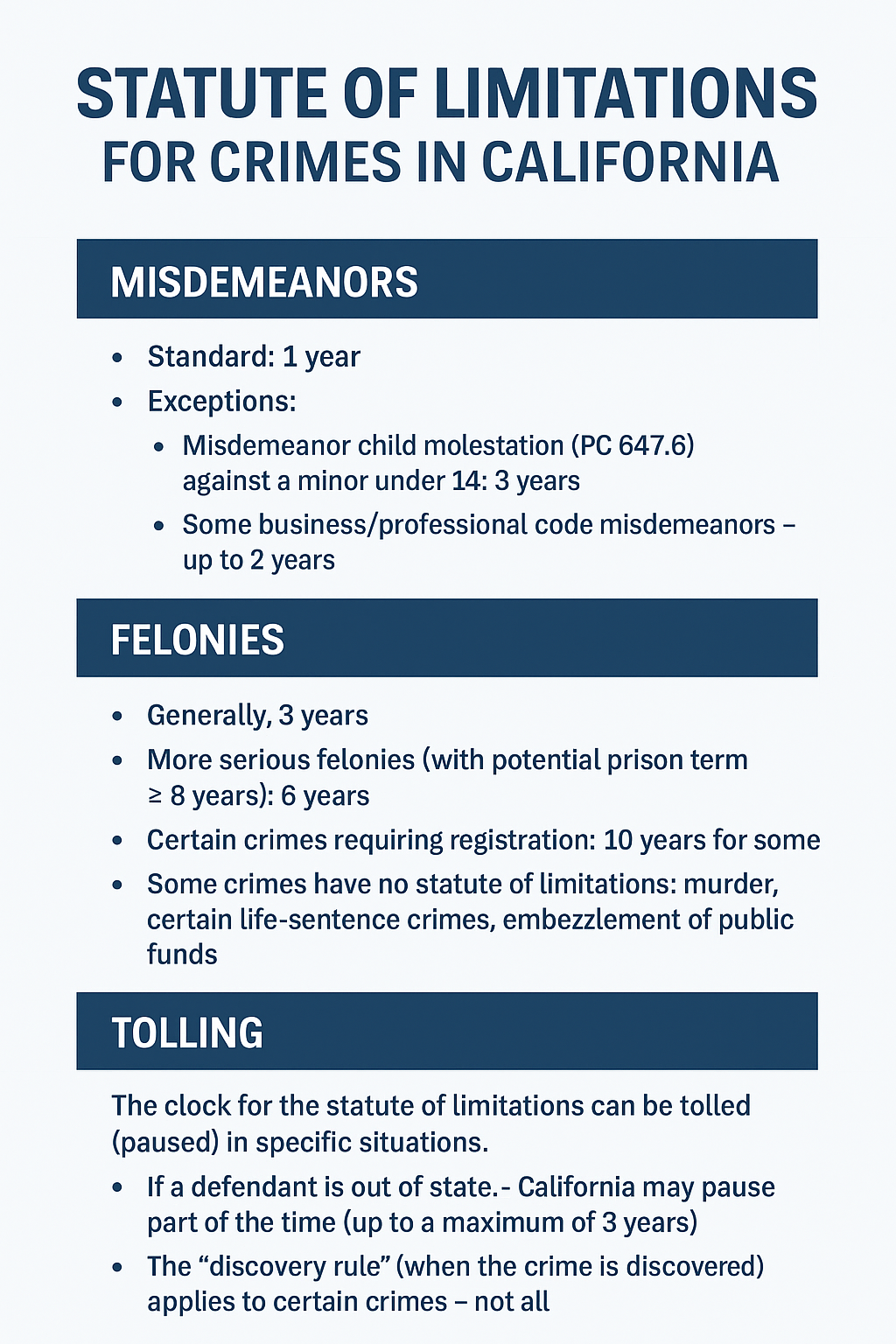
California Misdemeanor Statute of Limitations
Standard Deadline: 1 Year
Under California Penal Code § 802(a), most misdemeanors must be filed within one year of the alleged offense. This covers common charges like:
- Petty theft
- Misdemeanor DUI (in many circumstances)
- Simple assault or battery
- Trespassing
- Public intoxication
- Minor drug possession
- Disorderly conduct
- Vandalism under $400
If prosecutors don’t file within that year, the case typically cannot proceed.
Exceptions That Extend the Deadline
Cases involving minors — up to 3 years. California gives prosecutors more time in certain misdemeanors where a minor is the alleged victim.
Business & Professions Code violations — up to 2 years. Contractor licensing issues, certain regulated-industry misdemeanors, and similar offenses often involve delayed discovery, so the window is longer.
California Felony Statute of Limitations
Standard Deadline: 3 Years
Most California felonies — including basic burglary, grand theft, many financial crimes, and various drug-related felonies — must be filed within three years (Penal Code § 801).
Serious Felonies (8+ Year Sentences): 6 Years
Felonies carrying a potential sentence of eight years or more get a six-year filing window. Examples include aggravated assault, high-value embezzlement, and complex financial crimes (Penal Code § 800).
Complex Cases: Up to 10 Years
Large-scale fraud, high-loss financial crimes, and multi-suspect or multi-agency investigations can carry filing deadlines of up to 10 years, reflecting how long these cases take to unravel.
No Deadline at All
Some crimes can be charged at any time, with no statute of limitations:
- Murder
- Any crime punishable by life in prison or death
- Embezzlement of public funds
How Tolling Pauses the Clock
The filing clock can pause — or “toll” — under a few circumstances:
- Defendant leaves California. The clock can pause for up to three years while a suspect is out of state.
- Concealment or false identity. If someone actively hides who they are, tolling may apply.
- Delayed discovery. Common in financial crimes, where the offense isn’t discovered until well after it happened.
Why This Matters If You're Out on Bail
- A missed deadline can mean dismissal. If prosecutors don’t file in time, the case is generally over.
- Long investigations are stressful for families. Knowing the applicable deadline helps set realistic expectations.
- Bail status is tied to charges being filed. If charges never come within the statute period, bail obligations can be exonerated.
- It helps you plan next steps — whether that’s working with an attorney or understanding how much longer a case might hang over you.
Frequently Asked Questions
Does the statute of limitations restart if I leave the state and come back?
Can I be charged with a misdemeanor two years after the alleged incident?
Is there really no time limit for murder charges in California?
Does an arrest mean charges have already been "filed"?
Questions About Bail While a Case Is Pending?
Understanding these deadlines can help you make sense of where a case stands — but every situation is different, and only an attorney can advise on the specifics of a case. If you’re searching for bail bonds near me and need help in Ventura, Santa Barbara, or Los Angeles County, we’re available 24/7.
📞 Bada Bing Bail Bonds — 805-910-9842 🌐 badabingbail.com 📍 56 E. Main St., Suite 108, Ventura, CA 93001