It’s 2 a.m., somebody in Oxnard is sitting in a patrol car, and the phone rings from Ventura County Jail. The family hears one sentence that changes the whole night, the arrest is real, and now they need answers fast. The first thing I tell people is simple, posting bail is only the start of the process, not the finish line.
After the bond is posted, the jail still has to process the release, and that’s where families get blindsided. Booking numbers, paperwork, holds, identity checks, and facility workload all matter. If you’re dealing with bail bonds Ventura, bail bonds Oxnard, or a late-night call for Ventura County Jail bail bonds, what happens next is usually more administrative than dramatic.
Table of Contents
- The First Call and What Comes Next
- How the Jail Processes Release Once Bail Is Posted
- Premium, Collateral, and Payment Plans Explained
- Conditions and Monitoring After Release
- Co-Signer Duties and Defendant Obligations
- Refunds, Exoneration, and When Collateral Comes Back
- Common Delays at Ventura County Jail and How to Prevent Them
- Post-Bail Checklist and Frequently Asked Questions
The First Call and What Comes Next
At 2 a.m. in Oxnard, the family usually sounds the same on the phone, rattled, half-dressed, trying to make sense of a charge they only heard about minutes ago. That first call matters because speed depends on accuracy. If the wrong jail, wrong booking number, or wrong spelling goes into the file, the bond can’t move cleanly.
What I need before anything can move
A local agent doesn’t need a long story. The basics are what matter most, full legal name, date of birth, booking number if known, facility, and the charge. If you’ve got those five things ready, the call turns from panic into a workable plan.
Practical rule: the family should keep one person on the phone with the jail information and one person on the line with the bondsman. That keeps details from getting crossed when the pressure is high.
That’s why 24-hour bail bonds Ventura service matters more than voicemail. A live agent can verify booking details, compare the charge with the bail schedule, and tell you whether the defendant is already in the system or still being transferred. If the arrest started with the Oxnard Police Department and ended up in county custody, a local bondsman familiar with Ventura County can usually sort out the path faster than someone calling blind from another city.
For a plain-English rundown on the front end of the process, this how-to guide on bailing someone out of jail is a useful reference.
The first twenty minutes are about getting the file right. That’s the difference between a bond that sits and a bond that gets moving. When families call for fast bail bonds Ventura, the best help is usually the most basic help, a real person, the right booking details, and no guesswork.
How the Jail Processes Release Once Bail Is Posted
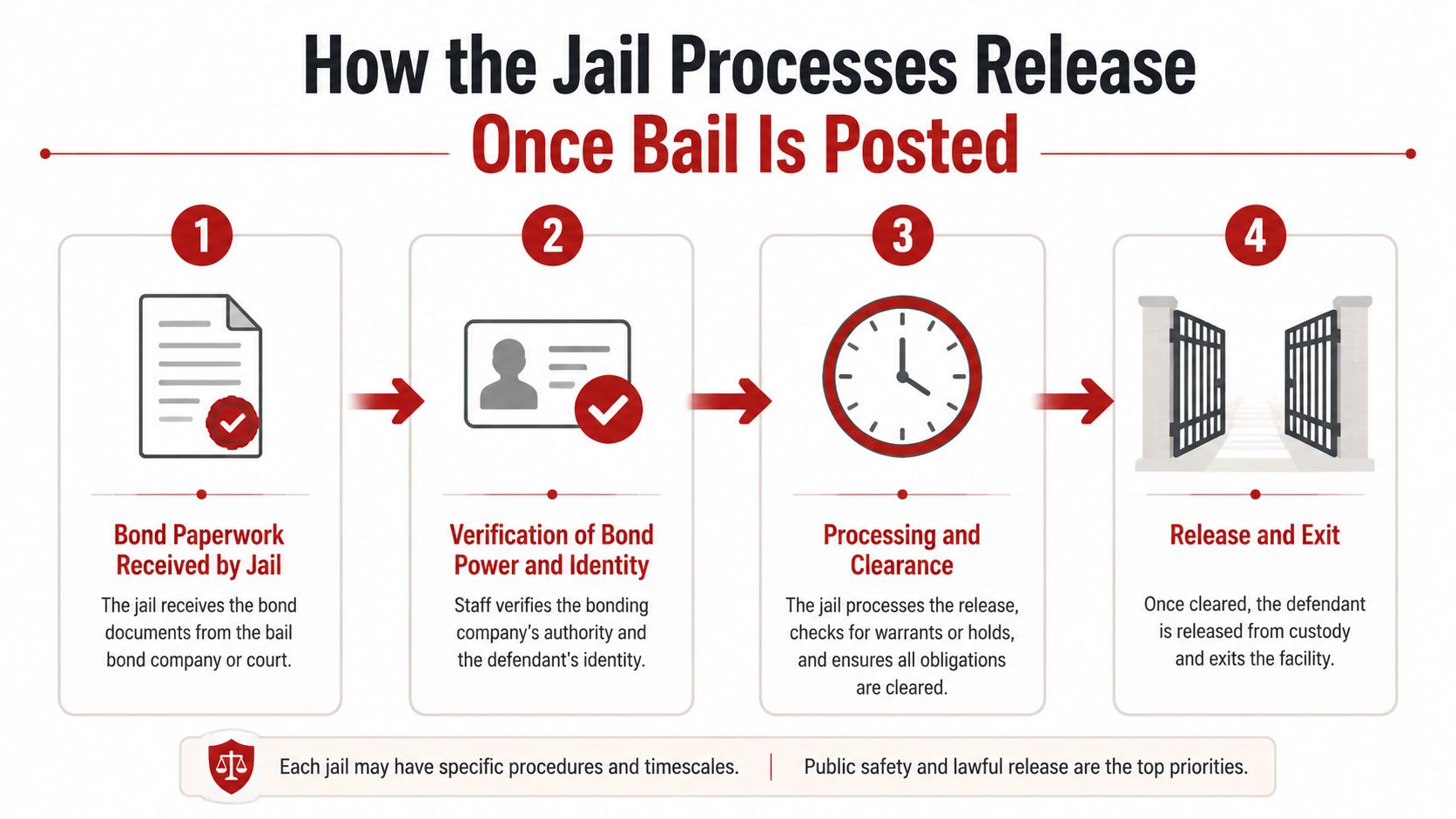
A family can post the bond and still wait. The jail has to take the paperwork, match the booking record, clear any holds, and confirm that the release order lines up with the person sitting in custody. Until that chain is complete, the defendant stays in the system, not out the door.
What the jail checks
First, the jail receives the bond paperwork. Staff then verify the power of attorney, confirm the defendant’s identity information, and look for other holds, warrants, or charges that could stop release. If the paperwork is incomplete, or the booking record does not match cleanly, the file goes back into the queue.
Release timing depends on how fast each step clears. A local release timing guide explains that some people come out within a few hours, while others wait longer because of jail processing, staffing, and court coordination, Ventura County Jail release timing guide. That is the part families miss most often, payment is only one step, and the jail still has its own work to finish.
Why timing changes at Ventura County facilities
Daytime weekday processing usually moves faster because more staff are available to verify documents and clear records. Overnight bookings, weekends, medical screening, or mental-health clearance can slow things down by hours. At Ventura County Jail, families often think the bond ends the wait, but the jail still has to complete its own review before anyone is released.
The practical truth is simple. If the booking number is wrong, the charge is unclear, or another hold is attached, the release clock starts over. Local release work takes paperwork and persistence, especially when the defendant was booked late or the facility is running behind.
For a clearer sense of the lag between posting and pickup, this Ventura County Jail release timing guide lays out the usual hold-up points families run into after bail is posted.
Premium, Collateral, and Payment Plans Explained
California bail pricing is where families get confused fast. The agency fee is not the same thing as the bail amount the court set, and those two numbers should never be treated like they’re interchangeable. In California, the premium on a bail bond is generally 10% of the total bail, and Bada Bing Bail Bonds keeps that structure clear with no add-on fees.
What the money means
The premium is the bondsman’s fee, and it is not refunded. The bail amount is the court’s number, and that is what ties the defendant to appearing in court and resolving the case. If collateral is used, it is there to secure the bond, not to replace court compliance.
| Item | Who Holds It | Refundable? |
|---|---|---|
| Premium | Bail agency | No |
| Cash bail posted with the court | Court | Yes, if the court exonerates it at resolution |
| Collateral | Bail agency or secured holder | Yes, after release conditions are satisfied and the bond is cleared |
| Cash bail posted with the court | Court | Tied to exoneration, not the initial release |
For families comparing quotes, the red flag is extra junk fees that do not fit the standard premium structure. If a quote sounds vague, ask what is being charged, who receives it, and whether anything else is owed later. A clear answer should separate the agency fee from any collateral discussion.
Why payment plans exist
Bigger bonds create cash pressure that most families cannot absorb in one shot. Payment plans exist to make the release workable without turning a crisis into a financial wreck. For larger or higher-risk cases, a local agency may also ask for collateral, and that can include property or other assets depending on the bond size and risk profile.
If you are comparing ways to pay, the payment options page lays out the kinds of arrangements families usually ask about.
Conditions and Monitoring After Release

Release doesn’t mean life returns to normal. The court can attach conditions that control where someone goes, who they can contact, whether they can drive, and what programs they have to complete. Families often hear “posted bail” and assume the hard part is over, but the next phase can be just as restrictive.
Two common cases that look similar at first
A DUI case may come with treatment requirements, court check-ins, or an ignition interlock requirement depending on the facts of the case. A domestic violence case can involve a protective order, no-contact rules, or limits on where the defendant can live or go. Those are very different realities, even if the bail amount looks similar on paper.
That’s where the gap in most explainers shows up. The release condition is not the same thing as the bonding agreement, and both can shape daily life. A defendant might be out of custody but still not be free to call, visit, travel, or return home the way the family expected.
A short video can help families see how these requirements fit together.
What families need to watch closely
The court’s conditions matter first. The bond agreement can add its own requirements, like check-ins or staying in touch with the agency so the bond doesn’t get jeopardized. If a person gets picked up on a new charge, ignores a no-contact order, or leaves the county without permission, the risk to the bond goes up fast.
Release is not freedom from oversight. It’s a supervised period where small mistakes can create big problems.
That is why families in Ventura, Camarillo, Port Hueneme, Thousand Oaks, Santa Paula, Moorpark, Fillmore, Ojai, and Santa Barbara need the rules explained in plain English, not lawyer talk. The less confusion there is on day one, the fewer surprises show up later.
Co-Signer Duties and Defendant Obligations
A co-signer is not just a helper. In practical terms, the co-signer is taking on financial responsibility if the defendant fails to appear, and that exposure is real the moment the bond is signed. If the defendant skips court, the bond can be forfeited, which means the court treats the bond as lost because the appearance condition was broken.
What the co-signer is agreeing to
A good co-signer asks one question before signing, what happens if the defendant doesn’t do what they’re supposed to do. That question matters because the risk sits with the person who signed too. A bail agent should keep contact going with reminders and check-ins, because silence is where avoidable problems start.
If you want a cleaner explanation of the role, this co-signer responsibilities page covers the practical obligations families usually overlook.
What the defendant has to do
The defendant’s job is straightforward, even if the stress around it isn’t. They need to attend every court date, stay in touch with the agent, avoid leaving the county without approval, and notify the agency of any new arrest. Those four habits protect the bond far better than last-minute scrambling.
Simple truth: most bond problems come from missed communication, not from the original arrest.
That’s why I always tell families to keep the court paperwork somewhere safe and to treat every reminder like it matters. The bond is a live agreement, not a one-time transaction. If the defendant travels, changes phone numbers, or misunderstands a date, the co-signer can end up carrying the fallout.
Refunds, Exoneration, and When Collateral Comes Back
People hear “bail posted” and think the money should come back soon after release. That’s not how it works. Release from custody and resolution of the case are two different events, and the bond stays active until the court closes the matter.
In California, one bail overview says the bail amount is refunded once the case is resolved, and the court then exonerates the bail when the case ends, as explained in this California bail overview. That means the bond can stay in place through dismissal, acquittal, sentencing, or another formal resolution.
What never comes back and what can
The premium is the agency’s fee, so it’s not refunded. Cash bail held by the court, or collateral secured through the bond, is tied to the court’s final action, not the moment the person is released. Families often miss that distinction because the relief of getting out of jail feels like the final step.
The court paperwork can lag behind the outcome by weeks or longer, so it helps to keep every receipt, bond copy, and case notice in one place. If collateral was used, those records matter when it’s time to unwind the bond and release property back to the family.
For a tighter explanation of that court step, the meaning of bail exoneration is worth reading before the case ends.
Common Delays at Ventura County Jail and How to Prevent Them
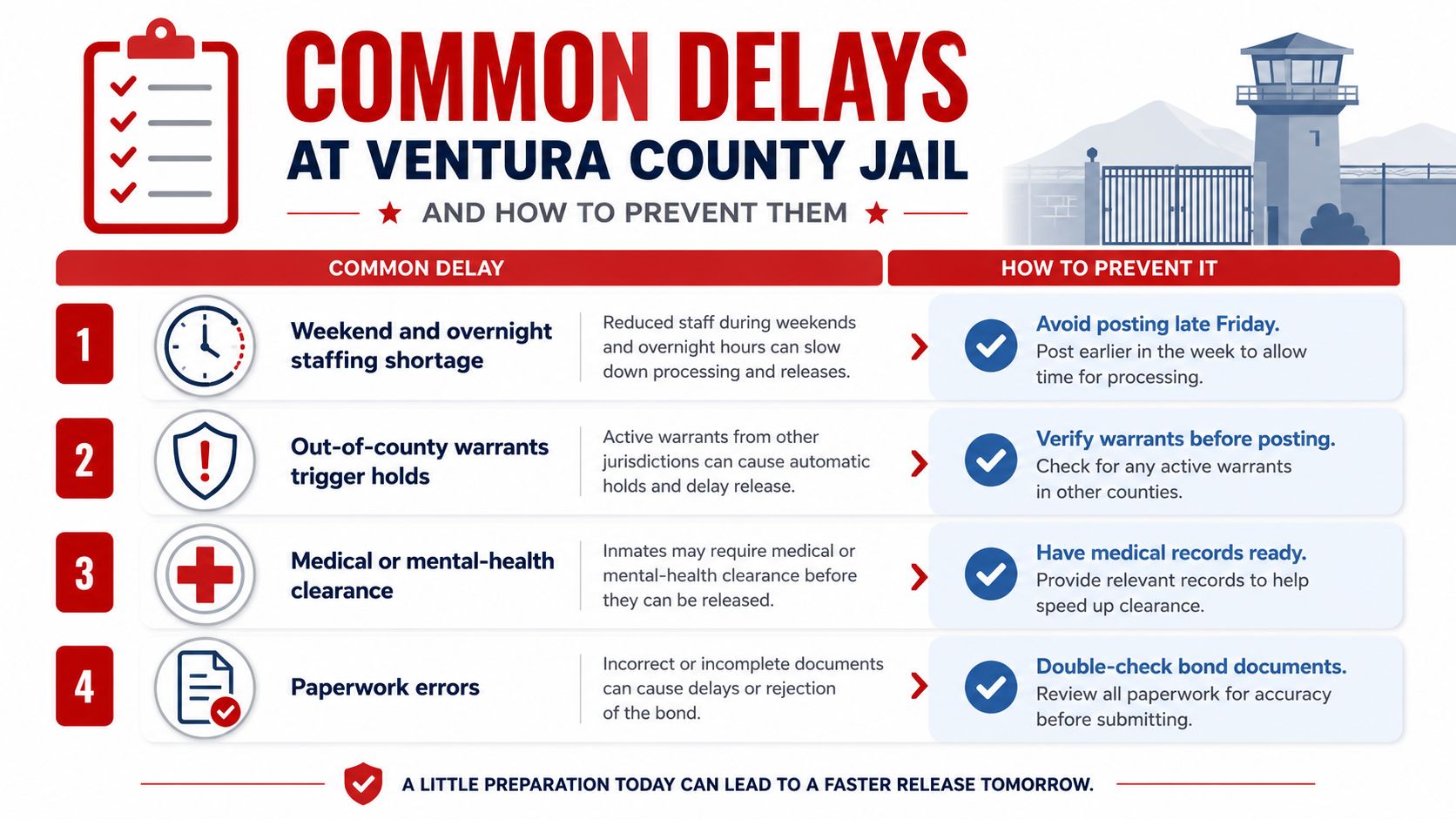
Ventura County families run into the same delays over and over. Weekend and overnight staffing slows the release queue, outside warrants can trigger holds, medical or mental-health clearance can add time, and bad booking information can stall the whole file. If bail hasn’t even been set yet, arraignment timing can become part of the wait too.
What actually helps
The single most useful detail is the correct booking number and charge. If that is wrong, everything else becomes harder. A local bondsman can confirm the arrest with the right agency, compare the charge to the schedule, and keep the paperwork aimed at the right file.
Some delays can’t be rushed, but some can be avoided with preparation.
- Weekend and overnight staffing: Posting earlier in the day can reduce the wait when the facility is busier.
- Out-of-county warrants: Checking for other holds before posting can prevent a surprise stop.
- Medical or mental-health clearance: Having medical information ready can help the jail process the case cleanly.
- Paperwork errors: Double-check the bond documents before they go in.
Families dealing with Ventura County bail bonds or bail bonds Oxnard usually want one thing, a release that doesn’t get stuck on a technicality. Local coordination helps, especially when the case touches the Oxnard Police Department, Ventura County Jail, or public defenders in Ventura and Santa Barbara County.
Post-Bail Checklist and Frequently Asked Questions
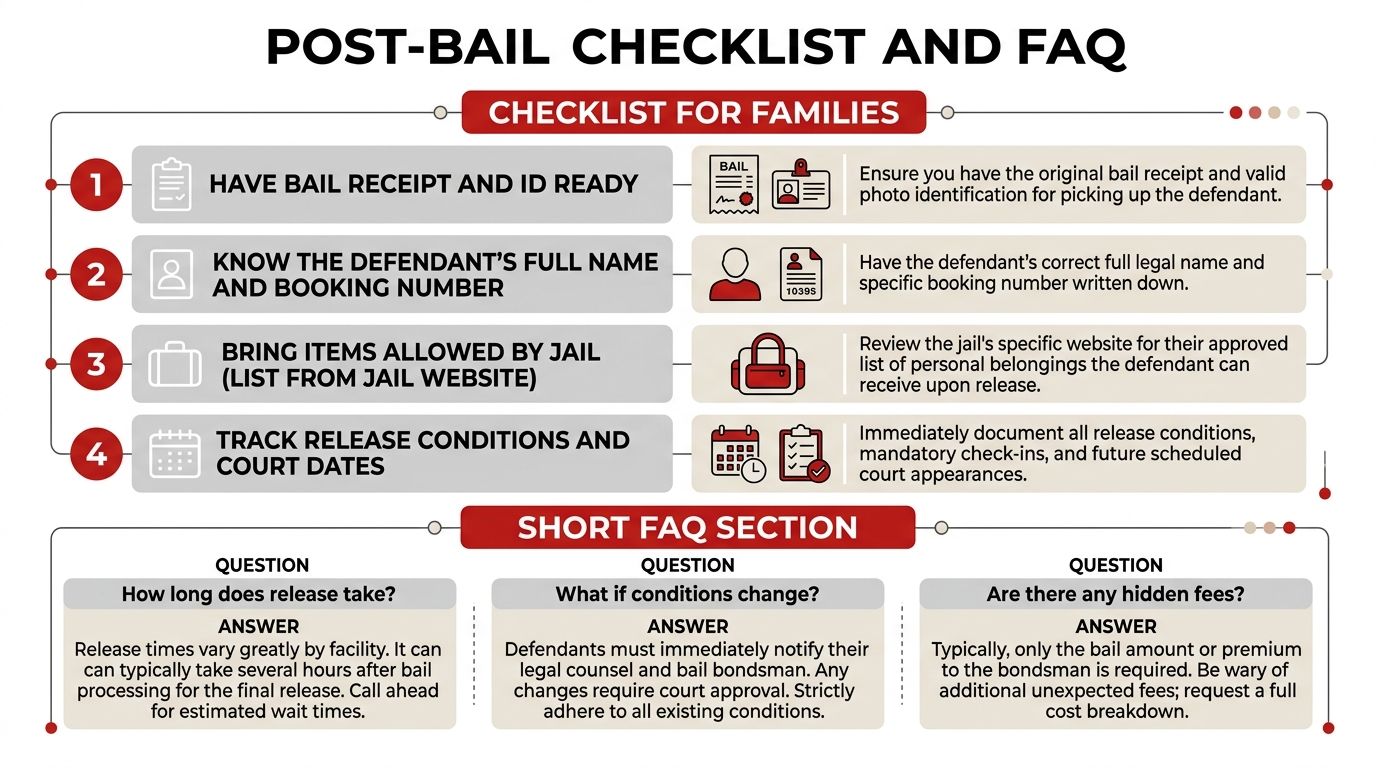
Keep the basics together before you call.
- Have the bail receipt and ID ready.
- Know the defendant’s full name and booking number.
- Bring only items the jail allows.
- Track release conditions and court dates.
Questions families ask most
How long does release take? It depends on the facility, the paperwork, and whether there are other holds, so release can move quickly or take longer than expected.
Can bail be posted before arraignment? Sometimes the timing depends on whether bail has been set and whether the jail has the booking information it needs.
What if there’s a warrant in another county? That can slow or stop release until the hold is sorted out.
What if the charge is no-bail? Then posting bail won’t solve the custody issue until the court changes the status.
If you’re staring at a late-night arrest in Ventura, Oxnard, or anywhere nearby, Bada Bing Bail Bonds keeps the process plain and fast, with live help, local paperwork coordination, and a focus on getting the file moving without nonsense. If you need a real person to walk through Ventura County bail bonds, payment options, or the next step after an arrest, visit Bada Bing Bail Bonds and make the call before the delay gets longer.