A bail bond agent is a licensed intermediary who posts a surety bond so someone can get out of jail without paying the full bail amount up front, and in California the most common consumer cost is 10% of the total bail. If your phone just rang in the middle of the night and someone you love is sitting in a Ventura County jail cell, the bail bond agent is the person who helps turn panic into a clear next step.
That call usually sounds the same. Someone's scared, you're half awake, and the first questions come fast. Where are they? What's the bail? How do I get them out? Do I need cash right now? Most families don't need a lecture in that moment. They need straight answers, fast.
The textbook definition of what is a bail bond agent only gets you part of the way. The real issue is what happens after the first call, what you'll need to sign, what the risk is to a co-signer, and whether a bond is even the right move in the first place. In Southern California, speed matters, but so does knowing the rules.
Table of Contents
- Answering the Call When Someone Is Arrested
- The Bail Bond Agent's Core Responsibilities
- How the Bail Bond Process Works Step by Step
- California Bail Laws The Rules for Your Protection
- How to Choose a Reputable Agent in Ventura County
- After Release Your Agent's Ongoing Support
- Frequently Asked Questions for Ventura and Oxnard
Answering the Call When Someone Is Arrested
At 2 AM, nobody asks, “Can you define surety?” They ask, “Can you help me get my son out?” That's the practical answer to what is a bail bond agent. It's the licensed person who steps into a bad night, confirms the jail, checks the booking, explains the amount due, and starts the release process.
A lot of families think they're calling a lender. That's not really it. A bail bond agent is part of a regulated surety system. In the United States, IBISWorld projects the bail bond services market at $3.5 billion in 2026, with 20,886 businesses in 2025, and notes that no single company holds more than 5% market share, which shows how established and structured this business is, not some informal side hustle (IBISWorld bail bond services industry data).
The first few minutes matter
When a family calls, the first job is to slow the situation down enough to get the right facts.
- Get the full legal name: A nickname won't help if the jail records are under a formal booking name.
- Confirm the jail location: Ventura County movement can happen, and timing changes everything.
- Ask about charges and booking status: A person can be arrested, booked, and still not be ready for release paperwork.
- Find out whether bail has been set: No bond can be posted until there's a bail amount or release decision.
The fastest bail process starts with accurate information, not rushed guessing.
If you're trying to act before a transfer creates delays, this guide on how to bail someone out in Oxnard before jail transfer covers the kind of timing issues families run into in the first hours after arrest.
What families usually need to hear first
The person in jail may be upset. You may be embarrassed, angry, scared, or all three. None of that changes the immediate job. The next move is to find out whether release can happen through a bond, cash bail, or some other release option.
That's why a good agent doesn't just say, “Bring money.” A good agent starts by figuring out whether a bond is needed at all.
The Bail Bond Agent's Core Responsibilities
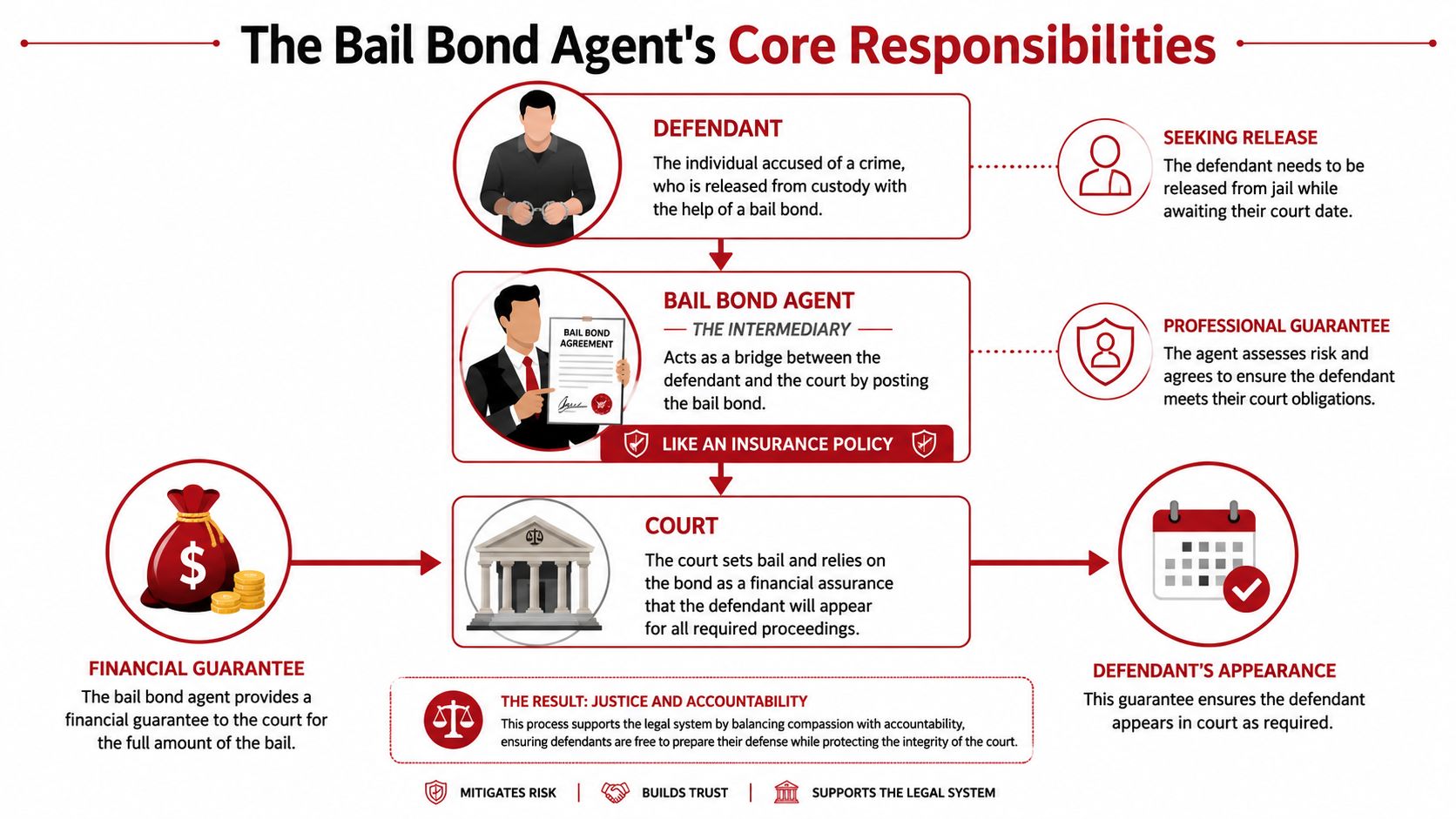
A bail bond agent does three main jobs. The easiest way to think about it is this. The agent is like an insurance-style intermediary for court appearance risk. The court wants a financial guarantee. The defendant wants release. The agent stands in the middle and backs the promise.
The agent is guaranteeing appearance, not making a casual loan
The public often focuses on the premium. That's only part of the story. A bail bond agent commonly charges a non-refundable premium of about 10% of the bail in many U.S. markets, but the actual exposure is that the agent or surety can become liable for the full bail amount if the defendant fails to appear in court (bail agent career FAQ on risk and premiums).
That's why agents ask questions that can feel personal. Where does the defendant live? Who are they living with? Do they work locally? Has anyone agreed to co-sign? Those aren't random questions. They're part of risk review.
The work is paperwork, timing, and risk control
Individuals often see the release. They don't see the stack behind it.
A working bail agent handles:
| Responsibility | What it means in plain English |
|---|---|
| Posting the bond | The agent files the surety undertaking that allows release. |
| Managing paperwork | The jail, court, indemnity forms, and co-signer documents all have to be correct. |
| Tracking compliance | The defendant has to appear in court and follow release conditions. |
Practical rule: If an agent can't explain who is financially responsible if court is missed, stop the conversation and ask again.
The other thing families miss is this. The bail bond contract isn't just about today. It governs what happens if the case drags on, if a court date changes, or if the defendant disappears. That's why transparency matters more than speed alone.
If you want a plain-English look at why families use a professional surety service instead of trying to improvise, this article on the benefits of hiring a trustworthy bail company like Bada Bing Bail Bonds gives a practical overview.
How the Bail Bond Process Works Step by Step
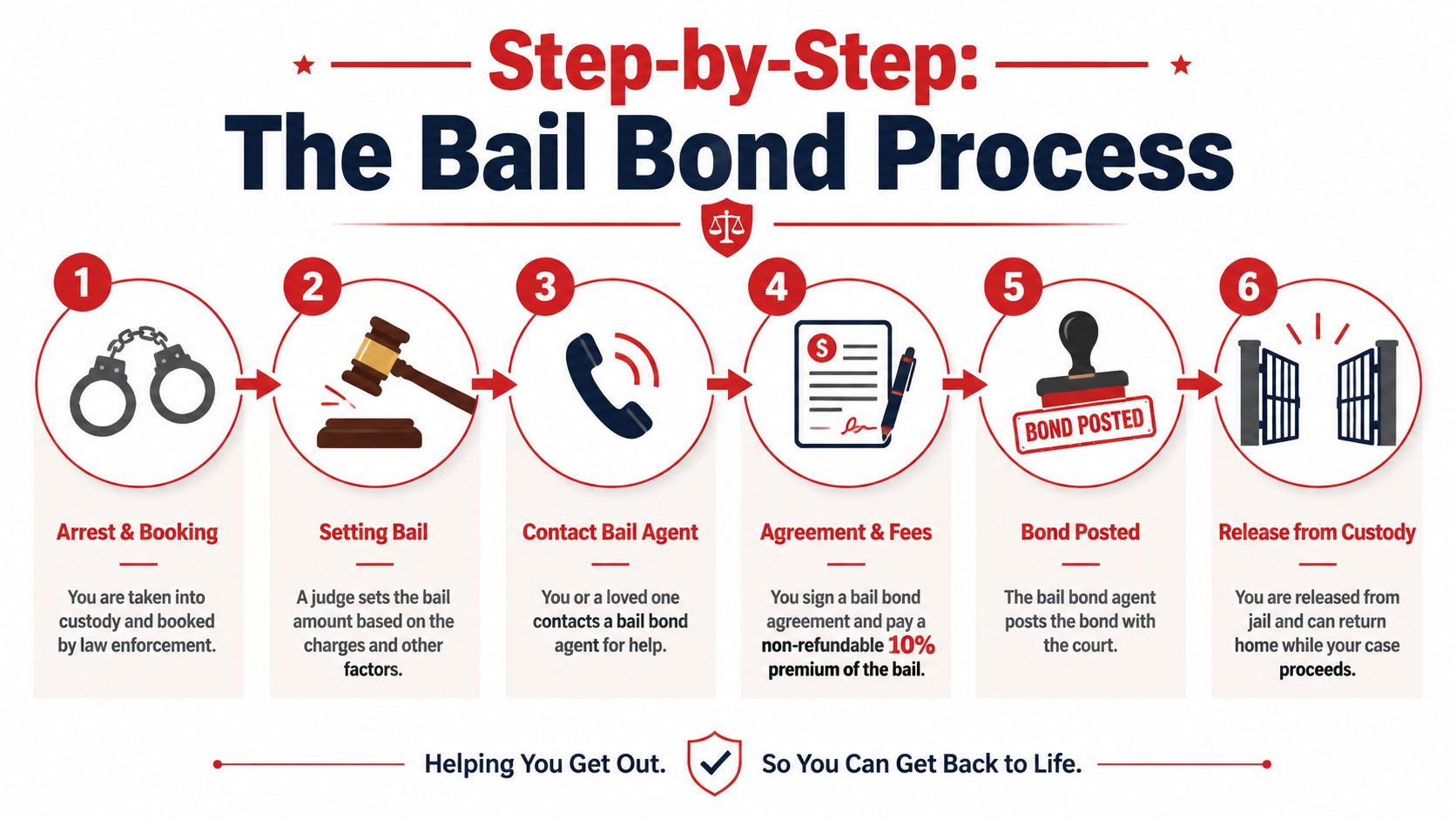
When families ask what is a bail bond agent, what they usually mean is, “What exactly happens from this moment until release?” Here's the actual sequence.
A quick visual helps before the details.
What happens on the first call
Step one is information gathering. The agent needs the defendant's full name, jail location, charges if known, and whether the booking is complete. If bail hasn't been set yet, the process pauses there. You can't post a bond that doesn't exist.
Step two is cost and contract review. In California, families usually expect the standard bond premium, but what matters just as much is how payment is being handled, who is signing, and whether collateral is required.
Step three is co-signer review. The co-signer, often called the indemnitor, isn't just a reference. That person is taking on real legal and financial responsibility.
Where families get surprised
The biggest shock usually isn't the premium. It's the risk behind the signature. Beyond the non-refundable premium, co-signers accept liability for the full bond amount, which is why agents often require collateral for larger bonds and review a co-signer's financial stability carefully (Cornell Law Wex on bail bondsman responsibilities).
That means you should expect discussion about:
- Who is signing: The co-signer needs to understand they're on the hook if the defendant vanishes.
- What collateral may be pledged: Vehicles, property interests, or other assets may be considered depending on the file.
- How payment plans work: Lower upfront cash doesn't erase the underlying responsibility.
- What happens after a missed court date: This should be explained before you sign, not after.
Here's the California-specific breakdown if you need more detail on how bail bonds work in California.
After families understand the paperwork, this short video can make the sequence easier to follow:
What happens after the bond is posted
Once the documents are signed and the bond is posted, the waiting starts. This is the part people underestimate. Posting the bond doesn't mean the jail door opens instantly. Release depends on jail processing, internal clearance, and the facility's workflow.
Ask the agent two separate questions: “Has the bond been posted?” and “Has the jail started release?” Those are not the same thing.
A good agent stays in contact through that waiting period. Families should know whether the defendant is still in processing, whether a hold is slowing things down, and whether pickup should happen at the jail or later.
The smoothest cases are the ones where nobody cuts corners. Correct name. Correct case info. Clear co-signer. Clear payment terms. That's what gets people out faster than frantic phone calls ever will.
California Bail Laws The Rules for Your Protection
California is one of those places where the rules matter a lot. Families often assume every bondsman works the same way. They don't. California has specific licensing and regulatory requirements, and those rules are there to protect you when you're making decisions under pressure.
Licensing matters in California
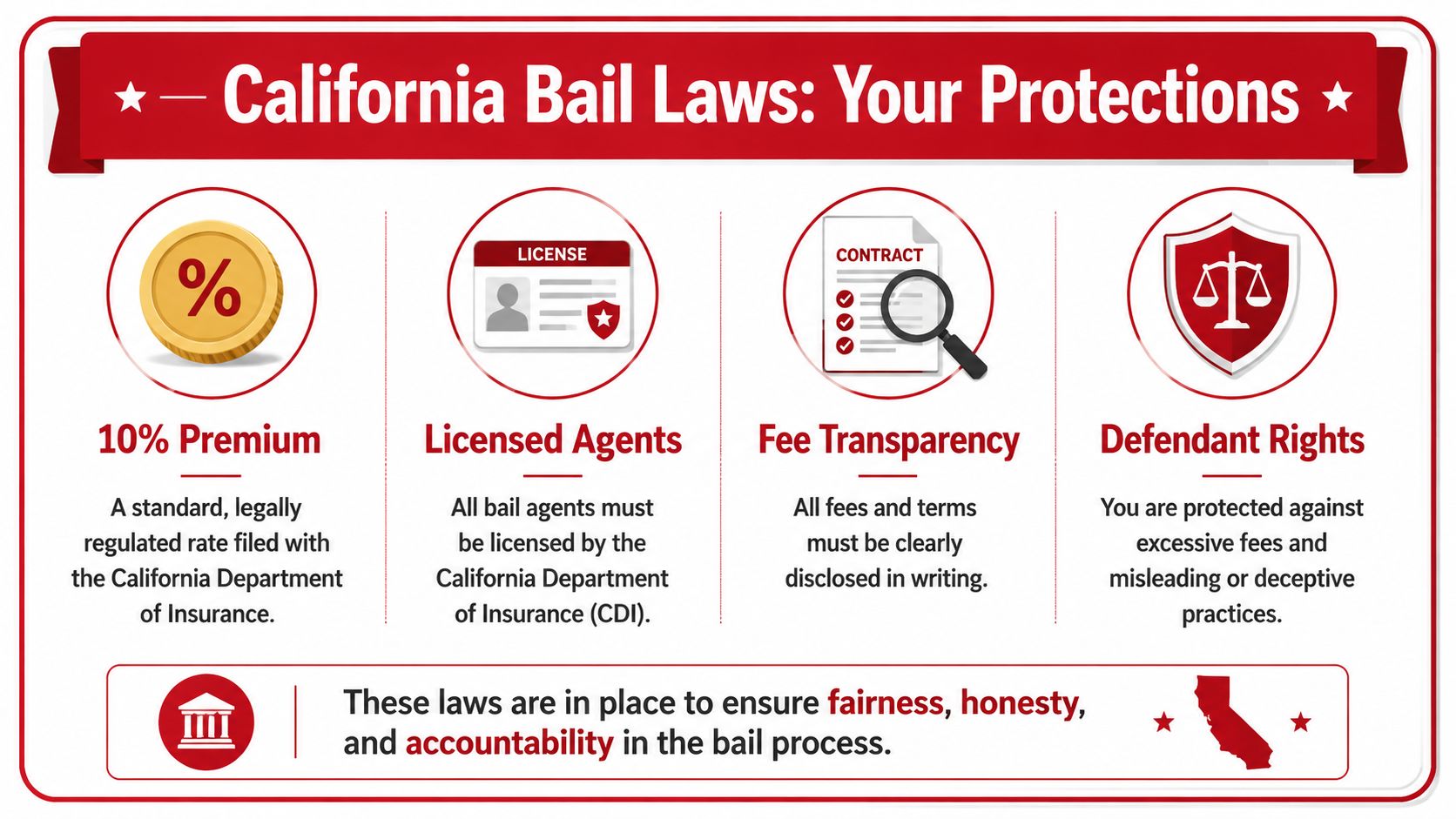
In California, a bail bond agent is a licensed intermediary permitted to “solicit, negotiate, and effect undertakings of bail” for a surety insurer. The state requires a 20-hour prelicensing classroom course, a 40-hour PC 832 power-of-arrest course, a passing exam, fingerprinting, a $1,000 agent bond, and a two-year license term with a $622 filing fee (California Department of Insurance bail agent requirements).
That should tell you something important. This isn't a business where someone should be vague about credentials. In California alone, the Department of Insurance says there are approximately 2,300 licensed bail agents and organizations, so there is no reason to work with someone who won't clearly identify themselves and their license status. The same California regulator also notes that the most common consumer cost is 10% of the total bail.
What California rules mean for you as a customer
These rules aren't just technical. They affect your wallet and your risk.
Here's what they mean in practice:
- Premiums are regulated: In California, the usual premium is generally 10% of the bond amount, and families should understand that this premium is generally nonrefundable.
- Agents have limits on conduct: Solicitation rules exist for a reason. If someone is pressuring you in a way that feels aggressive or shady, pay attention.
- Written terms matter: You should know what you're signing, what the co-signer is responsible for, and what happens to collateral.
If an agent rushes you past the contract, that's not efficiency. That's a warning sign.
California also has a long regulatory history. The framework goes back to the Bail Bond Regulatory Act of 1937, which is one reason experienced local agents tend to be very process-driven. The paperwork is part of the protection.
How to Choose a Reputable Agent in Ventura County
By the time families start calling around, they're tired and often talking to the first person who answers. That's understandable. It's also where expensive mistakes happen.
Questions to ask before you sign anything
Don't overcomplicate it. Ask direct questions and listen for direct answers.
- Are you licensed in California: If the answer is fuzzy, move on.
- What exactly do I pay today: You need to know the premium, any payment arrangement, and whether collateral is part of the file.
- Who is financially responsible if court is missed: The answer should be plain and immediate.
- Do I need a bond at all: In many jurisdictions, own-recognizance release, citation release, or pretrial services may be options, and a trustworthy agent should say so because the premium is non-refundable even if charges are later dropped (overview of alternatives to commercial bail).
- How familiar are you with Ventura County courts and jail procedures: Local knowledge helps with realistic timing and clean paperwork.
If you're comparing local providers, this article on choosing the right bondsman after our new website launch gives a practical checklist that mirrors what families should ask on the phone.
Red flags that should stop you cold
Bad actors usually reveal themselves fast.
| Red flag | Why it matters |
|---|---|
| Vague fee answers | Confusion upfront becomes conflict later. |
| Pressure to sign immediately | You still need clear terms, even in an emergency. |
| No discussion of alternatives | A serious agent should tell you when a bond may not be necessary. |
| No explanation of missed-court consequences | That's one of the most important parts of the whole contract. |
Bada Bing Bail Bonds is one local option that states it provides licensed bail services, explains California's standard premium in plain English, and handles payment plans, co-signer review, and collateral arrangements for Southern California families.
The right agent sounds calm, specific, and accountable. The wrong one sounds slippery.
After Release Your Agent's Ongoing Support
A lot of people think the transaction ends at the jail door. It shouldn't. Release is only the beginning of the bond file.
Release is the start, not the finish
Once the defendant is out, the primary job becomes compliance. Court dates can change. Instructions get ignored. People lose paperwork. A solid agent stays in the loop and helps prevent small mistakes from turning into major problems.
That usually includes:
- Court date reminders: Missing court over confusion is still missing court.
- Check-ins when needed: Especially if the file carries higher risk.
- Help with questions about conditions: The defendant needs to understand what they must do next.
Families should also keep every document from the bond package in one place. Not in a glove box. Not in random texts. One place. The fastest way to create trouble is to lose track of dates and signed terms.
When the bond ends
The bond doesn't end because the defendant got released. It ends when the court exonerates it. That means the surety obligation is dissolved and any collateral held under the agreement should then be addressed according to the contract and case outcome.
People often ask whether money comes back. The answer depends on what kind of money you're talking about. The bond premium is generally nonrefundable. Collateral is a different issue and should be returned once the bond is properly exonerated and the file is cleared under the agreement.
If you want the California version of that answer in simple terms, read do you get bail money back in California.
Frequently Asked Questions for Ventura and Oxnard
Do I need to go to the jail myself
Usually, no. In many cases, the agent can handle the bond process and paperwork without making you stand outside a jail for hours. What you may need to do is provide identification, sign documents, and arrange payment or collateral depending on the case.
If a company tells you to just show up at the jail and figure it out from there, that's not guidance. That's a handoff.
How long does release take
There's no honest universal answer. Release timing depends on booking status, jail workload, holds, internal clearance, and when the bond reaches the right desk. Some releases move quickly. Some don't.
The better question is this. Has the defendant finished booking, has the bond been posted, and has the jail started release processing? That's what tells you where things stand.
Can I get a payment plan
Sometimes, yes. Many families can't comfortably handle the entire upfront amount at once, especially on larger bonds. Payment plans and co-signer arrangements do exist in the market, but they don't erase the legal responsibility tied to the bond.
Ask for the terms in writing. Ask what happens if a payment is late. Ask whether collateral is required now or only under certain conditions.
What if charges get dropped
This is one of the hardest answers for families, because it feels unfair when the case later weakens or goes away. But the bond premium is generally nonrefundable. The service paid for is the posting of the bond and the assumption of the appearance risk, not a guarantee about how the criminal case ends.
That's why the right question at the start isn't only “How do I bail them out?” It's also “Do they need a bond, or is there another release option?”
If you need help right now, Bada Bing Bail Bonds serves Ventura, Oxnard, Santa Barbara, Los Angeles, and surrounding Southern California counties with licensed bail assistance. Call when you have the full name, jail location, and any booking details you have. They can verify the booking, explain whether a bond is needed, walk you through co-signer and collateral issues, and help you understand the next step without adding more confusion to an already hard night.