
The phone usually rings at the worst time. A husband got stopped in Oxnard. A daughter was taken to jail after leaving dinner in Ventura. A brother says he’s “fine,” but he’s calling from custody and nobody in the family knows what happens next.
If that’s where you are right now, slow down and handle the next 72 hours in the right order. After a DUI arrest, people waste time worrying about the wrong things. They argue about guilt, panic about court, or start calling ten different people. The immediate job is simpler than that. Get the person released, protect the driver’s license, preserve facts while they’re fresh, and stop avoidable mistakes.
That’s the answer to what to do after a DUI arrest in Ventura County.
Table of Contents
- Your First Priority After a DUI Arrest Securing Release
- The Critical 10-Day Window Protecting Your License
- Building Your Defense Evidence and Legal Counsel
- Navigating Financial and Practical Consequences
- The Court Process and Program Requirements in Ventura County
- Long-Term Outlook Expungement and Moving Forward
Your First Priority After a DUI Arrest Securing Release
A DUI arrest feels personal. The jail treats it like routine processing. That difference matters. In 2024, U.S. law enforcement arrested about 804,926 people for suspected DUI, which is why booking, bail, and release procedures are highly standardized, but it also means you need to move fast before deadlines and penalties start stacking up, according to national DUI arrest data summarized here.
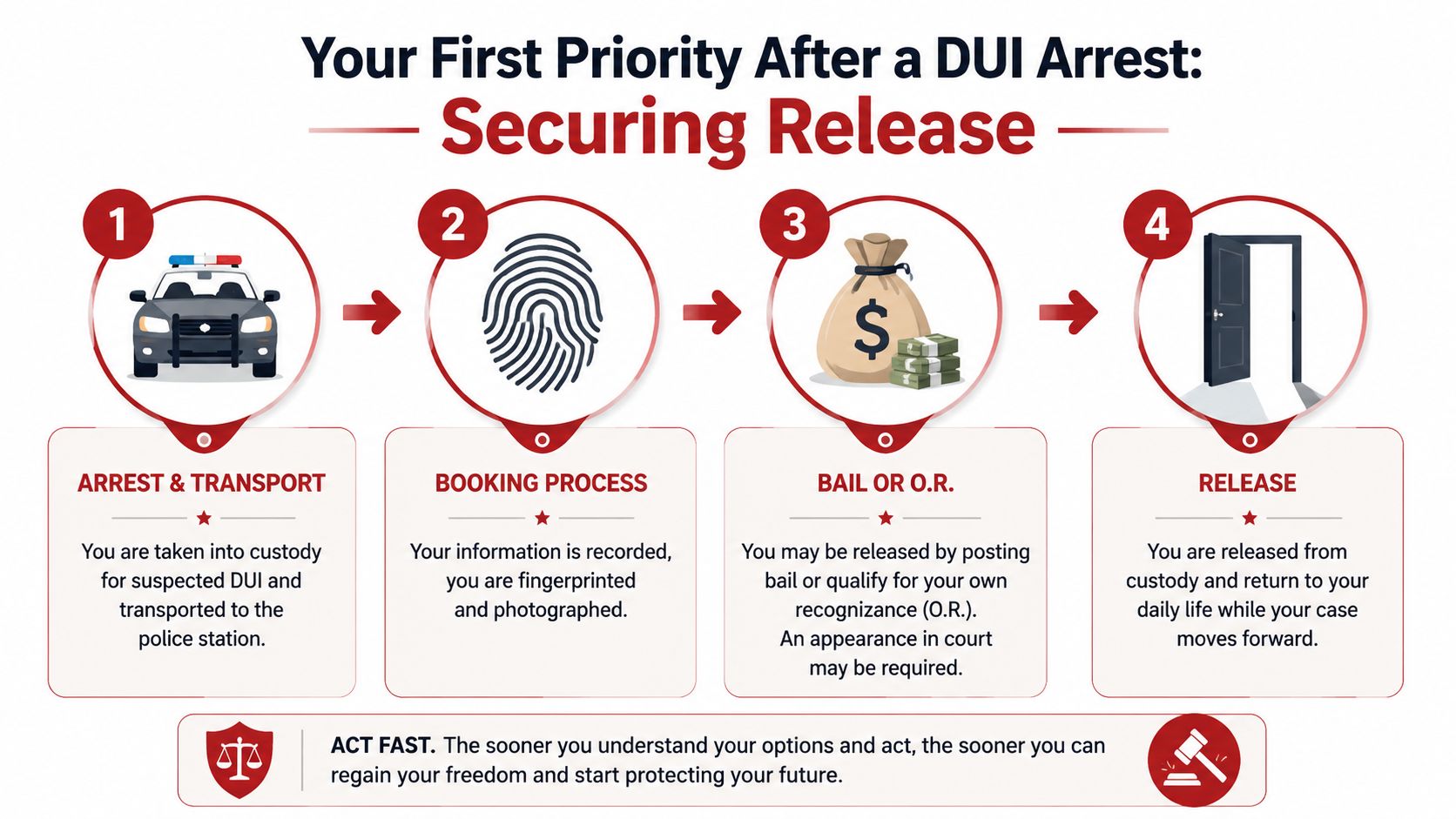
If your family member was arrested in Ventura, Oxnard, Camarillo, Thousand Oaks, Port Hueneme, Santa Paula, Moorpark, Fillmore, Ojai, or nearby, focus on one thing first. Find out where they were booked, what the charge is, and whether bail has been set or release on recognizance is possible.
What happens first at the jail
After arrest, the person is usually transported for booking. That typically includes fingerprints, photos, paperwork, and entry into the jail system. In Ventura County, families often start by trying to confirm whether the person is at the Main Jail, a local holding facility, or waiting for transfer after arrest by a local agency.
Your first phone call should collect these basics:
- Full legal name: Spelling matters. A wrong middle initial can waste time.
- Date of birth: Jail staff and bonds agents usually need it to confirm identity.
- Arresting agency: Ventura PD, Oxnard PD, CHP, Ventura County Sheriff, or another local agency.
- Approximate arrest time and city: This helps narrow down where booking likely happened.
- Any paperwork already received: Citation, booking number, tow slip, or release form.
Practical rule: Don’t wait for the arrested person to “call back with details.” Start verifying booking right away.
Ventura County bail bonds agents and jail staff deal with DUI holds all the time. That’s why speed matters more than drama. If the person is eligible for bail, every delay usually comes from missing information, slow decision-making, or family disagreements about who is signing.
Cash bail versus a bail bond
Families often freeze here because they don’t understand the options. The practical difference is simple.
| Option | What it means | What families should know |
|---|---|---|
| Cash bail | You post the full bail amount directly | That can tie up a large amount of money fast |
| Bail bond | You work with a licensed bail agent to secure release | It’s usually the realistic route when cash bail is too much to post immediately |
If you need fast bail bonds Ventura families can use at night or on weekends, a bail bond is often the workable solution because the agent handles the paperwork and coordinates with custody staff. If you’re trying to understand release timing at the Ventura County Jail, start with this page on Bail Bonds Ventura.
What to have ready when you call
When people ask me what to do after a DUI arrest, I tell them this first. Stop telling the whole story. Start giving usable information.
Have this ready before you call a 24-hour bail bonds Ventura service:
- The defendant’s identifying information
- Where the arrest happened
- Any booking number or citation number
- Whether this looks like a first arrest or there may be prior issues
- Who is willing to cosign
- How quickly someone can sign paperwork and provide ID
A local service like Bada Bing Bail Bonds can verify booking details, explain the charge in plain English, and coordinate release steps with the jail. That’s useful when the family is scattered between Ventura, Oxnard, Camarillo, and Thousand Oaks and nobody knows who should take control.
One more thing. Get the car situation handled early. If the vehicle was towed, locate it and get the hold information. A lot of families focus so hard on getting someone out that they let storage fees and missing personal property become the next mess.
The Critical 10-Day Window Protecting Your License
The most expensive mistake after release isn’t always in criminal court. It’s missing the DMV deadline.
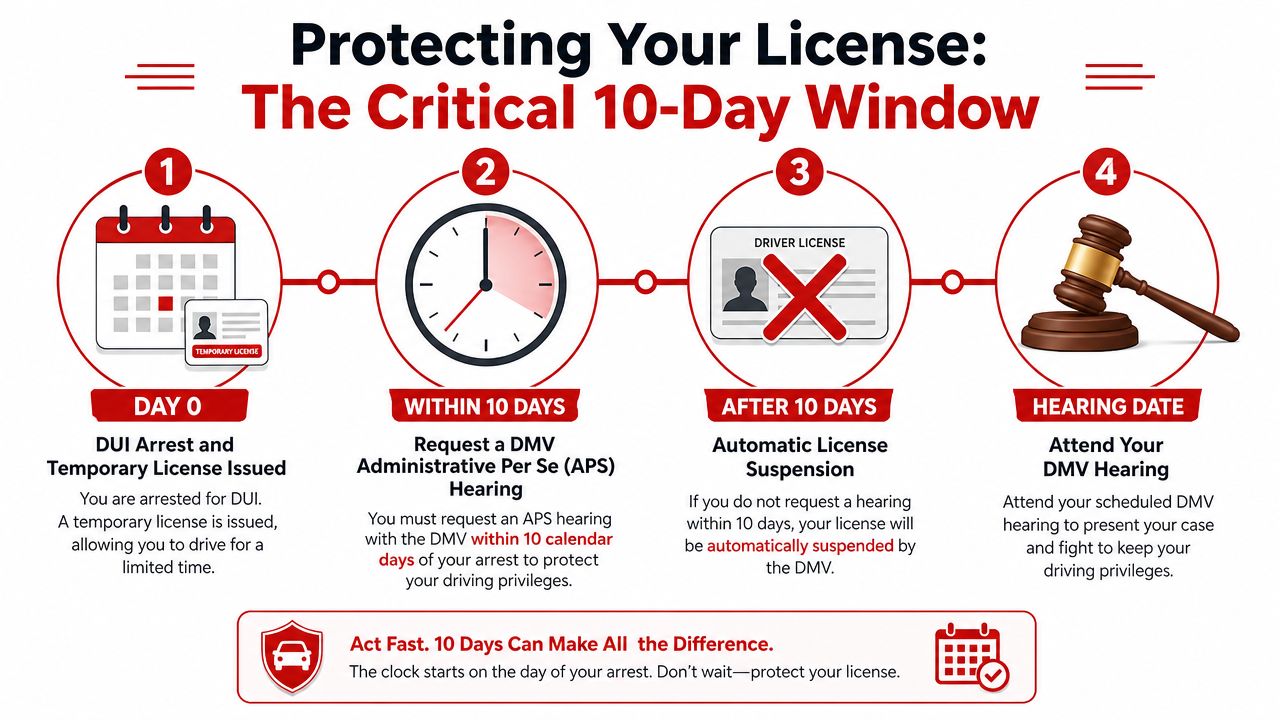
In California, the highest-value immediate action after a DUI arrest is to request the DMV hearing within 10 days. Miss that deadline and an automatic license suspension can kick in. That hearing request is separate from the criminal case, and counsel can handle it if retained quickly, as explained in this California DUI hearing overview.
Why this deadline matters more than most people realize
A lot of people think, “I’ll deal with the license later when the court date gets closer.” Wrong. The DMV side starts immediately. If the officer took the license and issued paperwork, that paperwork isn’t something to shove in a kitchen drawer.
California’s DUI system can be particularly intricate. There are two tracks moving at once:
- The criminal case
- The DMV administrative case
Those are not the same fight. Winning time on one doesn’t automatically fix the other.
The family member who says “we already hired a lawyer for court, so we’re covered” may be wrong if nobody has actually requested the DMV hearing.
If you’re posting bond for a DUI arrest, this is also the moment to learn what DUI-specific bail support looks like. For a practical local starting point, review DUI bail bonds.
What to do with the pink paper and arrest documents
Do this the same day the person gets home:
- Set aside every paper from the arrest: Citation, temporary license, notice of suspension, booking paperwork, tow receipt.
- Photograph everything: Front and back. Don’t rely on one person keeping track of originals.
- Calendar the 10-day deadline immediately: Use the family phone, work calendar, and a written backup.
- Tell the lawyer’s office to confirm the DMV request: Don’t assume they did it. Ask for confirmation.
Here’s the short version. If you care about being able to drive to work, school, treatment, court, or child pickup, this deadline is not optional.
A lot of generic articles bury this under broad legal advice. That’s a mistake. In California, this is one of the first pressure points after a DUI arrest, and families in Ventura County often don’t realize it until the deadline is gone.
This video gives a useful overview of the hearing issue:
Building Your Defense Evidence and Legal Counsel
Once the person is home and the DMV deadline is being handled, stop rehashing emotions and start preserving facts. Memory fades fast. Details that seem tiny on day one can matter later.
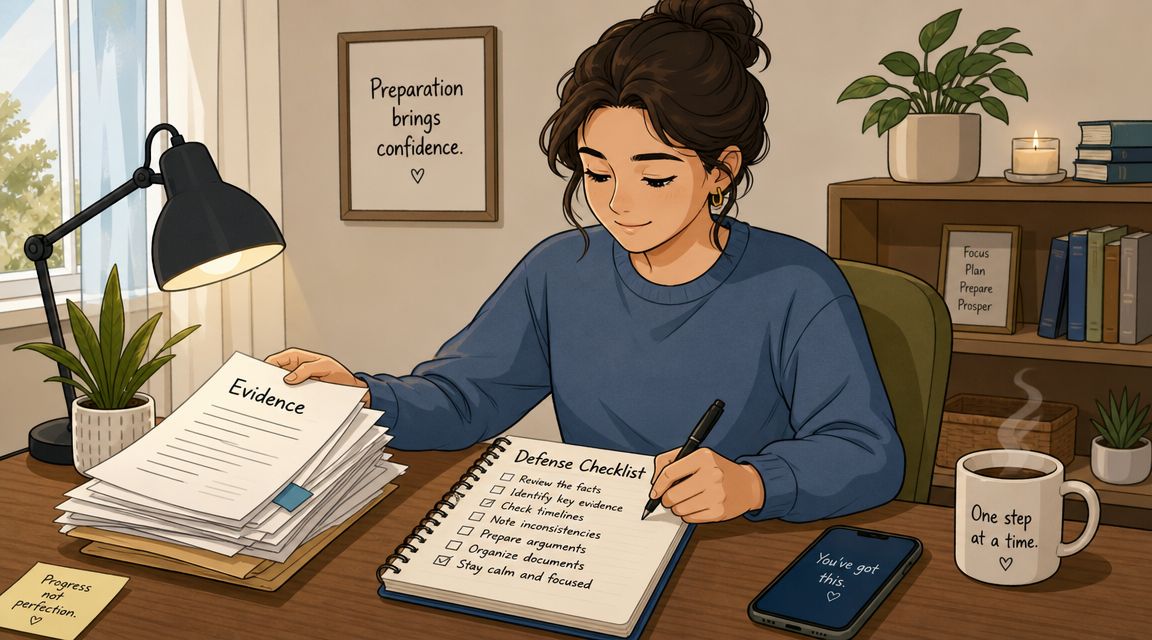
Expert guidance says to build a contemporaneous evidence packet in the first 24 hours by writing down the stop location and time, officer statements, and sobriety test details, because cases are often won or lost on small factual discrepancies, as noted in this first-24-hours DUI evidence guide.
Start the evidence packet the same day
Don’t wait for the police report. Write down what the person remembers while it’s still fresh, even if they’re tired, embarrassed, or convinced the facts are “obvious.”
Make one simple evidence file with these categories:
- Timeline: When they left, where they drove, where they stopped, when the contact happened.
- Officer interaction: Exact words they remember, instructions given, questions asked, whether they understood them.
- Field sobriety details: Where they stood, road conditions, shoes worn, lighting, weather, traffic noise, physical issues.
- Testing and medical factors: What tests were requested, what happened, and whether fatigue, injury, anxiety, or medication may have mattered.
- Independent records: Receipts, texts, rideshare history, location history, parking slips, dashcam, surveillance possibilities, witness names.
Important: Don’t clean this story up. Raw notes are better than polished notes.
Also do the boring but critical tasks. Find the tow yard. Retrieve valuables from the vehicle if allowed. Save every receipt. Don’t post a joke, apology, rant, or explanation on social media. A “harmless” post can become a problem.
Choosing a local DUI lawyer without wasting time
Not every criminal lawyer handles DUI cases the same way. You want someone who regularly deals with DUI procedure, local courts, DMV consequences, and the factual mechanics of a traffic stop.
Ask direct questions:
| Ask this | Why it matters |
|---|---|
| Do you regularly handle DUI matters in Ventura County? | Local familiarity matters |
| Will your office request the DMV hearing? | You need a clear yes or no |
| Who reviews the reports and testing issues? | You want to know who is actually doing the work |
| What should I preserve right now? | Good counsel gives immediate action items |
| Can you explain whether the case is being filed as a misdemeanor or something more serious? | Charge level shapes risk and strategy |
If you’re confused about charge severity, this plain-English page on the difference between felony and misdemeanor charges helps families understand why some DUI arrests carry much higher stakes than others.
A good lawyer won’t promise miracles. They’ll tell you what to gather, what to stop saying, and what deadlines control the next move. That’s what you need.
Navigating Financial and Practical Consequences
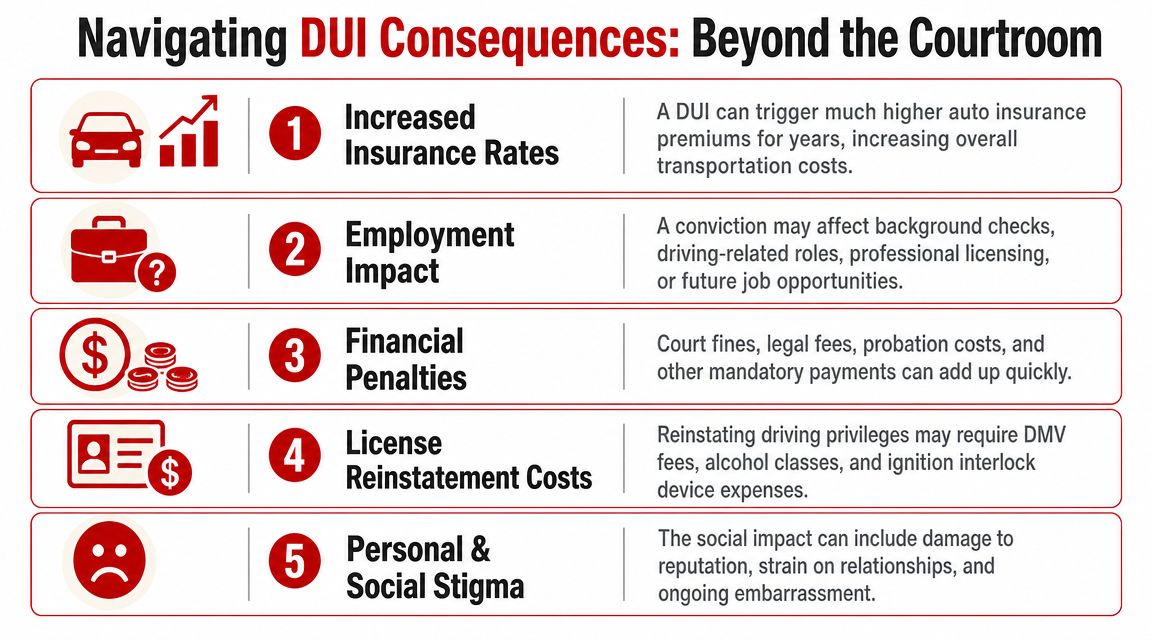
A DUI arrest doesn’t stop costing money after release. Families usually expect bail and legal fees. They don’t prepare for the long tail. Insurance issues, license reinstatement steps, transportation problems, classes, missed work, and court compliance can hit all at once.
That’s why I tell people to make two plans right away. One is for the case. The other is for daily life.
The costs that blindside families
The arrest is only the first invoice. What follows can disrupt the household for months.
Common problem areas include:
- Insurance pressure: Drivers often face policy changes, filing requirements, and higher costs.
- License-related expenses: Reinstatement steps can involve forms, proof of coverage, and other compliance items.
- Ignition interlock requirements: Some drivers may need device installation and ongoing monitoring.
- Program expenses: Education classes, treatment recommendations, and related administrative costs can pile up.
- Work disruption: Missed shifts, transportation changes, and employer concerns can create a second financial hit.
The practical answer is to stop pretending this will stay “contained” inside the court file. It won’t.
Most families get into trouble by handling each new cost as a surprise instead of building a written payment and transportation plan from the start.
How to keep the case from wrecking daily life
Use a simple household response plan for the next few months.
- Assign one organizer. One person tracks paperwork, court dates, DMV notices, and bond documents.
- Set transportation rules. If the person can’t legally drive, don’t let them “just go to work real quick.”
- Build a payment sequence. Prioritize what keeps the person compliant and mobile.
- Keep every proof document. Filing confirmations, class enrollment, insurance paperwork, and receipts should be in one folder.
- Review financing options early. If the family needs flexibility for release costs, this page on bail bond payment options is a practical reference.
This is also where shame starts making the case worse. People avoid opening mail. They skip calls. They stop telling the family what’s going on. That behavior causes more damage than the original panic.
Administrative license suspension also became a major post-arrest consequence over time, with first-offense suspensions commonly 90 days in many jurisdictions, and the Insurance Institute for Highway Safety also reports that broader impaired-driving enforcement tools such as checkpoints and ignition interlock laws are associated with measurable crash reductions, as outlined in this alcohol and drugs research summary.
The Court Process and Program Requirements in Ventura County
The first court date feels bigger than it is. Families walk into court thinking a final decision will happen in minutes. Usually, the first appearance is about getting the case formally in front of the judge, addressing the charge, and setting the path forward.
If the arrest happened in Ventura County, the person may deal with a courthouse tied to where the case was filed. Local procedure, the assigned courtroom, the prosecutor’s position, and defense counsel all shape the pace.
What the first court date usually feels like
A typical arraignment day goes like this. You arrive early, stand in a crowded courtroom, and wait much longer than expected. The judge calls the case. The charge is addressed. A plea is entered, or the lawyer handles that part. Conditions may be discussed. Then the case is continued, negotiated, or set for the next stage.
That doesn’t mean nothing happened. It means the machinery started.
Here’s who does what in plain English:
- The judge manages the courtroom and rulings.
- The prosecutor pushes the case on behalf of the state.
- The defense attorney challenges the evidence, negotiates, and protects the client from making bad decisions.
- The defendant needs to show up, stay quiet unless told to speak, and follow instructions exactly.
For local case movement and release-related support, families often look for Ventura County bail bonds information that matches local court and jail realities rather than generic statewide advice.
What compliance looks like after court starts
Once the case is moving, the person may have conditions to follow. That can include classes, probation terms, restricted driving requirements, alcohol-related programs, or other court-ordered steps depending on the outcome.
A few simple habits make this smoother:
- Arrive early to everything
- Save proof of enrollment and completion
- Read every court order twice
- Ask the lawyer before assuming a requirement is optional
- Never skip a date because “nothing will happen”
Missed appearances and missed compliance steps turn manageable cases into ugly ones fast.
Ventura, Oxnard, Camarillo, and Thousand Oaks families often make the same mistake. They think release means the crisis is over. It isn’t. Release means the person now has the chance to handle the case correctly from home instead of from custody.
Long-Term Outlook Expungement and Moving Forward
A DUI case ends in stages, not all at once. First comes release. Then court. Then compliance. Then, if everything gets finished properly, the person can look at what comes next.
In California, many people eventually ask about expungement, often called a dismissal under Penal Code 1203.4. Whether that’s available depends on the outcome of the case and whether the person completed the required terms. It can help with moving forward, but it doesn’t erase the fact that the arrest happened or magically solve every licensing or insurance issue.
What finishing the case actually means
People say, “It’s over,” long before it’s over. It’s really over when the person has done all of this:
- Resolved the court case
- Completed any probation terms
- Finished required classes or treatment
- Handled license-related follow-up
- Paid what must be paid
- Confirmed there are no loose ends
That last step matters. Loose ends are what bring people back into court or back into custody. Unpaid balances, missed proof filings, and misunderstood deadlines keep cases alive.
If the person may qualify for relief later, talk to counsel about timing and paperwork. Don’t assume it happens automatically.
How families and cosigners should handle the aftermath
Families carry more of this process than people admit. A spouse may drive the person to work. A parent may cosign. A sibling may manage paperwork. That support helps, but it needs boundaries.
Use these rules:
- Be supportive without becoming the case manager forever: The arrested person needs to take back responsibility quickly.
- Require honesty: If mail is arriving or dates are changing, everybody involved needs to know.
- Protect the cosigner: A cosigner should know every court date and every bond condition.
- Put expectations in writing: Who’s paying what, who’s driving, who’s attending classes, and who’s tracking deadlines.
The right mindset is simple. A DUI arrest is serious, but it does not have to define the next decade if the person handles the next few months with discipline. Families in Ventura County do best when they stop reacting and start organizing.
If your family needs immediate help after a DUI arrest in Ventura, Oxnard, Camarillo, Thousand Oaks, Port Hueneme, Santa Paula, Moorpark, Fillmore, Ojai, or nearby Santa Barbara County, Bada Bing Bail Bonds provides 24/7 bail help, booking verification, plain-English guidance, and release coordination with local jails. If you’re trying to get someone out now, gather the person’s full name, date of birth, arrest location, and any booking details, then call as soon as possible so the release process can start.