How Co-Signing a Bail Bond Works: A Guide to Your Responsibilities
When a loved one is arrested in Southern California, securing their release quickly is the top priority. One of the most effective ways to do this is by working with a bail agent to co-sign a bail bond.
However, many people aren’t sure what being a “co-signer” (or “indemnitor”) actually entails. At Bada Bing Bail Bonds, we believe in transparency. This guide explains how the bail process works and what you need to know before signing with a bail bonds company.
What Does It Mean to Co-Sign a Bail Bond?
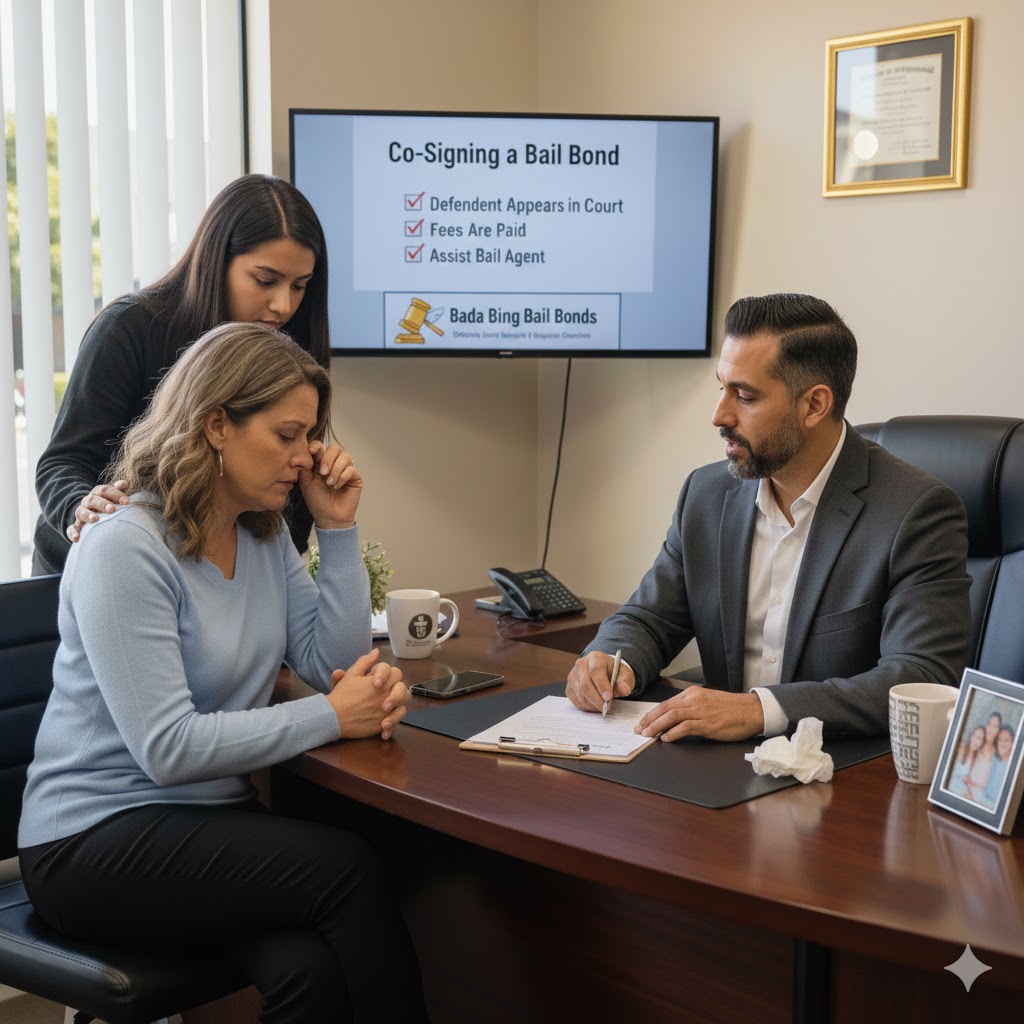
Co-signing a bail bond is a legal agreement where you take financial and legal responsibility for the defendant. By signing, you are guaranteeing the bail bondsman that:
Court Attendance: The defendant will appear at every required court date.
Payment: All bail bond fees and premiums will be paid in full.
Cooperation: You will assist the bail agent if the defendant becomes unreachable.
In many high-risk cases, a bail bonds company cannot legally post bond without a qualified co-signer to mitigate the risk.
Why Do Bail Bond Companies Require a Co-Signer?
A bail bond is a financial guarantee provided to the court. Because the bail agent takes on the risk of the full bail amount, a co-signer acts as a safety net. Having a co-signer proves the defendant has:
Strong ties to the local community.
A support system to keep them accountable.
A stable residence and financial backing.
Requirements to Be a Bail Bond Co-Signer
While every bail agency has different standards, most professional agents look for these four criteria:
Steady Employment: A consistent income proves you can cover the bond costs if necessary.
Credit History: Good credit or a solid payment history helps establish trust with the bail bondsman.
Valid ID & Residency: You must provide legal identification and proof of your current address.
Relationship: Spouses, family members, and long-time friends are usually the most reliable co-signers.
Your Legal Responsibilities as a Co-Signer
Before you sign a contract for bail bonds, it is vital to understand your obligations:
Ensuring Court Appearances: Your primary job is making sure the defendant shows up to court. If they miss a date, the bond may be revoked, and you could face additional fees.
Paying the Premium: In California, bail bond fees are typically 10% of the total bail amount. This fee is non-refundable as it is the cost of the agent’s service.
Additional Costs: If the defendant “skips” bail, you may be responsible for recovery costs or the full face value of the bail.
What Happens if a Defendant Misses Court?
If the defendant fails to appear, the court “forfeits” the bond. This means the bail bonds company is now liable for the full bail amount.
Important: If a court date is missed by mistake, contact your bail agent immediately. Most issues can be resolved quickly if you communicate right away.
Can You Be Removed from a Bail Bond?
Yes. If you no longer feel comfortable being responsible for the defendant—perhaps they are missing check-ins or planning to flee—you can request to be removed. The bail agent will surrender the bond, and the defendant will return to custody, releasing you from further financial liability.
Why Choose Bada Bing Bail Bonds?
If you need a trusted bail agent in Southern California, Bada Bing Bail Bonds offers 24/7 service with total confidentiality. We provide fast, honest bail services in:
Ventura County
Santa Barbara County
Los Angeles County
Orange, Riverside, and San Bernardino Counties
We make the bail bonds process simple, often requiring little to no collateral. Our licensed agents are ready to answer your questions and ensure you are comfortable before you sign.
Contact a Local Bail Agent Today
Don’t let a loved one sit in jail. Get the professional help you need right now.
Phone: 805-910-9842
Website: badabingbail.com
Availability: 24 Hours a Day, 7 Days a Week
Frequently Asked Questions: Co-Signing Bail Bonds
Q: What is the risk of co-signing a bail bond? A: The primary risk is financial. If the defendant fails to appear in court and cannot be located, the co-signer is responsible for paying the full face value of the bail to the court. Additionally, the co-signer is responsible for the non-refundable bail premium and any recovery costs incurred if the defendant skips bail.
Q: Can a co-signer get their money back? A: The 10% premium paid to a bail agent is a non-refundable fee for the service of posting the bond. However, if you provided any cash or property as collateral, that will be returned to you once the defendant’s case is fully resolved and the bond is exonerated by the court.
Q: Does co-signing a bail bond affect your credit score? A: Simply signing a bail bond does not typically show up on your credit report or affect your score. However, if you fail to pay the agreed-upon premium or if the bond goes into forfeiture and the debt is sent to a collection agency, your credit score will be negatively impacted.
Q: Can I withdraw as a co-signer after the bond is posted? A: Yes. If you have reason to believe the defendant will not go to court or is engaging in illegal activity, you can request that the bail bonds company “surrender” the bond. This will return the defendant to custody and release you from future liability, though you may still be responsible for fees incurred up to that point.
Q: How long is a co-signer responsible for a defendant? A: A co-signer’s responsibility lasts for the duration of the legal case. Once the judge “exonerates” the bond (usually at sentencing or when charges are dropped), the financial obligation to the court ends.