In California, a bail bond usually costs 10% of the total bail amount, and that premium is non-refundable. That’s the starting point, not always the full financial picture, because payment plans, collateral, and co-signer responsibility can change what you pay and what you risk.
If you’re reading this after a late-night call from the Ventura County Jail, the Santa Barbara Jail, or another local facility, you probably need a straight answer fast. Families usually ask one question first: how much do bail bonds cost? The calm answer is simple enough to start with. The practical answer takes a little more detail, especially if you’re trying to get someone out quickly in Ventura, Oxnard, Camarillo, Port Hueneme, Thousand Oaks, Santa Paula, Moorpark, Fillmore, Ojai, or Santa Barbara.
What matters most in the first few minutes is understanding two things. First, the court sets the bail amount. Second, the bail bond company charges the premium for posting the bond. If you’re looking for bail bonds Ventura, 24 hour bail bonds Ventura, or bail bonds near me, you need to know both the immediate price and the actual exposure before you sign anything.
Table of Contents
- The Urgent Question What Bail Really Costs
- The 10 Percent Premium Explained
- Beyond the 10 Percent What Really Affects Bail Bond Costs
- Payment Plans Collateral and Co-Signer Options
- Bail Bond Cost Examples in Ventura and Santa Barbara
- Frequently Asked Questions About Bail Bond Costs
The Urgent Question What Bail Really Costs
It is 12:30 a.m. You get a call from Ventura County Jail or Santa Barbara County Jail, and the first question is always the same. How much will it take to get them out?
Families usually hear one short answer first. Ten percent. That gives you a starting point, but it is not the full financial picture. The important question is how much cash is needed now, what documents or collateral may be required, and how long the jail will take to process the release after the bond is posted.
That distinction matters in the middle of the night. A family may be able to handle the premium, then get surprised when the bond also requires a co-signer, proof of income, proof of address, or property offered as security. In higher-risk cases, the amount at risk can be much larger than the premium itself.
What families usually need to know first
- What bail was set at: The jail or court sets that number during booking or after a hearing.
- What has to be paid right away: The upfront amount is often the first part of the cost discussion, but not always the only obligation.
- What the bond company may require to approve the bond: Some cases need a co-signer, financial records, or collateral before the bond can be posted.
- How fast release can really happen: Posting the bond is one step. Jail processing time is separate, and that timing changes by facility, staffing, and booking status.
I tell families to ask one direct question before signing anything. “What am I paying today, and what am I putting at risk if something goes wrong?”
That keeps the conversation grounded.
If the arrest happened in Ventura, Oxnard, or Santa Barbara, release speed depends on more than money. Booking must be complete, the defendant must be eligible for release, and the jail still has to process the paperwork after the bond is accepted. This guide on how bail bonds work in California explains the process clearly, which helps families separate bond cost from release timing.
The search for fast bail bonds in Ventura usually starts with urgency. The better approach is to get the full obligation in plain language before you agree. That is how families avoid surprises at the worst possible moment.
The 10 Percent Premium Explained
A family gets the call, hears bail was set at $20,000, and assumes $20,000 has to be paid today. In many cases, that is not how release happens. A bail bond lets the defendant be released without the family producing the full bail amount in cash on short notice.
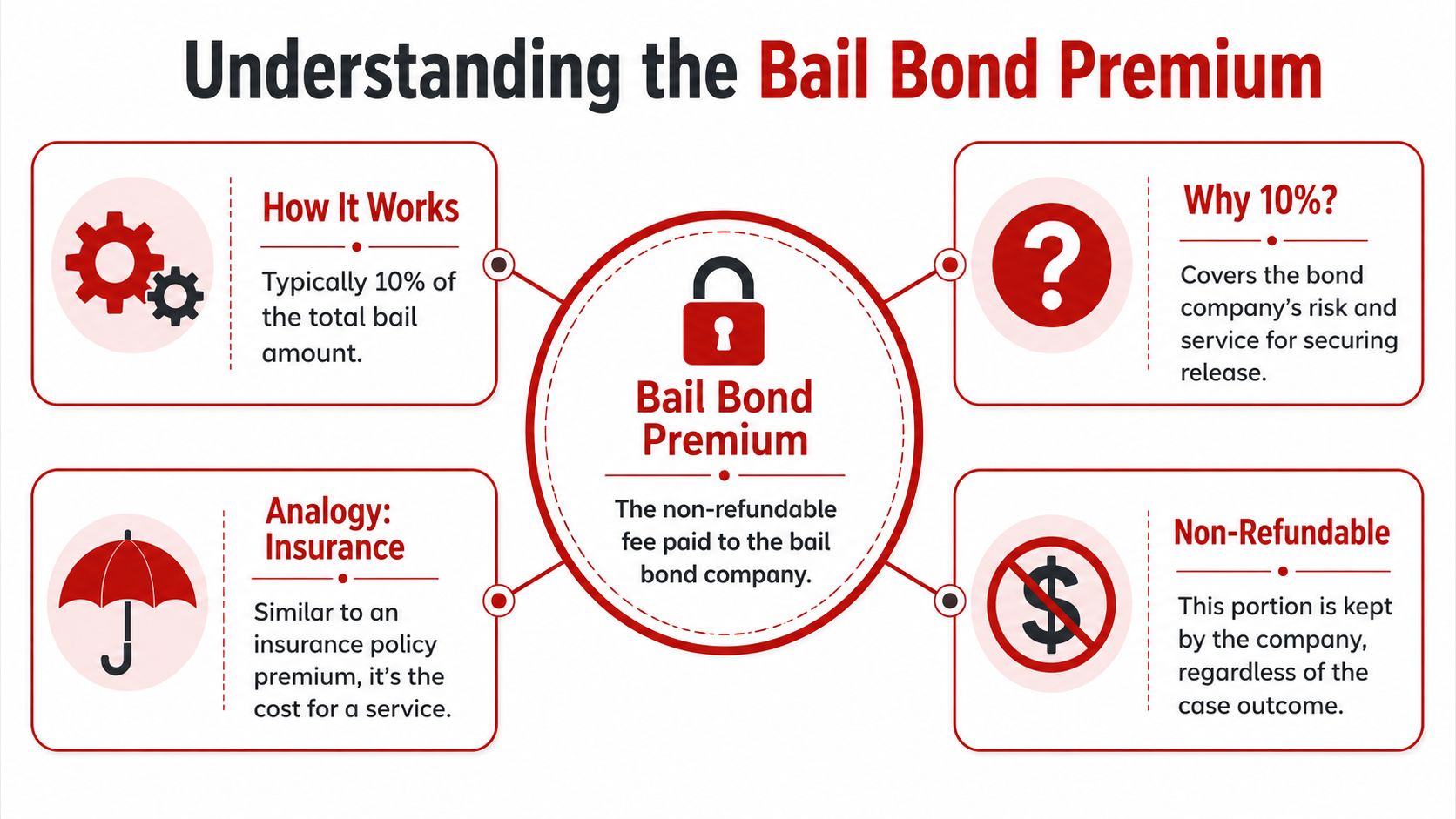
The premium is the fee paid to the bail bond company for posting the bond. It is the company’s charge for taking on the financial risk of the full bail amount and handling the paperwork needed to secure release.
What the premium actually pays for
In California, families are often quoted a premium based on the bail amount set by the court. The practical rule many people hear is the “10 percent” figure. What matters is this. The premium is the fee for the bond service, and it is separate from the bail amount itself.
A simple breakdown helps:
| Term | What it means |
|---|---|
| Bail amount | The amount set by the court |
| Bond premium | The fee paid to the bail bond company |
| Purpose of premium | Covers the bond company’s risk and service |
| Refundable | No, the premium is non-refundable |
If bail is set at $10,000, the premium discussion usually starts from that number. If bail is higher, the premium rises with it. That is why families need to ask for the actual dollar amount due today, not just the bail amount on the jail record.
The premium also does not tell you the whole financial picture. A bond company may still require a co-signer, proof of income, or collateral depending on the file. For a plain-English explanation of the agent’s role in that process, see what a bail bond agent does.
What it does not cover
The premium does not function like a court deposit. It is not money held for later return if the case goes well.
If charges are reduced, dismissed, or resolved without jail time, the premium still is not refunded. That point causes confusion all the time, especially when families are under pressure and trying to get someone out of Ventura or Santa Barbara custody fast.
The premium pays for the bond service and the risk the company accepts. It is not money held for later return.
That is why two bond approvals can sound similar at first and still expose a family to very different costs. One agency may accept a simple premium payment. Another may require property, a stronger co-signer, or financing terms that add to the total amount paid over time.
Beyond the 10 Percent What Really Affects Bail Bond Costs
The premium may be fixed, but the terms of the bond are not always simple. Families often get surprised by this.
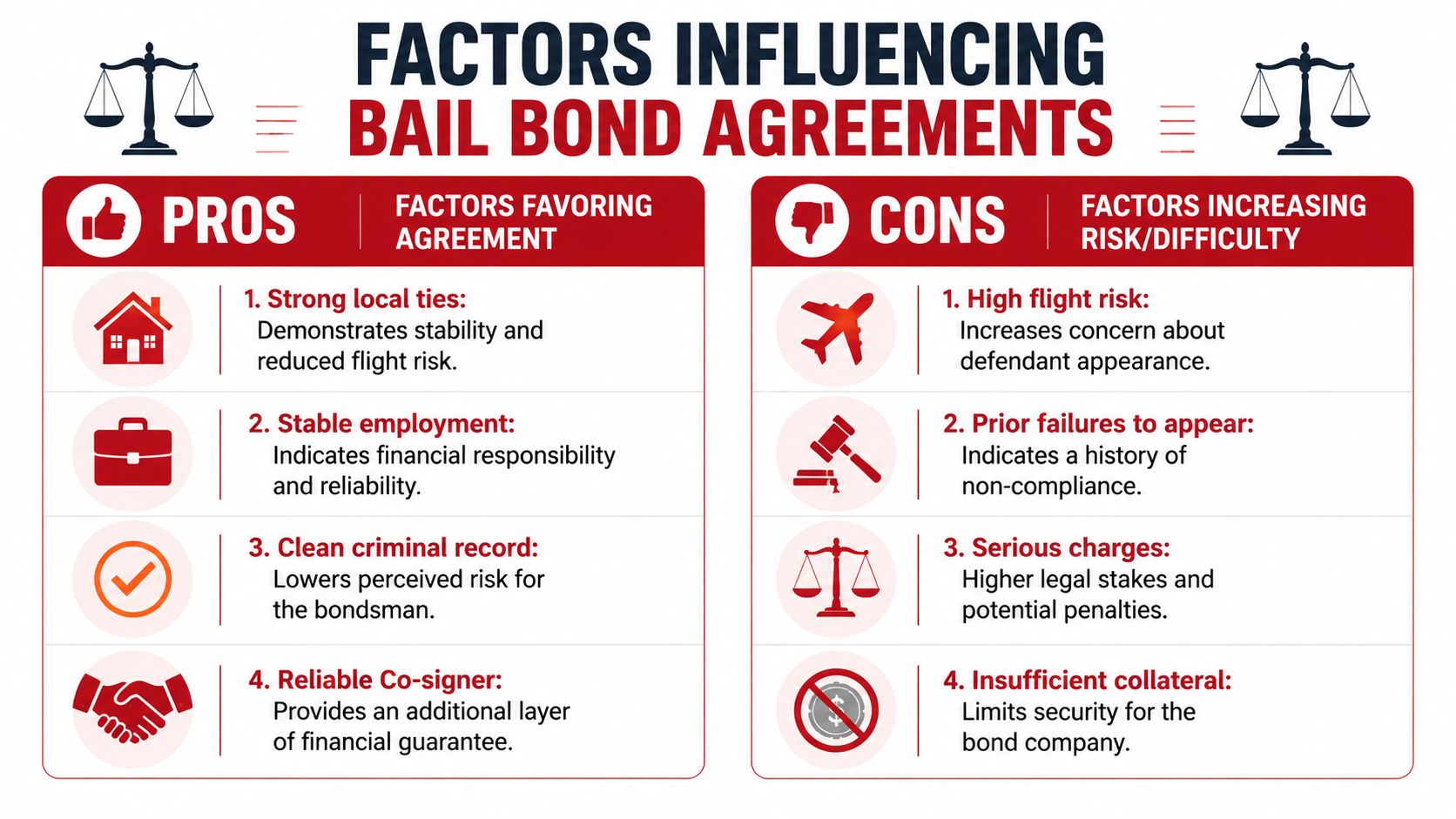
A bond company looks at risk. The charge matters. The defendant’s history matters. Whether the person has strong local ties in Ventura County or Santa Barbara County matters. Prior missed court dates matter too. Those factors don’t necessarily change the premium itself, but they can change what the company requires before it agrees to post the bond.
Why one case is easier than another
A lower-risk file is usually easier to write. A higher-risk file often needs more backup.
Common factors include:
- Charge severity: More serious charges can make the case harder to underwrite.
- Court history: Prior failures to appear raise obvious concerns.
- Community ties: Stable residence, work history, and local family support can help.
- Co-signer strength: A reliable indemnitor gives the company another layer of accountability.
If you’ve ever heard someone say, “The price is the same, but the terms are different,” this is what they mean. The company is not only asking, “Can we post this bond?” It’s also asking, “What happens if this person doesn’t come back?”
A broader explanation of risk transfer helps here. The basic framework is similar to the meaning of a surety bond, where one party guarantees another party’s obligation under specific terms.
Where total cost starts climbing
Beyond the base 10% premium, total cost can rise because financing plans may carry high interest rates, and bail bond companies frequently require collateral for defendants considered flight risks or for substantial bail amounts, as described in this summary of financing interest and collateral requirements.
That’s the part many “how much does bail cost” pages skip. The bond becomes more expensive in real life when:
- You can’t pay the premium upfront
- The company offers financing with added interest
- Collateral is required to secure the bond
- A missed court date triggers added consequences
Some families can handle the premium. What hurts them later is the collateral risk if the defendant disappears or stops following court orders.
For Ventura County bail bonds and Santa Barbara jail releases, this is often the turning point in the conversation. Not “What is the premium?” but “What am I signing my house, car, or savings up for if something goes wrong?”
Payment Plans Collateral and Co-Signer Options
If you can’t comfortably pay the premium in one shot, the next question is usually whether there’s a payment plan. That can help, but only if you understand the full agreement before signing.

The upfront premium is often only the entry cost, while the bigger risk is collateral or loss exposure tied to nonappearance. That’s why families don’t just need “10%.” They need answers to questions like what collateral is required, what happens after a missed court date, and when the bond becomes expensive in practice, as discussed in this Texas research paper on money bond costs and risk exposure.
When payment plans help and when they hurt
Payment plans can make release possible when cash is tight. They can also become a problem if the schedule is unrealistic or the financing cost is not clearly explained.
Ask direct questions:
- What is due today: Know the immediate amount before anyone starts paperwork.
- What is due later: Get the payment schedule in writing.
- What happens after a missed payment: Don’t assume flexibility.
- Whether collateral is tied to the plan: Financing and collateral sometimes overlap in larger cases.
A company such as Bada Bing’s bail bond payment options can be one way to review how payment plans, co-signers, and collateral may be structured in a California bond file.
Here’s a short overview that may help if you’re weighing options before signing:
What a co-signer is really agreeing to
A co-signer, sometimes called an indemnitor, is not just helping with paperwork. That person is taking on financial responsibility connected to the bond agreement.
That usually means the co-signer may need to:
- verify identity and residence
- show an ability to support the agreement
- help keep the defendant compliant with court dates
- face financial consequences if the defendant fails to appear
Collateral works the same way in principle. It secures the company’s risk. Depending on the file, that might involve property, a vehicle, jewelry, or another asset the company accepts. If the defendant misses court and the bond goes into forfeiture, the collateral is what stands behind the company’s exposure.
Before you sign as a parent, spouse, or friend, ask yourself one question: if the defendant stops answering the phone, can you still live with the obligation you just accepted?
For people searching fast bail bonds Ventura or bail bonds near me, this is often the most important affordability issue of all. The bond may feel manageable on day one. The risk sits in what happens after release.
Bail Bond Cost Examples in Ventura and Santa Barbara
A family calls after midnight. One person wants to know the bail amount. The next question is the one that really matters. How much cash has to be put together tonight, and what else could be on the line before release happens?
That is why examples help. The 10 percent premium is the easy part. The harder part is seeing how payment terms, collateral, co-signer strength, and jail processing change the actual cost and the time it takes to get someone out.
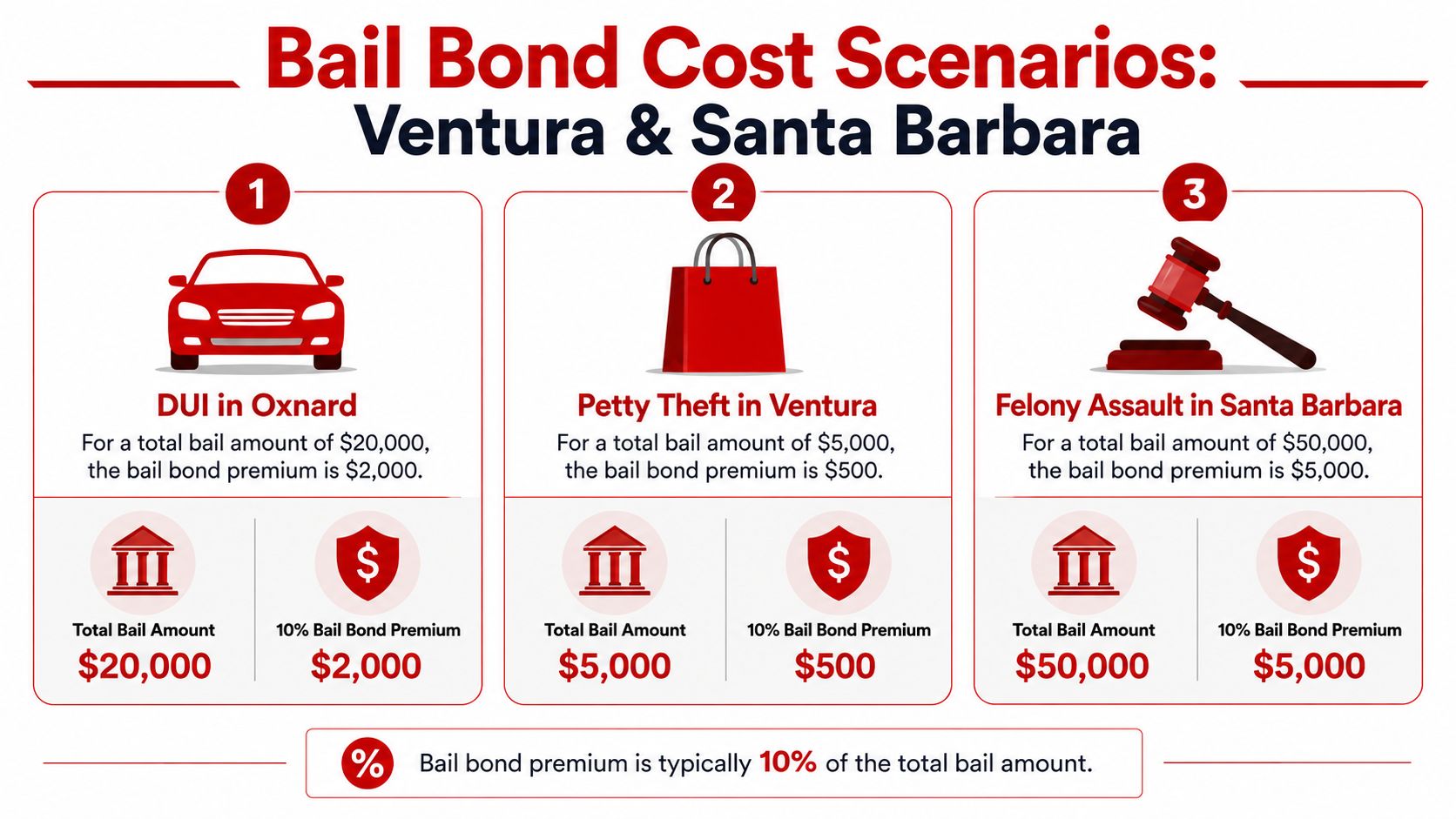
Three local style examples
| Scenario | Bail amount | Standard premium |
|---|---|---|
| DUI in Oxnard | $20,000 | $2,000 |
| Petty Theft in Ventura | $5,000 | $500 |
| Felony Assault in Santa Barbara | $50,000 | $5,000 |
The math in that table is simple. The pressure comes from everything around it.
With the Oxnard DUI example, a $2,000 premium may be manageable for one family and a problem for another. If the premium is paid in full, the file often moves faster because there is less paperwork to clear. If the family needs a payment plan, the practical question becomes the total paid over time, not just the starting amount. Interest or financing charges can raise the actual cost above the basic premium.
The Ventura petty theft example shows why smaller bail does not always mean zero stress. A $500 premium may sound straightforward, but delays still happen if booking is incomplete, the co-signer cannot verify residence quickly, or the defendant has another hold that must be cleared before release.
The Santa Barbara felony assault example is where families usually see the difference between quoted cost and total exposure. A $5,000 premium is common on a $50,000 bond. On a larger bond, the bond company may also ask harder questions about the co-signer’s finances, employment, and assets. In some files, collateral is part of the approval, especially if risk factors are higher or the family cannot pay the premium in full. If you are dealing with a local booking, help with bail bonds Santa Barbara can speed up county-specific coordination and set clearer expectations about what Santa Barbara jail staff still has to process after the bond is posted.
What changes the release timeline
Posting the bond starts the release process. It does not finish it.
Release time usually depends on a few local realities:
- Booking status: The jail must finish intake before release can move forward.
- Accurate bond paperwork: Missing names, case details, or signer information causes delays.
- Other holds or warrants: Immigration holds, probation issues, or outside warrants can stop release even after the bond is accepted.
- Jail workload: Ventura and Santa Barbara facilities release people on the jail’s schedule, not the family’s.
- Co-signer readiness: A signer with ID, proof of address, and payment arranged helps avoid preventable delays.
In practice, the fastest files are the ones where the family has the booking information ready, the financial terms are clear before signing, and everyone understands whether the actual out-of-pocket cost is just the premium or the premium plus financing charges and collateral risk.
Frequently Asked Questions About Bail Bond Costs
People often ask for the “cost” without realizing the premium may be only part of the total financial exposure. A useful question is the full one: what is the total cost under the local rules, and who is financially liable if more than one co-signer signs, as noted in this New York City explanation of bail bond fee rules and signer liability.
Is the premium refundable
No. The premium is the fee for the bail bond service. It is generally non-refundable even if the case is dismissed, reduced, or resolved quickly.
Who is liable if more than one person signs
That depends on the bond agreement. If multiple people sign, each signer needs to understand exactly what responsibility they’re taking on, including whether they are each liable under the agreement and what assets are exposed if the defendant doesn’t appear.
What should I ask before I sign
Ask these questions in plain language:
- What do I owe today
- Is there financing
- Is interest involved
- What collateral is required
- What happens if the defendant misses court
- Who is responsible if more than one person signs
If you need more county-specific answers, review these Santa Barbara County bail FAQs.
The most important thing is not to rush past the fine print just because the situation is stressful. Quick service matters. Clear terms matter more.
If you need immediate help with a Ventura County or Santa Barbara County jail release, Bada Bing Bail Bonds can help you verify booking information, explain the premium, walk through co-signer and collateral questions, and start the bond process any time of day.